James Forsyth

James Forsyth

James Forsyth is former political editor of The Spectator.

Why the government moved against Julian Lewis

15 min listen

Chris Grayling failed to win the chairmanship of the Intelligence and Security Committee on Wednesday evening. In his stead, Julian Lewis clinched the position, and No 10 withdrew the whip from Lewis. On the podcast, Cindy Yu talks to Katy Balls and James Forsyth about why this happened and whether it's better to rule by fear or love. Also on the episode: Shamima Begum and Patrick Vallance's comments on working from home.


The SNP’s next battle against Westminster

The greatest danger to the current government is the state of the Union, I say in this week’s edition of the magazine. Prime Ministers can survive many things but not the break up of the country they lead. Number 10’s position is that there won’t accept a Scottish independence referendum in this Parliament. Given that no legal referendum can take place without Westminster’s consent, this means there won’t be one. But this position will come under huge pressure if the SNP win an outright majority on a pro-IndyRef2 platform in next year’s Holyrood elections. The next skirmish between Westminster and Holyrood will be over the internal market bill.

The Union is in graver danger than ever

The greatest single danger to this government is the state of the Union. Prime ministers can survive many things, but not the break-up of the country they lead. No. 10 has a plan to avoid this: it simply won’t allow a Scottish independence referendum this parliament. No legal referendum can take place without Westminster’s consent and it will be declined on the grounds that a generation has not elapsed since the ‘once in a generation vote’ in 2014. This approach, however, cannot change the fact that the Union is now in even graver danger than it was during that campaign. In recent weeks, the polls have consistently shown independence ahead. Scottish Unionists are downhearted.

Why Boris u-turned on Huawei

21 min listen

Much as expected, the government has u-turned on Huawei, though the new government policy doesn't go as far as some of the most hardline Tory MPs would wish. On the podcast, Cindy Yu talks to James Forsyth and Fraser Nelson about the UK's China policy in the years to come. Also on the episode: masks and the Union.

Why Boris u-turned on Huawei

The government has today u-turned on allowing Huawei a role in the building of the UK’s 5G network. From the end of this year, mobile providers will be banned from buying Huawei kit and it’ll have to be removed altogether from their 5G networks by 2027. The UK government’s line is that this change in position is a result of the new US sanctions on the company. But it is also part of the government's broader strategy of trying to get the UK off the trajectory of ever-increasing dependence on China. Beijing’s actions in Hong Kong have illustrated the true nature of the regime while its attempts to bully Australia have highlighted how it is prepared to use economic links to punish countries that step out of line.

Will making face masks compulsory help us get back to normal?

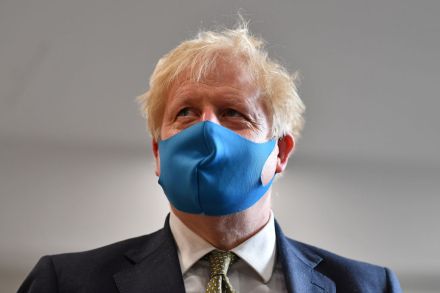
The government will announce today that from 24 July face coverings will be mandatory in shops and supermarkets. Those who don’t wear one risk a hundred pound fine. This decision is partly about reducing the spread of the virus – in a shift from the beginning of the crisis the government now thinks masks are effective in this regard, but also about giving people the confidence to go out. The argument goes that if we know everyone will be wearing a mask, so are less likely to spread the virus, when we go to the shops, we’ll be more inclined to head to the high street and spend money. I can see this case. But there is also a risk that the fact everyone is wearing masks will make people less inclined to go out, by emphasising how far from normal things still are.

Does anyone know the truth about face masks?

15 min listen

In recent days, more supportive noises have been made by those on the top of government about the wearing of face masks indoors, especially in shops. Scotland has already made it compulsory. But it wasn't long ago when the government was saying that face masks may even harm efforts to control the virus. So does anyone know the truth about face masks? Katy Balls talks to James Forsyth and Fraser Nelson.

Dominic Cummings’s plans for defence reform

13 min listen

Dominic Cummings will be touring key Ministry of Defence sites ahead of this year's defence review. So how would he like to reform the UK's military and defence capabilities? Katy Balls finds out from James Forsyth and the Times's Defence Editor Lucy Fisher.

The government’s inconsistent messaging on lockdown easing

11 min listen

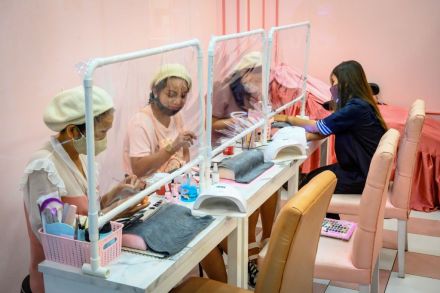
New lockdown easing measures have been announced, so later this month swimming pools, gyms, and outdoor theatres will be reopening in England. At the same time, the government advice on offices is still to work from home and do not travel by public transport. So are offices and trains really much less safe than beauty salons and pools? Katy Balls talks to James Forsyth and Fraser Nelson.

Is Rishi Sunak really hinting at tax rises?

15 min listen

The Chancellor's statement has gone down well but the big question is how the government will pay for all this. On the podcast, Cindy Yu talks to Katy Balls and James Forsyth about the possibility of tax rises, why the Governor of the Bank of England is still planning to address the 1922 committee, John Lewis's troubles, and Mark Sedwill's severance pay.

Is Boris brave enough to stand up to the Nimbys?

In the next few weeks, the government will publish planning reforms designed to simplify the system and free up land for development, I report in the magazine this week. It is by far the government’s most significant supply-side reform. One of those involved says ‘this is what the Thatcher government should have done but didn’t’. The plans would see the UK move to a zonal development system. In certain land classes, building would be actively encouraged, with a presumption in favour of development. The Housing Secretary Robert Jenrick has pushed aesthetic standards, influenced by the work of the late Roger Scruton, which he believes will ensure new homes are more attractive so garner greater local support.

Target for half of kids to go to university dropped

In a sign of how worried the government is about youth unemployment, it will – quiet literally – pay firms to hire 16 to 24 year olds. But, as I say in the magazine this week, these government-funded jobs can only be a short-term fix. Any medium-term solution is going to require fixing post-16 education. A third of British graduates are in non-graduate jobs. The government subsidises this failing system The expansion of higher education has not worked out as intended; the 50 per cent target for pupils going to university has been hit, but too many students are doing courses that don’t represent value for money.

The young are the most vulnerable to the Covid crash

Coronavirus is deadlier for the old than the young. But for the young, it is economically devastating. A third of working 18- to 24-year-olds have lost work because of the pandemic. Between March and May, the number of those under 24 claiming universal credit doubled to almost half a million, and those who leave school or university this year can expect to earn less a decade from now than they otherwise would have done. During lockdown the young have, to a remarkable extent, accepted their lives being put on hold to protect their elders. Fairness dictates that steps must now be taken to prevent them from bearing the brunt of the coming recession. Without help, the young will be hit hard in the next few years.

Can Rishi Sunak’s jobs pledge keep unemployment down?

15 min listen

The Chancellor has given his mini-Budget in a statement to the Commons today, and among a raft of stimulus measures from a VAT cut to stamp duty reduction, he has announced measures designed to keep down unemployment. But the government is clearly braced for a wave of unemployment when furlough ends, so are his pledges enough? Katy Balls talks to Kate Andrews and James Forsyth.

Rishi Sunak’s two big fears for the future

The summer economic statement made clear the government’s two big coming worries. First, the whole emphasis on jobs highlighted how concerned the government is about mass unemployment. If you thought that vacancies were going to bounce-back you wouldn’t be – literally – paying firms to take on 16 to 24-year olds. It isn’t just youth unemployment the government is concerned about either. The £1,000 bonus for firms that bring staff back from furlough is intended to preserve marginal jobs that might otherwise be lost. Even with these measures, unemployment is still likely to spike. The question is whether the government’s approach will stop this from tipping over into mass unemployment.

Liam Fox to be UK’s nomination for WTO Director-General

The UK will nominate Liam Fox to be director-general of the World Trade Organisation. I understand that the decision to nominate the former trade secretary, who has been lobbying heavily for the job, was made last night. There were those in Whitehall who were opposed to nominating Fox. They argued that it was too soon after the UK had become an independent member of the WTO to put forward a candidate and that it would be better to concentrate on some more junior positions that the UK would have a better chance of getting. Boris Johnson, however, wasn’t persuaded by these arguments. He wants to use the UK’s G7 presidency next year to push free trade and regards having a British candidate to head the WTO as a good accompaniment to that.

Is social care reform now inevitable?

13 min listen

Boris Johnson has rowed back on comments suggesting that care homes suffered from the pandemic because they did not follow procedure, after a widespread backlash. On the podcast, Cindy Yu talks to James Forsyth and Katy Balls about whether or not social care reform is inevitable, as well as why Andrew Bailey planned to address the Tory 1922 committee and the Magnitsky Act.

Why the government’s arts bailout was so generous

13 min listen

Rishi Sunak has announced a £1.6 billion bailout for the arts industry, which was more generous than many were expecting. On the podcast, Katy Balls talks to Kate Andrews and James Forsyth about why this is. They also discuss Pret's troubles and the coming Huawei u-turn.