James Forsyth

James Forsyth

James Forsyth is former political editor of The Spectator.

A brewing Clinton scandal

From our UK edition

The gloves are coming off in the US presidential race. Today, Rudy Giuliani’s team labelled Mitt Romney a Hillary Clinton clone, which is like a Labour politician calling one of his colleagues a Thatcherite in the 1980s. While on the Democratic side, John Edwards and Barack Obama are taking increasingly openly swings at Hillary Clinton. So this LA Times story about Hillary’s fundraising might give either of them the opening they need to go after Hillary on what are her three biggest weaknesses: her links to the Clinton scandals of the 1990s, trustworthiness and being part of the same old political establishment.

It’s official: Elder children are smarter

From our UK edition

Time magazine has a very fun story in this week’s issue about the importance of birth order. Apparently, elder children are smarter and earn more while younger ones are funnier and more inclined to take risks. Time even has the scientific data to back this up. “In June, for example, a group of Norwegian researchers released a study showing that firstborns are generally smarter than any siblings who come along later, enjoying on average a three-point IQ advantage over the next eldest—probably a result of the intellectual boost that comes from mentoring younger siblings and helping them in day-to-day tasks. The second child, in turn, is a point ahead of the third.”As the youngest of three, I do, though, feel obliged to point out that these IQ gaps are pretty minimal.

Why can’t the people have their say?

From our UK edition

On the Today programme this morning David Miliband contended that there was no need for the referendum that Labour promised in its 2005 manifesto as “the constitution is dead, last night marked the end of the constitution”. This argument is flawed on two levels. First, this treaty is--as pretty much every European leader other than Gordon Brown has conceded--the same document as the constitution. Second, as this week’s leader argues, Tony Blair promised a vote not because he believed that the constitution represented a fundamental change in the relationship between Britain and the European Union but to nail the ‘myths’ peddled by Euro-sceptics.

Then there were nine

From our UK edition

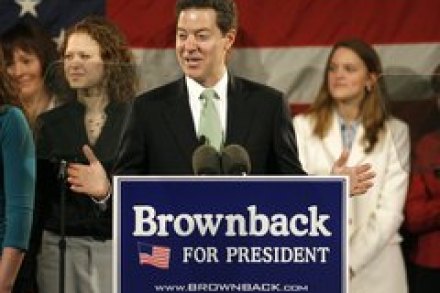
As the New Hampshire primary and the Iowa caucuses grow ever closer, the 2008 nominating contests are heating up. Today, word came that Sam Brownback—a standard bearer for religious conservatives—is to quit the Republican race. Brownback’s campaign has never caught on as many pundits thought it would and he simply doesn’t have the money or the name recognition to be a serious contender any more. Brownback’s withdrawal is good news for former Arkansas governor Mike Huckabee who has been competing for the same Christian conservative voters.

More signs of progress in Iraq

From our UK edition

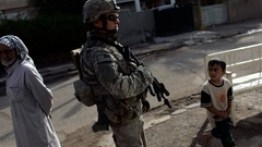
Obviously, the vote in the Turkish Parliament yesterday authorising incursions into northern Iraq to combat Kurdish terrorists threatens to undercut much of the progress that has been made in Iraq recently. But the security success of the surge in recent months has been quite remarkable as this sniper from Joe Klein’s Today in Iraq slot for Time magazine demonstrates. “Tonight, ABC news reported that there were no--zero--violent incidents in Baghdad today. But I can't find that fairly amazing story anywhere on the ABC website, or on Iraqslogger. So maybe it didn't happen. But if it did...”In a way, the issue isn’t whether there were no attacks at all in Baghdad yesterday but the mere fact that this even seems plausible to a close Iraq watcher like Klein.

They haven’t gone away

From our UK edition

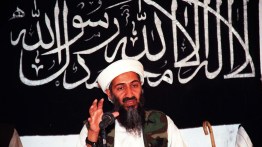
David Ignatius’s column today on the dangers of a nuclear attack by al Qaeda is absolutely essential reading. Ignatius, who is neither a scaremonger nor a shrill but an experienced journalist with incomparable intelligence sources, lays out the reasons to worry about what al Qaeda has up its sleeve. Perhaps, the greatest puzzle of the last six years is why al Qaeda stood down a cyanide attack on the New York subway. Ignatius reports that Zawahiri told the “plotters to stand down because ‘we have something better in mind.’” Certainly, one of the reasons why the United States hasn’t been attacked since 9/11 is that al Qaeda would like to one up those attacks when it next strikes.

And they’re off

From our UK edition

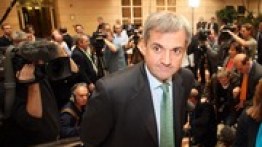
Nick Clegg scores the endorsement of the most impressive Lib Dem in public life, Paddy Ashdown, this morning. Writing in The Guardian, Ashdown argues that Clegg is the man to take the Lib Dems to the next level and the candidate the Tories fear. Chris Huhne, the main threat to Nick Clegg’s, has given interviews to both The Guardian and The Independent touting his ability to take on Gordon Brown and emphasising the dangers of appearing to be too similar to David Cameron. Talking to the Independent Huhne makes one of the oddest campaign pledges in recent British political history, "You will not find me or Nick streaking down the high streets of Britain like la Cicciolina, the Italian Radical porn star.” Another example of those famed Lib Dem media handling skills.

Why Bush isn’t wrong about Iran

From our UK edition

“So I've told people that if you're interested in avoiding World War III, it seems like you ought to be interested in preventing them from have the knowledge necessary to make a nuclear weapon.” Lots of people will recoil at Bush’s Texan directness, one might almost say glibness, on this point. But there’s no getting away from the fact that he’s right, even if he is engaging in some hyperbole.  There is no way that Israel is going to accept a country pledged to its destruction going nuclear and so either the world stops Iran through sanctions or someone does it by force.

Would you guess they are related?

From our UK edition

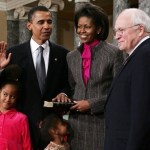
It is hard to think of two more different politicians than Dick Cheney and Barack Obama. But it turns out that they are actually eighth cousins. To borrow Richard Littlejohn's catchphrase, you couldn't make it up.

Why Clegg might not be the right choice for the Lib Dems

From our UK edition

Nick Clegg is clearly the bookies and the Westminster favourite to succeed Ming but there are reasons to believe that he might be the wrong choice for the Lib Dems. Unlike the two main parties, Lib Dem leaders have to earn their media. Charles Kennedy and Paddy Ashdown were successful at doing this because they stood out from the herd at Westminster in a way that Clegg does not. Indeed, Clegg’s similarity to David Cameron might be a real problem for him especially as Cameron has already established himself in the public mind which Clegg has not. Why would voters chose Diet Cameron when they can have the real thing? The other big question about Clegg is whether he is ready for prime time.

Did the Lib Dems get rid of Ming too quickly?

From our UK edition

Tim Hames has a typically sharp column in The Times this morning about the Lib Dems decision to dump Ming. He argues that the polls are so volatile at the moment that the Lib Dems would have done better to wait until Christmas before pulling the trigger as by then they would have been certain where they were really losing their votes to and why.  Having said that, Hames is very much part of the growing Clegg bandwagon: “Despite that, there is only one direction that the Liberal Democrats can and should take to limit the damage of this debacle. Nick Clegg is so plainly the superior contender for the post that, if he does not win, the party will have opted for collective suicide after committing two murders.

Ming Campbell resigns as Lib Dem leader

From our UK edition

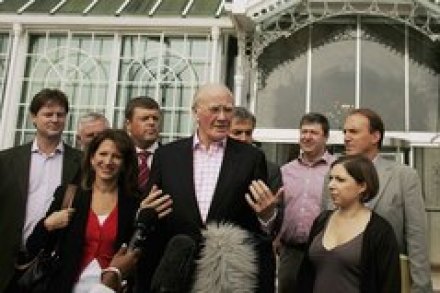
Simon Hughes and Vince Cable have just announced that Ming Campbell has resigned as leader of the Lib Dems. Nick Clegg and Chris Huhne are both expected to run for the leadership, with Clegg starting as the favourite. The timetable for the leadership contest will be announced on Tuesday. The immediate beneficiary of Ming’s departure is Gordon Brown as Ming’s departure will take the spotlight off his problems. While those vying to succeed Ming are all likely to have more appeal in Southern Tory / Lib Dem marginals than he did.

Some good news from Iraq

From our UK edition

The military progress of the surge in Iraq continues to be encouraging. As The Washington Post notes today, In September, Iraqi civilian deaths were down 52 percent from August and 77 percent from September 2006, according to the Web site icasualties.org. The Iraqi Health Ministry and the Associated Press reported similar results. U.S. soldiers killed in action numbered 43 -- down 43 percent from August and 64 percent from May, which had the highest monthly figure so far this year. The American combat death total was the lowest since July 2006 and was one of the five lowest monthly counts since the insurgency in Iraq took off in April 2004.  During the first 12 days of October the death rates of Iraqis and Americans fell still further.

Are Labour wedded to stealing every Tory idea?

From our UK edition

Andy Burnham saying that “marriage is best for kids” and that it is “not wrong that the tax system should recognise commitment and marriage” is a victory for common sense. But it is also another example of the Brown government’s cynical opportunism and lack of any new ideas. As recently as the Labour conference, Gordon Brown was quoting scripture to suggest that the Tory commitment to encouraging marriage through the tax system was somehow un-Christian.

Weekend Listening

From our UK edition

This week’s Spectator Intelligence Squared debate about whether we shouldn’t be reluctant to assert the superiorty of Western values is an absolute cracker. To listen to David Aaronovitch, Tariq Ramadan, Ibn Warraq, Charles Glass, Douglas Murray and William Dalrymple tackle this question click here.

Allez les Blancs

From our UK edition

If you’re kicking your heels until the rugby gets under way, do read this preview of the weekend’s semi-finals.

If Al Gore really wants to stop Hillary this is what he’ll do

From our UK edition

The dream scenario for the Gore supporters who’ve kept the faith was that Al would pick up the Nobel, return to national acclaim and a draft Gore movement and then—like a modern day Cincinnatus—reluctantly return to public life for the good of the Republic. I’ve always been rather sceptical about this scenario. Gore still has many of the political weaknesses that so bedevilled his 2000 run for the presidency and if he gets in the race he splits the anti-Hillary vote. Also many doubt whether he has the stomach for the fight that would follow. But it is almost certain that Gore would still like to stop Hillary. To paraphrase Princess Diana, Al Gore thinks that there were three people in the Clinton-Gore presidency, making it a bit crowded.

How long can Ming hang on?

From our UK edition

When it looked like there was going to be an autumn election, Ming Campbell’s position was safe for the simple reason that there wasn’t time to replace him. But now with no election likely until 2009, the Lib Dems have time to pick a new leadership team and bed them in before the next election. The Lib Dem’s poll ratings are barely in double figures and it is hard to imagine that they would do any worse with a new leader and the murmurings against Ming are starting to become more public. But this quote that a senior Lib Dem frontbencher gave to Andrew Pierce is particularly brutal: "Time is up. We have had a life-threatening experience. The whole dynamic changes, now that there is no election for 18 months. We will get him.

Blood Sports

From our UK edition

Toby set tongues wagging with his post about whether David Cameron was Muhammed Ali to Gordon Brown’s George Foreman. (Do see Clive’s post on why Gordon is really Sonny Liston) So, here--at Toby's suggestion--is yesterday’s encounter between Cameron and Brown and the combination of punches from the Rumble in the Jungle that Toby thought that Cameron threw the verbal equivalent of yesterday. Which was more brutal?

Brown’s Euro-vision

From our UK edition

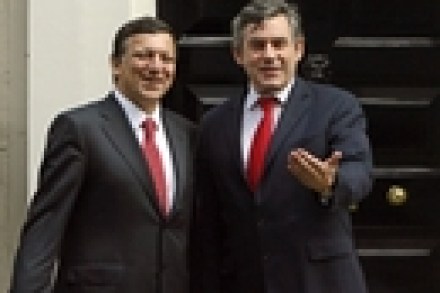
Do read Mark Mardell’s piece on Gordon Brown’s meeting with Jose Manuel Barroso. Particularly interesting, is his account of Brown’s European vision. “I’m told he argues that there are three phases in the European Union project to create stability on the continent. The first was establishing democracy and prosperity after the war. The second was reuniting Europe after the iron curtain came down. But the third phase has only just started. That is to engage Muslims within Europe, both within existing borders, but also by making welcoming noises to Turkey, Albania and depending what happens there, Kosovo.” As Mardell points out, this means that Brown is on a collision course with Sarkozy and Merkel who both oppose full membership for Turkey.