James Forsyth

James Forsyth

James Forsyth is former political editor of The Spectator.

Tories 3 points ahead in latest poll

The latest YouGov poll for the Telegraph has the Tories on 41, Labour 38 and the Liberal Democrats languishing on a 11 percent. I suspect that both main parties will be fairly happy with these numbers. Labour will be relieved to still be within striking distance after such an awful few weeks. While the Tories will be delighted to be ahead and over the crucial forty percent mark. Gordon Brown’s personal ratings have taken a battering after the whole debacle of the cancelled election. His net satisfaction rating is now minus 11, a plurality of people see him as indecisive and an absolute majority see the government’s ‘stealing of Conservative clothes’ as ‘feeble and opportunistic.
Time for Parliament to take a stand

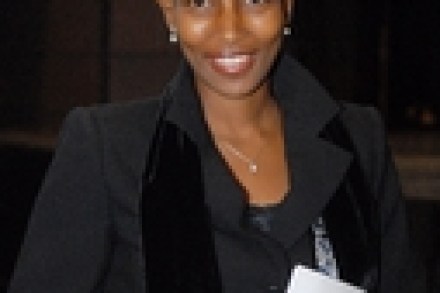
I’m normally slightly sceptical of the value of Early Day Motions; too few of them justify the £627,000 that they cost the taxpayer in 2005/6. But one put down today by Paul Goodman and Michael Gove, two of the most decent men in the House, makes an important statement: "This House, recognising that freedom of speech within the law and freedom from violence and intimidation are indispensable preconditions of a free society, deeply regrets the decision of the Dutch Parliament and Government to withdraw protection abroad from Ayaan Hirsi Ali, the author, film-maker and former politician, and urges both bodies to reverse this decision forthwith.

Preparations for a possible strike on Iran stepped up

The speculation over whether President George W. Bush will order strikes on Iran before he leaves office in January 2009 will ramp up another notch with the news that the Bush administration is requesting $88 million to alter B-2 Stealth bombers so that they can carry the largest conventional bomb yet developed by the US military. These bunker busting bombers would enable the US to hit the parts of Iran’s nuclear network that are far below the surface. Jonathan Karl, ABC News’s national security correspondent, has the story: The one-line explanation for the request said it is in response to 'an urgent operational need from theater commanders.' … There doesn't appear to be any potential targets for a bomb like that in Iraq.

Will Tony wear a blue dress?

Oh, this is going to be fun. Adam Boulton, writing in the New Statesman, says that Tony Blair and David Cameron will indeed be holding a meeting soon. Apparently, Blair wants to brief Cameron on his role in the Middle East. The substance of the meeting might be high-minded and Blair is—as Fraser reports in this week’s issue—trying to keep his supporters on a tight leash, but it is hard to imagine the rather paranoid Brown team taking kindly to any photos of Blair and Cameron together.

Ashdown warns that Afghanistan is lost

When it comes to winning the peace few people know more than Paddy Ashdown so his warning that Afghanistan is “lost” is particularly alarming. The Telegraph quotes him setting out the consequences of defeat: “I believe losing in Afghanistan is worse than losing in Iraq. It will mean that Pakistan will fall and it will have serious implications internally for the security of our own countries and will instigate a wider Shiite [Shia], Sunni regional war on a grand scale. "Some people refer to the First and Second World Wars as European civil wars and I think a similar regional civil war could be initiated by this [failure] to match this magnitude.

Brown is having tent trouble

When Gordon Brown first announced the outsiders he had recruited to his ‘ministry of all the talents’ there was much chuckling in Westminster about whether Digby Jones or Mark Malloch Brown would be the first minister to be sacked. Early on, Malloch Brown moved into pole position with an insufferably pompous interview in the Telegraph that caused Brown all sorts of problems in Washington and led to a public slapping down of the over-mighty junior by his boss David Miliband. But now Comrade Digby must be the bookie’s favourite. Digby’s unhappiness over the changes to capital gains tax announced in the pre-Budget report has not exactly been a state secret.

Arnie earns his stripes

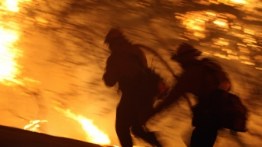
Most people chuckled at California when it elected Arnold Schwarzenegger governor. But the sheer competence of the state government’s reaction to the appalling wild fires that are sweeping the state suggest that Arnie is much better at his job than many professional politicians. Certainly, as Newsweek points out, the contrast to Katrina could not be starker.  You have to be impressed by any disaster response that not only gets people out in time, feeds them and shelters them but also provides volunteer masseuses to help ease the stress for the evacuees.

Time to use the space created by the surge

The military success of the surge in Iraq has been quite astonishing but much remains to be done on the political front. Part of the reason for this is that Iraqi politicians like to go right up to the wire, as they at every stage in the political process since 2003, before reaching an agreement.  Still what Tom Friedman reports this morning is not encouraging: since the Petraeus and Crocker report to Congress in September the four key Iraqi leaders have not been in the same county at the same time. It is time for Iraq's political leadership to begin the process of capitalising on the space and time created by the surge.

Brown shouldn’t waste his breath on the UN over Burma

In The Guardian, Gordon Brown asks the world to focus itself on Burma today as Aung Sui Kyi’s 12th year under house arrest draws to and end. The Prime Minister’s op-ed is full of noble sentiments and fine words but it inadvertently reveals the gap between words and actions when it comes to Burma. When it comes to describing UN action on Burma this is the best that Brown can come up with: “The UN security council has, for the first time ever, taken formal action on Burma by issuing a strong statement deploring the regime's actions, calling for an inclusive political process, and expressing strong support for the good offices mission of Ban Ki-Moon's special envoy, Ibrahim Gambari.

Why is it the money that gets the English so cross?

The constitutional settlement created by New Labour is clearly iniquitous. But what is interesting about the current debate is that it is based around the higher public spending per head in Scotland, which existed before devolution, not the West Lothian question. I always though that the devolution chickens would come home to roost when some controversial piece of legislation which did not apply to Scotland was pushed through using Scottish votes. But that’s already happened and it hardly kicked off a constitutional firestorm. The Barnett formula, though, seems to consistently spark off arguments.

Why I can’t take Norman Baker seriously

Folk on the previous thread seem to think that I should have dismissed Norman Baker’s belief that David Kelly might have been murdered so quickly. The problem is when you read through the serialisation of his book is it so littered with the most incredible conspiracy theories that he insists on treating with a seriousness that they don’t deserve, that it becomes hard to take Baker seriously any more. Take this section from the extract serialised under the headline, “Could America have been involved in the death of David Kelly?" “In fact, soon after 9/11, Bush overturned the 25-year ban on state assassinations and gave the CIA permission to eliminate individuals designated by the President. Might Dr Kelly have been just such an individual?

The MP who thinks David Kelly was murdered

Norman Baker, the Lib Dem MP, has gained a reputation in Westminster as one of the best ferreters out of information. But his new theories about how David Kelly died appear a little far-fetched. (Anything which involves letters from people who sign themselves ‘Nemesis’ seems a little suspect to me). David Aaronvitch in The Times does a great job of debunking Baker’s thesis and poses a challenge to Baker: “Since the fearless Mr Baker believes it is impossible to die in the way Dr Kelly is supposed to have done, then he should be able to meet the simple challenge of himself taking 29 co-proxamol tablets and then slitting his left ulnar artery.

A peek at Gordon’s vision

One of the surprises of Gordon Brown’s premiership so far to date, is how little substantive policy there has been. Pretty much everything Brown has done has been about political positioning—putting the Tories in an awakward spot, distancing himself from Blair and the like. As Rachel Sylvester argues in the Telegraph this morning a positive Brownite agenda has yet to emerge. Sylvester thinks, though, that the recent hiring of Richard Brooks and Nick Pearce from the Institute of Public Policy Research hints at what Brown has planned for public service reform.

The McCain comeback | 22 October 2007

If I was a betting man, I’d be very tempted by the 16 to 1 available on John McCain to be the 2008 Republican nominee. McCain has had a fantastic few weeks and is steadily clawing back some of the support he lost earlier in the campaign. He is once more getting some media love—crucial to a campaign that is desperately short of money and so can’t afford much paid for media—and conservatives are beginning to realise that McCain stacks up pretty well against the rest of the field. But perhaps most importantly, McCain has rediscovered his will to win. Earlier in the year it seemed that Iraq and the bitter debate over immigration had drained him of it completely, he looked every bit as old as he is and weary and downbeat to boot. But now he’s got his groove back.

One of Labour’s worst ideas yet

Even by the high standards of this government the idea that schools should have to give back 5% of any money they save to the government seems particularly half-baked. Whatever happened to Gordon’s love of prudence? Calculations by the Lib Dems indicate that up to 80% of schools in England could be affected.

The cost of Brown’s indecision

The Guardian this morning reveals that the election that never was cost the Labour party about  £1 million with poster sites being pre-booked, staff hired and election communications printed. By contrast, the Tories are thought to have spent only about a fifth of this amount. One anecdote concerning Martin Linton is particularly cruel: “Martin Linton, who has a majority of 163 over the Conservatives in Battersea, south London, sent out letters to thousands of Labour members and supporters asking for their help. Because of the postal strike, hardly any reached their destinations until well after the election was called off.

The latest on the row over The Independent’s lack of independence

Coffee House’s scoop about how The Independent reprinted in its pages a Foreign Office talking points on the EU Treaty with only the most minor of changes and without attribution is making waves. There is, as Neil O’Brien argued in his original post, something deeply disturbing about a newspaper reproducing the government line yet presenting it to readers as the newspaper's own considered opinion. The Independent has declared itself “completely unapologetic” about the incident and said that, “The Eurosceptics, who have monopolised this debate for so long, appear to be shooting the messenger because they don't like the message.

Why we need to look again at our abortion laws

Anyone who thinks that our abortion laws--or to be more precise, how they are interpreted—don’t need looking at should read this article from The Sunday Times. Here’s how it starts:“More than 50 babies with club feet were aborted in just one area of England in a three-year period, according to new statistics.  Thirty-seven babies with cleft lips or palates and 26 with extra or webbed fingers or toes were also aborted.

A moral nation?

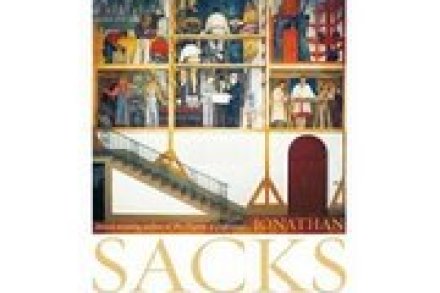
Under the arresting headline “Wanted: a national culture”, The Times carries an extract from the Chief Rabbi’s new book. Here’s the key section of Jonathan Sack’s argument: “In 1961, suicide ceased to be a crime. This might seem a minor and obviously humane measure, but it was the beginning of the end of England as a Christian country; that is, one in which Christian ethics was reflected in law. It was a prelude to other and more significant reforms. In 1967 abortion was legalised, as was homosexual behaviour.  Collectively these changes represented a decisive move away from the idea that society had, or was entitled to have, a moral code at its base, covering many areas of life that might otherwise be regarded as private.