James Forsyth

James Forsyth

James Forsyth is former political editor of The Spectator.

Brown survives PMQs

Gordon Brown came out of that exchange better than I thought he would. He stayed calm and was actually doing very well until he tried blame the Tories, arguing that the Tory manifesto would have cut HMRC’s budget, and that gave David Cameron the opening the needed o deliver the scathing soundbite that will be replayed on the evening news. Then Cameron hit his stride, saying that Brown wants “to control everything but can’t run anything.” Overall, though, Brown will be relieved at how the exchange went—it could have been so much worse.
What should Gordon say at PMQs?

Gordon Brown must be sick to his stomach about going to have to face David Cameron at PMQs today. The Tory leader, who thrashes him every week, is bound to make the case that this government is just serially incompetent and a busted flush. So the question is: can Gordon say anything to counter this? Would a very un-Gordon like, full apology do the trick? Or, would it just make him look even weaker?

Oh Gord, this is bad

Charlie Whelan takes to the Telegraph today to defend his old boss but only ends up emphasising how bad his current situation is. Whelan writes, “[Brown] also knows that there are two things that really matter. First, there is not one person in this country whose circumstances suffered in any way because there was no early election. This was no Black Wednesday, after which millions of people really suffered as a result of Tory economic incompetence. In the current volatile political climate, the polls will go up and down regularly, but, when people go to put their cross on the ballot paper, what was essentially a Westminster story will not matter a jot. Not for the first time, the Westminster village will be seen to be completely out of touch with reality.

Not another one, Darling

As Alistair Darling scurries off to the House to make a statement on the latest crisis to rock the Treasury, Martin Vander Weyer has some thoughts on the latest developments in the Northern Rock saga. As Martin argues, from a position where no was really blaming the government they have managed to land themselves right in the middle of the blame game. Back before Brown took over, it used to be the joke in Whitehall that the worst job in government would be being Gordon Brown's Chancellor. How true that has turned out to be.

The Brown retreat

Rachel Sylvester’s column today details how Gordon Brown is both retreating from the public service reform agenda and further into the bunker. In lots of technical ways that don’t make headlines, Brown has diluted many of the key Blairite reforms neutering their effectivemess. There is now oceans of clear blue water between the Tory education policy and Labour’s, although not that much between the Tory plans and the original intent of Blair’s education bill. However, nothing has replaced the Blairitie vision for reform.   As  Sylvester notes: "It's not that Gordon is going backwards or forwards, he's going sideways, like a crab," one former Number 10 adviser told me. "There's an intellectual caution and political calculation, leading to nothingness.

A victory for press freedom that leaves West Midlands Police in the dock

The decision by Ofcom to clear Channel 4 completely over the programme Undercover Mosque is welcome news. To recap, the documentary featured various preachers spouting hateful rhetoric about women, gays and the West. Several viewers referred it to the police. West Midlands Police, however, chose not to investigate the preachers but the film itself. Turning themselves into television critics, they charged that the program had been a gross distortion and while no criminal charges for stirring up hatred could be brought they took the unprecedented step of referring it to Ofcom.

How deep in the bunker are the Brownites?

When Gordon Brown was riding high in the polls, the Brownites were a ubiquitous present. Now, they have gone to ground. Last night’s, Blair documentary was a reminder of just how factional the Brownites are by nature and it seems those old instincts are coming out again. Ben Brogan reports on his indispensable blog that someone called him on Sunday afternoon to sound off about David Miliband: "There's a feeling around that he trying to rerun his leadership campaign and, fairly disgracefully, destabilise Gordon Brown. His friends believe he'll be in a stronger position if he distances himself from Mr Brown when he's in touble. He should remember that he could have stood against Gordon in the spring. He had his chances.

Might Clegg not make it?

If I was a betting man, I’d fancy a sly tenner on Chris Huhne right now. Nick Clegg has failed to impress during the leadership contest and Huhne, who doesn’t worry about being boxed in if elected leader, has been pandering to the membership like nobody’s business. The heated exchanges between the two contenders yesterday over the ‘Calamity Clegg’ briefing paper illustrated the Clegg camp’s slightly ham-fisted approach. As Mike Smithson notes, talking about reporting your opponent in a leadership contest to the chief whip for being critical of you seems a little soft. It also in Clegg’s case risks playing to the idea that he is the establishment candidate who expects to be handed the crown on a plate.

The danger of another Balkans war

 Andrew Rawnsley has an important piece in the Observer this morning about how conflict could again break out in the Balkans. The issue this time is the final status of Kosovo. The Americans favour independence for Kosovo, the Russians oppose it and the EU is mostly for it but with conditions.  As Rawnsley explains, “Time is now very short. The mandate for the EU's peacekeeping force in Bosnia expires this week and it is contested whether it can legally continue if the Russians wield their veto. There is a 10 December deadline for agreement in Kosovo. It is almost universally expected there won't be any agreement. Then the really scary stuff threatens to start happening. The Kosovans are talking about making a unilateral declaration of independence from Serbia.

Blair’s warning

David Aaronovitch’s piece in The Times today based on his interviews with the former Prime Minister and his associates for his The Blair Years series on the BBC is fascinating. Once again Blair reiterates that he did Iraq because he believed that it was the right thing to do. His concluding remarks, though, are grim: “The enemy that we are fighting I am afraid has learnt . . . that our stomach for this fight is limited and I believe they think they can wait us out. Our determination has got to match theirs and our will has got to be stronger than theirs and at the moment I think it is probably not.” There will be lots of people who will not take kindly to being told this by Blair but it is one of the key points in this struggle.

Spin ahoy

John Pienaar’s BBC column has a great little anecdote in it this week about Alan West’s reaction to the way his comments on not being convinced of the case for 56 day detention were reported. According to one report, he heard the radio headlines immediately after his morning interview reporting his doubts about government policy. "Why are they saying that," he asked an official. "Because that's what you said, minister" came back the reply. Although it must be noted, that the ‘simple sailor’ line West used to explain away the mistake shows that he’s fast learning how to spin with the best of them.

Who does Blair think his natural heir is?

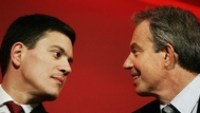
The Independent have launched a string of new blogs which are well worth checking out. Open House, their comment blog, looks particularly promising—anything that offers us more of John Rentoul and Steve Richards can only be a good thing.  Rentoul, who is one of the great authorities on Tony Blair, flags up a rather revealing interview that the former PM gave to David Miliband’s local paper. Here’s the key passage: “Did Mr Blair ever think that the South Shields MP would be his natural heir? He glanced up at the Foreign Secretary again, asking: "Shall I answer that?" Mr Miliband nodded cautiously with his eyes closed. "I'm very proud of him.

Men in tights

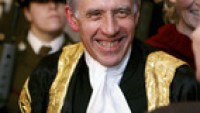
Jack Straw has taken to the ceremonial trappings of his new role with a vengeance. The former firebrand NUS president never seems happier than when dressed in his finery. Now Kevin Maguire reveals that Straw has been in training for his new role, or at least the dressing-up part of it, for a lot longer than anyone had realised: Gold-coated Jack "the Lad" Straw put on a magnificent display of grovelling for the Queen, a republican reintroducing the deferential practice of walking backwards at the Ruritanian opening of parliament. The Blackburn boy looked fetching in his breeches, though not quite as charming as when he watches his local footie team on cold winter days. Jack of the Rovers, I gather, wears his wife's old tights under his trousers at Ewood Park.

Who is Clegg closer to?

Nick Clegg’s interview with the New Statesman is well worth reading for an insight into how he sees relations with the two main parties. Clegg describes himself as “an anti-Labour northern MP” and explains why he thinks that the Lib Dems' room for growth comes from taking seats from Labour: "Something like 85 per cent of our MPs are in former Conservative seats. I want to hold on to those gains and improve on them. Look at the political map of Britain: the places where we are going to win the most seats in the next few years are in the Labour heartlands. One of the reasons I'm keen to be leader is that I think I can lead the charge against Labour."Yet, Clegg is aware of the dangers of being labelled a closet Tory.

Brown and terror

Peter Riddell has a very wise column in The Times today. As he points out, what Admiral West said yesterday about 56 day detention was actually quite sensible even if it was a ‘gaffe.’ While the burden of proof should be high for extending the period of detention without charge, it would be glib to dismiss the possibility that it might be necessary at some point. (The current Tory position that it hasn’t been needed yet so is not needed is hardly an example of rigorous thinking.) Brown’s speech yesterday on counter-terrorism showed that politicians are beginning to grasp that the problem is not just terrorist violence but the ideology of separatism that breeds it. However, listening to it one wondered how all these new initiatives would tie together.

The announcement strategy is back

Gordon Brown has never looked comfortable at PMQs but after a poor first few performances he developed a clever strategy of announcing policy during it, for instance on super casinos. This guaranteed that the main news coming out of PMQs was not how well Brown did but the policy he had unveiled. As Mike Smithson over at Political Betting points out, that strategy appears to have been dusted off after a string of poor performances from the PM at the despatch box. I also expect that foreign leaders who invite Gordon to events starting at noon on Wednesdays will have a very good chance of securing his attendance.

Is this all that Gordon has left to do?

I guess all the other problems facing the government must be solved as Gordon Brown is now to turn his attention to making sure that premiership teams select more British players. As The Guardian sports section puts it: ‘British players for British clubs.’ Brown is a genuine sports fan and there’s public concern over the issue, but is this really an issue worthy of government time? If Brown really does want to do something about this problem, he should concentrate on reversing the decline of competitive sports in schools and access to playing fields; problems that government of both parties have largely created in the last forty years. He might also want to stop funds being diverted from grassroots sports to the ballooning Olympic budget.

The future of Conservatism?

Conservative Home have just conducted an interesting survey of the candidates in the seats that the Tories have a realistic chance of picking up next time round. 70 of the 192 responded and the results suggest a further shift of gravity in the parliamentary party. 94% think that too many powers have already been transferred to Brussels, 81% want the Barnett formula revised and 62% believe immigration has been detrimental to Britain in the last ten years. This last statistic has things rather backwards to my mind. It is not the immigration that has been harmful to Britain, but the structural problems—a low skilled workforce, welfare dependency and the like—that have created such a demand for foreign workers.

Another Home Secretary on the rocks

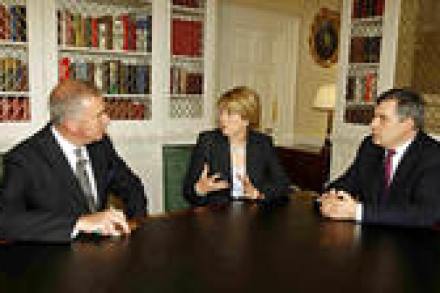
The storm that has broken around Jacqui Smith about illegal immigrants working in Whitehall is particularly dangerous for the government as it combines concerns over the loss of control over the borders with fears about security and the government’s reputation for honesty. If they don’t even know the immigration status of the person guarding Gordon Brown’s car then what hope is there that they know the status of anybody else? The gap between the Home Secretary learning about the problem and it being revealed to the public is also a huge problem for the government as it dredges up memory of Home Office scandals past and allows its critics to suggest that spin was put before public safety.