James Forsyth

James Forsyth

James Forsyth is former political editor of The Spectator.

Obama makes his pitch

From our UK edition

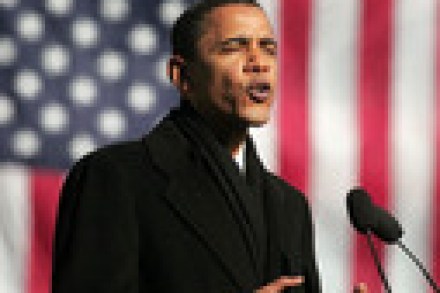
Des Moines, Iowa Barack Obama’s closing video is radically different from Hillary’s talk to camera. Obama’s ad-men have gone for essentially a collection of his greatest hits starting  with that speech to the 2004 Democratic convention which started it all. The message is light on policy and heavy on personality and Obama’s claims to be able to put the partisan divisions of the past behind him. It is very much the ad of a candidate who is relying on the support of independents, disgruntled Republicans and idealists for victory.
Hillary’s closing argument

From our UK edition

Every Iowan watching the 6PM news tonight will see this extended ad from Hillary Clinton. The message hits Hillary's theme that she is ready to be president from day one, in an unspoken contrast to Obama.

Brown’s challenge in 2008

From our UK edition

Jonathan Freedland has a typically smart piece on what Gordon Brown needs to do in 2008 in this morning’s Guardian. Freedland writes, “We will not vote on him this year, but after only six months in office - three that saw him soar, three that saw him plunge - we will form a settled view of him in 2008. If the Mr Bean tag sticks, he will be finished. He needs, at the very minimum, a few solid months of steady, unruffled, even dull competence: no more Northern Rocks, missing discs or tangled donations. Desperately required is a spell of quiet, so that the serial misfortunes of the autumn come to seem like a bad patch rather than a Brownian pattern.  For this, though, the prime minister needs to do more than cross his fingers.

New Iowa Poll has Obama winning big

From our UK edition

Today’s Des Moines Register poll suggests that Barack Obama is on course for his dream result in Iowa. It has Obama at 32, Hillary Clinton at 25 and John Edwards at 24. A clear win in Iowa, with Edwards coming third, would set Obama up for victories in the subsequent contests in New Hampshire and South Carolina.  The Clinton and Edwards camps are, though, questioning the poll’s methodology which has huge turnout from independents pushing Obama over the top. Indeed, the silver lining for Clinton and Edwards is that the pressure is now on Obama to win. On the Republican side, Mike Huckabee leads Mitt Romney 32 to 26 with John McCain in third.

What the candidates want from Iowa

From our UK edition

It is now only 4 days until Iowa Caucuses get the 2008 presidential contest under way. The most precious commodity that Iowa can bestow upon a candidate is momentum; the result in Iowa can set the tone for the rest of the campaign.  So, here is Coffee House’s guide to what the leading candidates want out of Iowa. The Democrats Current polls show John Edwards, Hillary Clinton and Barack Obama in an effective three way tie.  John Edwards: The Southern populist needs to win Iowa. If he doesn’t, he might as well drop out of the race.  Hillary Clinton: Winning would obviously be nice and there are signs that things are swinging back her way in the final few days. But most important to Hillary is that Obama doesn’t win.

Brown needs help, but he won’t take it from the Blairites

From our UK edition

Few columnists can claim to understand Team Brown better than Jackie Ashley, so her Guardian column this morning on this weekend's Blairite overtures is particularly interesting. Ashley writes that Brown “is probably tempted to pick up this olive branch and use it to give the Blairites a thrashing.” But she warns the Prime Minister that this would be the wrong thing to do and that he needs the Blairites’s help “to find new ways to reconcile liberty and security, and to express them in ways that most people approve. He needs to find new ways of reaching out to older voters: at the next election the majority of voters will be over 58. What is the new Labour offer to those worried about pensions, long-term care, and ever-scarcer local services?

Who will get knocked out by the Romney one-two punch?

From our UK edition

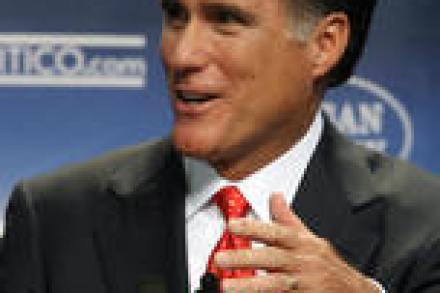
The Democratic presidential contest is getting the lion’s share of the media coverage because the two main competitors in it are political superstars whose candidacies would be historic and because whoever is the Democratic nominee will start out as the favourite in 2008. But the Republic race is, perhaps, even more fascinating with the very future of the conservative coalition at stake. It is certainly more fluid with four Republicans—Rudy Giuliani, John McCain, Mike Huckabee and Mitt Romney—still having plausible paths to the nomination.   Romney (pictured) is the only Republican with a realistic chance of winning both Iowa and New Hampshire, the two crucial early contests. He is second in the polls in Iowa and has a narrow lead in New Hampshire.

What will fill the vacuum in Pakistan?

From our UK edition

Ahmed Rashid’s Washington Post column on what happens next in Pakistan is an absolute must read. As Rashid puts it, “The assassination of Benazir Bhutto has left a huge political vacuum at the heart of this nuclear-armed state, which appears to be slipping into an abyss of violence and Islamic extremism. The question of what happens next is almost impossible to answer, especially at a moment when Bhutto herself seemed to be the only answer.” The West would also do well to bear in mind Rashid’s warnings about the likelihood that this crisis could break Musharraf’s grip on power: “Musharraf may not survive the fallout of Bhutto's death. His actions have not been honorable, and none of the political opposition is willing to sit down with him.

Can the Musharraf regime keep a lid on the violence in Pakistan?

From our UK edition

The political fall-out in Pakistan is likely to centre around a letter that Benazir Bhutto wrote to Pervez Musharraf on her return home, demanding that in the event of her death three senior figures in the security services be investigated. The government has always dismissed the letter as merely Bhutto settling scores with her opponents, but in the aftermath of her death it takes on new importance even though Al Qaeda has reportedly claimed responsibility for her death. Already violence in Karachi has claimed five lives and shops belonging to the family of Mohammedmian Soomro, the current Prime Minister, have been torched in Jacobabad.

What effect will Bhutto’s assassination have on the presidential primaries?

From our UK edition

Benazir Bhutto’s tragic death is dominating the news in the United States and could change the mood of the presidential primaries. The improvements on the ground in Iraq and the conclusion of the recent National Intelligence Estimate that Iran has suspended its nuclear weapon programme had made the world seem a much less dangerous place, and the focus of the primaries had shifted to domestic issues. This shift undoubtedly played a role in the rise of Mike Huckabee, the Republican former governor of Arkansas who has no foreign policy experience, and harmed Hillary Clinton, the Democrat with the toughest national security bona fides.

What’s next in Pakistan?

From our UK edition

The Pakistani government is currently meeting to decide what to do about the Parliamentary elections scheduled for January. It seems almost certain that they will be postponed. The next question is whether Musharraf returns Pakistan to a state of emergency.  Nawaz Sharif, the mild Islamist who is now the leading opposition figure in Pakistan and who has the support of the Saudis, has already told grieving Bhutto supporters, “I will fight your war from now on”. The worry for the West has to be that the only alternatives to Musharraf are now figures that have explicitly backed a more anti-Western approach. Bob Kagan’s warnings about the dangers of supporting Musharraf seem particularly prescient now.

Bhutto assassinated in Pakistan

From our UK edition

Benazir Bhutto’s murder vastly reduces the West’s options in Pakistan. Bhutto, while flawed in many ways, at least offered a secular and relatively liberal alternative to Musharraf. Musharraf now knows that the West has no palatable alternative to him—Nawaz Sharif is too Islamist for Washington and London’s comfort—and so will be less concerned about Western demands that this January’s Parliamentary elections go ahead.  The handling of Pakistan has been America’s greatest strategic failure in the war on terror to date. Today, Pakistan is a significant step closer to being a nuclear armed, failed state.

Things worth reading

From our UK edition

David Brooks, perhaps the most perceptive commentator in America, picked out the year’s best American magazine pieces in The New York Times the other day. They are all well worth taking a look at.

Happy Christmas

From our UK edition

Coffee House will be quiet over Christmas itself. We’d like to wish you a very merry Christmas and thank you for reading and contributing. If you want a political giggle over the next few days, click here.

Can the Prime Minister recover from his self-inflicted wounds?

From our UK edition

Andrew Rawnsley’s column in The Observer on how Gordon Brown undid all the good work of the early months of his premiership with the election that never was is essential reading. As Rawnsley puts it, “the election debacle was shattering to his credibility and authority. It was like one of those sci-fi movies where a mad scientist throws a switch and all the polarities are instantly reversed. Virtually overnight, Gordon Brown had alchemised his positives into negatives.”  Today, a Labour overall majority after the next election is far less likely than an overall Conservative one—this is remarkable given just how many seats the Tories have to win to obtain a majority.

Tony Blair becomes a Roman Catholic

From our UK edition

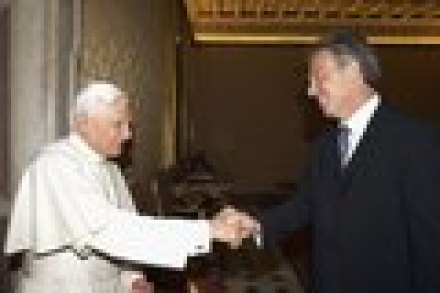
With the news that Tony Blair joined the Roman Catholic church last night in a ceremony led by Cardinal Cormac Murphy-O'Connor, I’d thoroughly recommend reading—or re-reading—Fraser Nelson’s piece on  the attitude of some Catholics in this country to Blair’s conversion. You might also be interested in Stuart Reid’s thoughts on the matter which he aired just before Blair left office.

Slow brewing

From our UK edition

The Coffee House team are scattering to the four winds for Christmas so posting will be less regular than usual. You can keep up to date with all the latest news at The Telegraph. Have a very happy Christmas and thank you for helping to make Coffee House what it is.

The Lib Dems need their A team on the field

From our UK edition

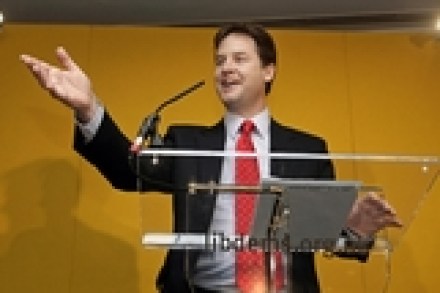
Nick Clegg’s reshuffle illustrates the problems that he is going to have as Lib Dem leader. Three of the most talented and well know Lib Dems won’t be on the front bench. It is hard to imagine that a party as small as the Lib Dems can afford to have big beasts like Charlie Kennedy, Paddy Ashdown and Ming Campbell missing from the front line. The top team is, though, as Iain Martin argues, strong in certain aspects. Vince Cable is an impressive figure and if the economy goes south, he’ll make sure that the Lib Dems benefit politically. Ed Davey will be a more formidable foreign affairs spokesman than Michael Moore and Chris Huhne will work tirelessly at Home, how much that will please the new leader remains to be seen.

Cameron and Osborne all smiles, for now

From our UK edition

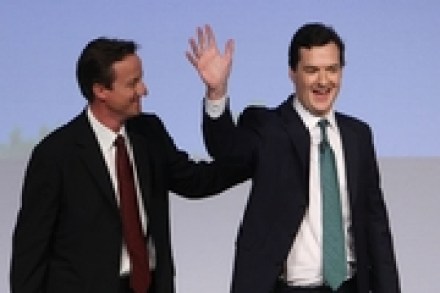
David Cameron and George Osborne are both singing from the same hymn sheet about the fact that there was no Granita style deal between the two of them in their joint interviews with the Mail and the Telegraph. The big difference between Cameron and Osborne and Blair and Brown is that Osborne was never the senior partner and as the younger man need not fear that he’s missed his turn. Probably the most likely source of future tension between the two of them is foreign policy. Where as Cameron is a classic Conservative when it comes to foreign policy, see his Berlin speech which was depressingly Hurdian, Osborne’s world view is far more modern. In opposition this kind of difference is not that important but in government it could become a real problem.

The scale of Petraeus’s achievement

From our UK edition

If you want to get an idea of how great General Petraeus’s achievement have been in Iraq, consider this revelation from Time’s profile of him:  “At a Pentagon meeting with the Joint Chiefs of Staff in December 2006, President Bush asked the Chiefs how many supported the idea of a surge — the deployment of more troops (which Petraeus would command) into Baghdad to secure the city and create the conditions necessary for a reconciliation of the various Iraqi political factions. The Chiefs were unanimously opposed.