James Forsyth

James Forsyth

James Forsyth is former political editor of The Spectator.

Nick Clegg should speak out

The Lib Dems should be leading the charge against Michael Martin. It is the kind of issue where the Lib Dems can emphasise their outsider status and come across as the party prepared to break up the cosy Westminster consensus. Considering the public disquiet about how MPs are using the expenses system, the Lib Dems would be onto a winner. MPs and the political parties are reluctant to criticise the Speaker because they fear the consequences. As Nick Robinson points out, individual MPs worry that they might not get called in debates and the Tories want to ensure that one of their own gets the job next time round.

Harriet Harman needs a moral compass

Harriet Harman comes out with one of the most disgraceful statements by a government minister in a while, in today’s Independent. Here’s the exchange: Now, Castro is not some cuddly Marxist but a brutal dictator. Harman’s statement is either an expression of extreme ignorance or of a double standard which sees no evil on the left.  The Freedom in the World survey gives a few examples of the kind of regime that Castro ran: All political organizing outside the PCC is illegal.Political dissent, spoken or written, is a punishable offense, and those so punished frequently receive years of imprisonment for seemingly minor infractions. … Access to the internet remained tightly controlled. It is illegal for Cubans to connect to the internet in their homes.

News from the front

Anthony Cordesman, the respected US military expert, has an important piece in the Washington Post today on the wars in Iraq and Afghanistan. As he reports, both conflicts are at a critical moment: “No one can return from the battlefields in Iraq and Afghanistan, as I recently did, without believing that these are wars that can still be won. They are also clearly wars that can still be lost”. Cordesman is more optimistic about the situation in Iraq than Afghanistan, but he argues that neither conflict will end anytime soon.  “What the situations in Iraq and Afghanistan have in common is that it will take a major and consistent U.S. effort throughout the next administration at least to win either war.

How the Tories can break on through

Northern Rock has not fatally wounded this government and Gordon Brown is slowly getting back on the front foot. The government, it appears, will not lose the next election all by itself. So how should the Tories should try and win it? Here, the divide is between the tortoises and the hares—or, the infantry and the light horse as I would put it. Today, Iain Martin and Tim Montgomerie, the two most eloquent hares, make the case for boldness. Iain makes the crucial point that the election will likely be decided by returning voters drawn to the polls by the fact ‘their vote will matter’ for the first time in a while: turnout in 1992—the  last election where the result was in doubt on polling day—was 77.7 percent, in 2005 it was 61.4 percent.

Speaking of controversy

Michael Martin’s spokesman has resigned for unwittingly misleading a journalist over the recent story about the Speaker’s wife’s £4,000 taxi expenses. The spokesman had said that she had been accompanied by a Commons administrative official when she was actually with her housekeeper. No one in the Speaker's office who knew the truth had prevented him from making the error. There is more to come on this story in the Sunday papers and even though the departing spokesman has absolved the Speaker of blame, this story is bound to increase the pressure on Martin to stand down. There is, though, no sign that he plans to go gracefully.

Wil Obama seal the deal on March 4th?

Over on Americano, all the latest from the US elections including reports that Hillary aides are thinking about a dignified exit for her if Ohio and Texas don’t go her way in 10 days time. Plus, thoughts on whose reputation has been damaged most by the New York Times’s story about John McCain’s supposed relationship with a female lobbyist.

Don’t clobber drinkers

The idea of vastly increasing the tax on alcohol to deal with Britain’s ‘binge-drinking’ problem is gaining ground. The Tory Social Justice policy group was keen on the idea and now the British Medical Association has come out in favour of it. It certainly appeals to the ‘something must be done’ school of thought but it is also grossly unfair as Charles Moore argues in the Telegraph today. As he puts it, “In 2004, 21.6 million adults who drank alcohol consumed less than the recommended guidelines per week, whereas 1.8 million consumed at very heavy levels (more than double the guidelines).

Is Yvette Cooper beyond help?

Iain Martin has a great post over at Three Line Whip about the rather disastrous effect that media training has had on Yvette Cooper’s manner—proof that things can get worse.   For the Kremlinologists of this government, the relationship between Alistair Darling and the newly arrived Chief Secretary to the Treasury is going to be fascinating, not least because so many people think that her husband is manoeuvring for her boss’s job.

Labour still in danger of drifting onto the rocks

Today’s Economist poll on Northern Rock is a belated birthday present for Gordon Brown. Only 5 percent believe the government is most responsible for the crisis and people are more impressed with Brown and Darling’s handling of it now than they were a month ago. But what will really cheer up the PM is that almost 60 percent of the public think the Tories are playing politics with the issue and only one in five say that David Cameron and George Osborne would have done any better. However, this doesn’t mean that the danger has passed for Labour. There are still, as The Economist points out, a whole bunch of problems for Labour—the management of the bank, the inevitable job loses, the repossessions to name but a few—to deal with.

What on earth were the Tories thinking?

Putting the words Auschwitz and gimmick together is ill-advised and for a politician to do this is particularly foolish. Whatever the substance of David Cameron’s criticisms he has opened himself up to some awful headlines. The Tories would be wise to back down gracefully and quickly. If they don’t, they will open themselves up to the charge that they genuinely think that trips to Auschwitz are a gimmick—which they do not.

Where the burden of Brown falls most heavily

 In the Telegraph, John Kampfner makes the case that Gordon Brown is as ‘uncritically’ adoring of the super rich as Tony Blair ever was. He argues that this attitude stems from Brown’s fear of being seen as anti-business, his acceptance that the wealthiest just won’t pay their fair share of tax and his conversion to ‘trickle-down’ theory. The most interesting part of Kampfner’s piece, though, is his contention that this approach combined with Brown’s desire to redistribute wealth has left to the tax burden being raised ever higher on the middle classes.  Certainly, one of the hall marks of Brown’s tenure as Chancellor was how fiscal drag saw more and more people being pushed into the top tax band.

Lords inflicts defeat on government over Northern Rock

The Lords has just defeated the government on its plan to exempt Northern Rock from the freedom of information act, the issue which David Cameron raised at PMQs yesterday. Brown and Darling now have a choice: they can either overturn the vote in the Commons and send it back to the Lords or they can back down on this question. As Peter Riddell wrote in The Times this morning, “The Government is asking us all to take far too much on trust over the nationalisation of Northern Rock. This may have become the only remaining option by last weekend. But that does not mean that Parliament should sign up to a blank cheque – on behalf of us all – granting ministers sweeping powers and providing little information about the possible taxpayer liability.

Gordon’s American problem

Gordon Brown should be casting nervous glances across the Atlantic because a defeat for Hillary Clinton, which is now the most likely result, would be bad news for him. First, it would remove any chance of Brown getting some easy opportunities to play statesman. A President Hillary would likely have teamed up with Brown on a bunch of popular initiatives on things such as climate change and given Brown the chance to strut the international stage. It is unlikely that Obama, who Brown apparently snubbed last summer, would do as much with the Prime Minister. While John McCain is on the record with high praise for David Cameron and has criticised Brown’s pullback from Iraq.

The oddest thing about Lembit Opik

Do read Lesley White’s sympathetic profile of Lembit Opik in today’s Times. There is, though, no getting away from the fact that Opik has some strange views and none stranger than this: “He talks about the transference of psychic energy, how his crossness that our Virgin train was late had put a spring in the step of the woman who later showed us to a meeting at Shrewsbury hospital.

Rocking with the non-doms

Ron Sandler, the Treasury appointed chairman of Northern Rock, is a non-dom, Robert Peston confirms. Add to this the brewing row about how much the new management team is being paid and the political connections of some of those appointed to the board and you can see how Northern Rock is going to be a constant irritation to the government. The bad news for Alistair Darling and Gordon Brown is that they probably won't be rid of Northern Rock before the next election.

Don’t worry Darling

David Cameron is calling for his head, the City has lost confidence and the bookies are offering 5/2 that he will be gone from the Treasury by the end of the year. Yet, I suspect that Alistair Darling has more job security than most. Darling was a temporary appointment; no one believes that Brown will keep him in post after the next election which explains why some young Brownites were so keen on an early election. But to move Darling before polling day would be a huge risk. First of all, it would call into question Brown’s judgement in appointing him in the first place. Second, it would add considerably to the feeling that this is a government on its last legs. Finally, there is no guarantee that Darling would go quietly.

So much for a united European front

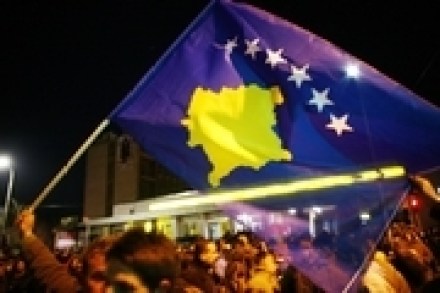
The issue of whether or not to recognise Kosovo demonstrates once again why the idea of a common European foreign policy is absurd. On this issue—as on pretty much any other contentious foreign policy decision you can think of—the European Union is split. 17 of the Union’s 27 members either have recognised Kosovo or will do so in the next few days. A common European policy would have had to gone against the wishes of one of these groups. Ironically, for years it was thought that the European Union was the solution to the Kosovo question. Serbian officials dropped heavy hints that they would accept independence for Kosovo if Serbia got to join the Union at the same time. But the backlash against enlargement, means that this deal was effectively taken off the table.

The Chancellor’s lucky break

Alistair Darling really should send Mohamed al-Fayed a thank you note. Fayed’s testimony is bound to bump Northern Rock off at least the front pages of the tabloids tomorrow. Perhaps this knowledge explains why Darling produced a calmer and more confident performance in the Commons today than many of us expected he would. The most effective speeches came from Vince Cable and Ken Clarke. Cable took a well deserved victory lap and landed as many hits on George Osborne as Darling; Cable is clearly keen to keep ownership of this issue. While Clarke pointed out in his typical saloon bar style just what a distorting effect on the market the presence of a government owned bank would have on the financial marketplace.