James Forsyth

James Forsyth

James Forsyth is former political editor of The Spectator.

Come and get me

Charles Clarke’s interview in The Independent is good value. He lets rip with his now trademark straight talk, declaring that he’s “frustrated that Labour does not seem to be doing enough to offer real solutions to the major problems of the future, nor be convincing about our capacity to overcome the challenges we face” and criticising Gordon Brown for “allowing a sense of indecision to develop.” But, interestingly, he issues a ‘come and get me’ call about returning to government in response to a question from one reader: “Would you ever take a Cabinet position under Gordon Brown? Richard Collins by email Yes, certainly but any such appointment is a matter for him.
You don’t say

The opening line of Northern Rock’s annual report, out today, deserves to win an award for understatement: "2007 was a difficult and challenging year for Northern Rock".

Someone really doesn’t like Douglas Alexander

Last Sunday, The Observer suggested that Douglas Alexander’s political career was effectively over after a falling out with the Prime Minister. This Sunday brings another anti-Alexander briefing with The News of the World reporting that he’s been dubbed ‘worst minister ever’ at DFID and that when the cabinet split up into break out groups, a Stephen carter innovation, Alexander was the last to be picked. The string of stories in recent days about divisions within the Brown camp shows that the tensions between the old Brownites and the new Carter-recruited team are a potentially lethal threat to Brown’s premiership. But the briefing against Alexander seems more likely to be a product of tensions amongst those who have been with Brown for a long time.

Fear and loathing in Downing Street

Toby Helm’s piece in the Telegraph on the mood in Downing Street is this morning's must read. Helm reports that it was the Brownite old guard who leaked Stephen Carter’s plan to bring back Tony Blair’s old speechwriter Phil Collins in an attempt to stop it from happening.  It also seems that Brown’s paranoia has returned, Helm recounts that: “The rustling of the Blairites has merely added to Mr Brown's unease. During a visit to Arsenal's Emirates Stadium this week with President Sarkozy, the Prime Minister was annoyed to see Jonathan Powell, Tony Blair's former chief of staff, with whom he never got on, appear through the crowd. Mr Powell had been invited by the Anglo-French Council. "What is he doing here?" the PM appeared to growl.

Harman’s turn in the limelight

Some of the most memorable PMQs of recent times were when John Prescott faced William Hague. The two-men both went at it with vigour and the total contrast in styles made for entertaining viewing. Now, it looks like we’re in for another classic contest because, as Sam Coates reports, Harriet Harman will be standing in for Gordon Brown next week. No official word yet on who will deputise for David Cameron, but if past performance is anything to go by it will be Hague; a Hague-Harman contest would be good for Tory morale if nothing else.

What the world is reading about Britain

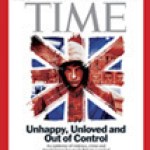
The cover story of the international edition of Time is about “Britain’s mean streets”. The article presents a litany of depressing statistics about children in Britain and why we now have so much violent street crime. One of the reasons we have so much bothersome street crime is the police’s attitude to it. Revealingly, Time reports that when a group of central London residents talked to the police about how to deal with a spate of attacks in the neighbourhood they were told: "Don't go out unless you have to"—which is hardly a solution to the problem. As Clive Davis writes--from personal experience--the attitude of the police to this kind of crime is all wrong.

The Carter clear out continues

Sam Coates flags up an article in PR Week which says that Stephen Carter is looking for a new speechwriter for Gordon Brown and is considering the position of Deborah Mattinson, Brown’s pollster. It seems that the re-Blairisation of Downing Street has now reached such a point that Carter is approaching Blair’s old speechwriters to see if they can be tempted back into the fold which is quite ironic considering how some of those being invited back were hardly Gordon’s biggest fans.

So much for Terminal 5 being the answer to BA’s problems

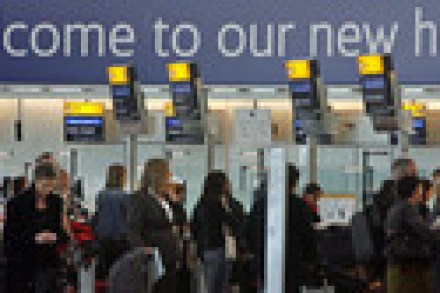
The opening day of Terminal 5 has been a PR disaster for British Airways. 34 flights have been cancelled and passengers can now only board if they do not check in any bags. In its defence BA is claiming that  “We always knew the first day would represent a unique challenge because of the size and complexity of the move into Terminal 5.” But if they knew that problems were so likely, why didn’t they start off with fewer flights? It really is incredible that on the first day they have had such dire problems. One would have thought that BA would have properly stress-tested everything before opening the terminal to the public. BA’s failure has left the company a laughing stock. But this is more than just BA’s problem.

Why Blair backed the Iraq war

Do read Steve Richards in The Independent today. He makes an interesting case that Tony Blair’s decision to support the war in Iraq was a result of political pragmatism not moralism. He also suggests that Blair might have thought that backing Iraq would position him perfectly to take Britain into the euro: "At some stage, Mr Blair wanted to fight a referendum on the euro. If he stayed close to the US on Iraq, he could never be accused of being anti-American and indiscriminately pro-European.”What Richards has also reminded us of, is just how crucial the position of the opposition will be if the Iran crisis reaches a point where the United States feels it has to take military action.

The smarter Bush doctrine

Over on Americano, I’ve just posted some thoughts on John McCain’s big speech setting out his foreign policy platform. Plus, there’s fascinating polling data on whether Barack Obama and Hillary Clinton are too liberal to be president.

The Tories need to get serious about Iraq

As Tim Montgomerie points out, it is a sad indictment of the Conservative party that the only time it seems to be able to get excited about Iraq is when it is calling for an inquiry into the war. Reading William Hague’s speech yesterday, one couldn’t help but notice the difference from his pre-war contributions, when his statements about WMD went far beyond what even the government was claiming and he was happy to throw around the term “appeasement”.

Islington schools fail their pupils

Pete's already posted on the thinking benhind Michael Gove's speech on school reform, but reading it one statistic jumped out at me and struck me as worth noting: “In the whole of Islington in the school year of 2006-7 not a single child took a GCSE in one of those sciences.” The failure of any school in Islington to put a candidate forward for physics, biology or chemistry GCSE is a disgrace. It effectively bars all of these students from applying for a whole variety of science-based courses at our top universities. Next time you hear a government minister prattling on about how universities should do more to broaden access, think of this statistic.

The new Labour faultline

For the Kremlinologists among us, Rachel Sylvester’s column on the ideological divisions between the old Brownites and the new recruits in today’s Telegraph is essential reading:  "The 'old Brownites' - including Ed Balls, Damian McBride and Ian Austin - are Labour tribalists who think the way to victory is through class war. Personally, they are laddish, football-loving street fighters. Politically, they are ruthless in the way they operate, demanding absolute loyalty (to Mr Brown, rather than to Labour) in return for favours. Having honed their skills creating dividing lines with Tony Blair, now they want to fight a highly personal campaign against David Cameron, portraying him as an Old Etonian toff.

More on Iran’s role in Iraq

Many of those who advocate for an early withdrawal from Iraq argue that Iran can be persuaded to play a constructive role there. But all of Iran’s actions suggest that it wishes to keep peace from breaking out in its neighbouring state. As General Petraeus told the BBC today:  “The rockets that were launched at the Green Zone yesterday, for example... were Iranian-provided, Iranian-made rockets," he said, adding that the groups that fired them were funded and trained by the Quds Force. "All of this in complete violation of promises made by President Ahmadinejad and the other most senior Iranian leaders to their Iraqi counterparts."  Iran is a state with hegemonic ambitions that is happy to use terrorist proxies to achieve its aims.

The world must not forget Tibet

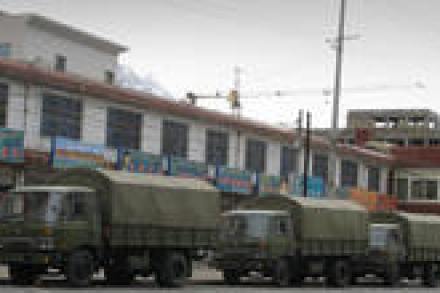
The New York Times has a great tick-tock on the riots in Tibet, it is the best thing I’ve read yet on what has gone on there these past few days. Intriguingly, the police initially backed away from confrontation with the protesters perhaps because of a desire to avoid reminding the world just what kind of regime China is ruled by so close to the Olympics. However, this Chinese passivity did not last long: “The Chinese authorities have also confirmed that army troops had arrived in Lhasa by March 15, saying their role was limited to traffic control and securing military property. But many people question if some of those troops were involved in the crackdown. Several armored vehicles had their license plates removed or covered in white paper. Mr.

Is the new Brown team compatible with the old one?

Gordon Brown’s new team at Number Ten have received rave reviews. Andrew Rawnsley in The Observer today points out how cabinet ministers who were in despair before Christmas have been given hope by the new Downing Street operation while Fraser has—in these pages—warned the Conservatives not to underestimate the new Brown machine. But this new Brown team can only work if it can come to an accommodation with the old Brown crew; something which Gaby Hinsliff’s masterful piece in today’s Observer suggests is some way off. If any of Brown’s new hires walk away before the election it will be seen as a sign that Brown is done for. As one senior government source told Hinsliff, 'Gordon can't allow Stephen to walk away, it would reflect on him.

The funding muddle

The issue of party funding is going to run and run with the parties still nowhere near an agreement on it. In an interview with the Telegraph today, Francis Maude makes an astonishing charge about the opaqueness of trade union funding for Labour: "It's a racket, there are two unions which declare more members paying the political levy than they have members." If Maude is right, then this is a huge scandal. The Tories, however, will never be on firm political ground on party funding while Lord Ashcroft’s tax status remains unclear. Maude tells the Telegraph he has “no idea” whether Ashcroft does pay tax in the UK and that Ashcroft’s tax status is a “matter for him.

The Tories should not let their caution on tax conceal the radicalism of their other policies

James Forsyth reviews the week in politics What a difference a poll lead makes. If Philip Hammond, the shadow chief secretary to the Treasury, had given an interview appearing to rule out tax cuts in a Conservative first term, when the Tories were behind in the polls or only marginally ahead, there would have been a full-scale revolt. To add fuel to the fire, Hammond talked about government storing up money in a ‘pot’ before giving it back — language which suggests that Hammond has forgotten whose money it is in the first place. But a YouGov poll showing the Tories with a 16-point lead which appeared on the same morning as the Hammond interview quelled any rebellion before it could get going.

Iran’s role in Iraq

This week’s Time has an important piece on Iran’s role in training, funding and arming the insurgency in Iraq. What one Shiite fighter told Time illustrates just how much Iran is responsible for the levels of violence in Iraq: “Ali's own training in Iran came in late 2005, when he says he and a group of roughly 14 other Iraqis drove to the southern city of Amarah, near the Iranian border. Everything had been arranged through contacts in Syria and Lebanon, where he and his group had fled for a time trying to avoid capture by American forces. According to Ali, a convoy of new sport utility vehicles with drivers speaking only broken Arabic was waiting for them in Amarah. Soon the group was on the road east for a five-hour drive.