James Forsyth

James Forsyth

James Forsyth is former political editor of The Spectator.

Will Williamson be moved from education?

14 min listen

Equalities minister Kemi Badenoch could replace Gavin Williamson as education secretary in the next reshuffle, according to reports today. Should he be moved, and how is he making his case for staying? Cindy Yu speaks to James Forsyth and Isabel Hardman.

The problems posed by booster shots

It is already known that there will be a campaign of booster shots in the UK this autumn to boost immunity among the over-50s. But it now looks like the government is planning one for autumn 2022 as well. Steven Swinford reports in the Times today that the UK has ordered 35 million doses from Pfizer for next year. The number of doses ordered suggests that the government wants to have the option in 2022 of giving a booster shot to everyone in clinical groups 1-9: the over-50s. Swinford reports that the government was prompted to act, in part, by the fact that the EU has already placed an order for 900 million Pfizer shots over the next two years. It seems likely that richer countries will go down the booster shot route in the coming months.

What’s wrong with grade inflation?

11 min listen

A record number of students got As or A*s in their A levels this year. After last year's fiasco, teachers were given the responsibility of grading their own pupils. Has leniency put less well-off kids at a disadvantage, and will the achievements of future students now look worse? Katy Balls speaks to James Forsyth and Isabel Hardman.

How deep is the Boris/Rishi divide?

12 min listen

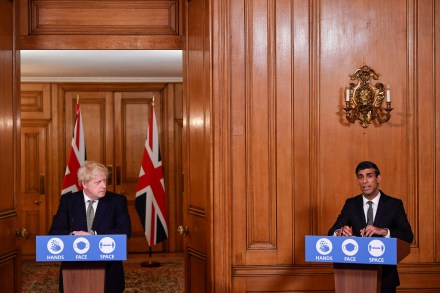
With the Chancellor's leaked letter to the Prime Minister (which apparently he'd never seen) showing some disagreement about COVID policy, is this an omen signalling a fracas to come over future spending plans?

Will a Scotland ‘love bomb’ woo voters?

14 min listen

Boris Johnson and Nicola Sturgeon seem to be battling for the position of most amiable leader. The First Minister invited Johnson to meet with her on his visit to Scotland, but the PM politely declined, instead inviting Sturgeon to a more formal meeting of devolved administrations. The Prime Minister's visit to Scotland is part of a wider plan to soften support for independence. Will a 'love bomb' work? Katy Balls speaks to James Forysth and James Johnson, co-founder of polling firm JL Partners and former pollster at No. 10.

The China challenge has no precedent

The US has never been more worried by the rise of China than it is today. In my Times column today, I mention a new book by Joe Biden's China director on the National Security Council which sets out why ‘China now poses a challenge unlike any the US has ever faced’. Rush Doshi notes that American hegemony has been based, in considerable part, on its economic might. In the second world war, Germany and Japan combined did not reach 60 per cent of US GDP. Throughout the Cold War, the Soviet Union failed to hit this mark. Yet, China passed it seven years ago. The book sets out how China is attempting to replace the US-led world order with its own system, and how the US should try and counter this. It highlights that great power competition is very much back.

Will Johnson’s mining misstep cost him?

10 min listen

The Prime Minister joked yesterday that thanks to Margaret Thatcher closing coal mines, the UK 'had a big early start and we're now moving rapidly away from coal altogether.' Is this typical Boris, or has he misread the room? Isabel Hardman speaks to Katy Balls and James Forsyth.

What if Covid was leaked?

9 min listen

US intelligence agencies are combing through reams of documents from the Wuhan Institute of Virology, according to reports from CNN, which could provide a vital indication as to whether Covid was leaked. What would be the repercussions if it was? Katy Balls speaks to James Forsyth and Isabel Hardman.

Boris shouldn’t rise to the SNP’s bait

The debate over Scottish independence has gone rather quiet since the Holyrood elections in May. Boris Johnson is visiting Scotland this week without the issue dominating. But, as I say in the magazine this week, the issue is likely to return to the fore this autumn. Sturgeon is on the verge of doing a deal with the Greens which would give her government an absolute majority in the Scottish parliament. Armed with this, and given her activist base is increasingly impatient, she may move to introduce an independence bill this autumn. This would be a deliberate provocation. The constitution is a reserved matter – and it is very hard to see how the Scottish parliament could legally bring about a second independence referendum.

Don’t pick a fight with the SNP

Since the Holyrood elections in May, the campaign for Scottish independence has been noticeably quiet. But that is about to change. This autumn Nicola Sturgeon will try to push the issue to the top of the agenda once again. The expectation in Edinburgh is that Sturgeon will soon unveil a governing agreement with the Greens, which would give her pro-independence government a formal majority in the Scottish parliament. With that under her belt, and with her activists increasingly impatient for action, she may move to introduce an independence bill. This would be a deliberate provocation. The constitution is a matter for Westminster — and it is very hard to see how the Scottish parliament could legally bring about a second independence referendum.

Why has Boris snubbed Sturgeon?

10 min listen

Boris Johnson is visiting Scotland today, but has declined an offer from Nicola Sturgeon for a meeting. Why doesn't the PM want to meet with the First Minister, and, after a period of relative quiet, is independence back on the agenda for Sturgeon's government? Katy Balls speaks to James Forsyth.

Why are 16-year-olds being given a vaccine?

10 min listen

Nicola Sturgeon said she expects that the Joint Committee on Vaccination and Immunisation will soon be recommending that those aged 16 and above will be offered a vaccine. Is this an acceptance that vaccine certificates and Deliveroo discounts aren't enough to reach herd immunity? Isabel Hardman speaks to Katy Balls and James Forsyth.

NHS app tweaked to slow pingdemic

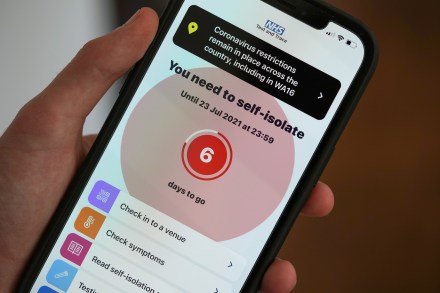
Mobility data suggests that public behaviour hasn’t changed much since 19 July, so-called ‘freedom day’. One suspects that part of the reason for this is fear of being ‘pinged’. Jeremy Hunt, the former health secretary and chair of the Commons health committee, a fortnight ago called for the double vaccinated to be excused from self-isolation if pinged (this change is only due to happen from the 16 August). Hunt warned that without that, ‘social consent’ for the app might be lost as so many people are forced into isolation. Other Tory MPs have privately argued that the app should be made less sensitive. Today, the government has announced that the app will be tweaked so that fewer contacts will be told to isolate.

Boris Johnson’s popularity problem

15 min listen

In a ConservativeHome poll on who should replace Boris Johnson, Rishi Sunak came out on top. It comes as the Chancellor is reportedly pushing the PM to relax travel restrictions. Is this a problem for No. 11? Cindy Yu speaks to James Forsyth and Katy Balls.

Should Britain boycott the Beijing Winter Olympics?

15 min listen

Team GB has had a brilliant start in Tokyo - can the government learn lessons on how to pick and nurture talent? And looking to the Beijing Winter Olympics in 2022 - which foreign secretary Dominic Raab said he is 'very unlikely' to attend - should Britain boycott them? Katy Balls speaks to James Forsyth and Sebastian Coe, president of World Athletics and member of the International Olympic Committee.

NHS delays could derail Boris’s re-election campaign

What is the biggest single threat to the Tories being re-elected? The NHS waiting list, I say in the Times today. Already more than five million people are waiting for routine hospital treatment in England. Sajid Javid has warned that this number could rise to 13 million — which would be one in four of the population. Simon Stevens, the just-departed head of NHS England, has warned that this waiting list could take three years to clear which takes you right up to the next election. For Labour, the backlog list offers the easiest and most comfortable of attack lines: 'You can’t trust the Tories with the NHS'. If millions are stuck waiting for treatment, this line will have huge resonance.

What’s the point of the ‘amber plus’ list?

10 min listen

A row is brewing with France over the government's decision to put the country on an 'amber plus' list, where restrictions on quarantine are tighter. But the reasoning for this has been ill-communicated by the government - is the measure worth the trouble? On the podcast, Katy Balls summarises the reasons for a backlash succinctly: 'It's frustrating not just for those who've booked holidays to France... but also to the travel industry, because obviously they're trying to play by a set of rules that you think you understand, and then all of a sudden a new category exists' We also discuss Keir Starmer's call for the government to move the August 16 date - when double-jabbed people will no longer have to isolate if they are pinged - forward.

Is there a ‘cunning plan’ behind vaccine passports?

12 min listen

With over two thirds of young people now vaccinated, does the messaging on how to reach the final third need to shift? And are the government putting the cart before the horse by hinting that vaccine passports are more about coercion than safety? And finally are we in for another turbulent exam season? James Forsyth speaks to Katy Balls.

The problem with not vaccinating teenagers

In the last week, the number of people testing positive for Covid has dropped by 36 percent. A fall in cases following the final stage of unlocking was not what most models had predicted. There are several possible causes for this, including people adjusting their behaviour to avoid being pinged. But one significant factor is that schools in England are now out for summer. When schools do return in September, cases will likely rise. But with an ever-greater percentage of the population vaccinated, this shouldn’t cause too many problems. And the end of classroom bubbles means that whole classes will no longer be sent home just because one pupil tests positive. Life will be far less disrupted.

Should Britain be vaccinating teenagers?

Last week there was acute concern in government about the country’s re-opening. Would restrictions need to be reimposed when schools return in September? Ministers fretted. But those nerves have now been replaced by cautious optimism. Case numbers have been falling for a week straight and it increasingly looks as if this wave has peaked. No one in Downing Street wants to declare mission accomplished. What will happen to the numbers when people’s fear of being ‘pinged’ by Test and Trace eases and they start to socialise more? Cases need to be falling consistently between now and schools returning. Privately, scientists are stressing risks remain. They warn that there is still a danger of another wave with a bigger peak than this one.