James Forsyth

James Forsyth

James Forsyth is former political editor of The Spectator.

In the magazine this week

From our UK edition

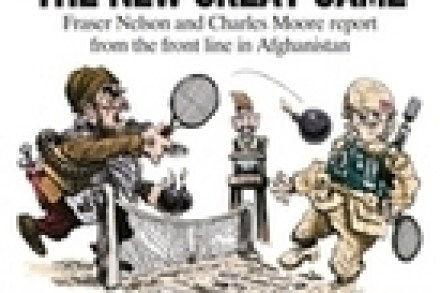
Fraser Nelson and Charles Moore report from Afghanistan. Rod Liddle explains how Britain can win Eurovision. Irwin Stelzer previews the US election and Bryan Forbes asks when did we start treating all motorists like criminals? In the books section, Magnus Linklater assesses Hugh Trevor-Roper’s posthumously published book on the invention of Scotland. Also do read Leo McKinstry’s review of Patrick Bishop’s first novel. At the back of the book, Deborah Ross gives her verdict on The Sex and the City movie and Stephen Pettitt celebrates a new wave of masterful British productions.

Not the headline the government wants right now

From our UK edition

This is the story leading The Guardian web site: House prices: Nationwide reports fastest fall since 1991 Nationwide are reporting that house prices fell 2.5 percent month on month and the price of the average home has dropped 4.4 percent compared to last year. (To put that in perspective though, the average house price is still 10 higher percent than they were in 2005).

Labour pains | 29 May 2008

From our UK edition

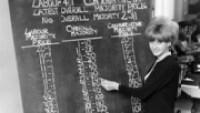
Guido flags up David Hencke’s story in The Guardian which reveals that Labour has only five weeks to find £7.45 million to pay off bank loans and money owed to some of the donors recruited by Lord Levy. Just to compound the problem, if Labour can’t find the cash then various individuals—including Gordon Brown and Harriet Harman—could find themselves personally liable for the party’s debts.

The spokesman’s revenge

From our UK edition

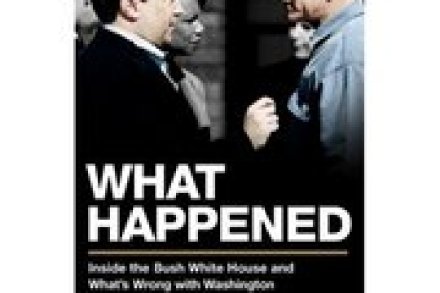
Scott McLellan was an awful White House press secretary. As you watched him get beaten up day after day by reporters you couldn’t help but feel sorry for him. He was a Bush loyalist promoted way over his head. When McLellan stepped down in April 2006, few expected to hear much more from him. But his new memoir has rocked Washington. In it, he criticises the Iraq war, complains that Scooter Libby and Karl Rove worked out their stories together about the Valerie Plame leak, is scathing about Condi and suggests that President Bush did take cocaine as a young man. (The Politico has the full scoop) Many are speculating about why an apparent loyalist like McLellan has written such a harsh book.

Remembering Frank

From our UK edition

Clive has a nice little musical tribute up to mark the tenth anniversary of Frank Sinatra’s death—and no, it is not someone singing My Way. Do check it out.

Bin Laden’s No. 2 believed he could secure political asylum in London for his supporters

From our UK edition

Lawrence Wright's essay in The New Yorker on the ideological divisions within the Islamic extremist movement from which al Qaeda emerged is essential reading. It really is long-form magazine journalism at its very best. One anecdote in it is particularly interesting from a British perspective. Zayyat reports that Zawahiri called him in March of [1997], when Zayyat arrived in London on business. “Why are you making the brothers angry?” Zawahiri asked him. Zayyat responded that jihad did not have to be restricted to an armed approach. Zawahiri urged Zayyat to change his mind, even promising that he could secure political asylum for him in London. “I politely rejected his offer,” Zayyat writes.

Darling indicates that a government u-turn on fuel duty is coming

From our UK edition

On The World at One this lunchtime, Alistair Darling strongly hinted that the government is preparing yet another u-turn; this time over the planned 2p rise in fuel duty. "I will return to the issue nearer the time - I will take into account what is happening in the oil market and see what is best to help out families and businesses. "I fully intend to come back to that before October.” I’m beginning to lose count of the number of climb downs that the Brown has been forced into since becoming Prime Minister. But I’d wager that it is a record number for a PM in his first year in office, a time when his political position is meant to be strongest.

Brown can look in The Mirror for advice

From our UK edition

Kevin Maguire was widely tipped to be Gordon Brown’s Alastair Campbell but in the end the Mirror man stayed at his paper rather than heading to Downing Street. His columns, though, have always been fairly supportive of the Brown government which is what makes his piece today—“Gordon Brown must make sweeping changes”—so interesting. Maguire wants Brown to dump a whole bunch of policies including the planned 2p increase in fuel duty, ID cards and 42 day detention.

Brown’s attempt to pour oil on troubled waters will fail

From our UK edition

Gordon Brown wants you to blame somebody—anybody—else for the rise in the price of fuel. So, this morning he takes to the pages of The Guardian for some OPEC-bashing hoping that aggrieved motorists will curse this cartel rather than Brown when they see how much it costs to fill their tank. Later today, Brown and Darling, who rumour suggests is rather fed up with his next door neighbour, will meet with oil industry chiefs in Aberdeen. As Michael Millar points out over on Trading Floor, nothing productive is likely to come out of this meeting. But Team Brown hopes that it will provide the public with someone else to blame for the pain at the pump. Back in the day, Brown’s transference tactics might have worked.

Forward to the past | 28 May 2008

From our UK edition

When the planes flew into the Twin Towers many rushed to declare it the end of the end of history. But it was not. All the plans that emerged immediately afterwards about how to remake the Middle East were premised upon the assumption that history was at an end; that the world was moving inexorably towards liberal, market democracy. Indeed, al-Qa’eda’s nihilism appeared to prove that in the war of ideas, democracy’s dominance remained unchallenged. It seemed that the 9/11 attacks, far from marking the end of the end of history might actually have speeded its arrival. Today, though, the world looks starkly different. For the first time in a quarter of a century, democracy is on the back foot and facing a serious ideological challenge.

Ken’s friend Qaradawi is no moderate

From our UK edition

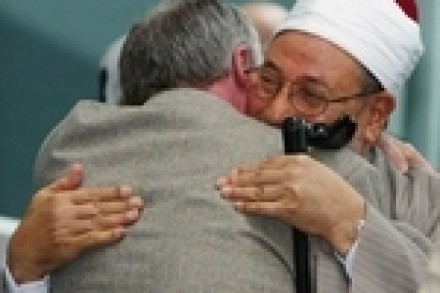
One of the many good things about Ken Livingstone’s defeat in the London mayoral election is that Islamic extremists will no longer be feted at City Hall. One person who should never have been invited and praised by the Mayor was Sheikh Yusuf al-Qaradawi, who was not—as Livingstone claimed—someone “who preaches moderation and tolerance to all faiths throughout the world" but a preacher with vile views. Stephen links to a review, which I’d thoroughly recommend, of Qaradawi’s book which shows just how wrong Livingstone was about him.

Obama’s running mate, McCain’s Iraq gambit

From our UK edition

Over on Americano, thoughts on the VP candidate who might tip the scales in Obama’s favour and an explanation of what McCain is up to with his suggestion that he and Obama go on a trip to Iraq together. Plus, a link to some video of a more relaxed Hillary Clinton on the campaign trail—she’s having a beer and a dance in Puerto Rico.

Brownism defined

From our UK edition

Tom Bower, who wrote a rigorously researched and extremely critical biography of Gordon Brown, delivers a devastating summing up of Brown’s record to date in today’s Evening Standard: "Thatcherism and Blairism were easily defined but what exactly is Brownism? Obsessed that the state knows best, Brownism can best be described by its dubious achievements: record taxation, hyper-regulation, the biggest debts in Europe, the destruction of private pension schemes, post office closures, appalling public transport and a looming energy crisis.

Straw breaks his silence

From our UK edition

Jack Straw has emerged from his self-imposed purdah to offer his support to Gordon Brown on The World at One. Straw declared "I'm absolutely convinced that Gordon Brown is the very best person to lead the Labour party and the government through these difficulties and beyond." He went on to say that, "Nothing that has happened has changed my view that he is the best man for the job" (which makes me think that Straw holds his colleagues in rather low regard). Just in case he hadn’t sufficiently reassured the Brownites who have been so enraged by his silence, he concluded: "There is no contest, there will be no contest and neither should there be."We have a powerful leader".

Brown 6/4 to go before the next election

From our UK edition

William Hill have just sent through their latest odds on Brown’s prospects. Brown is 6/4 to go before the next election 7 to 2 to leave this year 15/8 to be replaced in 2009 11/10 to go in 2010 The small odds on Brown going before the next election suggest that the punters are more bearish on Brown than the pundits. I suspect that, if you don’t mind your money being tied up for so long, the value bet might be on Brown going in 2009. If the party get absolutely slaughtered in the European and local elections on June 4th then Labour MPs might decide that, to save their own skins, they have to sacrifice their leader.

Brown needs to look at his fuel gauge

From our UK edition

The Mirror and The Sun both devote their lead editorial to arguing against the planned rise in vehicle excise duty and the rising cost of fuel. The Mirror—which is the one reliably pro-Brown paper in Fleet Street—leader will cause particular concern among jittery Labour MPs. It warns that the “rebellion…has the potential to be more damaging than the row over the 10p tax rate.” It urges Brown to “act now, signal that a 2p rise in fuel duty will not go ahead and make clear he is listening on vehicle excise duty.” 42 days and the vehicle excise duty revolt will give us our first guide to how much Brown’s authority among his backbenchers has been diminished by the triple-whammy of bad election results.

The Cruddas manifesto

From our UK edition

Jon Cruddas, the Labour backbencher who came third but with the most first preference votes in last year’s deputy leadership contest and is tipped by many as a good outside bet to be the next Labour leader, has an interesting piece in The Independent this morning. He argues that the calls for an instant change of leader are misguided but contends that Labour can’t carry on with the same set of policies.  These are what Cruddas would like to see as the new set of dividing lines between Labour and the Tories: “Where the Tories would rely on market forces to bring down living costs, Labour can enforce fairer prices.

Gordon’s problems have come from trying to be too flash

From our UK edition

Jackie Ashley’s column in The Guardian today shows just how downhearted those who yearned for a Brown premiership now are. It is an admirably frank piece. One point in it, though, needs rebutting. Ashley rather dolefully writes that:    When one looks at the success and popularity of Boris Johnson in London, it seems obvious that Brownites underestimated the importance of style and swagger, certainly humour, in this celebrity and television-driven age. We thought people might find a non-flashy, dour, rather private man a refreshing change. We were mistaken. This view that somehow the public are to blame for wanting a celeb-PM doesn’t tally with the facts.