James Forsyth

James Forsyth

James Forsyth is former political editor of The Spectator.

Another Budget u-turn

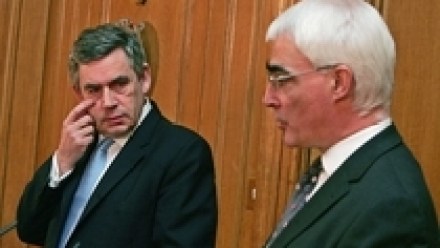
Alistair Darling’s Budgets really should come with the words “subject to change” stamped across them. Darling has just done another u-turn, postponing the 2p rise in fuel duty. (In the Budget he announced that he was delaying its imposition until October, he has now delayed again.) Darling’s quote explaining why he has done this is classic: "Today's decision will help motorists and businesses get through what is a difficult time for everyone." Indeed, Chancellor. The Labour party clearly feared how the public would react to a further hike in the price of petrol. Given the money being funnelled to the victims of the abolition of the 10p tax band and today’s delay, the public finances are going to be in an even worse state than expected.
Position perfect

David Cameron’s interview in The Guardian this morning once again demonstrates his skill at political positioning. By citing Barack Obama as the inspiration for his call for people to take responsibility for their own actions, Cameron is moving to ensure that his message is not seen as old-fashioned Tory moralism but rather associated with the hippest brand in politics today. Indeed, both Brown and Cameron have been keen to agree with Obama’s rhetoric on this. Labour is still underestimating Cameron, though. As this dismissive quote suggests: "What does he want to do, tell fat people they are not entitled to treatment on the NHS?" one senior minister said.

Nudge, nudge: meet the Cameroons’ new guru

The economist Richard Thaler — a favourite of the Cameron and Obama camps — talks to James Forsyth about the power of ‘nudging’: small transformative acts of persuasion No one likes to be pushed, prodded or shoved. But no one objects to a nudge in the right direction. The idea that people can be nudged into making better choices is the brainchild of Richard Thaler and Cass Sunstein, two whip-smart University of Chicago academics. The two professors see nudging as the ‘real third way’, an alternative to both government regulation and laissez-faire liberalism. The idea is the new big thing; the two politicians of the moment — Barack Obama and David Cameron — are both keen on it.

The Mail calls for Smith’s head

The Daily Mail sets about Jacqui Smith in its editorial today. It declares that: “This sorry little cameo only confirms that this Home Secretary is so hopelessly out of her depth that she makes a predecessor such as Charles Clarke seem like a Colossus. Surely, amid rising violence and mayhem in the streets, the public deserves better.” Now, The Daily Mail falling out with a Labour Home Secretary is not that surprising. But considering the influence that The Mail has on Brown, this editorial will give Jacqui Smith a nervous moment or two. I still think, though, that Brown will be loathe to move the most senior female member of his team; particularly, as there is no other obvious female candidate for promotion to a top job.

It is not Shahid Malik’s willingness to meet the Moonies that should worry us most

Paul Waugh’s scoop about Shahid Malik agreeing to chair a meeting held at the Commons by the Moonies suggests that Malik—or his staff—should do a bit of research before agreeing to things. But far more worrying is what Dean Godson reveals in The Times this morning about Malik’s desire to attend Islam Expo even after Hazel Blears had ruled that it was inappropriate for any Minister to attend because of the platform being offered to those with extreme views: "Shahid Malik, MP for Dewsbury, had other ideas and sought to attend in a personal capacity.

McCain’s Commander in Chief advantage

Barack Obama holds most of the aces in this presidential campaign. His supporters are more enthusiastic than McCain's, he is out fund raising his opponent and he can control the news agenda almost at will. But McCain still has one significant advantage that is keeping him in with a chance: Americans are far more comfortable with him as Commander in Chief than Obama. The numbers from the latest ABC / Washington Post poll illustrate just how sizable McCain’s advantage is on this front: Would McCain be a good Commander in Chief? Yes: 72% Would Obama? Yes: 48% To be sure, Obama has a chance to close this gap during the campaign. Being seen in a variety of Commander in Chief settings is going to make him look like a more plausible president.

Brown needs to serve up some policy beef to the electorate

One of the big puzzles of the Brown premiership is the complete absence of policy innovation. There was a belief among both Brown’s critics and supporters that he would wheel out a whole set of big ideas in his fist year in office. But now I doubt that most people could name off the top of their heads a genuinely innovative policy that he has championed as PM. Rachel Sylvester, essential reading as always, turns her attention to this subject in her column today.  Having gone through the leadership’s policy submission to the Labour National Policy Forum, Sylvester writes that: “The only new policy that I could spot in more than a hundred pages was the suggestion that all schools should be sent a copy of Al Gore's film on the environment, An Inconvenient Truth.

Vive la France

Bastille Day always reminds me of how jealous I am of the French national anthem. La Marseillaise is a splendidly, rousing song. There is nothing quite like hearing a crowd belting it out with passion. This scene in Casablanca when Victor Lazlo leads Rick’s Cafe Americain in a stirring rendition of it is, to my mind, one of the finest scenes in cinema.

Railing against the system

Train travel in this country can be pretty awful, especially on the weekends. But it is still shocking to read Andrew Gilligan’s account in today’s Evening Standard of his journey from Birmingham to London: “I was physically assaulted, called a f***ing c*** and a prick, and left stranded after the last train back to London had gone. The person who did all this was not a mugger or a hooligan, or even one of my political enemies, but a member of staff of Virgin Trains.” Gilligan had caused such a ruckus by trying to take his bike on the train without a specific reservation, hardly a hanging offence and something that could have been accommodated without any inconvenience being caused to any other passenger.

Who does Cameron want sitting round the Cabinet table?

Considering the amount of chatter there is about a possible Tory reshuffle, Philip Johnston’s Telegraph column is a good reminder that the skills that make someone a good opposition spokesman are quite different from those that make a good Cabinet Minister. As Johnston points out only one of the shadow Cabinet have been in an actual Cabinet—William Hague as Welsh Secretary—so it is hard to know who might or might not make a good minister. But considering this is probably the last planned reshuffle, Cameron will do before the next election he is bound to be thinking about this. One move that might be prompted by this thought is shuffling Chris Grayling from shadow Work and Pensions to Party Chairman.

Protecting free speech

The American press is significantly freer than the British one because of the free speech guarantee enshrined in the First Amendment. In the US unlike in the UK, the burden of proof in libel cases is on the plaintiff not the defendant; making it far harder for the powerful to use the threat of libel actions to silence the media. However, there has been an increasing trend for people to indulge in so-called ‘libel tourism’, suing American authors and journalists in English courts. Senators Specter and Lieberman are proposing a legislative remedy to this problem: "Our bill bars U.S. courts from enforcing libel judgments issued in foreign courts against U.S. residents, if the speech would not be libelous under American law.

Inflation the highest it has been since 1992

Last week, the Bank of England held interest rates at 5 percent because inflation, as measured by the Consumer Price Index, was 3.3 percent—above the Bank’s 2 percent target. Today’s Daily Mirror reports that the CPI will rise to 3.6 percent—the highest it has been since 1992—when new figures are announced on Tuesday. The Mirror also claims that its own Cost of Living Index shows that the ‘real rate’ of inflation is 18.53 percent. One can question the economic accuracy of the Mirror’s number. But there’s no doubt that the rise in prices has been dramatic. The Mirror notes a 30 percent rise in fuel costs, a 14 percent increase in food prices with bacon up an incredible 43 percent and a 4.3 percent rise in household bills.

Obama talks God

Obama supporters hope that his comfort in talking publicly about his religious beliefs will both help Obama bridge some of the cultural gap that separates him from large chunks of the electorate and help him make inroads into the evangelical vote. This strategy suffered a huge blow with the Revered Wright affair which tied Obama’s faith up with a divisive, racialist world view; the new Newsweek poll shows that almost a third of voters state that Wright might stop them from supporting Obama. However, the Obama campaign clearly believes that talking about religion is still sensible politics. In this week’s Newsweek, Obama talks about how often he prays, his Bible reading habits and what he tells his children about faith.

The two sides to fighting crime

‘Tough on crime, tough on the causes of crime’ is one of the great political soundbites. Sadly, though, Tony Blair’s government never managed to put both parts of into action. Any long term solution to the current spate of violence is going to require us to do both simultaneously. I’d urge all Coffee Housers to read Minette Marrin in The Sunday Times, who deals with the later part, and Alasdair Palmer in The Sunday Telegraph, who addresses the former. Minette Marrin makes the essential point that the social contract breaks down when people feel that they have no stake in society: “Morality depends on having something to lose. It isn’t just a matter of learning right from wrong, least of all in a post-religious society.

The US, Israel and Iran

There has been a lot of speculation in recent weeks that Israel was stepping up its preparations to strike Iran’s nuclear facilities. But Jim Hoagland, The Washington Posts’s foreign affairs commentator, suggests that the Americans have persuaded the Israelis to back away from the military option to give coercive diplomacy another chance: “The most significant indication of that change comes from strong U.S. public and private pressure on Israel to forgo military strikes while Washington seeks new U.N. economic and travel sanctions against Tehran. Neither government will confirm that such pressure was exerted. Bush hates to say no to Israel, and he and Olmert do not want Iran to think that it now has a free hand on enrichment. But diplomatic and U.S.

Another big Tory poll lead

The latest YouGov poll for The Sunday Times shows no change in the Labour and Tory numbers—the Tories are still 22 points  ahead, 47 to 25. The good news for the Tories is that the longer this lead remains stable, the more voters will adjust to the idea of a Tory government. The leadership speculation is relatively muted this weekend. In his Telegraph column, Matt pours some cold water over the idea that Brown might face a serious challenge soon: "To return to the PM's question: what does his survival tell us? First, that the Labour party are a bunch of wimps. Boy, they all talk the talk about getting rid of Mr Brown. Do they ever.

Poll has Labour 14 points ahead in Glasgow East

Gordon Brown’s effort to give up biting his nails just received a boost with the release of an ICM poll of Glasgow East which shows Labour 14 points ahead, 47 to 33 ahead of the SNP. This poll will create a strong expectation that Labour will hold the seat and probably put a stop to—or at least reduce—speculation about a challenge to Brown following a defeat here. However—as Anthony Wells points out—polling a constituency like Glasgow East is a phenomenally difficult task. It is also worth noting that the SNP has almost doubled its support in the seat since the last election which suggests that things will tighten further as the campaign goes on.