James Forsyth

James Forsyth

James Forsyth is former political editor of The Spectator.

The personal is now the political

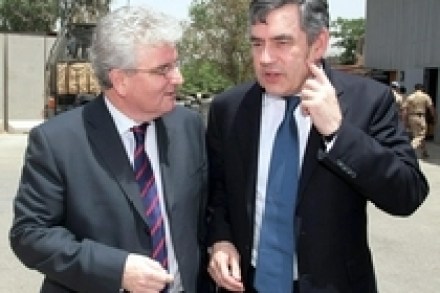
Whether Gordon Brown survives or not is going to turn on the question of how many Cabinet ministers—if any—are prepared to tell Brown that he must go or they will. Brown’s personal standing with his colleagues is now key to his future. So, it was fascinating to see that it was Des Browne who was sent onto the Today programme, and the other morning shows, to gamely try and spin last night’s result. Browne has been appallingly badly treated by his near namesake. First of all, Brown lumped responsibility for the Scottish Office on Browne despite the fact that Browne was Secretary of State for Defence at a time when Britain was engaged in two wars. Second, the PM went to Iraq during the Tory conference and announced a troop withdrawal.
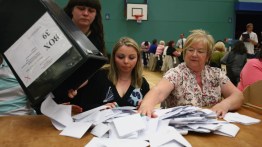
Labour in crisis: Brown’s leadership is now Topic A

Labour’s loss of Glasgow East will put rocket boosters under the speculation about Gordon Brown’s future. If Labour under Brown can’t win in Glasgow East, where can it win? MPs are now away from Westminster which makes plotting more complicated. But after this result, various Labour MPs are going to be seized by—to borrow a phrase—the fierce urgency of now. If Labour’s 25th safest seat can be lost to a three figure majority, then you can count on your fingers the numbers of Labour MPs who can have total confidence about keeping their seat. Even if Brown survives the summer, tonight’s result guarantees that leadership speculation will be a major factor at the Labour conference. What the plotters do not have yet is a candidate.

Labour in crisis: Union boss tells Brown to declare Blairism dead

Tony Woodley, the joint general secretary of Unite, has an op-ed in Friday’s Guardian demanding that Gordon Brown declare that “Blairism is dead”. Woodley claims that “Brown has one last window of opportunity. Face down the Blairites within. Clear the apologists for the big bonus brigade out of the cabinet and make Labour once more the party for state intervention for social justice.” Now, it is no surprise that Woodley—who is a long standing opponent of Blairism—is calling on Labour to move to the left. But given Labour’s current difficulties both electoral and financial, Woodley’s words matter more than they did in the past.

SNP: “We have had a very good day in Glasgow East”

The coverage is increasingly tilting to the idea that the SNP has pulled off a remarkable upset in Glasgow East. The SNP MPs being interviewed are sounding confident while the Labour MPs are on the defensive. I’ll now be surprised if Labour hold on. For the record, turnout was 42.5 percent.

Crick: Glasgow East wil be “very, very, very close”

On Newsnight just now, Michael Crick—who is at the count in Glasgow East—reported that the result is going to be very close. The Guardian is reporting a rumour that the SNP has won. If Labour has lost its 25th safest seat, then Gordon Brown is in even bigger trouble than we thought.

Not up there with Kennedy or Reagan’s but Obama’s Berlin speech did its job

‘Politics stops at the water’s edge’ is one of the most frequently invoked rules in US politics, so giving a campaign speech overseas carried a risk for Obama. However, he carried it off fairly well and his campaign will have been delighted by the visuals; the paean to America with which he ended the speech was pitch-perfect for campaign ad. The Obama campaign’s decision to start the speech with the Berlin airlift was astute as it allowed Obama to praise the city he was speaking in and deploy some good old fashioned anti-Communist rhetoric. Indeed, several times Obama flicked at phrases from the great Cold war speeches that Kennedy or Reagan delivered in Berlin.

A failing mark

Liz Brockelhurst, who marked Key stage 2 papers for a decade, has done a great piece for the magazine this week on the marking process for Sats. She points out that the “marking process itself was also dictated by idiotic rules, designed to help children scrape through.” Two of the examples that Liz gives, illustrate just how rigged the whole mark scheme is:  “And if the child wrote the correct answer, but then, on second thoughts, decided it was wrong and crossed it out, the crossing-out still gained the mark. On one paper this was carried to ludicrous extremes. A child had written an answer in pencil but then rubbed it out so I had not awarded any mark.

The People’s Party

MPs who return from canvassing in Glasgow East are full of talk about the broken society or the challenges of urban regeneration, depending on which party they belong to. But Kevin Maguire rather wickedly reports that the Labour deputy leader had a very different experience: “To the Glasgow East by-election, where Labour foot soldiers swap stories of a 90-minute state visit by Hattie Harperson. The multitasker was directed to a swanky road in the deprived constituency where detached houses nudge a million quid each. Up the gravel drive she went, past the new 4x4s, to canvass. Twenty minutes later she returned. What did Hattie discuss with the owners? Tax credits? Jobs? Schools? Err . . . showjumping.

A breathtaking mix of incompetence and inertia

The minutes of the Qualifications and Curriculum Authority board meeting on the 21st of May have just been published and they show a complete failure by the board to engage with the Sats crisis. This meeting occurred just after David Laws, the Lib Dem education spokesman, had questioned Ed Balls in the Commons about the “shambles that we have seen over the past couple of weeks in the marking of 1.2 million key stage 2 and key stage 3 test papers”. But the minutes record that David Gee, the acting managing director of the National Assessment Agency, informed the board that:  “the school experience had been good; that there had been no criticism on the content of the tests; and that process changes were implemented this year to reduce burden on schools.

How reform-minded Labour MPs should convince the party to topple Brown

If I was a reform-minded Labour MP trying to persuade my like-minded colleagues to move against Gordon Brown, these are the arguments that I would deploy: Things are as bad as the polls suggest: The latest ICM poll (which Pete blogged earlier) has the Tories on 47, twenty points ahead of Labour. Electoral Calculus predicts that on a crude swing this would lead to a Tory majority of more than 200. People tend to discount these numbers as traditionally the incumbent party recovers as the campaign goes on, as the election moves from being a referendum on the government to a choice between the parties.

Will Brown lose the Obama PR war?

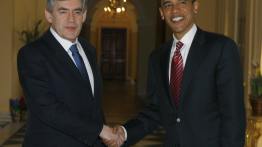
One could almost feel sorry for Gordon Brown on reading that Barack Obama will meet Tony Blair in London on Saturday morning. Blair excels at this kind of grip and grin occasion and one can easily imagine footage of Obama and Blair beaming at the cameras as Obama pays tribute to Blair’s work in the Middle East. Poor old Gordon won’t be able to compete on the star power front. To make things worse, as Obama is doing a solo press conference outside Number Ten’s famous front door, Brown could end up on the cutting room floor before the evening news is broadcast in the States. If this happens, news of this humiliation will race back across the pond.

Guess who didn’t come to dinner

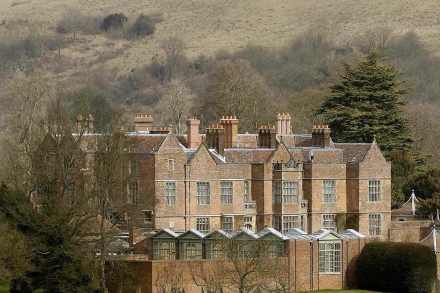
Downing Street has just released the names of all those who have received official hospitality at Chequers. Most of the Cabinet are on the list but there are some notable omissions. It is rather surprising that the Chief Whip and the deputy leader of the Labour party have not been entertained at the PM’s country residence. While Douglas Alexander’s omission lends credence to the rumours that the International Development Secretary’s role in letting the speculation about an early election get so out of hand has seen him expelled from Brown’s inner circle More worrying, though, is that at a time when the country is fighting two wars, neither the Foreign Secretary nor the Defence Secretary have been officially entertained at Chequers.

How can Obama say that, knowing what he knows now, he would still have opposed the surge?

Only someone wearing ideological blinkers could claim that the surge has not transformed the security situation in Iraq and provided the space necessary for political progress. So, it is depressing to see Obama claiming that - even knowing what he knows now, and after seeing the progress in Iraq at first hand, and being briefed by General Petraeus - he still would have opposed the surge if he had to go back in time and make the decision again (see video below). Indeed, Obama’s answer to this question displays his Bush-like quality of refusing to allow the changing facts on the ground in Iraq to influence his thinking. Rather than admit that the counter-insurgency strategy has worked.

Balls forced to face Parliament

The Speaker has ordered Ed Balls to the Chamber to answer questions about the whole Sats debacle. The question is who will enjoy watching Michael Gove skewer Balls more, Tory MPs or Balls’s enemies on the Labour benches.

There’s been a cock-up and Balls should take responsibility

One of the more disgraceful aspects of the Sats scandal is Ed Balls’s attempt to deny all responsibility for the fiasco. Michael Gove rightly roasts Balls for this in The Guardian this morning: “Balls is keen on accountability when it suits him. He has used the power of his office to harry successful faith schools and to name and shame those schools the prime minister calls "failing". We have been concerned that some of the faith schools were unfairly smeared and the blanket condemnation of 638 schools didn't help those on the path to improvement. But if he wants to operate in that sort of fashion, he must expect that he will be held similarly accountable.

Anthony Browne joins Team Boris

Anthony Browne, the director of Policy Exchange, is going to work for Boris Johnson as the Mayor’s policy director. This means that the job of running the most influential think tank on the centre-right is now up for grabs. Given Policy Exchange’s influence on the Tory leadership—James O’Shaughnessy went from being head of research at Policy Exchange to being head of policy for the Tories, and many of the party’s best ideas have their origins in a Policy Exchange pamphlet—there will be intense interest in the Westminster Village in who gets the job.

Obama and Brown

At some point, dire poll ratings begin to undercut a Prime Minister’s standing on the international stage as other leaders decide that there’ll be a new PM along soon so there’s no point in investing that much in the relationship. Gordon Brown appears to have already reached this point if Barack Obama’s comments are any guide. Here’s what Obama said in an interview broadcast on Sunday: “The objective of this trip was to have substantive discussions with people like President Karzai or Prime Minister Maliki or President Sarkozy or others who I expect to be dealing with over the next eight to ten years.

It’s time we were told all about ETS

One of the things that has come out in the Sats scandal is how there was a complete failure to do due diligence on ETS, a company whose track record did not inspire confidence. It now turns out that even after the problems with Sats had begun to emerge, the Immigration Service approved the use of ETS testing to assess immigrants’ knowledge of English; the tests form part of the new points-based approach to immigration. The consequences of these tests being messed up in the same way that the Sats have been are horrendous. Immigrants could be refused the right to work here or put on the path to citizenship on the basis on inaccurate marks.

The proliferation problem

One of the many reasons the world should worry about Iran going nuclear is the danger that Iran will sell the technology to raise cash; not an unlikely prospect given the shaky foundations of the Iranian economy. As Dan Gillerman, Israel’s outgoing UN ambassador, points out to Newsweek, Pakistani politicians have already come under pressure to sign off on selling Pakistan’s nuclear know-how: "[Benazir Bhutto] told us that when she was prime minister, the heads of Pakistan's atomic-energy agency came to her and said, "Pakistan is in deep economic trouble. We can make a lot of money by providing know-how and selling our nuclear capability." She said, "You are crazy, I will never allow it.