James Forsyth

James Forsyth

James Forsyth is former political editor of The Spectator.

How is Boris keeping the Tories so unified?

12 min listen

In the first session of PMQ's completely Covid restriction free, Keir Starmer proved that the Prime Minster wouldn't commit to definitely getting rid of the NHS waiting list within three years or the risk of people having to sell their homes to pay for care. But Boris Johnson seemed pretty bullet proof with not a whiff of tory rebellion even though some of his new policies go against his members more conservative principles. Katy Balls talks to James Forsyth and Isabel Hardman about today's session.
PMQs: Starmer’s caution lets Boris off again

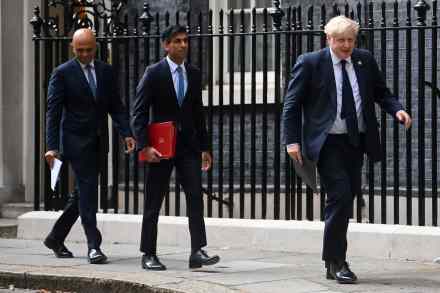
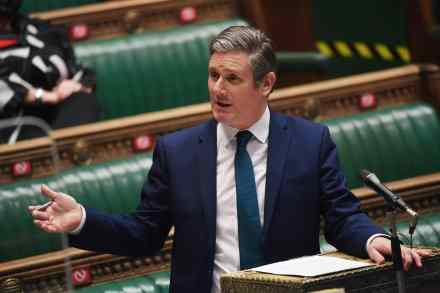
Today was the first PMQs clash between Boris Johnson and Keir Starmer in a packed Commons chamber. Starmer tried to pin down Johnson on whether he could guarantee that no one would have to pay their home to fund their care. Johnson dodged the question. But Starmer was limited by the fact that Labour can’t say how it would raise funds for the NHS backlog and social care, allowing Johnson to claim that Labour has no plan. Starmer is a naturally cautious politician, but his caution is leaving the field clear for Johnson on social care. Things would have been more difficult for the Prime Minister today if Labour was explicitly backing a tax on assets.

Why didn’t Tory MPs oppose Boris’s tax hike?

Boris Johnson has just announced his plans to increase National Insurance by 1.25 per cent for both workers and employers to fund extra spending on the NHS and social care. Johnson framed the measure as necessary to deal with the backlog that had built up during Covid. He claimed that without action hospital waiting lists would reach 13 million. He said that he didn’t break his manifesto promise lightly but that a ‘global pandemic was in no one’s manifesto’.  Of course, the problem with this argument is that the tax promise, as well as the commitment that no one would have to sell their house to pay for social care, were always going to be incompatible.

Are the Conservatives still a low tax party?

11 min listen

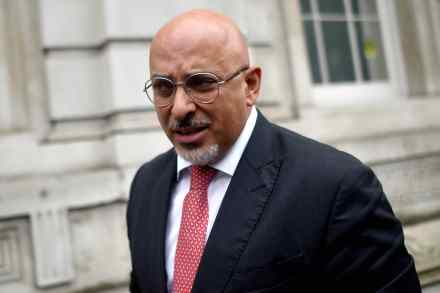
With the vaccine secretary Nadhim Zahawi declaring on the radio that the Conservatives were a 'party of fair taxation', could the government be looking at rebellion from its right with its new plans for tackling the social care crisis? Katy Balls in conversation with James Forsyth and Isabel Hardman.

Are Britain and America drifting apart?

14 min listen

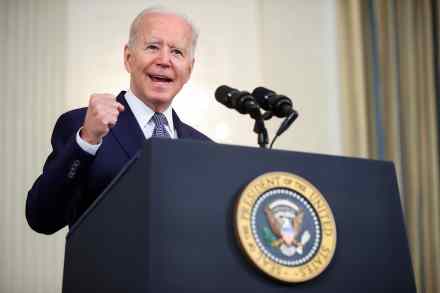
In a speech this week, Joe Biden said America will focus more on threats from Russia and China and less on foreign interventions. The US President signalled that his country would return to using 'over the horizon' drone strikes against terrorist targets, and would need to prove it was 'competitive' in combatting emerging threats.Ben Wallace, the defence secretary, addressed this in an interview with The Spectator last week. He said: 'If America makes the decision that it needs to tilt more, the question for the West, for Europe, for the United Kingdom and for other nations is: are we going to go with them? Do we backfill? Or do we do both?'So will Britain follow America, or will it instead make more of its bilateral relationships with European countries like France?

Why isn’t the vaccine approved for 12- to 15-year-olds?

This afternoon, the JCVI has essentially passed the buck on vaccinating 12- to 15-year-olds. It has declared that the health benefits of a vaccine for this age group are ‘marginally greater' than the risks of Covid. But it has left the decision on whether to actually vaccinate them to the chief medical officers. It would surely have been better for the committee to have made a decision one way or the other In the past few weeks, tensions between ministers and the Joint Committee on Vaccination and Immunisation have been rising. Ministers are keen to get on with an autumn booster shots campaign for the elderly and to vaccinate more school children. Yet the JCVI has only approved boosters for those with weaker immune systems.

Is Boris Johnson about to betray his manifesto?

15 min listen

Despite pledging not to raise taxes in the 2019 manifesto, rumours abound in Westminster that Boris Johnson is about to increase National Insurance in order to raise funding for healthcare and social care. Katy Balls talks to Fraser Nelson and James Forsyth about whether the government has other options.

Why isn’t No 10 stopping the Wallace-Raab war of words?

15 min listen

In an interview for the latest issue of The Spectator, Defence Secretary Ben Wallace hits back at Dominic Raab's suggestion that it was military intelligence which failed the British side when it comes to evacuation planning. On the podcast, Cindy Yu talks to Katy Balls and James Forsyth about the increasing public acrimony between the two secretaries of state, and ask - why isn't No 10 putting a stop to it?

The Tories aren’t in party mood

Nearly two years on from the general election and 11 years since the Tories took office, they remain comfortably and consistently ahead in the polls. This is remarkable. In September 2008, when Labour was in power, it was almost 20 points behind the Conservative party. Eighteen years before that, when the Tories were in power, they regularly trailed by double digits. You might think this Tory lead, and the poor numbers for the leader of the opposition — Keir Starmer’s latest approval rating is minus 39 — would have led to Tory triumphalism. However, when Tory MPs return to parliament next week, they will do so in a strikingly subdued mood. In part this is because of the issues at the top of the agenda.

Raab faces Afghanistan grilling from MPs

17 min listen

Dominic Raab was hauled before the Foreign Affairs Committee today to answer questions about how the government handled the withdrawal from Afghanistan. The Foreign Secretary faced tough questions about being on holiday during the crisis, risk reports produced from his own department, and whether a portrait of the Queen in Britain's Kabul embassy was taken by Taliban militants. How did he fare? Cindy Yu also speaks to James Forsyth and Katy Balls about whether China will fill the vacuum left by the West, and whether tension is emerging between the government and the JCVI.

Who is to blame for Afghanistan exit failures?

12 min listen

The Pentagon says the UK pushed to keep Abbey gate at Kabul airport open, which was later the site of a terrorist attack that killed 13 US soldiers and 170 Afghans. Dominic Raab took on today's broadcast round and defended the work of the Foreign Office during the evacuation process, but said the intelligence community's assessment of the strength of the Afghan government was wrong. Who is to blame for the chaos of the last few weeks? Cindy Yu speaks to Katy Balls and James Forsyth.

Our moral obligation to the Afghans who took us at our word

The speed of the Taliban’s advance in Afghanistan is remarkable. Even those who thought that the Trump / Biden policy of withdrawal was a folly, did not expect that Kabul would be surrounded before the end of August. Their only mistake was to believe our assurances about having an enduring commitment to the country What makes the whole situation, with all the suffering that ordinary Afghans will endure and the damage being done to the US’s reputation for being a reliable ally, so exasperating is that after years of failure the US and Nato had found a relatively low cost way of maintaining a form of stability in the country.

Is the West in retreat?

15 min listen

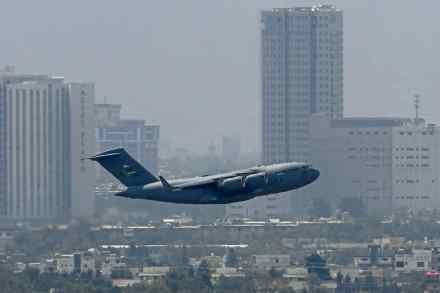
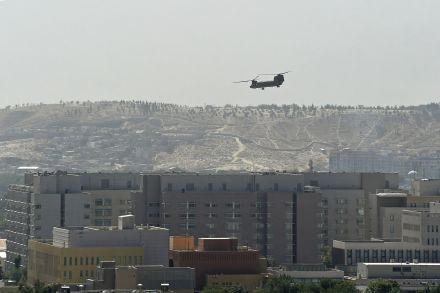
The south of Afghanistan is now under Taleban control, after the group took the cities of Kandahar and Lashkar Gah this week. Meanwhile, Britain and America are deploying thousands of troops - as many as were there before the withdrawal began earlier this year - to evacuate expats and the majority of embassy staff. After a 20-year war in Afghanistan, the West is running away.Britain and her allies, however, will continue to face challenges like Russian aggression and Chinese expansionism in the coming decade. Will we just sit back and accept our decline? Isabel Hardman speaks to James Forsyth and General Sir Richard Barrons, who helped set up the International Security Assistance Force in Afghanistan in 2001, and was deputy chief of the defence staff from 2011 to 2013.

Will Britain regret the Afghanistan withdrawal?

14 min listen

With things on the ground in Afghanistan accelerating from bad to worse so fast that the Americans are now even worried about the safety of their embassy. Cindy Yu talks to James Forsyth and Isabel Hardman about what the UK Defence Secretary Ben Wallace's attitude towards this 20 year conflict has been like in statements both past and present.

How China tried to suppress the lab leak investigation

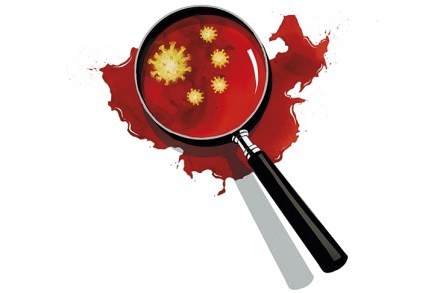
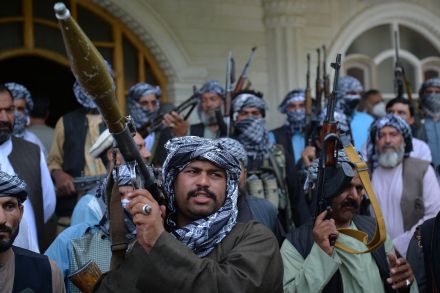
The lead figure in the World Health Organisation’s work on the origins of Covid-19 has given a remarkable interview to Danish TV. Peter Ben Embarek has revealed just how much political pressure the investigation came under and made clear that he thinks the lab leak hypothesis should not, pace the official report, be dismissed as extremely unlikely. Embarek told TV2 ‘Until 48 hours before we finished the whole mission, we still had no agreement that we would talk about the laboratory part in the report, so there was a discussion right up to the end about whether to include it or not.’ He said that, ‘initially, they [the Chinese] didn’t want anything about the laboratory included because it was impossible and so it would be a waste of time.

Is the Taleban’s success a surprise?

11 min listen

The Taleban are continuing their advance through Afghanistan, and are on the cusp of taking control in the major cities of Herat and Kandahar. The group's fighters have predictably ignored the Doha Agreement, but has the speed of their success taken politicians by surprise, and how much of an embarrassment is the deteriorating situation for the White House and Downing Street? Cindy Yu speaks to James Forsyth and Isabel Hardman.

Afghanistan will be a stain on the Biden presidency

Afghanistan will be a stain on the Biden presidency. His decision to continue with a US withdrawal from the country – he wants America out by the twentieth anniversary of the 9/11 attacks – reflects both the war-weariness of Washington and how Afghanistan and the ‘war on terror’ have dropped down the country's list of strategic priorities. The consequences of the US withdrawal are all too apparent, with the Taliban now in control of two thirds of Aghanistan. American intelligence is worried that Kabul might fall within a month. In an awful historical irony, the Taliban could once more be in control of the Afghan capital by 11 September.

When will exams get back to normal?

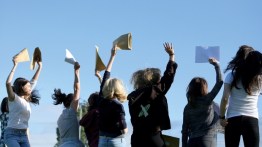
It wouldn’t be credible to say that this year’s A-Levels grades are comparable with 2019's: almost 45 per cent of entries got an A or A* compared to 25 per cent two years ago. But, as I say in the magazine this week, the problem is that you can’t simply snap back to normal next year. Many of those who got their grades this year won’t go to university until next year. This — and the fact that the education of those in the year below has been disrupted too — means it wouldn’t be fair for exams to return to normal next year. That would leave the class of 2022 competing for university places against those who have benefitted from 2021’s more generous system.

How to burst the grade inflation bubble

The Tories regard a return to rigorously marked exams as one of their big achievements in education. In 2010, the year they took office, more than a third of A-level entries received an A or A* grade. By 2019, following an overhaul of the curriculum, only a quarter did. Despite the havoc wreaked by Covid on education, the government was determined to carry on this trend. That’s why last year, after exams were scrapped, the Department for Education tried to further control grade inflation by using an algorithm. It worked, in part, by assessing the past results of schools — but a consequence was that exceptional pupils from historically underperforming schools were marked down. This seemed very unfair and the backlash was swift.