James Forsyth

James Forsyth

James Forsyth is former political editor of The Spectator.

It is his former friends that Brown should be nervous of

From our UK edition

I have a sneaking feeling that the cabinet ministers Gordon Brown should be most worried about are Douglas Alexander and Des Browne. Both are former Brown loyalists who have been shabbily treated by their boss. If either of them turned on the PM, it would prove that this is not a Blairite plot or a Southern rebellion but a movement of those who have come to realise that Brown is simply not up to the job.  Douglas Alexander has been frozen out by Brown, made to carry the can for the election that never was.

Three tests for those who want to replace Brown

From our UK edition

Steve Richards declares that the “Labour Party is in the worst of all possible worlds” in his column this morning. It is hard to disagree with him. The actions of the rebels have brought the leadership question into the open and made it the dominant topic in political discourse yet there aren’t enough of them to bring down the PM. But, equally, Brown is too weak to reassert his authority. So, the leadership speculation will run and run. It is the prism through which everything Labour does will be seen. But, as Steve argues, those who want to bring down the Prime Minister should want to put something in his place. Steve poses three questions which he thinks a new leader, or those who want one, must be able to answer: 1). What would they do about the economic crisis?

Purnell takes an apparent swipe at Brown on child poverty and says Labour’s backbench rebels are “entitled to do anything they want to”

From our UK edition

There was a fascinating debate tonight, sponsored by the Evening Standard, about whether or not New Labour is doomed for defeat. James Purnell had drawn the short straw of being the Labour politician on the panel and in the circumstances he turned in a fine performance. But there were a couple of moments that caused the Kremlinologists in the room to draw breath. First he announced that the reason child poverty is not about to being eliminated is not, as the Tories argue, because big state solutions don’t work but because the money earmarked in recent Budgets for the task has been insufficient. Now, when you consider who has been Chancellor and then First Lord of the Treasury during this time one gets the impression that the Blairite Purnell was criticising Brown from the left.

In other news, the Lib Dem conference

From our UK edition

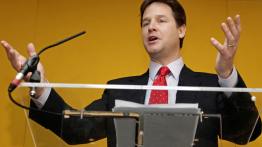
Spare a thought for Nick Clegg and the Liberal Democrats. Their conference, one of the best chances for them to get some proper coverage, is being over-shadowed by the banking crisis and the Labour leadership plotting. This is a pity as the Lib Dems seem to be trying to reposition themselves on the political spectrum. First, they have committed to cutting taxes and public spending. This is going to change the tone of the debate about this subject in a way that favours proponents of a smaller state. Second, they have de-emphasised their pro-Europeanism —an indication, as Andrew Neil notes, that they really are worried about losing their seats in the south-west to the Tories. But the Lib Dems do appear to be genuinely moving towards a harder-edged liberalism.

Will Glenrothes be the end for Brown?

From our UK edition

The financial crisis has pushed the Labour leadership down the headlines, but there does seem to be a new consensus emerging that, although Brown will not be forced out now, the last few days have made his departure in the near-future far more likely. It has certainly put more pressure on his conference speech and his much-hyped autumn fight-back. The Glenrothes by-election is the next electoral test facing Labour and if Brown fails that, it could be the end. Jackie Ashley writes that: “If Labour loses the coming Glenrothes byelection, key figures will go to him and say it's all over. If he tried to hang on, I'm told, there would be cabinet resignations.

Nightmare on Wall Street

From our UK edition

With Lehman Brothers filing for bankruptcy, Merill Lynch being sold to Bank of America for less than $30 a share and AIG seeking a bridging loan from the Federal Reserve it was a bloody Sunday for Wall Street. It remains to be seen if bloody Sunday will be followed by a black Monday but there is considerable fear about what might happen next. As the Washington Post puts it this morning, “The titans of Wall Street have, over the past 72 hours, been forced to reckon with the reality that the financial sector they built is, in its current form, too big, uses too much borrowed money and creates too much risk for the broader economy.” The New York Times reports that the Bush administration accepts that more bank failures are inevitable in the coming months.

A well-led, hungry Labour party would have made the Tories suffer today 

From our UK edition

Watching David Miliband surrender all he gained over the summer, Labour rebels wound but not oust Brown and the Lib Dems having their conference overshadowed by Labour’s troubles it would be understandable if the Tories felt things were going just fine. But a close reading of today’s papers should jolt the Tories out of any sense of complacency and encourage those Labour MPs who are sitting on the fence to join in the rebellion. There are three stories in today’s paper that the Labour attack machine would have used to hammer the Tories back in the day. First, and most seriously, there is The Sunday Times’ investigation into Lord Ashcroft’s funding of the Tories. It should be stressed that it is entirely legal.

Miliband retreats

From our UK edition

“I do support Gordon Brown” squealed David Miliband on the Politics Show just now. In an interview which was markedly different in style and tone from his confident performances during the summer after the publication of his Guardian article, Miliband backed away from a challenge, explicitly arguing against a leadership contest. When Jon Sopel challenged him on the ambiguous language he had used on the Jeremy Vine show when he was sending ‘come and get me’ signals to the Labour party, Miliband retreated from his earlier position. Having run his colours up the flag pole over the summer, Miliband now seems to have lowered them. Both stylistically and substantively this was a poor performance from Miliband.

Gordon’s formidable opponent

From our UK edition

If you haven’t seen it already, do watch Joan Ryan’s pitch-perfect call for a leadership election. She frames the issue, quite brilliantly, as one of party democracy. It will be very hard for the Brownites to depict her as a troublemaker or an egotist or to effectively rebut her argument. She is the one who sounds like she has the best interests of the Labour party at heart. Certainly, Brown is in a weaker position for not having been elected party leader in a proper contest. As Matt has argued, Brown’s uncontested elevation means that he lacks the bond with either the party or the country that a leader needs to get him through tough times.

If not Gordon, who?

From our UK edition

The plot against Brown is rumbling on, every few hours another MP is publicly joining the call for a leadership vote. It seems that the idea of a crowning a new leader has been abandoned and that there will be a contest if Gordon goes. Given the electoral college that Labour uses in its leadership contests, Alan Johnson would probably be the best placed candidate if he did run. He has appeal among MPs, party members and the trade unions and as a fairly non-ideological politician he would be acceptable to all the wings of the party. He is also seen as someone who ‘connects’ with the public and his biography is a plus. The biggest question mark against him is whether he wants it or not.

What will be the next plot twist?

From our UK edition

The rebellion does not appear to have taken off yet but neither has it been stamped out. If a senior Labour figure who is not regarded as one of the usual suspects were to join in the call for a contest that could be a trigger for a significant number of Labour MPs to move. One thing that Siobhain McDonagh’s resignation has sparked off is speculation about what John Reid might do, McDonagh was Reid’s PPS. It is worth noting that Reid, who is standing down at the next election, has not sounded off against Brown or the direction of his government in the relatively frequent way that some other Blairites have. An intervention from him would carry considerable weight.

Politics | 13 September 2008

From our UK edition

James Forsyth reviews the week in politics If Labour does dump Gordon Brown before the next election, then each of the three major parties will, this decade, have replaced a leader before he has had a chance to fight a general election. What used to be exceptional has become almost routine. This is a consequence of politics now running in double-time; the speeded-up news cycle means that what used to take years now happens in weeks. Consider the almost total reversal of Gordon Brown and David Cameron’s political positions since the last conference season. Then Gordon swept all before him, while Cameron had to make a brilliant speech to save his career. Now, it is Brown who is under all the pressure. Could the tables turn again; could Brown do a Cameron?

The Blairites have moved, now the left must

From our UK edition

Siobhain McDonagh has become the first person to quit their payroll job in an attempt to force a leadership contest. If others are brave enough to follow her example, then the game really will be afoot. The Progress article by a dozen Blairite MPs which is scathingly critical of where and how Labour is being led is also a clear statement of intent. What should worry the Brownites about it though, is that some names are noticeable by their absence; suggesting that there might be a plan for a programme of rolling criticism of Brown in the run up to conference. But as long as the campaign to force Brown out can be depicted as some kind of Blairite conspiracy then Brown is relatively safe.

Neil O’Brien to head Policy Exchange

From our UK edition

It is great news that Neil O’Brien is the new director of Policy Exchange. Neil is one of the smartest and most decent people in Westminster and under his leadership Open Europe has been the very model of a modern think thank, brilliantly mixing research and campaigning. With Neil in charge, Policy Exchange is going to go from strength to strength. This is great news for those of us on the centre-right who want to see a bold agenda for addressing the country’s problems laid out.

No change, no chance for Labour

From our UK edition

Gordon is safe is the new conventional wisdom. Nick Robinson, the arbiter of the CW, said this morning on the Today programme that “Gordon Brown no longer appears to be under threat.” This strikes me as evidence that Labour has given up, that it lacks the stomach for the fight. Looking at Brown’s poll rating—74 percent think he is a bad Prime Minister—it is almost inconceivable that Labour could win the next election with him in charge. Indeed, one suspects that Brown is leading Labour to a defeat of epic proportions. It is not as if Brown has faced down his internal enemies. It is just that they have retreated because getting rid of him appears too hard.

The next left

From our UK edition

If you want to know how a post-Brown Labour party might take on the Tories, I’d thoroughly recommend the Jon Cruddas and Jonathan Rutherford edited Is the future conservative? It is one of the first things from the left that I have read that takes the Cameron Tories seriously and maps out how the left can fight back. Here’s Cruddas and Rutherford’s rallying cry to the left: The future does not belong to the Conservative Party. Right now it belongs to a social democracy that is willing to bring liberal free market capitalism and corporate power back under control. The debate is about how we secure this post neoliberal politics. The left needs to recover its ethical socialism and commitment to equality.

The danger of a Tory Brown bubble

From our UK edition

The new Populus poll shows that 74 percent of the electorate thinks Gordon Brown is a bad Prime Minister. As Peter Riddell—not a man prone to over-statement—writes in The Times today, “The public have given up on Gordon Brown.” This is, obviously, in one sense great news for the Tories. Running against an incumbent who is a busted flush during a recession is about as good as it gets for an opposition. But the extent of Brown’s unpopularity should cause the Tories the odd nervous moment. Imagine for a second if Labour did get its act together and dump Brown. All of a sudden the 67 percent of voters who think it’s time for a change would have been offered something. The new Labour leader could try and present himself, or herself, as the change.

Is sunshine the best disinfectant?

From our UK edition

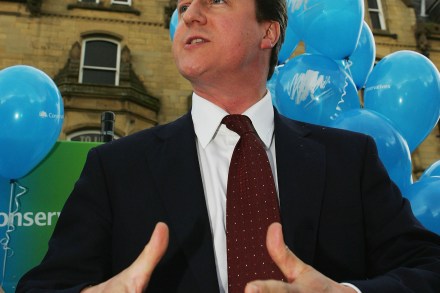
Anne McElvoy’s piece in the Standard today on the Cameron-Osborne relationship makes the following claim: “As their differences are in the open, they do not fester.” It is tempting to agree that sunshine is the best disinfectant. But I wonder how the press would have reacted to Osborne publicly drawing distinctions with Cameron and taking a thinly-veiled slap at Cameron’s jejune approach to Iraq as he did in The Guardian on Monday, if the Tories were not close to twenty points ahead in the polls?   PS Those interested in the Cameron-Osborne relationship should make sure to read Tamzin tomorrow.

The McCain campaign mocks Gordon Brown

From our UK edition

The news that Gordon Brown has thrown his weight behind Barack Obama has raced round the internets. If truth be told, Brown hasn’t endorsed Obama or done anything like that. Rather, a clumsily written article has implied that he has by singling out Obama for praise and not mentioning McCain. The McCain campaign’s response to these reports is scathing. In a post on the McCain report entitled “The Coveted Gordon Brown Endorsement” it points out that Obama no longer advocates the policy that Brown praised him for. Now, really this is a storm in a tea-cup.