James Forsyth

James Forsyth

James Forsyth is former political editor of The Spectator.

The dysfunctional Brown court

From our UK edition

Sue Cameron delivers up another great mix of scoops and quotes in her FT column this morning---it is worth paying £1.50 for this quote from Peter Hennessy alone: “If you think this lot have a Baldrick-style cunning plan you are flattering them”. But the more serious point comes from an anonymous insider:“Downing Street is a court… It’s about individual power and you mustn’t go thinking it’s logical” The Brown court has been even more dysfunctional than his harshest critics predicted, it has been a brutal reflection of the Prime Minister’s own flaws. The scene Cameron paints of an irate Brown striding the halls, demanding to know how on earth David Cameron was able to beat him and Miliband to Georgia rings all too true.
The Anbar achievement

From our UK edition

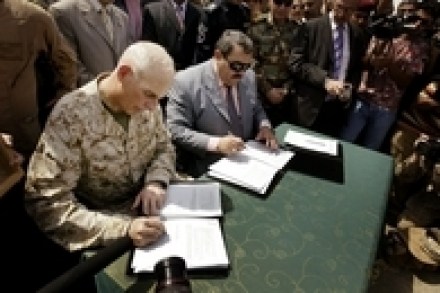
The transfer of Anbar province to Iraqi control marks another step forward in Iraq. The transformation in Anbar has been quite incredible. Two years ago, no one sane would have predicted that the then heartland of the Sunni insurgency would be peacefully and voluntarily handed over by the United States at the end of August 2008 with the occasion marked by a parade featuring unarmed US troops. To be sure, there is still much work to be done in Iraq. The situation there is fragile and there appear to be some new problems to confront but there has been a remarkable amount of progress made there in the past year and a bit; the number of attacks has fallen from a hundred and eighty a day in June 2007 to around twenty a day at the beginning of this August.

Silly money

From our UK edition

Dr Sulaiman Al-Fahim, of the Abu Dhabi United Group—the new onwers of Manchester City, has said that he is planning a £135 million, yes one hundred and thirty five million pounds, bid for Cristiano Ronaldo. This strikes me as absurd: Ronaldo—whose big game temperament remains in question—is not worth anywhere near that much; City are contemplating paying way over the odds just to secure a trophy signing. (Personally I’d rather have the Russian playmaker Andrei Arshavin, valued at about £20 million, playing for my club than Ronaldo). But the more important issue is, is this further flow of money into the game good for football?

Leaves on the line | 2 September 2008

From our UK edition

From the Southeastern Railways timetable: Retimed trains during the leaf fall period From Monday 13 October 2008 until the end of the timetable, some morning services in this timetable (Mondays to Fridays only) will be subject to retiming. This is part of our plans to overcome delays that occur during the autumn leaf fall period. Where trains run earlier for part of their journey two schedules will be shown – the schedule for when the train is running earlier than normal will be shown in red in the timetable pages. Where a train arrives at its destination station later than normal a note will be added to indicate the normal arrival time. You really couldn’t make this stuff up.

Dice are loaded against Brown

From our UK edition

The news that stamp duty is to be axed on houses costing less than £175,000 is rather underwhelming—the Tories proposed abolishing it on homes under £250,000 last year but is indicative of the problems that the government is going to have with its re-launch. The best chance for a successful re-launch would have come from a genuine period of silence over the summer followed by the rollout of a set of new initiatives. Instead, what we are seeing is confirmation that variously extensively trailed ideas are going to be implemented and often in less radical form than first suggested. This, as the Populus poll in the Times shows , is unlikely to change the voters’ mind about Labour.

Brown is neither feared nor loved

From our UK edition

When David Miliband wrote his infamous Guardian piece and then further stoked the controversy with a series of provocative media appearances many of us expected the Brownites to knee-cap him. After all, vicious party in-fighting is what they do best. But the Brownites—reportedly because of Stephen Carter’s intervention—backed away. At this point, the air of almost physical menace that surrounded the Brownites evaporated. Maintaining discipline within the Labour party has consequently become far harder. No one now fears the consequences of speaking out in the way they once did. (It was once seriously put to me that Charles Clarke was prepared to stand up to Brown because his belly acted as a physical buffer zone between him and Brown).

Will Brown’s conference speech be a mea culpa?

From our UK edition

Jackie Ashley’s column is, as always, well worth reading this morning. Perhaps, the most significant thing in it is the suggestion that Gordon Brown might admit to his own mistakes at conference: “Brown, who has been talking a lot to former Blair advisers, is said to be drafting a speech that will go further than he has ever done before to admit personal failings and explain why he wants to stay in office, even pushing ahead with reforms he used to oppose. We'll see. He is said to be deeply frustrated by his own performance, and ready to listen to people he used to dismiss out of hand.” I’ve long been convinced that before Brown can even contemplate a recovery strategy he needs to apologise to the public and ask for a second chance.

Carter got

From our UK edition

The Independent on Sunday’s report that Stephen Carter has been demoted is hugely significant. If it is right, and I have no reason to think it is not I just haven’t independently confirmed it, it suggests that a change in strategy is coming; that the Brownites are going to adopt a more bare-knuckle approach. In recent weeks, Carter has been advocating not trying to tear David Miliband down, he played a key role in the brokering of the Peace of Minorca, and trying to separate David Cameron from his party, Carter argues that the public believe Cameron to be a decent guy and a moderate so attempting to demonise him won’t work and that the best strategy therefore is to say to voters OK Cameron is alright but what about the rest of them.

A political hurricane

From our UK edition

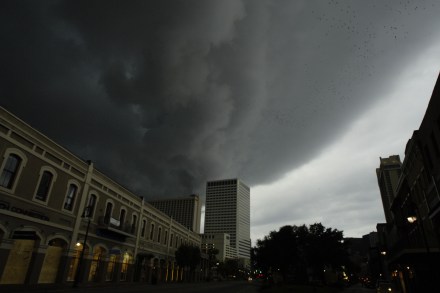
It seems rather Jo Mooreish to be discussing the political implications of Hurricane Gustav as people are forced to evacuate their homes but with the hurricane expected to make landfall as the Republican convention gets under way and with the legacy of Katrina there is an unavoidable political angle to this story. As Fraser notes, the Republicans cannot in the current circumstances have a typical convention. It would be wrong both stylistically and substantively to have speakers indulging in partisan rhetoric as a natural disaster strikes. At first blush, this appears to put John McCain at a further disadvantage.

Picking a running mate like it is 2000

From our UK edition

At first blush the selections of Joe Biden and Sarah Palin appear to have little in common. Obama went for an experienced Washington insider with a ton of national security experience, McCain went for a first term governor whose previous statements on foreign policy hardly suggest a great deal of knowledge about the subject. But the two picks do have something in common: they’re the picks you would have advised the candidates to make if they were running in 2000. In 2000, with the misguided holiday from history still in full swing, Biden would have answered questions about Obama’s lack of foreign policy experience in the way that Cheney did for Bush.

The Palin pick

From our UK edition

Talking to those Democrats who didn’t get the first flight out of Denver one picks up two conflicting emotions about the Palin pick: relief and fear. They are all happy that McCain has so neutered his attack on Obama’s experience; yes Obama was a state senator just four years ago but the person that John McCain—a 72 year old cancer survivor—has chosen to put a heart beat away from the presidency was the Mayor of a small Alaskan town then. But there is also real concern that John McCain might have finally found a domestic message; that he and Palin will run as reformers who are prepared to fight a broken system.

McCain rolls the dice

From our UK edition

A few weeks ago I was talking to a Republican who fretted that McCain wasn’t far enough behind. His worry was that the McCain campaign wouldn’t realise just how many risks it has to take to win. Well after McCain has tapped the young, inexperienced Alaska Governor Sarah Palin no one can make that argument anymore. The question is this is a sensible risk or a stupid one? The argument for it being sensible is that she is a woman, a Washington outsider, a reformer, someone who excites social conservatives but doesn’t scare moderates and understands energy issues at a time when high gas prices regularly come in the top three issues for voters. On the other hand, she has no national security experience and is not tested on the national political stage.

Not a great speech but an effective one

From our UK edition

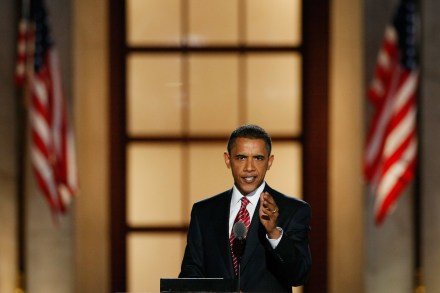
On a night which will live long in the memory, Barack Obama accepted the Democratic nomination for president. His acceptance speech was in parts stridently populist but in others presented Obama as the great conciliator. The speech as a text was not one of Obama’s best but it was delivered with the passion that he is often said to lack. When he thundered ‘Enough!’ about the last eight years the crowd was momentarily taken aback. This convention has been criticised for not being harsh enough on John McCain, Obama set about correcting that with surprisingly harsh attacks on his opponent. He repeatedly accused McCain of being out of touch and ruthlessly demagogued the comments of McCain and his advisers on the economy.

Tonight’s McCain ad

From our UK edition

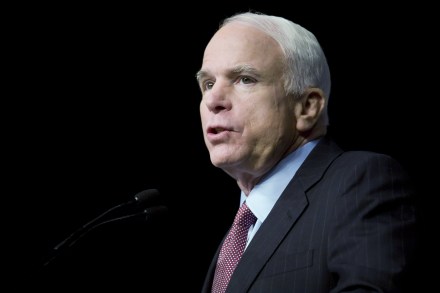
The McCain campaign used to rail against the media’s obsession with Obama but now it feeds it. It has jumped into the conversation through a series of ads mocking Obama and tough charges all of which has helped turn the election into a referendum on Obama. (This shift from a referendum on the Bush years to a referendum on Obama is the best explanation for why race is so close.) As part of this approach, the McCain campaign will bracket Obama’s acceptance speech tonight with an ad from McCain asking Obama a series of pointed questions. The ad will undoubtedly get good play in the media but it is a risk. If McCain gets the tone wrong, it could look mean spirited on a historic night for America.

A hard balancing act

From our UK edition

The expectations for Obama’s speech tonight are a mile high. I’d be tempted to say they’ll be impossible to match but, as First Read points out , Obama has never yet failed to deliver on one of these set piece occasions. Obama speaks as the first African-American nominee of a major American party on the 45th anniversary of Martin Luther King’s ‘I have a dream’ speech’, emphasising the historic nature of this moment. Add to this the fact that Obama is regarded as the best political orator in a generation and that his political career took off with his 2004 convention address, and you realise just how much people are expecting.

Biden lands some blows on McCain, but the convention as a whole fails to pack a punch

From our UK edition

Joe Biden did go after John McCain tonight, drawing contrasts between McCain and Obama. His solution to the question of how you attack a man with McCain’s record of service was to paint McCain as a good solider at a time when America needs a wise leader. The contrasts Biden drew were effective and the speech was the most useful of the convention so far for Obama. The section attacking McCain’s national security judgement was delivered with passion and should reassure some voters nervous about Obama’s national security credentials. At the end of the address, Obama joined Biden on the stage. The visuals looked good—Biden appeared a reassuring presence next to Obama.

Waiting for the boy from hope

From our UK edition

Bill Clinton’s speech is going to be the dramatic focal point of the night. Whether it is an emotional rapprochement with Obama, a lukewarm endorsement or a reflection on the prosperity of the Clinton years it will be news. The nervousness among Democrats here in Denver about the speech will only have been increased by the news that Bill told a group of donors that “Last night after she spoke, anyone who helped her were glad they did. And some were sad they didn’t.” If Bill’s evident regret that the Democrats didn’t pick his wife seeps into his speech tonight then the press will have a field day and another day of the Democratic convention will have been overshadowed by the Clinton drama.

The Clintons dominate in Denver  

From our UK edition

Another day in Denver, another day of Clinton stories. The extent to which the Clintons are dominating this convention really is quite remarkable. This morning, the news shows have three new angles to keep them busy. First, Bill Clinton is not attending Obama’s acceptance speech on Thursday—a snub and a half. Second, The New York Times have a couple of Clinton aides talking anonymously about her plan to run in 2012 if Obama loses. And last but not least, the dispute over Bill Clinton’s speech is still rumbling on with all the news shows running with a quote from a Clinton confidant that ‘no one tells Bill Clinton what to say.’ The Obama campaign really should have had Bill speak on Monday night.

Hillary praised Obama but the damage has not been undone

From our UK edition

Hillary Clinton did what her duty compelled to do in terms of supporting Obama and attacking McCain in her speech. But it didn’t inflict lasting damage on McCain; she attacked him on the issues you would expect a Democrat to and praised Obama on the issues you would expect her to. The 3am genie she let out the bottle has not yet been put back in. There is now talk that Bill Clinton will try and do this tomorrow night but given his recent behaviour that’s hardly reassuring news if you are an Obama supporter. The Democrats have not yet worked out how to attack McCain. The barbs aimed at him are still tentative and the speakers are noticeably more comfortable when they get to bash Bush. The Democrats urgently need to work out what their line on McCain is and ram it home.

The Democrats’ challenge: Turning the election from a referendum on Obama into a choice between Obama and McCain

From our UK edition

Everything this year seems to have aligned for the Democrats. The incumbent Republican president is deeply unpopular, more than three quarters of voters think the country is on the wrong track, the economy is in trouble and the conservative coalition is fracturing. But still the presidential race is tight; there aren’t more than a couple of points in it. The explanation for this is quite simple: the election has moved from being a referendum on the Bush years to a referendum on Barack Obama. The extent to which Obama dominates the media coverage of the campaign means that the most important thing in deciding your vote is what you think of Obama. This is what explains why quite so many Clinton Democrats are supporting McCain.