James Forsyth

James Forsyth

James Forsyth is former political editor of The Spectator.

Miliband’s performance  

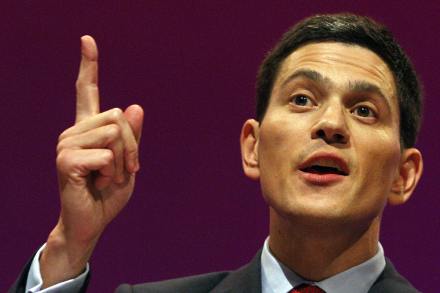
David Miliband’s speech was neither a triumph nor a disaster. It was, as a fellow scribbler put it to me afterwards, a seven out of ten speech. I doubt that many people who weren’t for Miliband before it thought he was the man Labour needs after it. But equally Miliband’s supporters will have been relieved that he didn’t bomb liked he did last year. Miliband confidently walked the leadership speculation tightrope. Early in the speech, he turned to Brown and praised him for his role in increasing international development funding. Praise for the leader but on an issue that everyone knows won’t decide the election.
Darling’s Speech

Darling’s speech suggests that Labour will not tack that left during this financial crisis. The Chancellor did attack the bonus culture. But all he said was that the government would “look at the culture of huge bonuses that have distorted the way decisions are made” which is not the kind of language that suggests he is actually planning on doing anything. Generally, there was little meat in the speech. Darling did admit that inflation was too high. He, understandably, pointed out that his comments about the toughest economic times for sixty years now look rather prescient. And there were some pro-forma attacks on The Tories and praise for Gordon Brown. But in short, this was a holding speech that is unlikely to move the needle either way.

Ed Balls is still fighting the war against Blair

The illusion of unity is just about holding up in Manchester. Both Alan Milburn and Peter Mandelson stayed away—much to the disappointment of us hacks—from the Progress rally last night despite being listed as speakers, and most attacks on Brown have been in code. All of this makes Ed Balls’ attack on Tony Blair at the Fabian Society Question Time all the more bizarre. The events had gone much as expected. The final question to the stellar panel—including Fraser Nelson of this parish, Jon Cruddas, Sunder Katwala and Zoe Williams, and superbly chaired by Gaby Hinsliff of The Observer—was about the role of the party in making policy, fairly innocuous stuff.

Miliband makes progress

David Miliband just spoke at a Progress rally here in Manchester, and the Kremlinologists are going to have a field-day with his speech. Provocatively, when Miliband listed what made him proud of New Labour, he did not mention the economy or anything else Brown is associated with. At the end of the speech, the room erupted in applause, with Tessa Jowell clapping with the intensity of a campaign manager. Miliband walked out of the room with the air of a man whose confidence had been bolstered.

Purnell’s third way

James Purnell made a fascinating speech this afternoon. It was in some ways a very Blairite speech. He challenged the party to go further, faster. He was cutting about Labour’s self indulgent streak and unapologetic about modernisation: “we changed. because we were tired of being the conscience of a Conservative country”. But at the same time, Purnell went out of his way to explain policy in left wing language, something some Blairites forget—or are reluctant—to do. Defending his welfare reform proposals which are not popular with party activists, Purnell said that they were based on “a founding value of our party,. emblazoned in the name of our party. The right to Labour. The dignity of Labour.

A temporary lull before the storm

The mood here in Manchester is odd. No one expects a move against Brown this week but most people expect that this will be Brown’s last conference as leader. Talking to folk on the left, it seems that the one thing that could save him with the Labour party is him tacking hard to the left in the coming days. At the same time, no one is quite sure who will succeed him; it really is all to play for. David Miliband doesn’t seem prime ministerial yet. Last night he was at the excellent New Statesman party--he could be seen in a corner briefing some of the most influential commentators on the left—but there was no presence, no sense of awe that surrounded him. I suspect that most people in the room were unaware he was there. Harriet Harman’s stock is rapidly rising.

Cruddas pushes for middle class tax cut

Over on Next Left, Sunder Katwala reports that at a Fabian society fringe meeting today Jon Cruddas said: “There is a big case for a middle-class tax cut too – to remove some of the people who have tripped over into the higher rate tax bands, such as teachers who can now be paying the same rate of tax as the big bankers, We could deal with that, and that would work across our electoral coalition too.” As I blogged the other day, until the Tories start offering tax relief to the middle class they are going to be vulnerable to being outflanked by any new Labour leader on the issue.

The tectonic plates just shifted

Alan Johnson’s interview with Alice Thomson and Rachel Sylvester changes the dynamics of the Labour leadership debate. By once again making clear that he isn’t interested in the top job and praising David Miliband in such lavish terms, Johnson has made clear that he won’t be a candidate. (Johnson admits that it was his defeat in the deputy leadership contest that “finished the little bit of ambition” he had inside him). As Sam Coates notes, this opens up space for another contender given that Miliband is unacceptable to large chunks of the party. Sam speculates that if there is a contest it will be a straight left-right fight between Miliband and Cruddas.

The Labour form book: Alan Johnson

Coffee House is running a series of posts on the contenders to succeed Gordon Brown as Labour party leader.  The latest is below.  Click here for our profile of David Miliband, and here for Jon Cruddas. Alan Johnson, 58, Secretary of State for Health Pros Impossible to hate: Johnson is, as one political operative put it to me, the only member of the Cabinet who when he appears on TV  doesn’t make the public want to throw something at the set. After 11 years in government, having a leader who the public are at least prepared to listened to would be a major boon for Labour. While dampening the public’s enthusiasm for kicking the bums out, could prevent the Tories from winning a two-term majority.

Newsnight’s focus group offers encouragement to Clegg and a warning to the Tories on tax

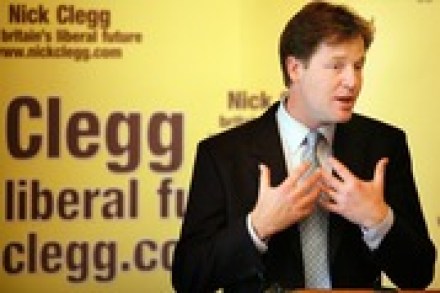
Frank Luntz is the Marmite of polling: you either love him or hate him. His focus group on Newsnight tonight comparing the three party leaders made—as expected—for interesting viewing. Although I’d have preferred to see the potential Labour leadership candidates tested. I imagine that the Lib Dems will be crowing for weeks about its finding that people warmed far more to Clegg than the other two party leaders. The first thing that struck me was how Tony Blair still so dominates British politics. The panellists saw both Brown and Cameron through the prism of Blair. When the group were offered the chance to bring Blair back, they went for it overwhelmingly. One can only imagine how febrile the speculation would be right now if Blair was still in the Commons.

The Labour form book: Jon Cruddas

Coffee House is running a series of posts on the contenders to succeed Gordon Brown as Labour party leader.  The latest is below.  To read our profile of David Miliband, click here. Jon Cruddas, 46 Pros Clean hands: Cruddas has served in neither the Brown nor the Blair cabinets so it would be harder for the Tories to pin Labour’s failures on him, and he is not compromised by association with the failed Brown premiership. Also, Cruddas hasn’t been a participant in the Blairitie-Brownite wars so he gives Labour a chance to break out of that destructive cycle. Anti-politics politics: Cruddas doesn’t look or sound like a typical Westminster politician. He would stand out from Cameron and Clegg.

Brown’s dangerous interventionism

Yesterday, Downing Street was keen to take the credit for the Lloyd’s HBOS deal. But Brown is playing a dangerous game. First of all, there is the issue highlighted by Alphaville of whether there has been tinkering with the deal to make sure that Edinburgh remains a major UK financial centre. It also appears that someone has leaned on Lloyds not to make the maximum efficiency savings. Then, there is the question of what Brown is doing apparently telling Lloyds to lend in the way that HBOS did. The FT’s Westminster blog reports Brown as saying, “We’ve also insisted on assurances from the new company [Lloyds/HBOS] about their mortgage lending in the market place so they will not reduce it.

Brown’s golden touch

Gordon Brown ignored the Bank of England's advice and sold off half this country's gold reserves between 1999 and 2002 at an average price of $275 an ounce. Last night, gold reached $870 an ounce in after-hours trading in New York.

Hutton and Purnell: We support Gordon because it is a requirement of our job to do so

There’s some pretty tough competition at the moment for the award for the weakest statement of support for the Prime Minister by a Cabinet Minister. But John Hutton is probably the front-runner for his comments on the Andrew Marr on Sunday. Marr asked Hutton whether he was on the side of the rebels or Gordon Brown. Here’s how Hutton replied: JOHN HUTTON: Well I'm, I'm on the side of the government and the Prime Minister. I'm in the Cabinet. It's my job to support... ANDREW MARR: So, so... So you would tell those people... JOHN HUTTON: ... the work that the Prime Minister is doing and the work that the government is doing. And I...” This was incredibly weak stuff.

Until the Tories move on tax, they’ll be vulnerable to being outflanked

The most interesting conversation in Westminster right now is what a new Labour leader could do to restore the party’s fortunes. One idea that could be particularly politically potent is a bold move on tax. Since Labour came to power, the number of people paying the top rate of tax has pretty much doubled. Brown has kept Labour’s 1997 manifesto promise not to raise the top rate of income tax but he has done so at the cost of making more and more people pay tax at the top rate; a typical Brown dodge. This fiscal drag has had the same effect as an actual tax rise and resulted in people who are not earning huge amounts of money—police inspectors, for example, who earn in the mid 40 thousands—paying the top rate.

The mood in cabinet

Anne McElvoy has some telling details from inside yesterday's meeting of the cabinet in her Evening Standard column this morning: “It can't go on for much longer,” says one Cabinet member who described yesterday's meeting as “excruciating: an embarrassment”. “It's not just the country that's not listening to Gordon any longer: the Cabinet isn't listening to him. Something is going to give. There were people staring at their hands, some scribbling on their papers, someone else on their BlackBerry.” Anything rather than look their own leader in the eye. Mr Brown told his Cabinet that issues about the direction of the party should not be raised until after the present economic turmoil.

The rebels musn’t let this get personal

One of the things that the rebels have got right so far is not turning this into a personal campaign against Gordon Brown. The Labour party is reluctant to dump its leader, they really don’t do assassination, and so the clever thing to do is to coax rather than bully them into it. By this standard, George Howarth’s remarks comparing Brown to Neville Chamberlain are a mistake. On Newsnight, Howarth declared: "He's so unpopular that no one can remember a time since Neville Chamberlain, after Hitler invaded Norway, that anyone was so unpopular. "And we can't allow that situation to continue.

Brown: The Labour party and the government should put on a show of unity

Gordon Brown’s reply to David Cairns’s resignation letter ends as follows: I will always respect the views of others both in the party and the government but believe that both function best when we show unity. Gordon Brown This strikes me as a revealing choice of words. Brown doesn’t say the party and the government work best when they are united but when they show unity, a subtle but important difference. Maybe I’ve been staring at this for too long but it does seem that Brown is accepting that the party and the government are divided about his leadership but arguing that it is best not to talk about it openly. Not in front of the voters, dear.

More clever positioning from the plotters

One of the striking things about this uprising is how the plotters keep framing their positions perfectly—evidently some people in the Labour party haven’t forgotten what the party learned from Blair, Campbell and Mandelson. On Saturday, Joan Ryan presented her request for nomination papers as a matter of party democracy. Today, David Cairns’s resignation letter contains an argument that is going to resonate with an awful lot of the PLP. Cairns says that he wasn’t in favour of people requesting nomination papers in the first place, but now that the leadership issue is out in the open the Labour party cannot go on pretending it doesn’t exist. Ultimately what might do for Brown is that there appears to be no way for him to stop the bleeding.