James Forsyth

James Forsyth

James Forsyth is former political editor of The Spectator.

The Tories need an enforcer who can protect the shadow cabinet from themselves

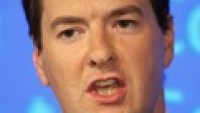
The evidence all seems to strongly suggest that George Osborne did nothing illegal in Corfu. But that does not mean he should escape without criticism. What he did was clearly foolhardy in the extreme. If Osborne has just googled Deripaska he would have seen enough material to make him hesitate about even being in his vicinity, let alone meeting with him on his yacht. These unforced Tory errors need to stop. What the party need is someone in Central Office powerful enough to demand to be told of anything even potentially controversial that a shadow cabinet member is planning to do and if necessary order them not to do it. Some will deride this as treating the shadow cabinet like children.
Osborne on Deripaska

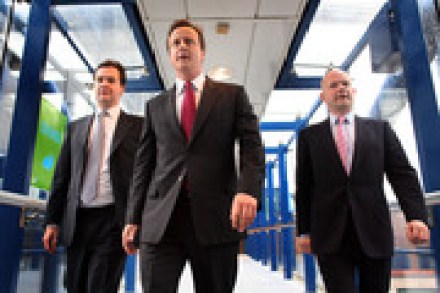
George Osborne’s performance at a press conference just now was typically confident. He even ended with a flourish: ‘the journalists say follow the money, but in this case there is no money to follow.’ Osborne stuck to a denial of the specific charge that he had solicited a donation, repeatedly stressing that he ‘neither asked for, nor received, money.’ The frustrated press pack kept asking whether Osborne has discussed a donation with the oligarch at all, but the Shadow Chancellow repeatedly batted that away, which will not play well in the media. Osborne said that he went on board Mr. Deripaska’s yacht twice, once with Mandelson and once with Feldman.

Corfued

The Battle of Corfu, the first encounter in the Mandelson-Osborne war, just escalated with Nathaniel Rothschild’s allegation in The Times that “George Osborne, who also accepted my hospitality, found the opportunity of meeting with Mr Deripaska so good that he invited the Conservatives’ fundraiser Andrew Feldman, who was staying nearby, to accompany him on to Mr Deripaska’s boat to solicit a donation. Since Mr Deripaska is not a British citizen, it was suggested by Mr Feldman, in a subsequent conversation at which Mr Deripaska was not present, that the donation was “channelled” through one of Mr Deripaska’s British companies.” The Tories emphatically deny this.

Britain deserves better tham Ambassador Winfrey

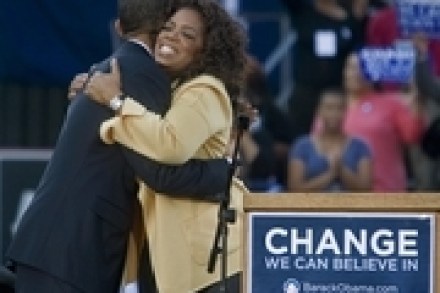
Gideon Rachman floats, on his blog, the rumour that Obama might make Oprah Winfrey Ambassador to London, and no it is not April Fool’s Day. I doubt very much this will happen, there are other ambassadorships I’d expect she’d prefer, but it does illustrate a long-standing weakness in the way the United States appoints its ambassadors. The plum jobs nearly always go to big campaign donors. This is a practise the United States cannot afford now that it is involved in a struggle for international support for its actions in a 24.7 media environment. It needs the best people for the job that it has regardless of whether they gave to the campaigns or not.

A distorted cause

I’d recommend to everyone today’s editorial in the Washington Post. I’ve posted a couple of key extracts below but if you have a couple of minutes it really is worth reading the whole thing, it is a fantastic corrective to the current narrative about the causes of the crisis: “[T]he problem with the U.S. economy, more than lack of regulation, has been government's failure to control systemic risks that government itself helped to create. We are not witnessing a crisis of the free market but a crisis of distorted markets. … We'll never know how this newly liberated financial sector might have performed on a playing field designed by Adam Smith.

Cameron chooses his battleground

On The Today Programme this morning, David Cameron came out firmly against any extra public spending financed by more borrowing. For the first time in this financial turmoil, there is now clear blue water between the two main parties. Cameron argued that such a move would only prevent the Bank of England from reducing interest rates—which he seems to regard as the most important step that can be taken at the moment—and lead people to believe that taxes will rise in time. Labour, I suspect, will not be displeased by Cameron’s opposition; they will see this as an opportunity to fight another Labour investment versus Tory cuts campaign. The challenge for the Tories is to communicate that such a spending programme will not be free.

Has the financial crisis catalysed the globalization process?

Thomas Friedman argues in his New York Times column today that the end result of this financial crisis will be more globalization not less. “The real and sustained bailout from the crisis will happen when the strong companies buy the weak ones — on a global basis. It’s starting. Last week, Credit Suisse declined a Swiss government bailout and instead raised fresh capital from Qatar, the Olayan family of Saudi Arabia and Israel’s Koor Industries. Japan’s Mitsubishi bank bought a stake in Morgan Stanley, possibly rescuing it from bankruptcy and preventing an even steeper decline in the Dow.

Powell backs Obama

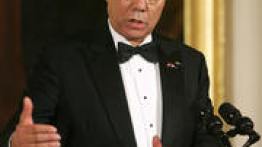
Colin Powell’s decision to endorse Barack Obama is a blow on a personal and a political level to John McCain. Despite being on opposite side over the best way forward in Iraq, the two men remained close. When McCain’s primary campaign was in deep trouble, Powell donated to it. Cynics will accuse Powell of trying to cleanse his reputation of the stain of his UN presentation on Saddam’s WMD. But to my mind, it is typical of Powell’s mo of moving cautiously and ending up in the establishment consensus position. So, he fully backed the invasion of Iraq once war was perceived to be inevitable and now endorses Obama once an Obama victory seems more likely than ever.

The Office of Budget Responsibility could be a very useful political shield for the Tories

As Pete notes, Darling has committed the government to a Keynesian stimulus package. This is going to be funded by yet more borrowing, worsening the government’s already bad debt problems. If the Tories win the next election, this spending spree is going to leave them facing some tough questions about cutting public spending. This is where the Office of Budget Responsibility, largely derided as a gimmick when it was announced just before conference, comes in. If the OBR demands spending cuts to reduce government debt, it will give the Tories cover for taking some of the tough decisions that are going to be needed to reduce what by 2010 is going to be a dangerously high debt burden.

The real economy will soon be hit by the crisis

The Sunday Times reports that by 2010 2 million households will be in negative equity based on current trends. This is a further reminder of how the politics of the crisis are going to change once the real economy starts to be hit by it. As Matt puts it in his Sunday Telegraph column, “it is much more likely time will be Gordon's enemy. The disclosure that the state-owned Northern Rock is now twice as likely to repossess homes as other banks is deeply symbolic. In the Thatcher era, the state liberated voters by selling them their council houses. Now the state has turned into repo man. And as the PM glad-handed his international admirers in Brussels last week, Britain's unemployment figures rose to an eight-year high - with worse to come.

Darling–not Brown–came up with the plan to save the banks

There is a great tick-tock in The Times this morning about how the bank recapitalisation plan came into being. The take-away point is that the Chancellor was much more the driving force behind it than the Prime Minister. Here are the key extracts: The Times can reveal today that the Chancellor believed that recapitalisation was the “only show in town” some time before Gordon Brown and that the Prime Minister signed up only after the intervention of his ministerial fixer and enforcer, Baroness Vadera. ... Mr Darling had first started plotting his move in mid-September, hiring the legal firm Slaughter and May to carry out contingency planning. He quickly became convinced that it was the only viable option to ease lending.

That was the campaign that was

James Forsyth on how the two candidates earned their party’s nominations and how the final stages of the campaign are playing out It was on the eve of the Iowa caucus, 2 January, that it became clear that Barack Obama’s candidacy was more than just a form of political entertainment. Obama’s last speaking engagement was in a high school gym in Des Moines. It was the hot ticket of a cold night. This was the best orator in a generation giving the most important speech of his political career so far; the youthful crowd were expecting quite a show. But the star attraction had lost his voice. When he tried to hit the rhetorical high notes, nothing came out. The crowd didn’t desert or turn on him, though. Instead, they chanted his iconic slogans, carrying him through.

High noon on Wednesday is Cameron’s next chance to change the narrative

PMQs is frequently derided as something that is only of interest to the Westminster Village. That may be true but it helps frame the way that political reporters and commentators see the battle between the parties and plays a crucial role in determining the mood of the parliamentary parties.  This week’s clash will be one of the most important in a while. The consensus in Westminster is that Cameron’s speech today was too small for the moment—though, it is worth noting that the Standard’s write up is positive and the odd conversation about it that I’ve overheard on the train to the north that I’m on has been fairly warm about it—and if Brown is perceived to school Cameron at PMQs then the Brown comeback narrative will gain further momentum.

Buffett says buy

The Sage of Omaha takes to the New York Times to explain why he is moving his personal investments from US government bonds to shares, a move that is the opposite of what most people are up to: “The financial world is a mess, both in the United States and abroad. Its problems, moreover, have been leaking into the general economy, and the leaks are now turning into a gusher. In the near term, unemployment will rise, business activity will falter and headlines will continue to be scary. So ... I’ve been buying American stocks. This is my personal account I’m talking about, in which I previously owned nothing but United States government bonds. (This description leaves aside my Berkshire Hathaway holdings, which are all committed to philanthropy.

What ‘big’ thing should Cameron do?

Steve Richards’ column this morning is thought-provoking. Here’s the central plank of his argument: “In some ways there are parallels for Cameron in the dilemmas Neil Kinnock faced during the miners' strike under Margaret Thatcher in the mid 1980s. Kinnock was torn as to what to do. He instinctively sympathised with the miners, but disapproved of the leadership and strategy of Arthur Scargill. He was scathing about what he saw as Thatcher's ruthless brutality and yet appreciated some of the arguments she was deploying. He wanted to say more, but knew that his party was largely in favour of the strike and felt constrained. Later he was to reflect that his evasive approach was his biggest mistake as leader.

The cease-fire is over

The Tories returned to the fray on the economy with David Cameron’s speech in the City this morning. There is much to criticise Gordon Brown for in terms of his economic management but Brown has done a brilliant job in the last couple of weeks in setting out a narrative that because he can’t be blamed for everything that has gone wrong with the financial system, he shouldn’t be blamed for anything. One respect in which Brown is Churchillian is in his view that history will be kind to you if you write it. The Tories need to puncture this bubble with a set of clear and lucid arguments that don’t overreach.

The one and only Gordon Brown

Bagehot in The Economist makes the sensible—but overlooked—point that Brown’s strengths are his weaknesses and vice-versa: “In his response to the crisis, Mr Brown has demonstrated many of the traits that contributed to his ruination before. One is a fondness for plagiarism. He is a natural copycat, as he demonstrated to his cost last year when he imitated a sketchy Tory idea to ease inheritance tax by squeezing “non-doms”. But well-judged plagiarism can be a desirable, even an admirable, skill in a leader, as it is proving now. Mr Brown borrowed elements of Sweden’s bank-rescue package of 1992, plus ideas advanced by the Tories and others, and worked them into a proposal that he victoriously presented as his own.