James Forsyth

James Forsyth

James Forsyth is former political editor of The Spectator.

Europe’s bullying atheism is a threat to public debate

Reading New York Magazine’s profile of Tony Blair, I was struck by this quote from Blair: “Actually,” he says, “what’s interesting is I’ve spoken to several European leaders—I won’t name them—who I didn’t really think were religious at all, and was rather surprised. They know I’ve started this foundation. And they’ll say, ‘That’s really interesting, because you know,’”—and here he lowers his voice a bit—“‘I am actually a practicing Christian.’” Turner adds that prominent business executives have told him the same thing.
Welfare reform and the recession

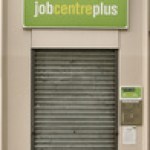
It was widely thought that welfare reform would be one of the victims of the downturn. But interestingly, the political case for it—as opposed to the practicality of actually doing it—seems almost easier to make at a time when everyone is tightening their belts. Certainly, Purnell’s proposals faced less opposition from the left than one would have expected. Peter Oborne’s essay in the Mail today shows part of the reason why this is the case: those who have decided to live on benefits have total ‘job’ security even during a recession in which a million people are expected to lose theirs. The unfairness of this is compounded by how much some people are receiving from the state.

Reasons to think 2009 will be good for the Tories

Anthony King, the polling sage, has an op-ed in the Telegraph today setting out the polling case for why the Tories should go into the New Year in good heart. King notes that the Tories—who have led in the YouGov poll for the last 15 months with forty percent plus support—have not been in such a strong polling position since the poll tax did for Margaret Thatcher’s popularity. He also points out that anti-Tory tactical voting is likely to unwind at the next election with Labour’s lead among Lib Dem voters having fallen from 40 percent at the last election to 11 percent today.

Why Labour are now borrowing more from the Bush campaign book than the Tories

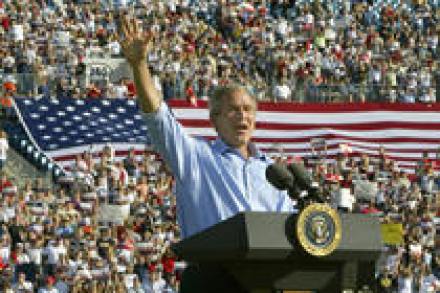
Vanity Fair has a long series of interviews looking back on the Bush presidency. A lot of the ground covered is familiar—9/11, torture, Iraq and Katrina—but this comment from Mark McKinnon, Bush’s chief adman during his presidential campaigns, touches on an aspect of Bush’s election victories that people don’t think about enough: “The interesting thing about both Bush campaigns is that they strategically defied conventional wisdom and turned it on its head.

Hamas is to blame for the violence

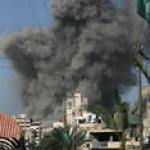
There is a strange tendency when viewing the Israeli-Palestinian dispute to imagine that because might does not make right it must make wrong. By this logic, the fact that Israel can inflict greater damage on Hamas than Hamas can on Israel makes Israel the aggressor. But in reality, it is Hamas who is responsible for this latest round of violence. It is Hamas who never fully implemented the six month ceasefire and then broke it off completely. Israel has a right to pursue the action it is taking but the strategic question is what purpose will the action serve. Unlike with the war in the Lebanon in 2006, Israel has set itself the narrowest of war aims: the ending of all rocket attacks from Gaza.

The blame the bankers gambit

One of the political themes of 2009 is going to be how Labour tries to shift the blame for the fact that the economy is not recovering. Just before Christmas, Pete highlighted how Brown was suggesting that the forecast that the recession would be over by the third quarter might be too optimistic because the banks aren’t lending again. Today in The Sun, David Blunkett---widely expected to soon make a comeback in a campaigning role—goes into full hang-a-banker mode, peppering his column with references to “latter day gold diggers” and “these modern money-changers”. Here’s the key section: “Of course, people are right to look for someone to blame.

A testing year for South African democracy

Ever since the end of apartheid it was clear that the ANC would win every election it contested until it split, its role in the liberation struggle determined that. But this one party dominance was always going to be a bad thing for South Africa; a fully functioning democracy requires competition between political parties—a party that knows it will win at the ballot box whatever it does becomes detached from the peoples’ concerns and corrupt. I hadn’t paid much attention to the recent split in the ANC as the numbers of defectors seemed too small to make much of a difference. But Donald G. McNeil Jr., who was the New York Times’ South Africa correspondent, argues that it could be more important than people have realised depending on who it could attract to join it.

Brown should heed The Godfather’s advice

In The Observer’s feature on what will happen in 2009, Andrew Rawnselys says this about an early election: “The case for an earlier election is that things will get worse for Labour. I don't see [Gordon Brown] wanting to believe that. Such is his contempt for his Tory opponent, he will reckon that waiting will make sure that David Cameron is "found out" by the voters. In common with most leaders, the prime minister will also think that the people will grow to love him the longer they have to get to know him.” This puts one in mind of that famous quote from Michael Corleone: “Never hate your enemies. It clouds your judgement.

Cut the payroll tax and raise the gas tax

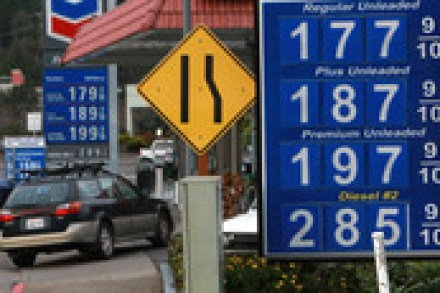
Charles Krauthammer has an important piece in the Weekly Standard joining those calling for an increase in the gas tax in the US compensated for by an equivalent reduction in the payroll tax. Here’s what he is proposing: “A net-zero gas tax. Not a freestanding gas tax but a swap that couples the tax with an equal payroll tax reduction. A two-part solution that yields the government no net increase in revenue and, more importantly—that is why this proposal is different from others--immediately renders the average gasoline consumer financially whole. Here is how it works. The simultaneous enactment of two measures: A $1 increase in the federal gasoline tax--together with an immediate $14 a week reduction of the FICA tax.

Free speech doesn’t require giving Ahmadinejad a platform

It is worth returning to Channel 4’s decision to have President Ahmadinejad deliver its alternative Christmas message. Predictably, those who have attacked the decision have been accused of opposition to free speech—just look at some of the comments on the Skimmer’s post. But this criticism misses a crucial distinction: there is a difference between allowing free speech and providing a platform. For example, I oppose criminalising Holocaust denial on the grounds that it is best to defeat these absurd and offensive theories in open debate and that people should be allowed to say what they want, short of incitement to violence, however wrong what they say is. But I would never give a platform on Coffee House to a denier.

Ben Brogan: Three shadow cabinet members would have quit rather than give up their part-time jobs

Ben Brogan has an important update to the story about the shadow Cabinet and their outside interests: “what seems to have happened is fairly straightforward: Dave and George Osborne wanted to call time on part-timers, but when the idea got out there was a backlash behind the scenes. I'm told that three members of the Shadow Cabinet would have quit rather than give up their extra-curricular earnings, led by Mr Hague, whose outside interests brought him £230,000 this year.” This really does call into question their commitment to the cause. One begins to wonder which job they actually regard as their first priority. I suspect that most people who have followed this story are fairly confident that they know who the other two members who threatened to resign are.

The next president from the land of Lincoln

Obama’s victory speech on election night was not the triumphant hallelujah that some of his supporters wanted. Rather, it was an exercise in expectations management. Ever since his victory became a racing certainty, Obama has been trying to damp down expectations—the inspirational, the ‘planet will begin to heal’ rhetoric has taken a back seat in recent months—aware that expectations could so easily get so high that his first hundred days would be bound to be regarded as a disappointment. This is what makes his choice of the Lincoln Bible so interesting.

Part-time jobs for the shadow Cabinet are a full-time weakness for the Tories

The saga of the shadow Cabinet and their second jobs took another turn today with a report in the FT that David Cameron will not force them to give up their outside interests. This strikes me as a mistake. A general election is less than 18 months away and the part-time nature of much of the shadow cabinet—15 of its 31 members have jobs other than their ones as an MP and a shadow minister—is a vulnerability just waiting to be exploited by Labour. The problem is compounded by the fact that many of them holds job that would be easy to demonise in an election campaign. Reportedly, it was fear of shadow Cabinet unrest that led to Cameron backing away from a confrontation over the issue.

It was the taking part that counted

Yes the England team lost the series in India and yes there were things to critics about their performance—Shane Warne’s jibe about Monty Panesar’s lack of guile has never rung truer than after this tour, Steve Harmison’s attitude away from home is still deeply frustrating and in continuing to pick Ian Bell ahead of Owais Shah the selectors are taking loyalty to Bush-like levels—but all this pales into insignificance compared to the fact that the tour went ahead. That we are talking about cricket not security today is a small victory for civilisation against the terrorists.   Those responsible for the Mumbai atrocities had many aims. One of them was to scare the Western world away from doing business with India.

A mighty expensive stimulus

The latest estimate for the cost of the stimulus package that Obama will ask Congress to approve is $850 billion. That is, as Playbook points out keying off a Washington Post story: “ more than the inflation-adjusted cost of the Vietnam War ($698 billion), the Iraq war ($597 billion), the Korean War ($454 billion), the initial 42,700 miles of the Interstate highway system ($425 billion), the race to the moon ($237 billion), the savings-and-loan crisis of the 1980s ($153 billion), the Louisiana Purchase ($217 billion), the Marshall Plan ($115.3 billion) or the Works Project Administration of 1939 ($100 billion).” Now, obviously the US economy is now far lager—making the stimulus a smaller percentage of GDP.

Too Quick on the draw

One would imagine that a prerequisite of heading the Met’s counter-terrorism branch would be having good judgement. This is something that Bob Quick, who signed off on the Damian Green arrest, seems to lack. This morning a story in the Mail on Sunday reported that his wife runs a wedding car hire service from their home. Quick responded by accusing the Tories of smearing him because of the Damian Green arrest. The bizarre statement alleged that, “The Tory machinery and their press friends are mobilised against this investigation in a wholly corrupt way, and I feel very disappointed in the country I am living in." The Tories replied with a simple denial.

Marginal unemployment

General elections are decided in the marginals; it was polling from them that led Brown to call off the election in 2007. The economic conditions in these seats are going to have a disproportionate impact on the election result. The Independent reports today that unemployment is rising faster in Labour-held marginals than in the country as a whole: “Some 59 out of Labour's 115 most marginal seats witnessed increases of more than 418 claimants, the average for the country. In total, 225 Labour seats, 64 per cent of the party's Westminster total, had above-average unemployment rises, compared with 21 per cent of Conservative and 22 per cent of Liberal Democrats.

Free trade and free the schools

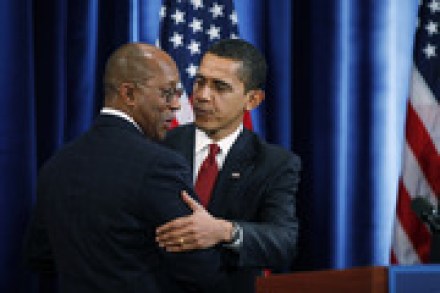
I said the other day that Obama’s national security appointments were as good as a hawk could hope for. Well his pick for US Trade Representative is much better than what free traders expected. The former Mayor of Dallas Ron Kirk (pictured with Obama) is on the right side of the issue which considering Obama’s protectionist demagoguery during the primaries and the general is a pleasant and most welcome surprise. Given the protectionist nature of the Democratic Congress it is unlikely that much progress will be made on liberalising trade over the next few years. But the nomination of Kirk suggests that Obama is, thankfully, not prepared to give the unions all that they want on trade.

Give the voters hope

Bagehot has some sensible advice for David Cameron in The Economist: smile more. He writes that: “Labour’s caricature of [Cameron’s] astringent economic approach as “do nothing” is unfair but evocative; it has awakened an almost olfactory memory of Tory responses to past downturns. Meanwhile, Mr Cameron pursues his theme of the “broken society”, his catch-all, exaggerated label for a range of ills such as drug abuse and chaotic families. The “broken society” slogan was invented in a recent but distant era when, so Mr Cameron breezily argued, the economy was essentially sound. Combined with his glumly parsimonious economic message, this social pessimism now makes him seem unappealingly bitter and recriminatory.

Pounded down

Peter Oborne has an important column this morning on just how seriously the option of printing more money is being taken by the Bank of England and the government. But what caught my eye is the fall in sterling that Oborne details: “This systematic debauchery of the country’s finances has caused sterling to collapse. In just three days this week — Tuesday, Wednesday and Thursday — the pound fell by 4 per cent. It has now collapsed by an average of 23 per cent against rival currencies over the past 12 months.