James Forsyth

James Forsyth

James Forsyth is former political editor of The Spectator.

Obama’s double-play on taxes

From our UK edition

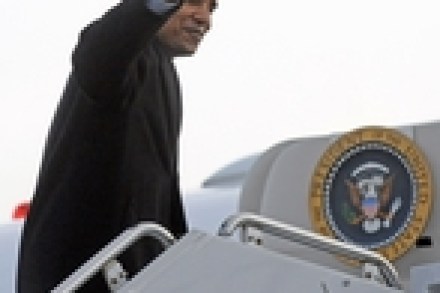
The first order of business for the incoming Obama administration is going to be a stimulus package. With Obama’s vacation over and the President-elect moving from Chicago to DC, the details of the plan are beginning to become clearer. The Wall Street Journal reports that the administration will urge Congress to make 40 per cent of the stimulus, expected to weigh in at $775 billion, tax cuts. As it notes: “The Obama tax-cut proposals, if enacted, could pack more punch in two years than either of President George W. Bush's tax cuts did in their first two years.” This is a clever move from the ever-pragmatic Obama team. The stimulus package is, in reality, hugely risky: the more bi-partisan cover Obama has the better for him.
Cameron goes grey

From our UK edition

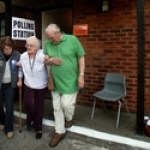
Fraser is at David Cameron’s event so he’ll have more on the Tory announcement that they’ll abolish the basic rate of tax on savings and raise the personal allowances of pensioners by £2,000 My initial reaction is that it is a savvy political move, the population is getting older and old people vote in higher numbers than young people. It is, however, a micro not a macro announcement. As David Cameron’s interview on the Today Programme this morning showed the Tories still lack a clear convincing, and compelling answer as to what they would do to lead the country out of this crisis.

Dwelling on the past will damage Brown

From our UK edition

The whole economic meltdown is less of an opportunity for the left in Britain than the US for the simple reason that Labour was in power here in the years leading up to it. Today, Jackie Ashley bemoans that Brown’s refusal to admit that mistakes were made means that the left might miss the opportunity presented to it by this crisis: “We really do live in a world ready to accept bigger government and fairer taxes. Yet to properly exploit that, Brown and his ministers have to change their tune about the past. To hear him claim he made no mistakes, and that everything about the Blair-Brown handling of the boom culture was well judged, jars horribly. If he believes we need to think again about what kind of society we want to be, he has to start by being a bit more reflective.

A first bit of bother for President-elect Obama as Richardson withdraws

From our UK edition

Until today the transition had gone pretty much perfectly for Obama. His appointments were impressive and warmly received, his poll numbers have risen to record levels and the scandal about Governor Blagojevich  allegedly trying to sell off Obama’s Senate seat has not hurt Obama or any of his staff. But today the transition hit a bump in the road: New Mexico Governor Bill Richardson had to withdraw from consideration to be Commerce Secretary. It was decided that a grand jury investigation into allegations of corruption in the awarding of state contracts in New Mexico would make his confirmation too difficult and distracting.

A far from healthy attitude to accountability

From our UK edition

There is a classic example of government waste and arrogance in today’s Observer. The Department of Health has taken to paying celebrities to appear in public health announcements. The thinking (and it is rather dubious if you ask me) being that a celebrity is more likely than anyone else to persuade us to eat five pieces of fruit a day and the like. The Observer put in a Freedom of Information request to find out how much these celebrities are paid for this work. But the Department of Health is refusing to disclose the sums involved, with a spokesman saying: “The Department appreciates that high-profile individuals are very successful at communicating public health messages.

He’s bolder than you’d think

From our UK edition

In The Observer today, Peter Oborne argues—as he has in the past—that David Cameron is far more of a radical than most people realise: “[Cameron] has been accused, especially by supporters, of being long on ambition, short on principles. This is almost the complete opposite of the case. I have read most of his speeches since he became leader and they are incredibly brave. Fundamentally, he has been calling for the British state as it currently stands to be dismantled, with power taken from central government and given back to local communities and institutions. There is an intellectual coherence here. In a series of brilliant speeches, Tory education spokesman Michael Gove has argued that schools should be freed from central control and run by parents.

Father Brown’s double-standard

From our UK edition

In his speech to the Labour conference, Gordon Brown launched a highly personal attack on how David Cameron treats his children: “Some people have been asking why I haven't served my children up for spreads in the papers And my answer is simple My children aren't props; they're people” But Brown seems to have no problem with talking to print journalists about his children or having them appear during meetings with journalists. Take the interview in today’s Observer, Gaby Hinsliff reports that: “His two-year-old son, Fraser, bursts in periodically still clad in his pyjamas and scrambles gleefully on to his father's lap.

Risk management

From our UK edition

The Tories keep telling us that they are on an election footing. If they are, part of that must be aiming to lose as few news cycles as possible between now and polling day. There are going to be some that the Tories can’t stop Labour winning; Labour is still the government giving it the ability to act and Brown the benefit of the Prime Ministerial bully pulpit. But what the Tories should be doing is addressing vulnerabilities they know about and cutting out the unforced errors. There are two obvious weaknesses that the leadership has yet to deal with: the shadow cabinet’s second jobs and the whole issue of Lord Ashcroft’s tax status. Another area where the Tories are opening themselves up to Labour attacks is donations.

The Great War’s toll

From our UK edition

I’ve been reading Blood, Toil, Tears and Sweat: The Dire Warning by John Lukacs about Churchill’s speeches in May 1940. It is well worth reading; a fine example of microcosmic history and short at only a 140 odd pages. Reading it one particular fact stood out to me: “the British their soldiers and sailors and airmen and bombed and burned civilians together, lost fewer lives during six years than during the four years of the First World War.” I knew that the military casualties in Europe were far heavier in the First World War than the Second. But I’d have thought that the war in Asia and the civilian casualties at home would have meant that more Britons died in the Second World War than the First.

How Labour might spin a second bail-out

From our UK edition

A second bank bailout would, as Pete noted earlier, be a hinge moment in British politics. Anthony Wells has shown that Labour’s fortunes began to recover because people believed that Brown and Darling’s rescue plan for the banks would work. If the government have to go back and have a second crack at it that will surely undermine public confidence in its ability to handle the crisis and in its future pronouncements. But I suspect that Labour think they have a way to spin it. Congressional Democrats plan to have a stimulus package, which looks like it will be worth between $675 and $850 billion over two years, ready for Obama to sign as soon as possible after the inauguration. I expect that Brown will try and roll out the second bank bail-out at the same time.

Oborne: Talks have begun about a Lib-Lab coalition

From our UK edition

Peter Oborne’s column today is explosive stuff. He writes that secret talks have already begun between Labour and Liberal Democrat figures about a possible coalition. He reports that as a sweetener to any possible deal the Labour Whips office is already drumming up support for Ming Campbell as the next Speaker. Oborne points to an article by Vince Cable suggesting that a national government might not be a bad idea and says: “Throughout all my years of reporting politics I have rarely encountered such a blatant hint by a senior politician from an opposition party that he wants a job in government  -  and all the signs are that Gordon Brown is warming to the idea of Vince Cable as Chancellor of the Exchequer in a government of national unity.

What’s wrong with political dynasties

From our UK edition

It now seems that Governor Paterson probably is going to appoint Caroline Kennedy to the Senate seat being vacated by Hillary Clinton. The odd thing about her mini-campaign, if you can call it that, is how unnatural she has been. She has been much less assured and appealing than she was when she stumped for Obama. In today’s Wall Street Journal, Peggy Noonan, in her own inimitable style, explains why being born to it might be why Caroline has proven to be such a poor advocate for herself so far “People who've seen politics up close when young tend to be embarrassed to be in politics. This is because they have seen too much of the show-biz aspects, the balloons and smiles and rallies.

A needed contrarian

From our UK edition

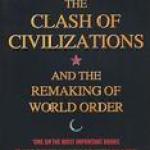
Every age needs its contrary thinkers, those prepared to challenge the conventional wisdom of the day. As Lexington argues in The Economist, Samuel Huntington—who died on Christmas Eve—was that for the 1990s. While others were triumphalist after the West’s victory in the Cold War, Huntington was pessimistically warning of a coming Clash of Civilizations. Huntington was many things but he was not creature of fashion. Clash, to my mind, is at least as flawed a theory as The End of History but it has undoubtedly added something to the intellectual debate. We would be in a better state today if more people in the 1990s had not succumbed to the illusion that the challenges to democratic market liberalism were over.

Elections the Tories should win in 2009

From our UK edition

The idea that 2009 will be a good year for the Tories is fast becoming conventional wisdom. Michael Brown makes this case in typically eloquent style in The Independent today arguing that once the downturn begins to really hurt, people will turn from the government to the opposition. But what really struck me was Brown’s observation about the two elections that we definitely will have here in 2009: “For the first time since 1993, county council elections will be held in England NOT on the same day as the general election. In 1997, 2001 and 2005 these local elections coincided with Tony Blair's three victories on general election turnouts – saving hundreds of Labour-held county council seats.

Helen Suzman RIP

From our UK edition

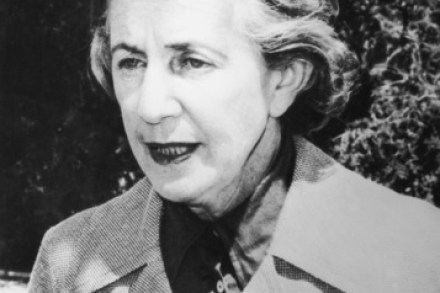
Helen Suzman was a woman of quite remarkable character and bravery. To have been the sole anti-apartheid MP in the South African parliament for so many years must have required a level of courage and a dedication to principle that few of us can imagine. Suzman was a good liberal, in the proper sense of the word. She opposed the great evil of apartheid, pointed out the failings of the Mbeki government over AIDS and Zimbabwe and denounced Mugabe. As she put it herself: “I am proud to acknowledge that I am a liberal...who adheres to old-fashioned liberal values such as the rule of law, universal franchise, free elections, a free press, free association, guaranteed civil rights and an independent judiciary.”  May she rest in peace.

Tony Blair: That the economy grew for a decade under Labour was down to luck not Gordon Brown

From our UK edition

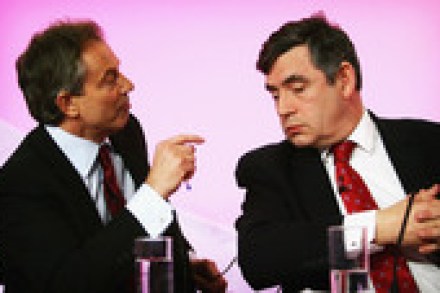
The Daily Mail reports a quite astonishing quote from Tony Blair: “Mr Blair, replying to a question after delivering a lecture at Yale University in Connecticut, said: 'It is true that we had ten years of record growth when I was prime minister. 'I have, unfortunately, come to the conclusion that it was luck.'” Having not heard the audio one can’t tell if Blair was joking, as his spokesman claims he was, or what the context was. But Brown’s boasts about his own economic record have always been exaggerated; a whole bunch of those record quarters of consecutive economic growth came under the Tories and Brown was operating in a very benign global economic environment.

What to look out for in 2009

From our UK edition

The events of 2008 should make us all wary about making predictions. So instead, I’m going to flag up some things that I think are worth watching out for in 2009. The Chinese government’s legitimacy is predicated upon rapid economic growth, so what will happen there when the downturn hits? I’m fascinated to see if there is more social unrest, whether newly affluent urbanites become as irked at the Communist party as folk in the countryside and whether the leadership resorts to nationalist sabre-rattling in an attempt to shore up its position. Iran is the problem that hasn’t gone away. As Richard Beeston notes in The Times this morning, Iran could have enough fissile material to build a bomb in 2009. It’ll be intriguing to see how Obama handles this.

Blagojevich won’t go quietly

From our UK edition

The embarrassment that is Rod Blagojevich, the Illinois governor who has been accused of trying to effectively auction off Obama’s Senate seat, isn’t going away for Illinois, the Democrats or Obama. Rather than resigning in shame following Patrick Fitzgerald’s devastating press conference, Blagojevich has tried to brazen it out. Today, he is set to name a replacement for Obama, 71 year old former Illinois Attorney-General Roland Burris. If seated, Burris would be the only black senator—Blagojevich presumably thinks that this factor would force the Senate to seat him despite Blagojevich appointing him while indicted for, among things, attempting to sell this position.

A speech George Osborne should deliver

From our UK edition

A problem for the Tories at the moment is that they lack a big idea on the economy. This is what enables Brown to unfairly paint them as a ‘do-nothing’ party. The Tories should take inspiration from Arthur Laffer. Here’s a lightly adapted version of a recent Laffer article, that Osborne should make party policy:   “We need to impose a tax on the thing we want less of (carbon dioxide) and reduce taxes on the things we want more of (income and jobs). A carbon tax would attach the national security and environmental costs to carbon-based fuels like oil, causing the market to recognize the price of these negative externalities. Nuclear power plants would then compete with coal-fired plants. Wind and solar power would have a shot against natural gas.

Russia skids on an oil slick

From our UK edition

Today’s Wall Street Journal is spot on about how the limitations of Putinism have been exposed by the collapse in the oil price: The last few months have laid bare Putinism's true character. His recovery was no miracle: With oil so high, and half the work force employed by the state, any country like Russia would boom. But now the cost of Mr. Putin's abandonment of market reforms and his neutering of state institutions and the private sector can be better appreciated.” The Journal reports that 39 percent of Russians are now dissatisfied with the regime. One of the geopolitical things to watch in 2009 is how non-democratic societies like Russia and China handle the coming economic strife.