James Forsyth

James Forsyth

James Forsyth is former political editor of The Spectator.

The three messages the Tories need to get across on the economy

From our UK edition

The Tories need to do three things when talking about the economy. First, give the public some straight talk about how bad the situation is. Second, pin sufficient blame on Gordon Brown and the government for the current problem. Finally they need to show the electorate that life would be better under the Conservatives, that after four years of Tory government the economy would be growing again and Britain would once more have a bright future. In strategic terms, the challenge the Tories face is similar to the one that the Reagan campaign faced in 1980. The Tories could learn a lot from Reagan’s economic rhetoric in that election. This past week, the Tories pulled off this triple play. The baby debt message accounted for the first two and their green proposals for the final part.
The New Year brings bigger, better poll leads for the Tories

From our UK edition

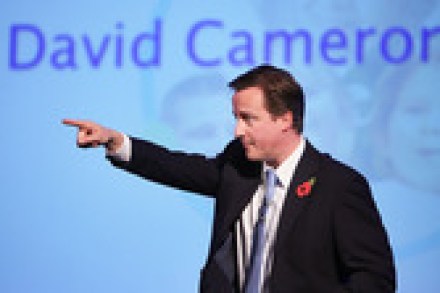
Before Christmas, the Tories were acutely aware of the need to start the New Year strongly. This morning's polls suggest that they have done so. The Tories are now back above 40 percent with ComRes and on course for an overall majority with the pollster that has returned the worst Tory scores in recent months. In the YouGov poll for The Sunday Times, the Tories are on 45 percent, 13 points ahead—their biggest lead since October and a seven point increase in their advantage with the polster since last month. The Tories will be particularly pleased to see that the Cameron and Osborne edge over Brown and Darling on who will raise your standard of living more is growing. It’ll be fascinating to see how Brown’s bank insurance scheme plays in the polls.

How patient will the public be?

From our UK edition

As Pete noted earlier we can expect the government to announce a new string of measures to try and get the banking system moving again next week. The key political question is whether action from the Prime Minister revives his poll rating or whether the public conclude that this means that the government’s first effort failed and that it doesn’t know what it’s doing. I’ve spent most of today at the Fabian Society conference and sitting on a panel with Peter Mandelson I was particularly struck by this comment from him: “No one responsibly would say that this is all that needs to be done to put right what’s gone wrong ... We’ll get there but it will take more time, more ingenuity and possibly some further trial.

You think Abraham Lincoln had it tough?

From our UK edition

James Forsyth says that Barack Obama will need all his remarkable talents to confront an extraordinary set of challenges — not only the economy, but global security Short of wearing a stove-pipe hat, Obama could not make his desire to be compared to Abraham Lincoln any more obvious. He plans to travel to his inauguration via the same route that Lincoln did, be sworn in on the Lincoln Bible and eat lunch off replicas of the Lincolns’ White House china. Michelle and the girls must have wondered if he was going to change their name when he took them to the Lincoln Memorial on Saturday night. Obama has set a high bar for himself; comparisons with America’s greatest president are rarely favourable to an incumbent.

The Tory task on foreign policy

From our UK edition

There has been a conspicuous silence from the Tories about David Miliband’s deeply mistaken piece in The Guardian yesterday. While there are not many votes in foreign policy for an opposition, it is vital that a party that wants to be a success in government uses its time out of office to work out its world view. So far, there’s insufficient evidence that the Tories have done this. David Cameron has developed impressive relationships with foreign leaders but the intellectual framework for Tory foreign policy, especially when it comes to the broader Middle East, is lacking. Part of the problem is that there is no ideas infrastructure on the right when it comes to foreign policy; no think-tank on the right does work on it.

The Hunt for a new Tory party chairman

From our UK edition

Even if Caroline Spelman is completely exonerated by the Parliamentary Standards Commissioner she’ll still be moved from her post as party chairman. The party needs a better media communicator in the job in the run-up to an election. If the reshuffle rumours are to be believed, Jeremy Hunt is in pole position to replace her. Hunt is one of the most effective members of the shadow cabinet and comes across well on TV and radio. But a top trio of Cameron, Osborne and Hunt is too similar. Three southern, Oxford educated public school boys are always going to find it hard to reach certain sections of the electorate. Apparently that is why the leadership is pushing William Hague so hard to do more for the party.

Lies, damned lies and league tables

From our UK edition

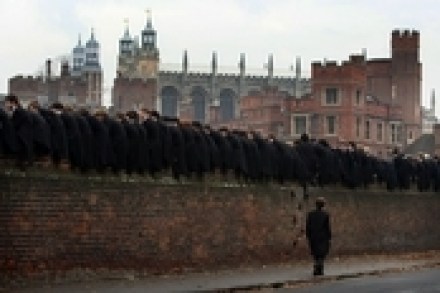
According to the school league tables published today no pupils at Eton are “achieving 5 A*-C GCSEs including English and maths". How can that be? Well, Eton like various other top private school have abandoned GCSEs in certain subjects and instead have their pupils take international GCSEs which don’t count in the league tables. IGCSEs, though, are far harder than their British counterparts, more like the old O-Levels than GCSES. For all the talk from Balls and Brown about "social mobility", they have presided over the erection of a new barrier to social mobility: the rise of an alternative set of exams that are more highly valued by universities and employers but are unavailable to children edcuated in the state system.

It’s a small world at the top

From our UK edition

Ben Smith spots a passage in Michael Wolff’s Murdoch biography which might explain why Murdoch’s New York Post is so enthusiastically backing Caroline Kennedy: “As Rupert Murdoch begins to plot to get the Wall Street Journal, he's also worried about getting Grace into private school in New York. He wants her to go to Brearley, where [an older daughter] went. He recruits Gary Ginsberg, who knows the Kennedys, to help him get Caroline Kennedy, a Brearley Alumna and board member, to write a letter on Grace's behalf.” The other thing this snippet makes you think is how absurdly competitive and socially-based the admissions process is at these New York private schools.

Miliband’s argument is bananas

From our UK edition

One of the great mysteries of British politics is why David Miliband has a reputation for being a deep-thinker. Far from being a bold new agenda for British foreign policy, his piece in today’s Guardian, which Pete reviewed earlier, is, as Melanie argues, embarrassingly shallow. First, it is hardly ground-breaking to observe that ‘war on terror’ is an inadequate and misleading phrase. Back in August 2004, President Bush conceded this point:  “We actually misnamed the war on terror; it ought to be the struggle against ideological extremists who do not believe in free societies, who happen to use terror as a weapon to try to shake the conscience of the free world.

Damming with faith praise

From our UK edition

“If you compare him with an average Russian bureaucrat you're laughing." A hilarious--—perhaps unintentionally so—assessment of Gordon Brown from Alexander Lebdev, who is reportedly the new owner of the Evening Standard.

The Ken Clarke conundrum

From our UK edition

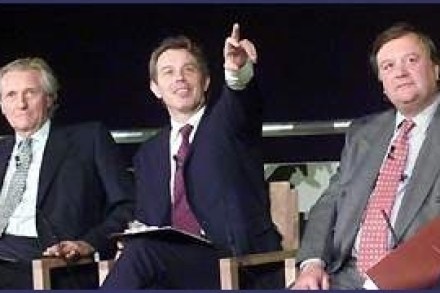
Having let the Ken Clarke hare run, the Tory leadership are faced by what happens to him dominating reshuffle coverage. If after this Cameron doesn’t bring him back there’ll be a lot of headlines about Cameron bowing to pressure from the right. But if Clarke does return, then the press—egged on by Mandelson—will start speculating about ‘Tory splits.’ (If Clarke does return, expect to see rather a lot of this pic from the Britain in Europe launch.) Cameron’s dilemma is that Clarke’s return would boost the party in opposition—he is, whatever his faults, a highly effective media performer—but hinder it in government.

The Tories try to bring Hague’s vague role into focus

From our UK edition

Over Christmas, William Hague’s standing in the party and David Cameron’s authority took a beating from reports that the shadow foreign secretary was prepared to resign rather than give up his outside interests. Today’s joint Cameron-Hague interview in The Sun can be seen as an attempt to move on from that. In an attempt to minimise the part-time issue, Hague tells George Pascoe-Watson, “I have been drastically cutting my outside interests. That will continue. There won’t be a lot left by the time we are approaching the election.

The cost of the US deficit

From our UK edition

Obama might be right that there is no alternative to the US running “trillion-dollar deficits”. But the $1.7 trillion deficit, its likely size in 2009, is truly alarming. Consider these comparisons that Kevin Hassett provides: “The whole world’s military spending in 2006 totalled a little less than $1.2 trillion. So next year’s U.S. deficit could cover that and still have $500 billion left over for building bridges. Perhaps the most disturbing comparison is this one: When President George W. Bush was first elected, total federal government spending was about $1.7 trillion. In other words, the difference between federal outlays and federal revenue this year will be bigger than the entire government was as recently as 2000.

Obama will gain from honouring McCain

From our UK edition

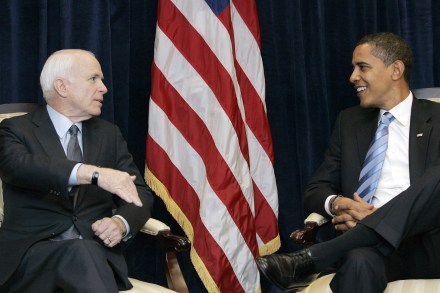
In a classy gesture, Barack Obama is holding an inaugural eve dinner to honour John McCain. (There are other dinners that night for Colin Powell and Joe Biden). But it is also smart politics, as it costs Obama little and gains him much. McCain is a genuine American hero and the evening will be seen, and is presumably intended to be seen, as a sign that Obama is moving from being the candidate of one party to the president of the whole country. McCain isn’t going to run for president again and his support for various initiatives—think immigration reform and climate change legislation—would give them a pleasing bi-partisan sheen. The dinner will make Obama’s administration appear bi-partisan without actually having to compromise on policy.

A disaster waiting to happen?

From our UK edition

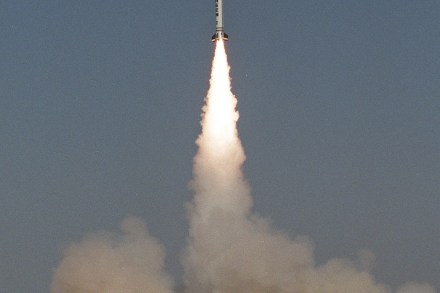
There’s some tough competition but Pakistan is probably the scariest foreign policy problem the world faces. It is where the issues of weak states, Islamic extremism, nuclear weapons and terrorism all come together. Considering Britain’s ties to the place it is a problem that should cause particular concern here. If you doubt how big a problem Pakistan is, read David Sanger’s excellent piece on the safety, or otherwise, of Pakistan’s nuclear arsenal in The New York Times magazine. Here is the key section: ‘By now Obama has almost surely been briefed about an alarming stream of intelligence that began circulating early last year to the top tier of George W. Bush’s national-security leadership in Washington.

School reforms will bring real social mobility

From our UK edition

Labour is right to want to do more to bring working class children into the professions. It is undeniable that middle-class children derive a considerable advantage from the social capital of their parents and the fact that their families can support them in low-paying or unpaid internships. Schemes that can offer those from deprived backgrounds access to these social networks should be welcomed; Chris Grayling is quite wrong to call it ‘class war’ and is playing into the worst perceptions of the party by doing so. But far more important to making Britain a more meritocratic country is school reform; making a good education available to everyone will do far more for social mobility than these schemes, however worthy they are.

Obama’s Iran calculation

From our UK edition

The New York Times reports this morning that President Bush rejected an Israeli request for bunker-busting bombs, refuelling capacity and over-flight rights that would have allowed it to hit Iran’s nuclear facilities. It is unclear whether the Israelis were actually planning a strike or whether they merely wanted to emphasise to the Americans that they would act if Washington would not. Tehran’s rate of progress towards nuclear status means that Iran will probably be a nuclear power, or at least nuclear-ready, by the end of Obama’s first term unless action—whether military, diplomatic, or economic—is taken to stop it. The New York Times says that US covert-ops against Iran’s nuclear programme have been stepped up.

America is changing and so must the Republicans

From our UK edition

There is a deep divide in Republican circles about how to think about the 2008 election result. Some argue that the results show just how close to becoming a rump party of the Deep South the GOP is. Others say that considering the economic crisis, the drag on the ticket that was the Bush presidency, the failings of the McCain campaign and Obama’s skills as a candidate to lose 53-46 in the popular vote was not that bad a result. I think the former group have the more convincing argument because of the ways in which America is changing. Just consider this from Ron Brownstein: “To grasp how powerfully demographic change is reshaping the political landscape try this thought experiment about the 2008 election.

Why Derek Draper’s web offering will be no match for Conservative Home

From our UK edition

Iain Dale points us towards Gaby Hinsliff’s scoop in The Observer that Derek Draper’s Labour List website will launch next week. Comparisons are being made to Conservative Home but looking at the contributors list which includes Peter Mandelson, Charlie Whelan, Philip Gould and Douglas Alexander it seems more like the Conservative Party’s Blue Blog. It is hard to imagine that these people are going to want to say things that could cause the Labour Party political problems. (To be fair, part of the problem is that the media and the blogs will jump on anything on the site that can be spun as an attack on Gordon Brown).