James Forsyth

James Forsyth

James Forsyth is former political editor of The Spectator.

What worries voters most

The unemployment numbers are expected to be grim by the end of this year. But Bagehot notes in this column this week that the Brown circle believes that rising unemployment might not be as big a political deal as it has been in past recessions: “But, in private, some of his associates argue that redundancies may prove less politically toxic for the government than was the case in past recessions—because they will not be concentrated, as they previously were, among low-skilled industrial workers ill-equipped to find alternative employment. These days, the argument runs, few workers expect to spend their careers in a single job, and the labour market is flexible enough for most to find new ones.


The West Bank model

At the beginning of Israel’s action in Gaza many claimed that it would bring down the more moderate Fatah-run Palestinian Authority on the West Bank. But it has not. Walter Isaacson of the US Palestinian partnership tells Jeffrey Goldberg that it is because the Palestinians on the West Bank can see what peace would bring that things have remained relatively quiet:  "There has been double-digit growth in the economy, and people have a stake in the future because of what Salam Fayyad and others have done to improve conditions there," Walter said. "And Israelis have responded by encouraging economic development. I think that people in the West Bank have a clear sense of what peace would bring them, and that's a prosperous state.

Cable: We’ll only work with Labour after the next election if it is the largest party

We are at the point in the electoral cycle where the political class begins to speculate about a hung parliament. Personally, I’m sceptical that there will be one-the signs point to the polls breaking decisively for the Tories in 2009. But Vince Cable’s comments in The Times are noteworthy as they rule out the Lib Dems propping up a Labour government if Labour is not the largest party in the Commons. Cable tells Alice Thomson and Rachel Sylvester that: “It would be arrogant for us to choose one or other. Whoever gets the largest number of seats . . . whether it is Conservative or Labour, we will work with either.” Coalition speculation is a mixed blessing for the Liberal Democrats.

Denouncing the useful idiots

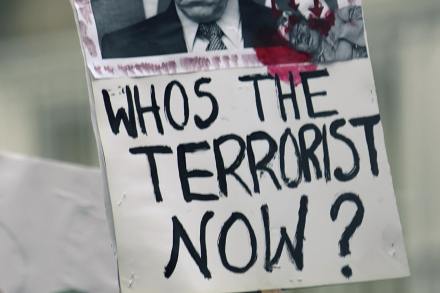
There are few more sickening sights than people wandering around with banners stating things like “We are all Hezbollah” or “We are all Hamas”. These people are using the freedoms entrusted to them by a liberal democracy to endorse terrorist groups with genocidal ambitions. Over at the Telegraph, Shiraz Maher has written a powerful denunciation of these useful idiots: “Such vociferous support from the streets of London will have come as great relief to Hamas leaders at a time when even Arab governments such as Syria, Egypt and Saudi Arabia have blamed them for this latest outbreak of violence. These self-righteous "friends of Palestine" obsess about Israel and the Jews, but turn a Nelsonian blind eye to everything Hamas does.

Brooks: this time next year, Obama will either be a great President or a broken one

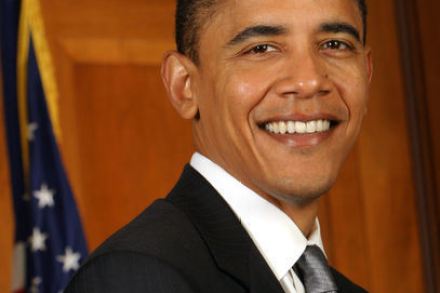
David Brooks is, to my mind, the most perceptive American political commentator. He is a conservative who understands both the potential and limitations of Obama. Today, he argues that Obama’s decision to try and do everything through the stimulus is as bold as it is risky. He writes that: “This is daring and impressive stuff. Obama’s team has clearly thought through every piece of this plan. There’s no plank that’s obviously wasteful or that reeks of special-interest pleading. The tax cut is big and bipartisan. Obama is properly worried about runaway deficits, but he’s spending money on things one would want to do anyway. This is not an attempt to use the crisis to build a European-style welfare state. The problem is overload.

How Obama is selling the stimulus

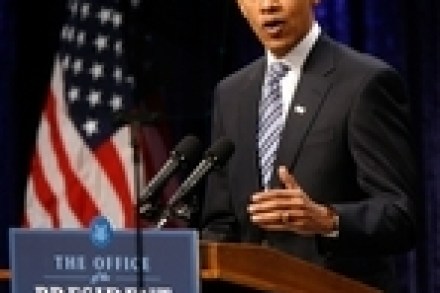
Obama gave a big-speech today promoting his stimulus plan. It was short on detail—there’s much Congressional horse-trading to come—but there were two passages that stood out. The first was Obama’s diagnosis of what has caused this economic collapse: “This crisis did not happen solely by some accident of history or normal turn of the business cycle, and we won't get out of it by simply waiting for a better day to come, or relying on the worn-out dogmas of the past.  We arrived at this point due to an era of profound irresponsibility that stretched from corporate boardrooms to the halls of power in Washington, DC.

Field artillery

Frank Field was once famously lifted off his feet by his lapels by Gordon Brown, so enraged was Brown by Field’s criticism of him. Considering this, Field would we well advised to steer clear of the great clunking fist after writing this on his blog: “During no move since has the Government been able to get itself ahead of the curve, and thereby perhaps influence the course of events. The latest example is over VAT. It was a fatuous move from the very beginning. And when we had a chance in Parliament sometime before Christmas to debate it I voted against, making a plea that the billions being borrowed to finance the VAT cut should be channelled into new forms of credit for viable businesses who might otherwise go under in the credit crunch.

The politics of printing money

I’ll leave the economics of printing more money to those more qualified than I, but the politics of it seems appalling. Mike Smithson is right when he writes at Political Betting that: “...the notion of “printing money” sounds quite horrific - something that simply won’t be understood, surely, by 99% of the electorate and something that the Daily Mails of this world can attach the imagery of what goes on in Robert Mugabe’s Zimbabwe.” If the Bank of England does do this, I imagine that economic confidence would plummet. And—as Anthony Wells has shown—when economic confidence falls, Labour’s poll rating is the next thing to go. P.S. By the Wells thesis, the Tory lead should grow this month.

How do you have a debate with nobody talking?

Alistair Darling’s latest comments are among the most baffling he has made during this whole crisis. Here is his response when asked on BBC News about reports that the Bank of England is to start printing money: "We're looking at a range of measures to support the economy, to support business, to help people, but nobody is talking about printing money. "There's a debate to be had about what you do to support the economy as interest rates approach zero, as they are in the United States. But for us that is an entirely hypothetical debate," he said. He added: "We are looking at a range of measures to support the economy, to support business and to help people. But nobody is talking about printing money.

The idiocy of the ECB

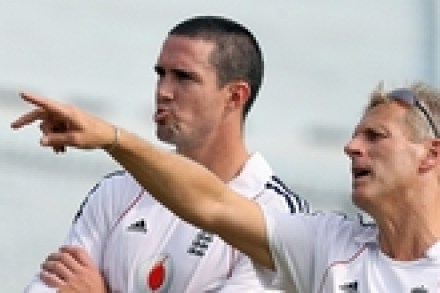
So, it has all ended in tears. Kevin Pietersen’s resignation came even sooner than his worst enemies would have predicted when he took the job five months ago. A lot of people are already blaming Pietersen, saying that you can’t have the captain forcing the management’s hand as publicly as he tried to do when he let it be know that they would have to choose between him and the coach Peter Moores. But this strikes me as the wrong way to look at things. When the ECB appointed Pietersen they knew what they getting; it was blinding obvious that he was going to want things done his way. Once they’d made that decision, they should have been prepared to give him what he believed the team needed to succeed.

The debate about the debate

Kevin Maguire devotes the bulk of his column today to arguing that Gordon Brown should sign up to a televised debate before the next election. Maguire writes: “In Downing Street, the mood remains opposed to US-style Presidential TV debates. … Brown should declare now that he'll talk podium-to-podium with Cameron and the Lib Dems' Nick Clegg in front of millions of viewers.” I might be reading too much into this but considering Maguire’s closeness to some in Downing Street, it seems likely that this is debate is going on amongst the Brownites at the moment. My personal view is that Cameron would probably win such a debate but that Brown—given where he’ll probably be in the polls at this point—should take the risk.

Is Brown’s last roll of the dice an income tax cut for everyone?

After the PBR there was a huge sense of relief among Tories that Brown had chosen such politically poor tax cuts. An income tax cut (or an increase in the personal allowance which would have had the same effect) would have caused the Tories far more problems than the two and a half percent cut in VAT. But it seems that Brown might make a better fist of things second time out. John McFall, Chairman of the Treasury Select Committee, has told the Mirror that it is “in the Prime Minister’s mind” to raise the personal allowance from £6,035 to £10,000 in the March budget. Politically, this would be a potent tax cut. It would reduce everyone’s income tax bill, it would bring some people out of tax altogether and pull others out of the top-rate.

Empathising with Israel

One thing that strikes me about many of Israel’s critics is their unwillingness to even think about why Israel acts as it does. Those who think that Israel is wrong to be doing what it is doing in Gaza should read Daniel Finkelstein’s column in The Times this morning; I won’t quote from it because it is such a splendid piece of writing that it deserves to be read in full. I’m not saying that after reading it you will agree with Israel’s actions but it will give you a sense of empathy with the Israelis, an understanding of why they do what they do. Given the Holocaust, it is unrealistic—and unreasonable—to expect Israel to take threats to wipe it off the map lightly.

Of course the Tories are watching what their candidates are saying

Michael Crick has taken to his blog to reveal the contents of leaked Minutes from a Tory meeting: “"Care needs to be taken over the candidates that have the potential to embarrass the Party - there will now be a fortnightly meeting to assess the watch-list of candidates, and the reasons they are on the list needs to be taken into consideration." And the document shows that a Conservative Central Office official has even been appointed to keep a close eye on what these potential trouble-makers get up to: "The public output e.g. blogs, websites, press releases of candidates will [sic] now to be monitored by a new member of the CRD team," the minutes read. "Let JM or Stephen Gilbert know if there are any problems with candidates - de-selection should be the last option.

How to restore Britain’s military standing

Rachel Sylvester’s column today, highlighted by Pete this morning, raises the question of who should take the blame for the decline in Britain’s utility as a combat ally. This is principally a result of this country fighting wars on a peacetime budget. It was one of Tony Blair’s great failings that he did not tell Gordon Brown that the need for a serious and sustained increase in defence spending was non-negotiable. (When Brown became Prime Minister, the military had to fight two wars for a year without even a full time Secretary of State for Defence). What the military can be faulted for is a series of high-handed comments and articles about the failings of the US military when it came to counter-insurgency. These were not politic.

The Gaza dilemma

Jeffrey Goldberg, formerly of the New Yorker and now at The Atlantic, is a fantastic writer and always worth reading on the Middle East. His post, flagged up by Clive, explaining why he isn’t commenting more on the situation in Gaza, is as depressing as it is moving: “I've served in the Israeli Army in Gaza; I've been kidnapped in Gaza; I've reported for years from Gaza; I hope my former army doesn't kill the wrong people in Gaza; I hope Israeli soldiers all leave Gaza alive; I know they'll be back in Gaza; I think this operation will work; and I have no actual hope that it will work for very long, because nothing works for very long in the Middle East. Gaza is where dreams of reconciliation go to die.

In 2009 the Tories need to kick their dependency on Dave

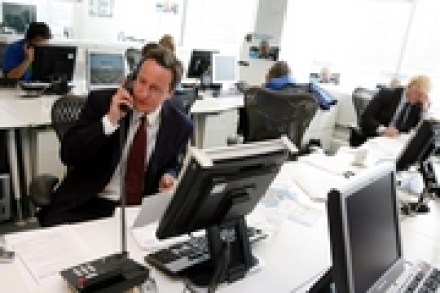
One habit the Tory party should aim to cure itself of in 2009 is its over-reliance on David Cameron to gets its message across. Some Tories defend the heavy use of Cameron by arguing that he is both the party’s most attractive face and the only way they can guarantee getting their message reported in the media. But using Cameron for nearly all high-profile announcements prevents other members of the shadow Cabinet from developing national recognition. For instance, I fail to see why George Osborne shouldn’t have made today’s announcements on tax. Also, as Tim Montgomerie has noted, if there are too many speeches by a party leader they become devalued, less of an event.

Things worth reading | 5 January 2009

The economic crisis is so bad that it is often easy to forget that the foreign policy challenges that so dominated the news a year or so ago have not gone away. The mission in Afghanistan will present General Petraeus with an even tougher challenge than Iraq, Iran’s nuclear ambitions will have to be confronted or accepted sometime soon, this year we will find out what happens in China when the economy stumbles, Russia still seems intent on reasserting its dominance in its near abroad and there is—of course—the problems in the Middle East that have so dominated the news in the past few days. So, I’m very glad that my old home Foreign Policy has launched a set of blogs that promise to be required reading on these topics.