James Forsyth

James Forsyth

James Forsyth is former political editor of The Spectator.

Will Obama’s Middle Eastern public diplomacy work?

From our UK edition

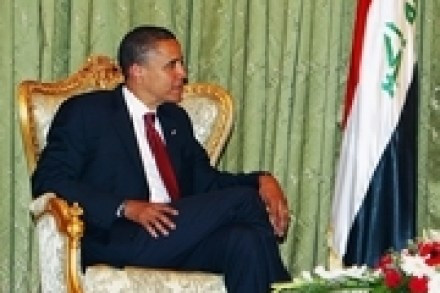
One of the big questions of the Obama presidency is can he actually use his popularity to go over rulers’ heads and straight to their people. Obama’s interview with Al Arbiya, a 24 hour Middle Eastern news channel, was an attempt to do just that. Obama emphasised his willingness to listen and repeatedly talked about ensuring about a better future for the children. He struck a far more doveish tone than he did either in his inaugural address or on the campaign trail; it was clear quite his comments were not aimed at a domestic audience. We’ll have to wait and see if this approach works. My concern is that it muddles his message and the soft-pedalling on issues such as Iran’s nuclear programme will encourage the Iranians to test his resolve.

It won’t be leadership speculation that hurts Brown but leadership positioning

From our UK edition

One poll already puts Labour below 30 percent but there’s almost no chance that Labour will replace Brown as leader. Collectively the party seems to know that it made its decision when it chose during conference to stick with Brown. But what will undermine Brown, as James Kirkup argues, is ministers jostling for the best position post-defeat: One minister sighs that there are "at least four of my Cabinet colleagues who think about nothing else but how they are positioned to succeed Gordon" after Labour loses the next election.   Their names are no surprise, but some MPs say that Harriet Harman and Ed Miliband are doing the best job of wooing backbenchers and Labour activists in the country.

How China’s currency manipulation caused the crisis

From our UK edition

One of the most important political and ideological battles of the next few years will be to determine who—and what—gets the blame for the current financial crisis. The public, and public policy, will react heavily against whoever and whatever is perceived to be at fault. All of which makes Sebastian Mallaby’s comments in the Washington Post so important: “Geithner [Obama’s Treasury Secretary] is correct that China manipulates its currency. What's more, this manipulation is arguably the most important cause of the financial crisis. Starting around the middle of this decade, China's cheap currency led it to run a massive trade surplus. The earnings from that surplus poured into the United States.

The problem with the DEC appeal

From our UK edition

As someone who thought Israel’s actions in Gaza were justified and that the BBC did not do nearly enough to explain the Israeli position during the conflict, I was fairly cynical about the BBC’s motives in not showing the DEC appeal last night. But having watched it a couple of times, I find myself in increasing sympathy with the BBC and Sky’s position. The appeal emphasises the destruction in Gaza. (The charitable explanation for this is that this is the best way to persuade people to donate, an uncharitable one is that these charities have an anti-Israeli agenda.) This emphasis, and the footage used, carries with it an implicit message that Israel’s actions did not take sufficient care to avoid civilian casualties and damage to civilian areas.

Is it the schooling or the eyebrows that is the problem?

From our UK edition

One friend joked to me the other day that Prime Ministers should only appoint Chancellors whose eyebrows match their hair colour, pointing out that the last two Chancellors to lead Britain into recession have both had black eyebrows and silver hair. But Alex Massie points out that it might be the schooling not the eyebrows that are at fault: both Norman Lamont and Alistair Darling are products of Lorreto, the prestigious Edinburgh boarding school.

Making the motorcade

From our UK edition

The New Yorker has a really fun piece this week about a New Republic journalist who was drafted in to drive a car in the president-elect’s motorcade a couple of days before the inauguration. Here’s the bit where she’s given her instructions: The Secret Service guys told her the drill: it would all happen fast; the Suburbans would pull out, one of them with Obama inside, and she would follow right behind. One of the agents had a Starbucks drink, and he offered Lear a sip: six espresso shots on ice. “He told me he gets it three times a day,” she said. They gave her one piece of driving advice: “Don’t hit anything, and drive like you stole it.” After an hour and a half, Lear’s passengers arrived: General James L.

The Muslim Council of Britain’s disgusting decision to boycott Holocaust Memorial Day

From our UK edition

Today’s Guardian reports that: “The Muslim Council of Britain boycotted yesterday's national Holocaust Memorial Day commemoration in protest at the Israeli offensive in Gaza this month” The MCB’s decision to vote in December 2007 to end its boycott of Holocaust Memorial Day was regarded by many as proof that the group was moderating and that the government should once more start using it as its first-stop in dealings with the Muslim community. Their decision not to attend yesterday, the fact of which was confirmed to The Spectator by the Holocaust Memorial Day Trust, shows how wrong-headed that thinking was.

Brown and out

From our UK edition

Today’s ComRes poll in The Independent marks an important turning point. Labour has dropped below 30 percent for the first time since September; this means that Brown has dropped back to where he was before the first bank bailout and the return of Peter Mandelson. Brown has already recovered once when most of the political class had left him for dead but it is almost impossible to see how he can recover again. The brilliantly-constructed illusion that Brown is in control during this crisis has been shattered by events: as repossessions, unemployment and bankruptcies rise, the public will not see Brown as the great helmsman steering them through the crisis.

How the British left went bust

From our UK edition

Nick Cohen’s essay in The Observer Review is written with his trademark honesty and passion and is essential reading. Here’s the crux of his argument: “the paradox of the 1997 Labour government was that it was at once a left- and a right-wing administration. It wanted a huge public works programme. It aimed to redistribute enormous amounts of wealth. To achieve both these desirable goals, it made a bargain with the markets. All right, the political left said, we will accept extremes of wealth we once denounced as obscene. With the City accounting for a fifth of the British economy, we will embrace your speculators and not drive them overseas with tough regulation.

The state is too big

From our UK edition

If anyone doubts that state spending has grown far too large over the past few years consider these numbers: “Across the whole of the UK, 49% of the economy will consist of state spending, while in Wales, the figure will be 71.6% – up from 59% in 2004-5. Nowhere in mainland Britain, however, comes close to Northern Ireland, where the state is responsible for 77.6% of spending, despite the supposed resurgence of the economy after the end of the Troubles. Even in southern England, the government’s share of spending is growing relentlessly. In the southeast, it has gone up from 33% to 36% of the economy in four years.

A Tory landslide looks increasingly likely

From our UK edition

It has been rather obscured by the torrent of bad economic news and Obama’s inauguration but the Tories appear increasingly set for a decisive victory. It now appears almost impossible that the British economy will start to grow again in the third quarter of this year as Brown and Darling predicted in the PBR. Instead, an optimistic scenario now would have growth resuming in 2010—a pessimistic one would push the recovery as far back as 2012. This means that voters will have not felt the effects of the recovery when they go to the polls.

Nationalising the banks would just create new problems 

From our UK edition

Charles Moore’s column today on the similarities between Gordon Brown and Sir Fred Goodwin, formerly of RBS, is well worth reading. As Charles writes, “What is the difference between Sir Fred and Mr Brown? Mr Brown is still in his job.” Charles also points out how difficult, pace Kevin Maguire, nationalising the banks would be: “Even with his abiding faith in the beneficence of government and of himself, Mr Brown must know that nationalisation of the banks would be a nightmare. Either it would require compensation (£125 billion on the latest book value of the banks concerned), which would cause taxpayer outrage, or expropriation, which might make markets lose all faith in this Government.

Alternative bus slogans

From our UK edition

As an agnostic, I find the atheist advertising campaign on the buses most odd. First of all, it seems unlikely that an advert on the side of bus is going to change minds about something as fundamental as whether or not there is a God. Second, the slogan, "There's probably no God. Now stop worrying and enjoy your life" seems to rely on the idea that most people who believe do so purely out of fear of fire and brimstone. Yet, most of those who are blessed with faith find comfort and solace in it. The idea that there is no God does not necessarily remove worry as Alan Jacobs argues over at the American Scene. Just consider his alternative slogans: “There’s probably no God.

How bad will this get?

From our UK edition

One of the most alarming things at the moment is that no one appears to know what is going to happen next in this financial crisis. When in today’s Times interview Alice Thomson and Rachel Sylvester asked the City Minister Lord Myners whether there will have to be more bank bailouts, he replied: “There may well be. Who knows? It depends how we negotiate these things.” Hardly an answer that fills one with confidence. The doomsday scenarios also no long seem as far-fetched as they once did. Just yesterday at lunch in the City, I was told in a matter of fact fashion that Britain would have to call in the IMF in 2012. There are also—as Camilla Cavendish laid out yesterday—an uncomfortable number of similarities between Britain’s position and Iceland’s.

Obama needs a new Iraq policy

From our UK edition

If the Iraq War had not happened Barack Obama would not be president. If most Washington Democrats had not discredited themselves in the eyes of the Democratic base by voting for the war, a first term Senator—even one with Obama’s political talents and appeal—would not have been able to win the party’s nomination. In the Democratic primaries, Obama proposed a 16 month withdrawal plan. The plan owed more to politics than to military strategy; he announced it after John Edwards in a last-ditch effort to stay in the race had produced an absurd rapid timetable for the departure of US forces in an attempt to pander to anti-war voters.

Can Brown really not see that he hasn’t got everything right?

From our UK edition

With the country officially entering recession today, the Prime Minister went on the Today Programme to make his case. The first part of the interview was, from his perspective, quite effective. He managed to stress that the other major economies were either in recession or going into recession, he hit back using politically astute populist language at those prophesying doom for the UK and he drew a clever—albeit misleading—dividing line between doing what he has done and doing nothing. All in all, it was shaping up to be one of Brown’s more effective media performances. Then, the wheels came off: Brown, to Evan Davis’s mounting incredulity, refused to admit that Britain has had a boom and is now having a bust.

Our shrinking banks

From our UK edition

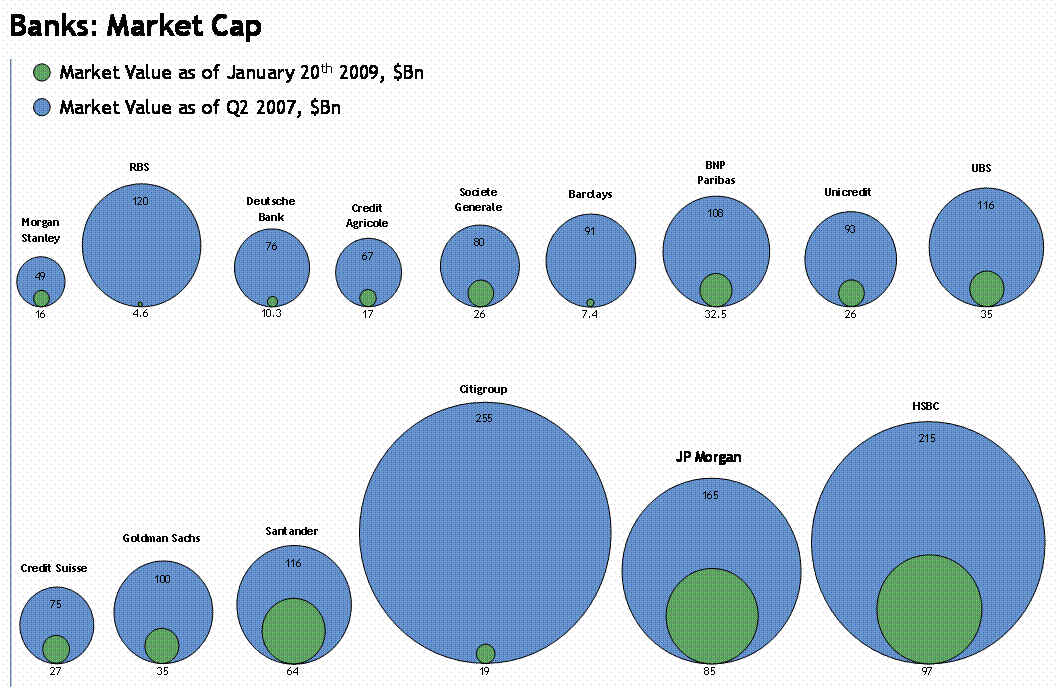
On the Today Programme this morning, Gordon Brown backed away from the PBR’s claim that the economy would start to grow again in the third quarter this year, adding a slew of caveats about the need for international cooperation to make his actions effective. But looking at the JP Morgan chart above, brings home just how bad the situation is. The banks have lost $1.25 trillion in value since the crisis began. Considering the importance of the banking system and credit to any recovery, it seems unlikely that the British and American economies are to start growing again anytime soon. We are facing a recession that appears to be more on the scale of the 1930s than the 1970s.

Why history will struggle with Bush

From our UK edition

The Bush presidency can hardly be termed a success. But I suspect, historians will soon be boosting Bush’s standing. Why? Because Bush’s answer to the terrorism question is, basically, right. In the short term, you have to disrupt their networks, deny them safe haven and—if all else fails—kill them. But in the long term, you have to fight the causes of terrorism by creating democratic, prosperous societies where people control their own destinies: in such places, terrorists and their causes do not find support. But, ironically considering that Bush was the first MBA president, the execution of these ideas was appalling. There’s also a paradox when it comes to Bush and presidential decision making.