James Forsyth

James Forsyth

James Forsyth is former political editor of The Spectator.

You can bank on the shadow Cabinet’s second jobs causing problems for the Tories

From our UK edition

It has long been clear that the shadow Cabinet’s second jobs are a vulnerability just waiting to be exploited. Today’s Evening Standard brings an example of this: “THE TORY shadow cabinet has been raking in thousands of pounds in cash and perks from failing banks. Three prominent shadow cabinet members--William Hague, Ken Clarke and Francis Maude--who have supported criticism of 'irresponsible' bankers, were paid large sums in the past year by institutions that have lost taxpayers billions of pounds.” Now, we can get into a long argument about the value of outside experience and all that. But there’s no denying that in PR terms there are huge risks associated with the shadow Cabinet’s second jobs and little to no potential upside.
Another American Century

From our UK edition

Walter Russell Mead, whose book Special Providence is one of the best works on American foreign policy, has a fascinating essay in The New Republic arguing that the current financial crisis will actually strengthen and sustain American power. Mead writes: “Cataloguing the early losses from the financial crisis, it's hard not to conclude that the central capitalist nations will weather the storm far better than those not so central. Emerging markets have been hit harder by the financial crisis than developed ones as investors around the world seek the safe haven provided by U.S. Treasury bills, and commodity-producing economies have suffered extraordinary shocks as commodity prices crashed from their record, boom-time highs.

Ratting on a conspiracy to keep the truth from the public is no bad thing

From our UK edition

The more comes out, the more it seems that the Tories did go back on a deal on expenses that had been hashed out between the parties. Iain Martin writes this morning that, My understanding from a senior shadow cabinet member is that Cameron over-ruled his whips. "The chief is absolutely furious", he tells me. "It's the old guard. David wants total transparency but there is a generation of our MPs who think it an impudent imposition. He's winning but it's a slog." If the Whips and the backbench committees had cooked up a deal and Cameron unilaterally overruled it then good for him: the stitch-up was morally indefensible. The public have a right to know how their money is being spent.

Obama will be more hawkish than Europe expects

From our UK edition

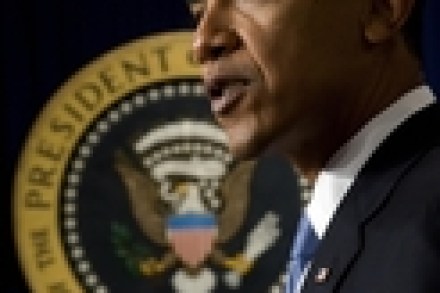
Barack Obama is the first Democrat to be Commander in Chief in the post 9/11 era. The election of a Democrat was a necessary requirement for the emergence of a new, settled American foreign policy for this time. You can’t have a bi-partisan foreign policy consensus when only one party knows the foreign policy challenges from the inside. Certainly the Bush administration made mistakes on foreign policy. It over-reacted in certain areas and implemented good ideas badly in others. But I suspect that there will be a more continuity between the two administrations than most people expect. The threats facing America have not changed with the departure of George W. Bush and the arrival of President Obama.

The statistics which bring home the need for welfare reform

From our UK edition

This week’s shadow Cabinet reshuffle was designed to make it campaign not government-ready. But the Tories do need to prepare for government as they are going to confront a huge set of problems. Policy Exchange have produced a pamphlet with ‘100 Reasons why Britain needs to change’ and, even leaving aside the country’s ever worsening position, it makes for depressing reading. The desperate need for welfare reform is brought home by these statistics: “In 1997 Tony Blair said that ‘By the end of a 5-year term of a Labour Government, I vow that we will have reduced the proportion we spend on the welfare bills of social failure…This is my covenant with the British people. Judge me upon it. The buck stops with me.

The new battle in British politics is how to be most like Obama

From our UK edition

James Forsyth says that both Brown and Cameron are mesmerised by the new President, who will be the lodestar of political life in this country. The contest to lay claim to his policies and style has begun — the risk being that our leaders are found sorely wanting by comparison David Cameron and Gordon Brown would not be human if they had not felt a little jealous on Tuesday night. They will never give a speech like Barack Obama or draw a crowd as big as his. To rub salt in the wound, Obama had just achieved — without knowing it — what they have spent their adult lives trying to do: he had reorientated British politics. Obama is the new lodestar of our politics.

Obama’s domestic policy risk

From our UK edition

“We remain the most prosperous, powerful nation on Earth.  Our workers are no less productive than when this crisis began.  Our minds are no less inventive, our goods and services no less needed than they were last week or last month or last year.  Our capacity remains undiminished.  But our time of standing pat, of protecting narrow interests and putting off unpleasant decisions - that time has surely passed.  Starting today, we must pick ourselves up, dust ourselves off, and begin again the work of remaking America. For everywhere we look, there is work to be done.  The state of the economy calls for action, bold and swift, and we will act - not only to create new jobs, but to lay a new foundation for growth.

Restrained but effective

From our UK edition

On pure rhetorical terms, the speech was not as great as Kennedy or Reagan’s first. But it gave us a guide to his presidency. We saw an Obama here who was lifting a nation up, bracing it for the challenges ahead but with confidence in the future. Indeed, the passages about how America would overcome its challenges were positively Reaganesque. In terms of domestic policy, Obama came across as a classic new frontier liberal: full of talk of opportunity and personal responsibility. On foreign policy, Obama made clear he represented a break with the Bush administration while striking a hawkish tone. Obama was restrained today, more so than I expected.

Obama’s speech with commentary

From our UK edition

My fellow citizens: I stand here today humbled by the task before us, grateful for the trust you have bestowed, mindful of the sacrifices borne by our ancestors.  I thank President Bush for his service to our nation, as well as the generosity and cooperation he has shown throughout this transition. The traditional praise for his predecessor. Forty-four Americans have now taken the presidential oath.  The words have been spoken during rising tides of prosperity and the still waters of peace.  Yet, every so often the oath is taken amidst gathering clouds and raging storms. A Lincoln reference.

Douglas Alexander attacks Obama’s regulatory chief

From our UK edition

Douglas Alexander has a piece over at LabourList trying to claim Barack Obama for Labour. But Alexander needs to do his research better, as in his piece he attacks the man Obama has picked to overhaul the entire US regulatory system. Alexander writes: “As I argued recently in the Telegraph, David Cameron, like John McCain, finds himself stranded in the wrong place because you can't privatise, deregulate or even nudge your way out of a global financial crisis.” Now, the problem with this is that the co-author of Nudge is Cass Sunstein who Obama has appointed to head the Office of Information and Regulatory Affairs. Sunstein, a former colleague and close friend of Obama, is charged with reforming the whole US regulatory system.

Changing the tone

From our UK edition

It is almost a ritual for an incoming president to announce that he wants to change the tone in Washington, D.C., a town where partisanship gets in the way of the people’s business far too often. But few have made as impressive a start on this front as Barack Obama. After last week’s supper with conservative columnists, Obama held a dinner to honour John McCain last night. The President-elect’s speech, of which video after the jump, was a generous tribute to his former opponent. Of course, Obama benefits politically from reaching out like this and there is a world of difference between warm words at a supper and genuine bi-partisan policy-making. But Obama does seem to be turning his back on the hyper-aggressive politics of the last 14 years in Washington.

The Tories must prove they’re still committed to the reform agenda

From our UK edition

One of the real puzzles of this reshuffle is why Nick Herbert, one of the best policy brains in the shadow Cabinet, has been moved to shadow DEFRA. The decision to hive off a Department of the Climate Change and Energy from it has taken away its most politically important and intellectually challenging responsibilities. A more obvious place for Herbert would have been in Eric Pickles’ old job at the Department of Communities and Local Government or at the Department of Work and Pensions. The decision not to send him to either of those spots has created concern that the Tories are backtracking on the welfare reform and localism agendas. Before the reshuffle, one shadow minister told me that Herbert would be the man the leadership sent to DCLG if it was serious about localism.

A setback for Tory radicalism

From our UK edition

Radical reform of Britain’s public services must be a priority for the next Tory government. But today’s reshuffle was a blow to the reform agenda. This morning, two of the three key public service jobs—education, welfare and health—were in the hands of committed reformers. Now, only education is. The reformers have long given up on making progress on health until, at the earliest, Cameron’s second term. A political decision was made right at the beginning of Cameron’s leadership to simply try and shut down the debate on health. Consequently, Tory health policy has been subcontracted out to the British Medical Association. But on education and welfare there were signs of real boldness.

Cameron corrects an error

From our UK edition

David Cameron’s decision to move Dominic Grieve from Home to Justice shows that he is capable of rectifying his own mistakes, an important quality for leader. Grieve was appointed in a panic, in an effort to shut down the story when David Davis resigned over 42 days. It was apparent at the time that Grieve was not the man for the job; Nick Herbert would have been a far better pick. Chris Grayling will bring his phenomenal work-rate to the job. The Home Office is still not fit for purpose and one can be certain that Grayling will be terrier-like in uncovering scandals. However, Grayling will have to avoid acting up to Tory stereotypes. Grayling will also have to be prepared for a fight on the ECHR in government.

The Tory reshuffle is recognition that Purnell has shot the Tory fox on welfare reform

From our UK edition

James Purnell can take great satisfaction from the Tory reshuffle today. The decision to replace Chris Grayling as shadow DWP with Theresa May shows that the Tories do not think that there is much political advantage to be gained on welfare reform now. If the Tories were planning to make this a major dividing line in the election they would have appointed a policy heavyweight like Nick Herbert or an energetic media performer like Jeremy Hunt.

At least two shadow cabinet members are going to be sacked today

From our UK edition

Caroline Spelman and Alan Duncan have both been moved from their current jobs but are staying in the Shadow Cabinet. This suggests that at least two of the current members of the Shadow Cabinet will be leaving. Other rumours doing the rounds at the moment are that Dominic Grieve will be moved to Justice and Nick Herbert to a frontline job, either Work and Pensions or DCLG. There's also speculation that Andrew Mitchell will move back to domestic portfolio. Update: To no one's great surprise, Peter Ainsworth has been sacked. He was Shadow Environment but faield to get much press or gain policy traction in the brief much to the leadership's frustration.

The Speech

From our UK edition

More than any other modern politician, Barack Obama’s political career has been made and punctuated by his speeches. He became a figure on the national political stage while still a State Senator in Illinois because of his speech to the Democratic National Convention in 2004. His Jefferson-Jackson speech in Iowa in late 2007 was the moment when it became clear he could take Hillary Clinton on head to head and win. His defiant concession speech after his shock loss in the New Hampshire primary showed that he could take a punch and his speech on race carried him through the Jeremiah Wright scandal. But Obama’s speech in Grant Park after his election as president was surprisingly unmemorable.