Did Starmer win PMQs?
11 min listen
There was a sombre tone as Boris Johnson faced Keir Starmer at the despatch box for PMQs.

James Forsyth is former political editor of The Spectator.
11 min listen
There was a sombre tone as Boris Johnson faced Keir Starmer at the despatch box for PMQs.
11 min listen
With COP26 fast approaching, the Heat and Buildings Strategy has been published today along with the Net Zero Strategy. But what do these papers mean for the environment, you, and your boiler? Isabel Hardman is joined by James Forsyth and Katy Balls to dissect these plans as well as looking at why the NHS is still so low-tech?
12 min listen
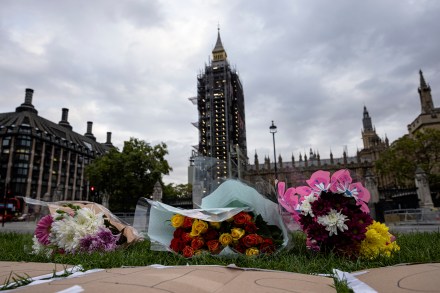
Parliament meets today to pay tribute to David Amess MP who was stabbed to death at his constituency surgery last week. But what have we learnt about the suspect currently still in police custody? And going forward what can be done to keep our representatives safe? Katy Balls is joined by Isabel Hardman and James Forsyth to discuss these questions as well as the sharp rise in Covid cases.

The news that Labour and the Liberal Democrats will not contest the by-election caused by David Amess’s murder is not a surprise; the Tories and the Liberal Democrats took the same approach in Batley and Spen in 2016. (It should give us all pause that there is recent precedent for how parties should behave in a by-election when the sitting MP has been killed.) The principle they are standing up for is that violence should not change the party-political balance of the House of Commons. But the pragmatic reason that the last thing a town in mourning needs is a fiercely contested by-election is just as potent a factor.
17 min listen
As the temperature starts to fall, the question for the global economy is: how long will energy prices remain high? Industrial production has already started to feel the energy-related price pressures. Many more suppliers are unlikely to make it through the winter. But with the governement divided over bailing out businesses, who should be absorbing all of the costs? James Forsyth is joined by Fraser Nelson and Javier Blas, chief energy correspondent at Bloomberg News as they discuss how this is just the beginning of the energy crisis.
12 min listen
David Amess, the MP for Southend West, has died after being stabbed at his constituency surgery. Essex Police say that a 25-year-old man has been arrested on suspicion of murder. Amess had been an MP since 1983, and represented Southend West since 1997. Fraser Nelson speaks James Forsyth and Isabel Hardman.

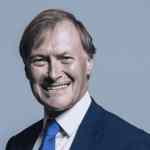
David Amess, the MP for Southend West, has died after being stabbed at his constituency surgery. Essex Police say that a 25-year-old man has been arrested on suspicion of murder. Amess had been an MP since 1983, and represented Southend West since 1997. He was a genial parliamentarian, a diligent constituency MP and a doughty campaigner for city status for Southend, regularly asking about the matter at PMQs. Amess’s death after being attacked at his surgery is a tragic reminder of the risks that MPs run when they meet the public in this fashion. Five years ago, Jo Cox was murdered on her way to a constituency surgery in her seat of Batley and Spen. In 2010, Stephen Timms was stabbed at his surgery. A shockingly large number of MPs have received death threats.

14 min listen
With the R-number being higher than 1.0 for some days now, could we be seeing some of the least invasive covid restrictions being put back into place as winter approaches? Isabel Hardman is joined by Fraser Nelson and James Forsyth to discuss the figures, as well as the continuing labour shortages.
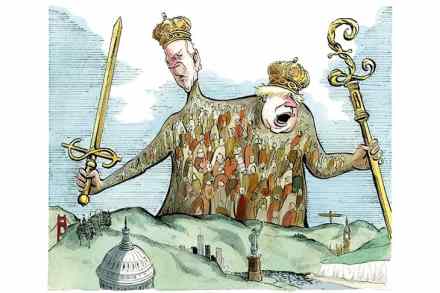
History suggests that when the state expands in a crisis, it doesn’t go back to its pre-crisis level once the emergency is over. After the first world war, the Lloyd George government extended unemployment insurance to most of the workforce, fixed wages for farm workers and introduced rent controls. The second world war led to Attlee's nationalisations, along with the creation of the NHS and the modern welfare state. In the magazine this week I ask if Covid will lead to a permanently bigger state. There is another danger in all this intervention: can the country afford it? Last year, state spending exceeded 50 per cent of GDP for the first time since the end of the war.
11 min listen
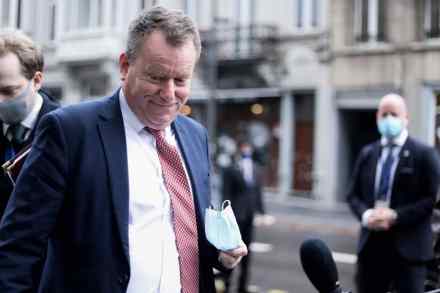
GPs have been promised £250 million to improve their services, but only if they increase face-to-face appointments. The Health Secretary must meet the demands of patients that want more face-to-face meetings. But he got a hostile reaction from doctors after a difficult two years for the healthcare service. Meanwhile, the Brexit row is still bubbling away. Lord Frost received an olive branch from the EU towards a ‘new’ Northern Ireland Protocol. But will the British government even entertain these proposals?

Sir David Amess, the MP for Southend West, has been stabbed to death while holding a surgery in his constituency. Essex Police say that a 25-year-old man has been arrested on suspicion of murder. The news will shock parliament and the country: it is a reminder of the risks that MPs run every time they hold a constituency surgery. In 2010, Stephen Timms was attacked with a kitchen knife at one; and five years ago, Jo Cox was murdered on her way to a constituency surgery in her seat of Batley and Spen. In a statement, Essex Police said: 'A man has been arrested on suspicion of murder after a man was stabbed in Leigh-on-Sea. A 25-year-old man was quickly arrested after officers arrived at the scene on suspicion of murder and a knife was recovered.

Covid transformed the role of the state. During the pandemic, the government did things it would never normally even contemplate. At the same time as it restricted civil liberties, it intervened in the economy to an extent never before seen in peacetime. Through the furlough scheme, close to £70 billion was spent on paying people’s wages. Other government economic interventions seem minor in comparison. What is a few hundred million here and there when the state has been spending billions so regularly? History suggests that when the state expands in a crisis, it doesn’t revert to its pre-crisis level once the emergency is over.
12 min listen
In an attempt to save the Northern Ireland Protocol, the EU has promised ‘very far reaching’ changes which are due to be revealed tomorrow. Dominic Cummings has also piled into the debate, suggesting that Boris ‘never had a scoobydoo what the deal he signed meant’. He also claimed that it was ‘always the plan’ to tear up the Brexit deal, which has grown tensions with Ireland. Meanwhile, Matt Hancock has a new job. But will he be invited back into the cabinet soon? To discuss this, Katy Balls speaks to James Forsyth.
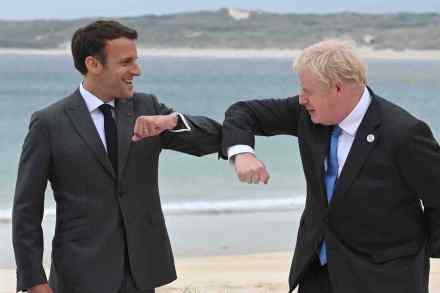
The French Finance Minister Bruno Le Maire has given a very frank interview to the New York Times. It is principally about tensions between Paris and Washington post-Aukus, but it also shows why Anglo-French relations are, sadly, only going to get worse. The UK accepts, as Australia does, that balancing China is going to require US leadership. France thinks its interests are very different. Le Maire tells the paper that, 'The United States wants to confront China. The European Union wants to engage China'. He thinks the key challenge for the EU now is to become 'independent from the United States, able to defend its own interests, whether economic or strategic interests.
10 min listen
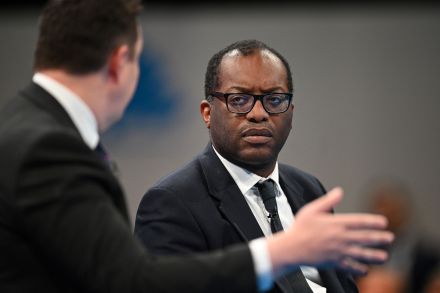
With the energy crisis showing no signs of improving, many industries warned over the weekend that they may have to shut down some manufacturing points due to the rising costs. This has lead to tensions between the Treasury and the Business Secretary, Kwasi Kwarteng about how to proceed. Isabel Hardman is joined by Katy Balls and James Forsyth to discuss.
13 min listen
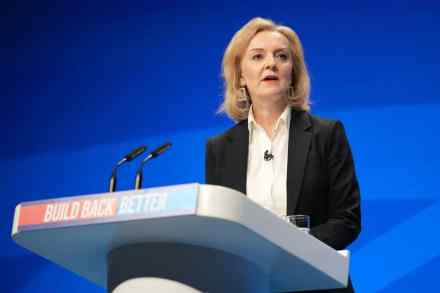
Katy Balls talks to James Forsyth and Fraser Nelson about the rise of 'Trussmania' that seemed to be sweeping the Conservative party conference in Manchester.
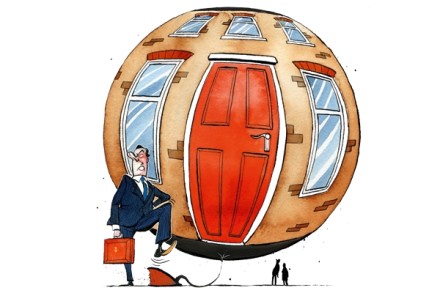
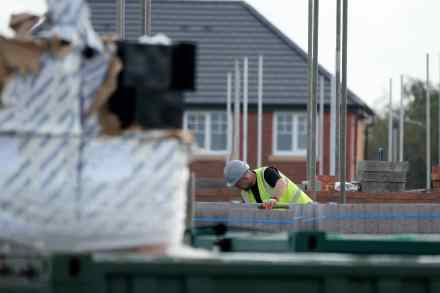
One of the themes of Conservative conference was that the government has dropped plans for a radical reform of the planning system, which was designed to get more houses built in the south east. Both Boris Johnson and the new party chairman Oliver Dowden were keen to stress this point. But, I say in the Times today, this is a mistake. The Tories are the party of the property-owning democracy, and live and die by this The Tories have been spooked by the Chesham and Amersham by-election where the Liberal Democrats ran hard against planning reform and took the seat on a 25 per cent swing from the Tories. Boris Johnson will pay little immediate electoral price for this U-turn. Indeed, at the next general election he’ll probably benefit from it.
12 min listen
The former housing secretary, Robert Jenrick delivered a warning to his former colleagues in government yesterday that a failure to build new homes will cost the Conservatives down the line. Cindy Yu is joined by James Forsyth and Katy Balls to discuss this, as well as the update to Covid holiday restrictions and the sad passing of James Brokenshire.
10 min listen
Although Boris won over the audience during his conference speech, the opinion polls might say otherwise. Starmer's voice of reason could be starting to resonate with the public as the cost of living continues to rise. Underlying tensions with businesses are also still bubbling. Are they really to blame for labour shortages? And what now is the biggest threat facing the Tories? Cindy Yu speaks to Katy Balls and James Forsyth.
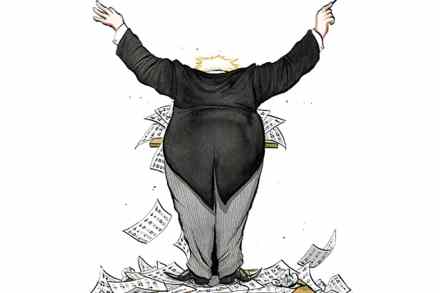
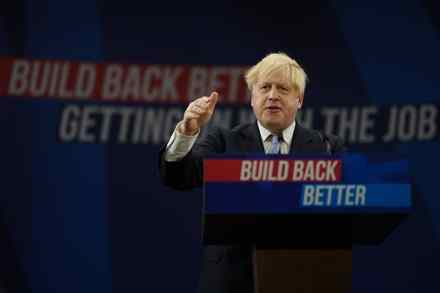
Most prime ministers would be worried about supply chain shortages. But as became increasingly clear at the Tory party conference in Manchester, Boris Johnson has instead spotted a political opportunity. He denies there is a crisis and claims that the recent ‘stresses and strains’ amount to nothing more than the economy reawakening after lockdown. As for the worker shortages, he believes they are proof of a ‘robust economy’ which will result in people being paid more. This has been the Tories’ theme in Manchester: set up a dividing line between a government that wants workers to be paid more and those who want to ‘reach for the same old lever of uncontrolled immigration to keep wages low’.