James Forsyth

James Forsyth

James Forsyth is former political editor of The Spectator.

It is disinterest not defections that should really worry Labour

I suspect that Lord Ashdown and the Lib Dems are involved in a bit of mischief-making with their suggestion that Blairite MPs might come and join them (see Pete's take on the story here). The Lib Dems have no realistic prospect of power and I suspect that the Blairites are thoroughly tired of constantly going against a party base that is considerably to the left of them. What I do think, though, is a danger is a lack of a Gaitskellian desire to ‘fight and fight again to save the party’. A friend of mine was recently in a discussion with a Cabinet minister and asked him what he would do if the party lurched to the left or was taken over by the Balls-Unite axis. He replied, ‘Oh I’d be off then.
Quote of the day | 2 May 2009

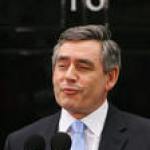
From Matthew Parris in The Times today: The Brown saga is less Shakespearean tragedy than Pinter farce. The Ozymandian statue will be inscribed, not “Look on my works, ye mighty, and despair!” but “Gordon Brown - what were we thinking of?”. The whole column is, as always with Matthew, well worth reading. As Matthew says, those who have worked with Brown for years and knew who he was bear a large part of the blame for the disaster that has been the Brown premiership. But it is worth bearing in mind that many of these people bit their tongue because of the Brownite intimidation tactics that Nick Cohen details in this piece. I was going to write some words about the dire, deservedly dire I should stress, situation that Labour finds itself in.

Labour, partying at Britain’s expense

One of the things that will become apparent in the coming years is just how irresponsible this last Budget was. It put party ahead of country in a way that few Budgets ever had. Many civil servants, who know the true numbers, are despairing about what it means for Britain’s future. Peter Oborne writes today that: “One permanent secretary complained about the Budget, saying the Chancellor's financial figures do not add up. He said: 'We either need spending cuts, or a larger departmental budget. We are in a situation where the official figures are just not deliverable.' Another civil servant is even gloomier. 'We are moving towards a crisis which can only be resolved by an emergency statement to the House of Commons in the autumn,' he warned.

A supreme debate

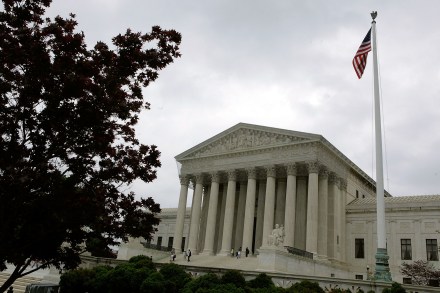
One of the reasons Obama has been so successful in his brief political career is that he has largely dodged the culture wars. I remember in Iowa and New Hampshire meeting many voters who were drawn to him because they wanted to, in Obama’s phrase, stop re-litigating the 1960s.  But the Supreme Court vacancy caused by David Souter’s coming retirement could drag Obama into this battle. Where the nominee stands on Roe v. Wade, DC’s gun control laws and school vouchers which are used to send pupils to religious schools will dominate the debate.   Bush’s experience, though, shows a way that Obama, who used to teach constitutional law himself, could minimise the culture war fall-out.

Petraeus: Next two weeks key to whether the Pakistani government survives

If you want an idea of how worrying the situation in Pakistan is, read this story from James Rosen: ‘Gen. David Petraeus, commander of U.S. Central Command, has told U.S. officials the next two weeks are critical to determining whether the Pakistani government will survive, FOX News has learned. "The Pakistanis have run out of excuses" and are "finally getting serious" about combating the threat from Taliban and Al Qaeda extremists operating out of Northwest Pakistan, the general added.

Brown’s biographer says people who don’t treat their staff properly aren’t fit to be Prime Minister

Paul Routledge in today’s Daily Mirror: “David Cameron is no different to Thatcher. He is – and I’m afraid you have to accept my word for this – a crap employer. And anybody who does not treat his staff properly is, to my mind, not fit to employ the nation and run the country.” Charles Moore in this week’s Spectator: “I recently met a man who entered a room containing the Prime Minister and found himself ducking to avoid a mug Mr Brown had hurled not at him, but at an official who was just leaving.”   PS Just to be clear, those who worked for Thatcher generally talk about her being a kind and caring employer. It was her colleagues who were more likely to hear the rough side of her tongue.

There’s no super-sub for Brown to call on

Martin Kettle reports in The Guardian today that: “There is a lot of talk now about yet another shakeout at No 10. Lord Mandelson is pressing for a senior politician – not necessarily himself – to fill the righthand man role that Chris Patten played for John Major in 1992.” This is understandable given that, as Jackie Ashley wrote yesterday: “Brown seems to have performed the brilliant hat-trick of failing to grasp where his parliamentary party is coming from, failing to recognise what will provoke ridicule in the press and failing to acknowledge the public mood. Much of this comes back to the out-of-touch inner circle on which he has relied for so long.

What is the Tory position on Trident?

Yesterday, The Times published an interview with William Hague. Here’s how it reported his views on the defence budget and Trident: ‘The MoD budget was “not immune”. But he again pledged his party to upgrading the Trident nuclear deterrent.’ But today at his press conference, David Cameron said: “having the best replacement there is for an independent nuclear deterrent - there are reasons for all of these things. But clearly, when you are reviewing spending, you have to review all spending” It is hard to see how one can square these two positions. It would be instructive to know which line—Hague or Cameron’s—is actually party policy.

Now for the hard part

Ross Douthat, the new New York Times columnist, has a smart piece up at The Atlantic arguing that the beginning of the Obama presidency has been the easy bit precisely because his inheritance has been so bad. Here’s the nub of his argument: “Barack Obama hit the trifecta. He's inherited two ongoing military conflicts; he's responsible for managing a global financial crisis that began on his predecessor's watch; and he spent last week trying to pick his way through the political-legal minefield created by the Bush Administration's interrogation policies.

Obama’s personal appeal

In the slew of polling data that has come out to mark Obama’s 100 days, two numbers stand out to me: 81 percent of Americans like Obama, that’s 30 percent more than support his policies. This is a result of several things: his personal manner, the fact that people appreciate the historical significance of having a black president and the respect afforded the presidency. But I think an often overlooked factor is that even though Obama is a committed liberal he has some conservative instincts on, most notably, family policy and education. Take this comment from him in a just released interview with the New York Times Magazine: “My grandmother never got a college degree. She went to high school. Unlike my grandfather, she didn’t benefit from the G.I.

PMQs live blog | 29 April 2009

Brown begins with a tribute to the solider who died in Afghanistan. Bill Cash then asks Brown when he next intends to do a ‘comedy turn’ on YouTube. An irritated Brown bats it back. Brown announces in a reply to a question about swine flue that there are three more confirmed UK cases. One school in Torbay, where a pupil is sick, will be closed for the duration. Cameron leads on swine flu, asking about the national flu line which isn’t yet up and running. Brown chooses to try and play father of the nation, talking slowly and very deliberately and avoiding taking any party political shots. Another question about preparations from Cameron, Brown again gives a long, detailed answer.

The idea behind Brown’s expenses debacle

One of the many odd aspects of Gordon Brown’s expenses gambit was why he came out with a proposal that was bound to be mocked as paying MPs just to turn up. It would only have been worth the Prime Minister coming out with his own proposals before the official review and before he’d consulted with other party leaders and his own MPs, if he was going to propose a regime that was tougher than others would have wanted; one that would have marked him out as someone who was going to end this culture of feather-bedding.

What Specter’s defection means

The defection of Arlen Specter is a nice momentum booster for Obama on the eve of his 100th day in office. To be sure, by switching parties Specter has saved himself a debilitating primary fight and pretty much guaranteed himself re-election in a state that is becoming increasingly Democratic. But even if the move is hardly a profile in courage, it should still worry the Republican Party. It means that once Al Franken is seated the Democrats will have 60 votes in the Senate; if the Democrats are united they will be able to vote down a filibuster. Specter’s departure also acts as an illustration of how the Republican Party is shrinking.

Engaging our academics

Mary Dejevsky writes today on one of my favourite topics, why aren’t British academics more engaged in policy debates. Where is the British Greg Mankiw or Paul Krugman? It is crazy that we have four of the 10 best universities in the world, but that our academics play such a limited role in public life and policy debates. There’s plenty of blame to go round for this. Government departments are too unwilling to ask for outside advice and our political parties do a bad job of tapping academia for ideas. But, I think, the biggest problem is our academics. Far too many of them view policy as beneath them and any contact with government or politicians as contaminating. Changing this culture will not be easy. But there are ways it can be done.

Brooks: Cameron is the right alternative to Obamaism

David Brooks is, to my mind, the most perceptive American commentator. He is a conservative who understands Obama and what he is trying to do. So, I was particularly interested by his remarks on the Charlie Rose show where he said that Cameron’s emphasis on society is what the right should offer as an alternative to the enhanced role for the state that Obama is advocating: “we now have two models. We have the Obama model, which is technocratic, sending teams of experts to solve problems. Very centralized, actually. And then if you want the alternate model -- the Republicans in this country unfortunately have no model because they haven’t thought about it, or they haven’t thought productively about it. But there is another model.

Roubini: This is going to be a U, not an L, shaped recession

Nouriel Roubini, the doctor doom of the credit crunch, sounds a mildly optimistic note in an interview with the Washington Post: “I don't believe we are going to end up in a near-depression. Six months ago I was more worried about an L-shaped near-depression. Today, after the very aggressive policy actions taken by the U.S. and other countries . . . we are, instead, in the middle of a U.” The thing that my economist friends say they worry about now is a W recession. The theory goes that the economy will rebound and start to grow again but because the financial system hasn’t been fixed that recovery will soon peter out and there will be a slide back into recession.