James Forsyth

James Forsyth

James Forsyth is former political editor of The Spectator.

Dragging the Speaker from the chair

Today will be a day of parliamentary drama. A Speaker hasn’t been removed from the chair for more than 300 years so no one knows precisely how the effort to oust Michael Martin is going to proceed. We can expect Martin’s statement to both contain a timetable for reform and to announce that he will stand down at the election. But after this weekend’s events and the revelations about the Fees Office this is probably no longer enough. Then we come to the question of whether or not Douglas Carswell’s motion of no confidence in the Speaker is allowed to be tabled. Carswell has done an impressive job in recruiting a string of high-profile cross-party supporters for his bill.
Sweet for Obama, sour for the Republican party

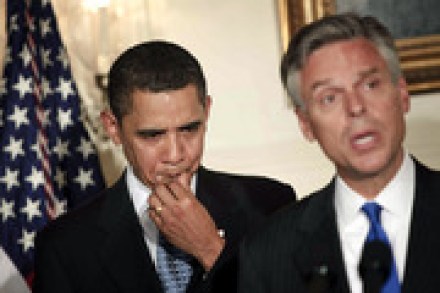
Barack Obama’s decision to nominate Jon Huntsman as the US ambassador to China is classic Obama. Huntsman is the Republican governor of Utah and was widely expected to make a run for his party’s nomination in 2012. Unlike a lot of other Republican politicians Huntsman has kept his eye on the general electorate rather than just thinking about how best to stroke the base. For that reason, he would have been a more formidable opponent for Obama in 2012 than many of the other names being bandied about. But Huntsman is now out of the running for 2012 and will no longer be making his necessary arguments for reform.   Huntsman is well qualified to be US ambassador to China.

The breath-taking recklessness of Donald Rumsfeld

One thought one had heard it all when it came to the folly of Donald Rumsfeld’s second stint at the Pentagon. But it is jaw-dropping to see these cover sheets for intelligence briefings that Rumsfeld gave President Bush. They come with Biblical quotes attached to martial images. Just imagine the reaction if these had leaked during the Iraq war. The incident would have played into the charge that the United States was trying to impose Christianity on the Muslim world. They would have undercut Iraqi and Afghan democrats and would have made life even more difficult for American allies in the Muslim world. And to what end, what upside was there to the use of these quotes? None but possibly a brief motivational buzz for those who saw these quotes.

The causes of the crisis 

Niall Ferguson has a typically sharply-argued piece in the New York Times Magazine disputing the idea that the current financial crisis was caused by deregulation. Here’s the nub of his argument: “The reality is that crises are more often caused by bad regulation than by deregulation. For one thing, both the international rules governing bank-capital adequacy so elaborately codified in the Basel I and Basel II accords and the national rules administered by the Securities and Exchange Commission failed miserably.

Clegg calls for the Speaker to go

The future of the Speaker dominates the Sunday papers. The Mail on Sunday reports that Michael Martin will announce that he will quit at the next election in an attempt to save his position. The Sunday Times has an interview with a former staff member, admittedly one who left under a cloud, who alleges that Martin personally edited the Green Book on MPs’ expenses and angrily resisted all attempts at reform. But these stories have been trumped by Nick Clegg’s decisive intervention this morning calling for the Speaker to do the “decent thing” and quit Clegg’s intervention further weakens Martin. It is hard to see how the Speaker can stay on when he explicitly does not command the support of one party and its leader.

Polls show Labour dropping to new lows, but the Tories are down as well

There are two new polls out tonight and both show that the two main parties are suffering as the expenses scandal drags on. ComRes for the Independent on Sunday has both Labour and the Tories down five, putting Labour on 21 and the Tories on 40. BPIX for the Mail on Sunday has the two parties down three, with Labour on a mere 20 percent—a record low for them—and the Tories on 42. Conservative Home notes that if this result was replicated at a general election it would, assuming a uniform national swing etc, result in a Tory majority of 220. If this happened, we would be in a bizarre situation of the Tories having no honeymoon but one of the largest ever majorities. The Lib Dems have not gained in either poll; they have actually lost two in the BPIX poll.

Is self control more important in life than intelligence?

The New Yorker has a fascinating essay this week on self-control in children and the role it plays in their life chances. The story starts with a Stanford academic who experimented on whether children when left alone with a sweet of their choice would delay eating it in exchange for being allowed to eat two later. The study found that when these children grew up “the child who could wait fifteen minutes had an S.A.T. score that was, on average, two hundred and ten points higher than that of the kid who could wait only thirty seconds.

It could be worse, you know: not every MP is a Moran

Britain’s most popular political leader has been involved in a dodgy property deal with a fraudster. Britain’s most popular political leader has been involved in a dodgy property deal with a fraudster. On the same day that the politician bought his new home for £165,000 under the asking price, a regular campaign contributor purchased (via his wife) the adjacent plot of land from the same seller for the listed price of £350,000. The donor, a property developer who had a significant amount of business with the government, had been alerted by the politician to the availability of the land and to his intention to buy the house next door. The two men had even walked through the property together.

What the Commons should look for in a new Speaker

Iain Martin reports that Monday is a key day for the effort to remove the Speaker. Today, the mood seems to have hardened against Michael Martin—I haven’t spoken to anyone who thinks that his position is tenable. Over at Comment Central, various Times writers have nominated who they would pick as Speaker. On the question as to who is the best individual for the job, I don’t have particularly strong views. But we definitely need a Speaker who is completely committed to transparency. I also think that the next Speaker will have to be an advocate for Parliament, someone who can take on a high-profile role explaining the importance of Parliament and what it does.

Hague to give up his second jobs

In an intriguing development, the story has just broken that William Hague is to give up his outside interests. Paul Waugh reports that Hague will give them all up, including the after dinner speeches, by September. Hague’s move suggests that Cameron is going to order his shadow Cabinet to give up all their second jobs.  These jobs were always a strategic vulnerability, but given the strength of the anti-politician mood in the country right now it would be suicidal to keep them on. PS Pete points out to me that this move on second jobs chimes with Cameron's declaration at the party's Scottish conference, "Let us be clear, this is not just about MPs’ expenses." The question now is how radical Cameron is prepared to be on the cleaning up politics front.

If Cameron won’t, Clegg should tell the Speaker to go

The issue of who is the Speaker of the House of Commons should not be a party political issue. But there is no way the Commons can begin to put its house in order and begin the urgent task of restoring the public’s trust in it as long as Michael Martin remains in office. He has fought transparency at every turn. Indeed, even now—as Heather Brooke reported the other day—he is still trying to block the release of information. His attitude also exemplifies what is wrong about the way too many MPs have treated the expenses system; Martin allegedly told another MP that “I have been a trade unionist all my life. I did not come into politics not to take what is owed to me.

There is nothing British about the BNP

This country has a proud anti-fascist tradition. No country has done more to defeat fascism than Britain. So, it would be saddening and shaming if this country, the mother of all parliaments, was to send fascists to sit in the European Parliament. Indeed, I even hear that Griffin, the leader of the BNP, will head the fascist faction in the parliament if elected. The strategy of trying to deal with the BNP by denying them the oxygen of publicity is out of date. The BNP now has alternative ways to reach voters than through the mainstream media. So, we need to take the BNP on, to make sure that people know that a vote for the BNP isn’t a protest against political sleaze or the establishment but a vote for racism and thuggery.

Labour below 20 and Tories below 30 in Euro-poll

Labour has fallen to its lowest ever opinion poll rating in a YouGov poll for The Sun. On the general election question, the Tories were at 41 down two from the last YouGov poll, Labour on 22 down five and the Lib Dems up one on 19. The Sun calculates that this would deliver the Tories a majority of 152. However, the poll contains numbers that should worry the Tories and show just how badly the main parties have been hurt by the expenses scandal. In the last week support for them at European elections has dropped nine points to 28. Labour is down on 19 tied with UKIP who have surged 12 points in the last week. Encouragingly, it seems to be UKIP not the BNP, whose rating is unchanged, who is benefiting from the public’s anger over expenses.

The punishment momentum builds

Up until now, there’s been safety in numbers for those MPs caught up in this scandal. If, for example, the revelations about Alistair Darling had come out on their own, I suspect, they would have placed his career in jeopardy. But now, what Fraser calls, ‘the punishment momentum’ is building; two thirds of the Conservative Home panel think that Mackay should cease to be an MP. This momentum is being driven by the extent of public outrage, Cameron and Brown’s duel over who can appear tougher and the continuing severity of the revelations. The next MP who is busted in a significant breach of the rules is going to be in huge trouble.

A 646 seat strategy is a necessary part of restoring faith in politics

‘If you ain’t a swing, you don’t mean a thing’ is sadly an adage that British political parties live by. Come the next election, the parties will concentrate their efforts on the battleground street and ignore their own safe seats and those of the other parties. This targeting leaves most voters feeling ignored. The disillusionment this fosters creates the conditions in which extremists like the BNP can make inroads. It is unrealistic to expect that parties are going to campaign equally in all seats. But I would like to see David Cameron declare that he will visit every constituency in the country between now and election day. It would show that he wants to be Prime Minister of the whole country.

The tax havens fight back

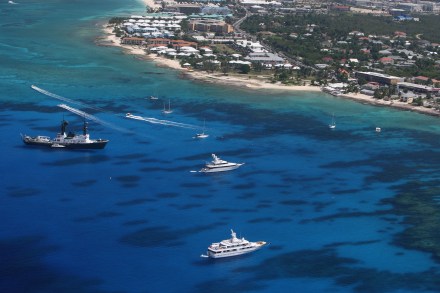
Barack Obama has made clamping down on tax havens one of his key talking points. It is easy to see why he has taken this approach which enables him to sound both populist and patriotic. On the stump, Obama liked to joke that a building in the Cayman Islands that was the registered home of 12,000 plus US companies was "either the biggest building in the world or the biggest tax scam on record." But the Cayman Islands is dinging back, a press release has just dropped in my inbox from them pointing out that 1209 North Orange Street in Wilmington Delaware, Joe Biden’s home state, houses 217,000 companies. Obviously, arguing about the numbers of companies in various buildings is hardly having a serious debate about tax havens and company law.

What do we want? Instant disclosure! When do we want it? Now

Nick Robinson reports that the parties are still banging out the details of an agreement on expenses. Robinson reports that “What remains at issue is that Labour wants a cap on the amount that can be spent on mortgage interest payments and the Lib Dems are arguing that MPs should repay any gain they make by selling a house which the taxpayer bought and did up.” But more important than the details of any deal is transparency. The public should be able to know what their money is being spent on. Indeed, I think the only way to begin to draw the sting from this issue is for every expense request to be disclosed as soon as it is made.

Telegraph to take a dozen Lib Dems to task

One of the key questions as to how the expenses scandal will play out politically, is how it affects the Liberal Democrats. The Telegraph have just posted the teaser for their story tomorrow, here’s the key paragraph: “Expenses claims submitted by 12 Liberal Democrats, from senior spokesmen to a number of back benchers, will be disclosed, with some of those involved having already volunteered to pay back some of the money.” If the Lib Dems appear considerably cleaner than the two main parties, they could run effective clean up politics campaigns. However, if their dozen are just as bad as the other two parties, then the political benefit to them from the damage today’s Populus poll suggests is being done to the two main parties will be limited.

In other news: Top US General in Afghanistan relieved of his command

One of the things that makes me angriest about the whole expenses scandal is that our politicians have conspired to reduce their standing at a time when the country is in economic crisis and the global situation is becoming increasingly precarious. Yesterday, Robert Gates, Obama’s Secretary of Defense who is a holdover from the Bush administration, took the dramatic step of dismissing the US commander in Afghanistan General David McKiernan (pictured). The move is an admission that the war in Afghanistan is, at best, not being won. It is the first time a general in theatre has been relieved of his command since Douglas McArthur was during the Korean War. McKiernan will be replaced by Lieutenant General Stanley McChrystal.