James Forsyth

James Forsyth

James Forsyth is former political editor of The Spectator.

A morning of Mandelson and Miliband

From our UK edition

The Telegraph’s interview with Peter Mandelson and The Guardian’s with David Miliband are setting the news agenda this morning. Mandelson tells the Telegraph that he expects there will be another attempt to topple Brown from a “small group who keep coming back”. While Miliband admits he considered resigning on Thursday night. Both push the message that the economy might come out of recession far sooner than anyone expected. Clearly this is what Labour strategists believes might rebuild the party’s reputation. But it is hard to see how they can brag about their economic record ithout seeming out of touch with a population who are still worried about rising unemployment.

‘There must be a reckoning if Gordon is to survive’

From our UK edition

Jon Cruddas, tribune of the left and foe of the BNP, tells James Forsyth his support for the PM is not unconditional, and praises James Purnell for being ‘true to himself’ Jon Cruddas, the Labour MP for Dagenham, isn’t your typical 21st-century politician. He’s relaxed, unconcerned about his appearance: the amount of spare cloth in his suits would appal a Cameron or a Clegg, and his hair is more barber-shop than salon. When I meet him in his Westminster office it quickly becomes clear that his political worries aren’t those of your average ambitious MP either. His Labour colleagues are obsessing over the wave of resignations and how best to position themselves for the coming drama, but Cruddas is keenest to talk about the campaign against the BNP.

Violence in Afghanistan is now the highest it has been since the fall of the Taliban government

From our UK edition

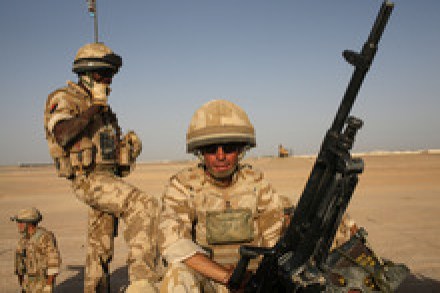
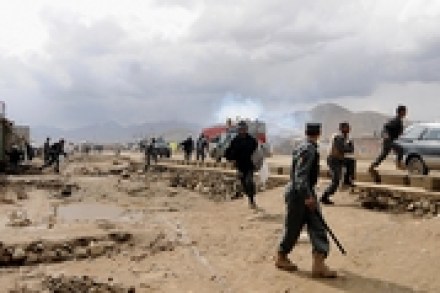
General Petraeus’s comments yesterday, reported by the Washington Post, that violence in Afghanistan is now at its highest level since the toppling of the Taliban shows how bad the situation has got there. But interestingly: “Two-thirds of all the attacks in Afghanistan are concentrated in about 10 percent of the country's districts” If the coming surge of US forces into the country, can get a grip on the violence in these areas there is a real chance to put the country on a path back to something approaching stability.

Al Qaeda on the move

From our UK edition

There’s a fascinating story in the New York Times today about how some al Qaeda terrorists are moving from the tribal areas of Pakistan to Somalia and Yemen. The key question is why are they doing this, is it because Pakistan has become a less hospitable place for them both because of US drone strikes and the Pakistani government’s change in attitude. Or is it because, the totally failed state in Somalia and the failing state in Yemen and the jihadi campaigns there make them them even more appealing places for terrorists than the bad lands of Pakistan. In other words, is the movement a sign of progress in the struggle against al Qaeda or not.

Charles Clarke: Labour could be down to less than 100 seats after the next election

From our UK edition

Charles Clarke’s interview with Andrew Neil for Straight Talk is going to make news. In it, Clarke makes clear that the moves to oust Brown are suspended not ended. As he tells Andrew: “It will depend how events go but more importantly than any other single thing it will depend how the people of the country form their judgement of our party and the Government.  And if, for example, the poll ratings go up or we win these by-elections which are going to come through or whatever, I think the issue will go away and he can be confident he leads us into the next election.  If, on the other hand, he somehow doesn’t fulfil those things or electorally we do badly or whatever it might be, then the issue will still be there.

His life in his hands

From our UK edition

In this week’s Economist, Bagehot has an interesting thought about the dynamics of the Mandelson Brown relationship: “The official line is that [Peter Mandelson] and Mr Brown have buried the hatchets they once deployed against each other, and revived the understanding they shared before their falling out. Perhaps; but perhaps his succour itself contains a subtle form of vengeance. Lord Mandelson could easily have destroyed his erstwhile foe. Yet to a refined palate, the one-off rush of bringing down an old adversary might seem a crass and unsatisfying triumph. How much more gratifying to hold his fate in your hands every day—and he knowing you own it?

Blunted Flint

From our UK edition

PR Week, which has delivered an impressive string of scoops during the Brown era, has an interesting little anecdote about Caroline Flint’s resignation: “Westminster sources said Flint toned down her resignation letter on the advice of friends. One insider even claimed it originally contained words such as ‘devious’ and phrases such as ‘sexist pig’.” If Flint hadn’t praised Brown on Thursday night, her resignation could have been devastating to him. But instead it looked like she was just angry about not getting the promotion she thought she was owed. After all, that’s what had changed in the 18 hours since she had offered Brown her support. P.S.

The Cabinet’s credibility problem

From our UK edition

Martin Bright makes a very good point on his blog about why the press will dismiss the protestations of loyalty and unity coming from the Cabinet: “Too many conversations have been had by too many ministers with too many journalists about the inadequacies of the Prime Minister to believe the words of solidarity.” In the last week or so, the ability of some Ministers to say one thing in private and another in public has been shocking even to journalists who know how things work. Perhaps, the worst example was of a Cabinet minister who while doing a round of interviews praising Gordon Brown was asking journalists for a quiet word, the content of which was the precise opposite of what was being said on TV.

Labour investment versus Tory cuts won’t cut it this time

From our UK edition

The Sun’s leader column today is an indication of just how much the terms of the spending debate have changed: “And, frankly, where is the disgrace in making cuts? Who really believes some services WON'T need cutting to pay back the monstrous debts we are running up to beat recession? More unedifying was Gordon Brown's desperate and deceitful attempt to paint Labour as the party of endless investment battling to keep out the cost-cutting Tories. This is complete fiction. Both parties will be forced to make substantial cuts after the next election, no matter who wins it. Mr Brown knows this very well - his Treasury's own figures admit it. His poll ratings might improve if he stopped taking us all for fools.

Spending restraint in precisely the wrong place

From our UK edition

The evidence of Ed Butler, who commanded 16 Air Assault Brigade in Helmand in 2006, to the Defence Select Committee yesterday was devastating. As The Times reports: “Brigadier Butler told the committee that in 2006 the Treasury had “capped” resources available for the operation, limiting funding to £1.3 billion for a “three-year campaign”. The Government has always denied imposing a cap on resources for the mission. “There was a Treasury-imposed cap on the number of troops we could have in Afghanistan,” he said. With the troops available to him — 3,300 — “we could just about hold the line but we couldn’t sustain a higher tempo”.

Same old Gordon

From our UK edition

Perhaps the most comic aspect of the past few days is how the Cabinet and then the PLP have been persuaded to give Gordon Brown a stay of execution by promises that Brown would be more collegial and call off his bully boys. (I’ve lost count of the number of times Gordon Brown is said to have made this pledge). But the Brown operation ain’t going to change as this story in The Independent makes clear: “...on the same day as his Parliamentary Labour Party speech, hard-nosed Brownites were telling journalists that Mr Purnell had quit because he was not up to his challenging welfare brief (a myth) and were threatening to expose mistakes in one MP's expenses claims if he joined the revolt.

Justice is done

From our UK edition

That the civil case against the Omagh bombers has succeeded is wonderful news, a triumph for justice against terror. Ruth Dudley-Edwards, who is writing what will be a superb book on the trial, has a moving piece in the Mail today about what the families went through and what the verdict meant to them. All those who helped the family achieve justice—the lawyers, Robert Cranborne, Peter Mandelson, the Mail and many others —deserve immense credit. Thanks to them and the awe-inspiring determination and courage of the families, the bombers have not got away with murder.

How much of a drag on Labour’s support is Brown? Well, Balls would do better

From our UK edition

One detail from the Indy’s poll about how Labour leaders other than Brown would do particularly amused me: Ed Balls would do a better job than Gordon Brown at holding down Cameron’s majority. Now, in a way this illustrates the problem with this kind of poll: the one percent uptick in Labour support is due to the fact that the public know they don’t like Brown and have yet to find that they don’t like Balls either. But it does show how strong anti-Brown sentiment is in the country. On the subject of polls, I’d be fascinated to see someone do a name recognition poll on the various leadership contenders. I wonder how many voters could pick Alan Johnson out of a line-up.

Does the government now oppose the setting up of academies?

From our UK edition

The Guardian reports that the new schools minister Vernon Coaker is a member of the Socialist Educational Association. The SEA campaigns, among other things, for 'the Government to end the setting up of academies'. So, we have a schools minister who is opposed to the biggest educational innovation Labour has made in its 12 years in power.   With Brown so weak, we can expect a lot more of this kind of thing. Every Labour pressure group will be pushing at an open door until Brown finally goes. Policy will be decided not on the basis of what is good for the party, but on what might just keep the party behind Gordon.   One wonders what Lord Adonis, the great champion of academies, makes of all this.

There are more twists left in this plot

From our UK edition

As Fraser said earlier, the rebellion has not been defeated: Brown has not had some moment that restores his authority. Instead, he has made the same pledges that he has made before—to set out his vision, to be more inclusive and to call off his bully boys—and they look like they will be enough to buy him a few more weeks. But these pledges won’t be met because Brown can’t change. (Hands up if anyone thinks we’ll make it through the summer without a minister being briefed against by Downing Street). So, soon enough there will be another trigger for a rebellion—defeat in Norwich North or a string of polls with Labour in the teens, say—and the whole show will start all over again.

Darling’s test

From our UK edition

Alistair Darling has kept silent since the government reshuffle. He knows that any interviewer worth his salt would press him on whether he discussed any alternative jobs with the Prime Minister or the Prime Minister’s staff. But Darling will have to break his silence tomorrow at Treasury questions. Darling finds himself in a nigh-on-impossible position. Everyone in Westminster knows that Brown wanted to move him but couldn’t; I don’t think anyone was convinced by Brown’s denial of this point on Friday.  But Darling can’t be seen to be crowing about facing down the Prime Minister. The next test for Darling will be whether he can prevent Brown from inflicting further damage on the public finances.

The scale of Labour’s defeat

From our UK edition

Alex Barker at the FT’s Westminster blog rattles off a series of facts to show just how bad things are for Labour, where Brown has led them to. This trio are particularly devastating: “Labour is now the third party of local government in England, with fewer councillors than the Liberal Democrats for the first time since the First World War Labour secured the lowest vote share ever recorded by a serving government in both elections Labour fell under 20 per cent vote share for the first time since 1910, when the party was four years old” It is, as Labour showed in the 1980s and the Tories more recently, very hard for one of the two main parties to destroy itself. But if Brown continues, that might become a possibility.