James Forsyth

James Forsyth

James Forsyth is former political editor of The Spectator.

Splits emerging in Pakistani Taliban

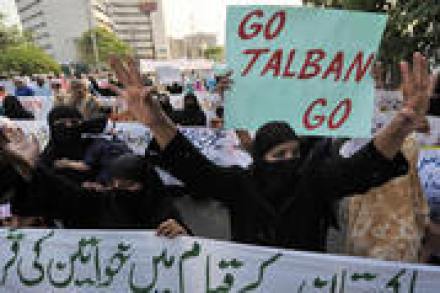
Splits appear to be emerging in the Pakistani Taliban after a US drone-strike reportedly killed its leader. The New York Times says that a ‘Pakistani government official and an intelligence official said Hakimullah Mehsud, a young and aggressive aide to the former Taliban leader, had been shot dead in a fight with Waliur Rehman, another commander who was seeking to become the leader.’ As a US official tells the paper, splits within the group can be exploited by the US and the Pakistanis. Also anything that limits the Pakistani Taliban’s effectiveness is to be welcomed—the Pakistani state fully collapsing under jihadi pressure is the nightmare scenario. However, a split within the movement could give more power and influence to al Qaeda.
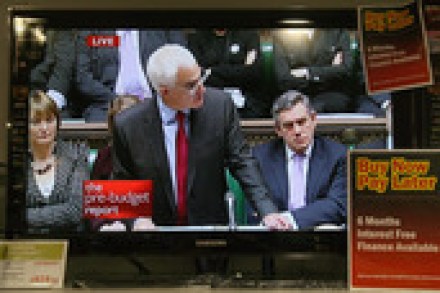
20 percent Vat is likely whoever wins the next election

I must admit that I thought that both the government and the Tories were committed to raising Vat to 20 percent after the next election. My recollection was that Vat rising to 20 percent was part of the PBR package that saw Vat temporarily cut to 15 percent and that the Tories had not opposed this part of the package. But having checked up, I see that this was not what was announced but merely what the Treasury was advocating internally. The Tories might be denying the story that they will raise Vat to 20 percent but I would be very surprised if they did not end up doing so. Vat is an easy tax to collect and hard to avoid so as the Tories look for an instant way to show the markets they are serious about dealing with the national debt, Vat is the obvious tax to increase.

Will the Obama administration deny requests for more troops in Afghanistan?

Frederick and Kimberly Kagan, two of the people involved in devising the surge strategy in Iraq which so transformed the security situation there, have a strong piece in the Weekly Standard arguing that the Obama administration is in danger of repeating in Afghanistan the mistakes the Bush one made in Iraq: not giving the commander on the grounds the tools they need to do the job. The Kagans’ concern has been caused by strong hints from the Obama administration that it is not minded to send any more troops to Afghanistan whatever the review initiated by the new US commander there, General McChrystal, says. (The deadline for McChrystal to make his requests has been pushed back until September). If McChrystal thinks he needs more troops, he should not be denied them.

The West must prepare contingency plans to bomb Iran

Chuck Wald, a retired US Air Force General who was the air commander for the US response to the 9/11 attacks, has an important op-ed in the Wall Street Journal today about Iran. Wald argues that while no one wants to see the military options explored before all others have been exhausted, it would be a mistake to think that there are none. He argues that even the mere act of a military build up might persuade the Iranian regime that the cost of continuing with their nuclear programme would be being bombed and thus persuade them to give up. Alternatively, a naval blockade could deny Tehran the petrol imports it needs, bringing its already teetering economy to a halt.

The human cost of deprivation 

The news that in one Northern city, 15 percent of Neets, those young people not in education, employment or training, are dead within ten years in immensely depressing. It is a reminder of the horrendous toll that drugs and social breakdown take on our society. The director general of schools, who revealed this, stresses that these numbers shouldn’t be taken to be typical of the country as a whole. But seeing as we don’t have numbers for the rest of the country, this was a local study, it is impossible to know how serious the situation is nationally.   One can talk in policy terms about possible solutions to this problem.

Mehsud’s death is a massive blow to the Taliban 

If Baitullah Mehsud, the leader of the Pakistani Taliban, has been killed that is a major success which should help both in the fight against the Taliban in Pakistan and Afghanistan; Mehsud had up to 20,000 fighters under his command. It appears that a drone hit his father in law’s house while he was there receiving medical treatment. One of his wives is reported to have also been killed in the strike. Drones are a controversial part of the US arsenal, some argue that the collateral damage they inflict turns the population against the coalition and so make them not worth using. But for this kind of operation they are invaluable.

For Afghanistan’s sake, Karzai must lose the election

Elizabeth Rubin’s profile of Hamid Karzai in the New York Times magazine is brilliantly done; it is long-form magazine journalism at its best. The two impressions that you are left with after reading it, is what a waste the Karzai presidency has been since his election in late 2004 and how his paranoia has increased in recent years; Rubin reports that in one cabinet meeting he ‘threatened to go to the mountains to fight the invaders himself’ and that he worries that there is a secret Anglo-American plan to aid the Taleban. Indeed, Karzai’s views of this country are particularly bizarre: he thinks that the British have a series of cunning plans in place to aid the Taleban. (Oddly, he’s fan of the Last of the Summer Wine.

Georgia on my mind

Last August was dominated by Russia’s invasion of Georgia and two recent stories are reminders that this conflict could flare up again. Radio Free Europe reports that Georgian officials says that Obama told Medvedev and Putin that the US "would not stand aside" if Russia marched in again. At first glance, this seems odd. Obama stumbled during the presidential campaign last year because of his cautious reaction to Russia’s move and it would be unusual for him to be sounding more bellicose in office than he was on the campaign trail. Also, Obama’s diplomacy so far has been thoroughly realist — it would be more in keeping with his administration’s modus operandi, for it to be looking for some grand bargain with Russia.

Mandelson’s holiday plans: no Russians, no yachts, no Osborne

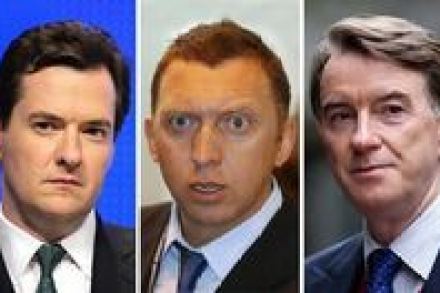
George Osborne might be steering well clear of Corfu after all the trouble that his holiday encounters there last summer got him into, but Peter Mandelson is a fighter not a quitter and so has headed back to the island. His spokesman tells the Mirror that this trip will be “much less glamorous” than last year’s — “He is there for a week but this time without Russians, yachts or George Osborne” — and that the peer had flown out there on Easy Jet.

A minister for Afghanistan?

The Daily Telegraph reports today that the Tories are thinking about appointing a minister for Afghanistan. The paper says that the “role could be taken by a new appointee possibly a former member of the Armed Forces who would be brought into government by Mr Cameron by making them a peer.” This idea, however, will only work if the Minister is put in charge of all British government work in Afghanistan. If the Minister’s writ only runs in the Ministry of Defence, the move will only succeed in undermining the Defence Secretary. What is needed is someone who has the authority to make sure that the military, diplomatic, and development aspects of the mission are working together.

Goodman: Westminster is the author of its decline

If all shadow ministers were as in command of their brief and had thought as much about what they would do in government as Paul Goodman had, I’d feel a lot more confident about how well the next Conservative government would perform. So, I was shocked—and disappointed—when Paul telephoned me a few months back to say that he was standing down as an MP.   Paul is giving up a certain ministerial job and the chance to push through policies that he has thought long and hard about. He’s not doing this because he’s been ensnared in scandal or revealed as a ‘trougher’ or anything like that. But rather because, as he writes in the Mail today, he is thoroughly disillusioned about the direction Parliament is heading in.

Substantial turnout in Totnes open primary

Conservative Home is reporting that turnout in the Totnes open primary is 25 percent. This is quite remarkable and a real vindication of the idea of open primaries: remember that the UK turnout in the European elections was only 34 percent. In Totnes, the Tory majority is less than 2,000. But by holding an open primary, the Tories have created a situation where one in four voters has been involved in the selection of their candidate. This must give the Tory candidate a significant head-start in terms of both name recognition and people feeling connected to them. I suspect that the success of the Totnes experiment means that the Tories will use open primaries in a slew of the other seats where they have yet to select a candidate.

By being so cheap, Pound devalues himself

The Daily Mirror is very exercised by the fact that David Cameron has 12 secretaries. It reports that Cameron has “five correspondence secretaries, two diary secretaries, a personal assistant, two private secretaries, one assistant private secretary and an office secretary.” This is actually a relatively small number when you consider that Cameron doesn’t, unlike the Prime Minister, have a multitude of civil servants working for him. But Stephen Pound, the quote happy Labour MP, has seen fit to join in with the Mirror’s outrage, telling the paper, "Not even the President of the United States needs 12 secretaries.

The police play dress-up

I think this must count as one of the daftest things I have heard in quite a while: “Two sergeants and a community support officer dressed in head-to-foot burkhas, jilbabs, hijabs and niqabs - with only narrow eye slits to see through as they accompanied four Muslim women. Another officer wore Muslim dress and a head scarf showing her face as part of the scheme, called 'In Your Shoes', organised by South Yorkshire Police in Sheffield.” Is this really the best use of police time?

Iran may have crossed the West’s red line – Obama must act

The Times reports today that Iran has perfected the technology needed to make a nuclear bomb and could produce one a year from being given the order to by the Supreme Leader. This is yet another reminder that time is running short when it comes to stopping Iran from going nuclear. Indeed if the Times is right, then Iran has already crossed what used to be regarded as the West’s red line. To date, the Obama administration’s Iran policy has been—to put it mildly—unclear. But the New York Times today discloses that the US has been in conversation with its allies about attempting to use sanctions to prevent Iran from importing petrol, the country imports 40 percent of the gasoline it uses.

Gove’s exam paper proposals could drive up standards

The Tory plan to put old exam papers online will show how transparency can drive up standards. By allowing people to easily compare today’s exams with those of twenty, thirty years ago it will make it possible for everyone to judge whether the exams have got easier or not. One of the things that I’ll be most interested in seeing is whether certain exams boards consistently produce less testing papers. It will also be instructive to see how IGCSEs compare to GCSEs and the pre-U to A-Level. I suspect we will find that these new exams — currently only available to independent schools though, the Tories would change this — are far more rigorous.

Pickles expects 17 more Tory MPs to stand down at the next election because of expenses

The Guardian has just posted online a Julian Glover piece which will be in tomorrow’s paper. In the piece, Glover says that Eric Pickles has given an interview to Monday’s Guardian in which he says that he expects 17 more Tory MPs to stand down because of the expenses row. (That would bring the total to thirty). This means that 17 fairly plum seats will become available, any seat the Tories won last time they should hold this time. I suspect that the leadership would like to use this opportunity to try and expand its potential ministerial talent pool. There might well be a few clashes over the new powers that CCHQ has gained over the selection process.    Update: Via Conservative Home, I see that The Guardian’s news story on this is now up.

Achieving our strategic goals in Afghanistan will takes decades but is necessary for our security

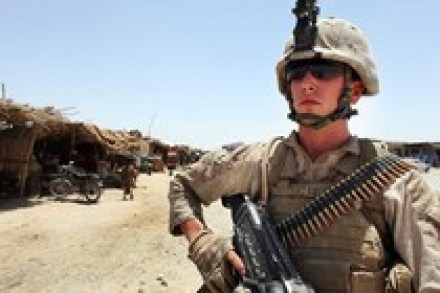
Sir Nigel Sheinwald, the British ambassador to Washington, has said that Britain will be involved in Afghanistan “for decades.” Sheinwald is right and right to say this, the public need to be prepared for the fact that it will take a generation to accomplish our strategic goals in Afghainstan. Coffee Housers often ask what the British national interest is in Afghanistan. To my mind it is clear: preventing the re-emergence of an al-Qaeda sanctuary in Afghanistan and preventing things that could further destabilize Pakistan. I think—and say in the Washington Post today—that Afghanistan is turning into a test of whether Britain is still prepared to pay the price of being a frontline nation.

Tories comfortably ahead in the most marginal seats

On Coffee House we frequently ask why the Tories do not get Lord Ashcroft to clarify his tax status. The silence over it seems an obvious strategic vulnerability and something that is bound to create some bad press for the Tories during an election campaign. But a poll in the Sunday Telegraph today, first reported on Tory Diary, shows just how effective the Ashcroft marginal seats operation has been. It finds that in the thirty most marginal seats the Tories are on 44 percent, Labour 20 and the Liberal Democrats 18. One of the things that makes me thing the Tory majority will be relatively sizable is that the marginal seats operation is now concentrating its work on seats that are quite a long way down the Tory target list.

Telegraph: Brown planned to use his conference speech to challenge Cameron to a series of debates

There’s a an intriguing story in the Telegraph today which goes some way to explaining Labour’s confusion last week over whether or not Brown wanted a TV debate with Cameron. Andy Porter, who is well connected in the Brown circle, reports that Brown planned to challenge Cameron to a series of debates in his conference speech and is furious at Mandelson for giving the game away. (Cynics might say that this story reflects rather too well on Brown and shows that some in his circle are not entirely reconciled to Mandelson's influence). It is easy to see the thinking behind Brown’s original plan. Brown could frame the challenge as a chance for Cameron to prove that he was not all style and no substance.