James Forsyth

James Forsyth

James Forsyth is former political editor of The Spectator.

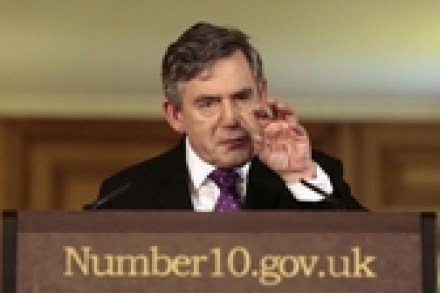
A number that shows what a drag on Labour’s prospects Brown is

The news that Max Clifford is now involved in publicising the story of Baroness Scotland and the illegal cleaner is another blow to an already bruised Labour party. One of the last things that it needs is the beginning of its conference being overshadowed by a story that combines the two toxic issues of political hypocrisy and immigration violations.
Clegg embodies his party’s incoherence

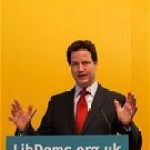
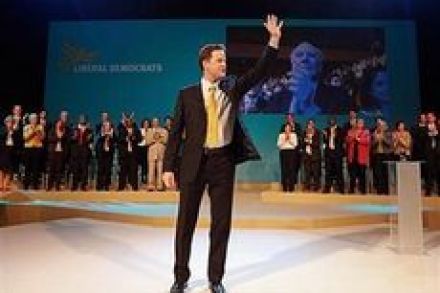
Nick Clegg started the Lib Dem conference with an interview calling for ‘savage cuts’ in public spending and ended it with a speech trying to position the Lib Dems as the main party of the left in Britain. That pretty much sums up the strategic incoherence of this conference which has left the Lib Dems worse off than they were before.   The Lib Dems have had an awful week for several reasons. First, they haven’t done the basics well—putting Clegg up against Obama was hardly clever programming and not informing every spokesperson of policy announcements before the media was told was bound to cause trouble. (How no one thought to tell Julia Goldsworthy of a change that so dramatically impacted on her brief is beyond me).

Obama’s choice on Afghanistan

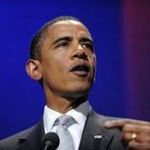
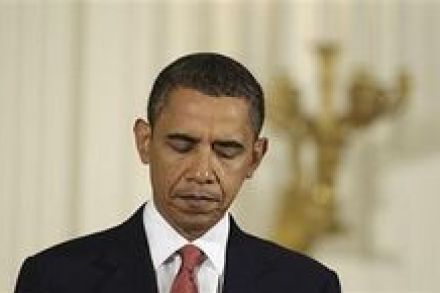
The New York Times reports that President Obama has re-opened internal debate about Afghan policy, suggesting that he is going to u-turn from the counter-insurgency strategy that he announced in March. It seems that Joe Biden, who lost the policy argument last time round, might win out with his argument that, “Instead of increasing troops, officials said, Mr. Biden proposed scaling back the overall American military presence. Rather than trying to protect the Afghan population from the Taliban, American forces would concentrate on strikes against Qaeda cells, primarily in Pakistan, using special forces, Predator missile attacks and other surgical tactics.

Banging on about Europe will cost the Lib Dems seats

In his interview with the FT, Nick Clegg says that the Lib Dems have been too “reticent” about making Europe a dividing line with the Tories. There’s little doubt that Clegg, a former MEP is an ideological pro-European. But if he starts banging on about Europe he’ll cause his party problems. The Lib Dems have several seats in the South West, one of the most Euro-sceptic regions of the county. As the European elections results there showed, when Europe is the issue the Lib Dems do badly. If Clegg really does intend to make Europe a key campaign dividing line, then the Tories will fancy their chance of picking up a fair few of these South Western marginals.

Lib Dem conference goes from bad to worse for Clegg

After an awful conference so far, the last thing the Lib Dems needed was for another internal row to threaten to overshadow the leader’s speech. But that is what has happened. 18 of the 29 member Federal Policy Committee, which produces the Lib Dem manifesto, have written to The Guardian saying that they will include in it a commitment to scrap tuition fees regardless of what the leadership wants. This is not the only open defiance of Nick Clegg’s authority.

Tories cock-a-hoop about Lib Dem disarray

Every Tory I have spoken to this week has said the same thing, ‘aren’t the Lib Dems having a terrible time.’ The Tories are particularly happy because they see the Lib Dems’ credibility on economics taking a battering thanks to the total confusion over Cable’s proposed new tax on million-pound homes. They also think that the new Lib Dem policy will hurt the Lib Dems in a lot of the Southern seats the Tories are trying to win—Richmond, Winchester, Meon Valley and Taunton—as well as in three way marginals like Hampstead and Kilburn.   The other thing that is putting a smile on Tory faces is the Lib Dems downgrading their pledge on tuition fees.

More than half of those who voted Labour in 2005 say they won’t do so this time round

The new ICM poll for The Guardian shows the Tories in an extremely strong position heading into conference season. They are on 43 percent, 17 points ahead of Labour. The extent of Labour’s fall since the last election is illustrated by the fact that only 47 percent of those who voted for the party then intend to do so again. Indeed, even 40 percent of those who have remained loyal to Labour now expect a Tory victory at the next election. The poll also shows that Labour is not seen as credible on the state of the public finances by the electorate. Only 14 percent of voters believe that Labour is “telling the voters the truth about the size of the problem facing government finances.

Decision time for Obama

Bob Woodward has the scoop that General McChrystal’s review of Afghan strategy calls for more troops. McChrystal is direct, stating that “ISAF requires more forces” and that “inadequate resources will likely result in failure”. He is also clear that these troops are needed now, "Failure to gain the initiative and reverse insurgent momentum in the near-term (next 12 months) -- while Afghan security capacity matures -- risks an outcome where defeating the insurgency is no longer possible." McChrystal has yet to present his request for more troops to the Pentagon but it is clear that he will ask the administration for considerably more troops. Obama now has to decide whether he will back the new commander he put in place and give him the tools he needs.

Blair and Brown, the story that keeps on running and running

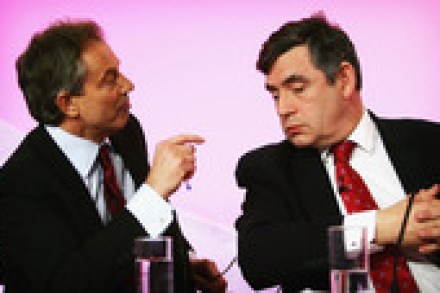
Adam Boulton is exceptionally well sourced in the Blair circle so the extract from his updated history of the Blair years makes for fascinating reading. It shows how Blair is carving out a post-premiership in a way that no other ex-British Prime Minister ever has. What is making news, though, is what Boulton reveals about relations between the Blairites and Brownites. In a way, it is no surprise that Blair regards Brown as a quitter not a fighter. Brown’s avoidance of contests where the result is not certain has been a feature of his political career.

The Iranian opposition mocks Ahmadinejad’s anti-Israel rhetoric

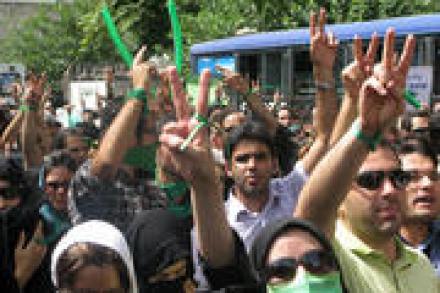
The opposition rally in Tehran yesterday on Quds day is a hopeful sign that the Iranian regime’s hard-line anti-Israel and anti-Semitic rhetoric—Ahmadinejad called the Holocaust a ‘lie’ in his remarks—is increasingly ineffective. The New York Times report, which was filed from Beirut and so probably reliant on opposition sources and websites, states that opposition supporters chanted “No to Gaza and Lebanon, I will give my life for Iran” and responded to the official shouts of “death to Israel” with “death to Russia” (Moscow was quick to accept the legitimacy of Ahmadienjad’s re-election). Admittedly, the opposition supporters were outnumbered by regime loyalists.

Losing perspective 

At The Spectator, we’ve been so close to the spending debate that one worries about losing perspective. But this post from Faisal Islam gives one a sense of just how important today’s revelations are: “We have never seen this level of detail on a budget situation before. Much of what was implied or left out of the budget is stated in astonishing detail here. It is a total disaster for the treasury and the government, but some will argue the Tories have taken a big risk with financial confidence in publishing it.

Cable’s cuts

Imagine for a second if Alistair Darling or George Osborne wrote a pamphlet about spending cuts which contained plans which were not yet party policy. The press would go into overdrive. Journalists would demand to know if Gordon Brown or David Cameron agreed with their numbers man.  If there was no instant answer, splits stories would lead the news. The whole thing would be considered a disaster. But when Vince Cable does it, it is not a problem. Bagehot, The Economist’s respected political columnist, writes admiringly of Cable’s pamphlet for Reform before saying, “It isn't all Liberal Democratic policy yet, but much of it is likely to be.

Bush didn’t understand Paulson’s bailout

Those who think that the financial bailout in the US was rushed through without sufficient thought and that the Treasury Secretary Hank Paulson had far too much latitude will find plenty of ammunition in a tell-all book by a former Bush speechwriter, Matt Latimer. Latimer worked in the White House in the final two years of the Bush administration and the extract from his book in GQ gives a sense of the confusion as the administration tried to deal with the crisis. What is most revealing to me is how even the president didn’t know what the bailout was trying to do: “the president was clearly confused about how the government would buy these securities.

Osborne: Tories will hold emergency Budget if they win the election

George Osborne has just announced at The Spectator’s inaugural conference, Paths to Prosperity, that there will be an emergency Budget in June or July of 2010 if the Tories win the election. Osborne told Andrew Neil that the aim of this Budget would be to reduce borrowing for fiscal year 2010-11, which will already be under way at that point, and for the years thereafter. Presumably this will be done through a combination of tax rises, spending cuts and asset sales.

Ouch | 15 September 2009

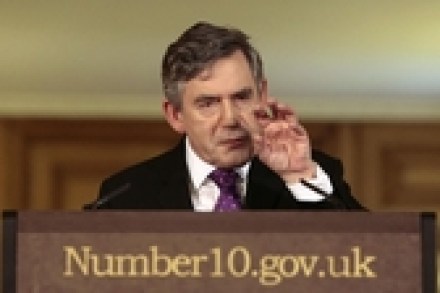
From the write up in The Times of the latest Populus poll: “Almost half of voters think that anyone would do a better job than Gordon Brown as Labour leader. Nine months at most from a general election, a Populus poll for The Times suggests that 48 per cent of voters believe that “literally anyone” from Labour’s ranks could do better, without naming alternatives.

This’ll be worth watching

The Daily Telegraph reports today that Cherie Blair will campaign for Gordon Brown at the next election. She told Tim Walker that "I will personally get involved in the electoral campaign". The idea of Cherie campaigning for Gordon is rather comic. Relations between the two were famously tense. At Tony Blair’s last conference as Labour leader, Cherie was heard to say ‘that’s a lie’ when Brown said how much of a privilege he had found it to work with Tony. As Tony Blair quipped in his speech, he never had to worry about Cherie “running off with the bloke next door”. Personally, I’m intrigued by how much campaigning the other Blair will do.

Mandelson loses his touch

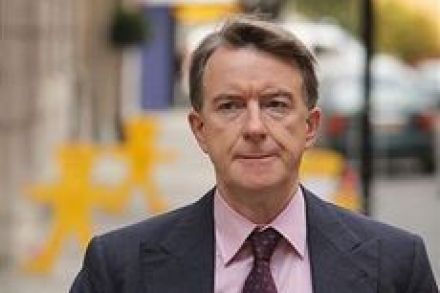
Peter Mandelson got rather badly caught out on the Today Programme this morning. Mandelson tried to deny that the Labour line was shifting, saying: “You know, I did ask [Robinson] recently when exactly the prime minister had defined this simply and crudely as Labour investment versus Tory cuts, and Nick was unable to [put] his finger on such a quote.” The problem, as Nick Robinson rapidly pointed out, was that Gordon Brown has repeatedly put it that crudely. As for Mandelson’s wise spender line, that’s not particularly new. Gordon Brown told the Labour conference in 1995, “'We want wise spending rather than big spending. We put value-for-money first, and before more money.” If only he had followed his own dictum.

The government’s latest ‘child protection’ idea is positively harmful

Alsadair Palmer neatly sums up the absurdity of the government’s new child protection plans in the Telegraph: “Once it receives your application, the ISA will invite people to submit information about you. The ISA’s officials will be looking for any claim to the effect that you have done something which might have caused “physical, emotional, financial or developmental harm” to a child. Don’t ask for a definition of such “harm”, for there is none – the term will be interpreted in any way the Government’s assessors choose. Those assessors will not be required to ascertain whether or not “harm” actually took place, nor whether you were in fact the cause of it.