James Forsyth

James Forsyth

James Forsyth is former political editor of The Spectator.

The Tories must make the public understand just how much damage Brown has done to the nation’s finances

The mission for the Tories in the New Year is to communicate to the electorate just how bad a state the public finances are in. The Tories need to hammer this message home until the proverbial man on the street knows the numbers. Only when people realise that we were first in and last out of recession of the major economies and that, as Rosemary Righter points out in The Times today, the deficit is roughly twice as large in real terms than it was when Healey was forced to go to the IMF will Brown’s standing collapse as much as it should by rights. Brown’s defenders will say that he has been dealing with exceptional circumstances. But his pre-crash handling of the public finances was reckless in the extreme.


The NYT: The Detroit bomber was radicalised in London

It is a depressing fact that the Detroit bomber appears to have been radicalised in London. Today, the New York Times takes an extensive look at the bomber’s radicalisation in London. As the paper, which is not prone to hyperbole, says: “Investigators are now, in fact, turning a sharper and retrospective eye to the passage in Mr. Abdulmutallab’s life that began immediately after his summer in Sana, Yemen, in 2005, when he enrolled as a $25,000-a-year mechanical engineering student at University College London. In recent days, officials in Washington and London have said they are focusing on the possibility that his London years, including his possible contacts with radical Muslim groups in Britain, were decisive in turning him toward Islamic extremism.

Two of the alleged ringleaders of the Detroit bomb plot were released from Guantanamo in 2007

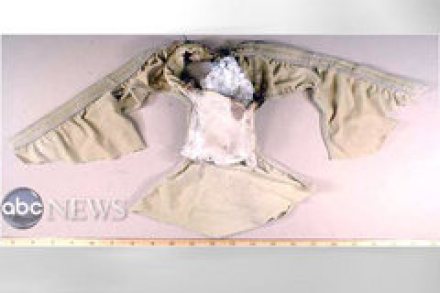
Two of the leaders of the organisation that is claiming responsibility for the attempt to blow up a jet over Detroit were released from Guantanamo in 2007, ABC News is reporting. They were sent from Guantanamo to Saudi Arabia where they were entered into an ‘art therapy’ programme designed to rehabilitate terrorists. They seemed to have given this rehabilitation programme the slip and joined up with Al Qaeda in Yemen. This example highlights just how difficult the problem of repatriating Guantanamo inmates is. Guantanamo is, obviously, not an ideal solution nor even the least worst.

The lessons of New York’s falling murder rate

New York’s ever falling murder rate is one of the wonders of modern urban policy. It is proof that decisive political leadership can arrest and then reverse decline that many had considered inevitable. This year, as The New York Times reports, New York is scheduled to record the lowest number of murders since records began in 1962. In 1990 there were 2,245 murders in 2009, to date, there have been 461. Now, it has often been rightly said that Britain should learn from the success of broken windows policing. But reading the piece in the Times today, I was struck by the fact that the murder rate is still falling despite the NYPD having to reduce its number of officers by 6,000 since 2001. Much of this success is due to the NYPD using technology to help best deploy its resources.

Jon Cruddas and Chuka Umunna go local on the Tories

Now is not a good time--politically--to be an incumbent. The economic realities mean that tough choices have to be made: services cut, taxes raised or both. So it is a clever move by Jon Cruddas and Chuka Umunna to set up a website, Tory stories, scrutinising the work of Tory councils. It also plays to the message that many in the Labour party, but notably not Gordon Brown and Ed Balls, want to push: Cameron and a few top Tories might have changed the rest of the party hasn’t.  The  Tories are keen to show that they will not balance the budget on the backs of the low paid, note how the million lowest paid public sector workers are exempt from their proposed public sector pay freeze.

What happened the last time Gove played Cameron’s opponent in debate prep

One of the surprises of the Tory leadership campaign in 2005 was how David Davis bested David Cameron in the TV debate between the two men. Those involved in Cameron’s preparations for that debate blame Cameron’s poor performance on how Michael Gove knocked Cameron’s confidence in the run up to it. Gove was Davis in debate prep and played Davis as a ferociously clever, Oxford Union-style debater and kept leaving Cameron tied in knots. So it is interesting that the Cameron camp have again chosen Gove to play the role of Cameron’s opponent in the run up to a TV debate. This time Gove will, of course, be playing the part of Gordon Brown. These debates are going to fascinate the press.

No Christmas cheer in the Mail for Cameron

The Daily Mail sets about David Cameron in its editorial today. It accuses him of “insulting voters’ intelligence”, tells him to “avoid the PR men, spivs and trashy celebrities with whom he has taken to mixing” and advises him to “spend less time with his spin-doctors, worrying about his image and trying to be all things to all men.”   The Mail matters. Privately Tory strategists admit that its savaging of Cameron’s shift in European policy played a considerable part in depressing the certainty of Tory supporters to vote, one of the reasons for the party’s lead narrowing in the polls. If the Mail was fully on board with Project Cameron, it would shore up the Tory base and leave Cameron freer to concentrate on wooing swing voters.

Why Ken is talking up a Mandelson challenge

Ken Livingstone has added fuel to the fire that Fraser started with his News of the World column revealing that Peter Mandelson was being talked about as a possible Labour candidate for Mayor of London by saying that he had been warned to expect a challenge from Mandelson. But it strikes me that Livingstone might be engaged in a typically cunning spin operation.   Mandelson is the ideal opponent for Livingstone. He is an establishment figure and so allows Ken to run as an outsider. At the same time, Mandelson doesn’t have the support or connections in the London Labour party that Ken has. In any primary contest against Mandelson, Livingstone could expect to win comfortably.   What Livingstone wants to avoid is a race against either David Lammy or Oona King.

Brown’s PR dilemma

Gordon Brown is in an odd position when it comes to PR. As a Labour tribalist he hates it. But he knows that it could be very useful to him as he attempts to save his job. There was huge pressure from within the Labour party on Brown announce a referendum on PR for polling day. The tactical aim was to put Cameron on the ‘wrong’ side of reform at a time when faith in politics is at rock-bottom. The strategic goal was to ensure the Tories would find it very hard to win an overall majority again under the new system. But Brown bottled out of that decision; instead saying in his conference speech there would be a manifesto commitment to a vote on electoral reform.

Cameron plans to lighten up

David Cameron’s interview with Tim Shipman suggests that the Tory leader is about to undergo a course correction. The Tories have, rightly, begun to be frank with the public about the cuts that will need to be made and have, again rightly, refused to rule out a short-term rise in VAT. But the ‘we’re all in this together’ rhetoric has only been applied to the tough measures that are needed now not the prosperity that might follow in years to come. If Cameron is to start showing the public more of his vision of where he wants to take Britain then that is to be welcomed. But he also needs the rest of his top team to communicate to the public what the consequences of carrying on spending massively more than the country earns would be.

What Cameron really needs to think about over Christmas is why he wants to be PM

James Forsyth reviews the week in politics David Cameron is only taking a week off this Christmas. This is a pity, because he is facing a year that would test the stamina of a Spartan. From the moment politics resumes in the New Year, he’ll be in constant campaign mode. Then, if he wins, he’ll be governing a country in crisis; trying to push through unprecedented spending cuts and embarking on nothing less than the reordering of the relationship between the individual, society and the state. This may be his last chance in four years to recharge his batteries. A proper holiday would also give him some time to reflect on his style of leadership.

Why is it one rule for the shadow Cabinet and another for Ashcroft?

The last Friday before Christmas is pretty much the perfect take out the trash day and the Conservatives have today published the Legg repayment details of the shadow Cabinet. The person who has had to repay the most is Liam Fox. But as Paul Waugh reports, Fox seems to have had a pretty decent defence. But a decision has been taken, as so often before in the expenses crisis, that the reputational risk to the party is so great that a member of the shadow Cabinet should return expenses money even if they have reasonable grounds not to. You can say that this is a sensible strategic decision, it has certainly helped limit the damage to the party from the whole scandal.

The Tories and class

Martin Kettle writes in The Guardian today that around “Cameron the response to Brown's class war rhetoric is utterly different. They can't believe their luck. Brown has gifted us the centreground for a generation, they say, rubbing their hands. They are not going to spurn their gift.” Certainly, those close to Cameron think that crude toff bashing won’t work. When I asked one of them what he thought the Tory response to this stuff should be, he told me that he abided by Napoleon’s dictum of never interrupting his opponent when he is making a mistake and joked to me that Dennis Skinner must have taken over as communications director of the Labour party.

A Bercow intervention the Tories will like

John Bercow will have the Commons sit in September if he is Speaker after the next election, reports the Evening Standard today. This will be welcome news to the Tory leadership. They are keen for parliament to be in session in September, if they win, for reasons both high and low. The high-minded reason is that they think that Parliament sitting in September will help show that this new Parliament is different from its predecessor, more diligent and more focused on getting things done. The low one is that the Tories want to get as much done as possible before a new Labour leader is in place, the thinking is that Labour will not have a new leader until after Labour’s autumn conference. Berocw’s relationship with the Tories remains uneasy.

Timing contrition

James Crabtree, a Labour SPAD turned managing editor of Prospect, has a good piece in the new Prospect about how the first step to recovery for Labour after the next election, assuming they lose, will be saying sorry. Crabtree argues that even if the Tory majority is small, Labour would be ill-advised to move straight into oppositional mode, attacking every Tory cut. Rather, he argues, the party needs to understand that its "brand is now nearly as contaminated as the Tories before it."   One of the challenges for the Tories should they win the next election will be bringing home to the public just what an appalling state Labour has left the public finances in.

The Tories need an attack dog

Iain Martin has a thought-provoking post up about how the Tories lack an attack-dog. Certainly, the Tories lack a shadow Minister for the Today Programme, someone who can be relied to go on when it is a bad morning for the party and deal robustly with a tough interview. This is a position the Tories will need to fill before the campaign gets under way. As Iain says, Chris Grayling was at one point used as the party’s attack dog. But this has come to overly define his political persona and he hasn’t really recovered from his Wire speech and a lacklustre conference, although his recent more thoughtful speeches on crime have been worth reading. I suspect that Sayeeda Warsi might soon be auditioned for this role. Andy Coulson is very impressed by her media skills.

Tax cuts are a better form of stimulus than more spending

Greg Mankiw is one of the best academic economists out there and having been chairman of the Council of Economic Advisors has a good sense of how to turn theory into policy. His column last weekend in The New York Times is essential reading for anyone wondering about how Britain can avoid a double dip recession. In it, Mankiw summarises the recent academic evidence which shows that cutting business and income taxes is a more effective form of stimulus than increasing spending. The challenge for Osborne in drawing up his first Budget, if the Tories win, will be how to foster a private sector stimulus for the economy. Without that we could easily end up in double-dip recession, something that would doom the Tories.

Should Prince Charles be getting involved in the Copenhagen debate?

I’m of the view that climate change is happening and that the evidence suggests that man’s actions are playing a significant role in this. I’m even in favour of a carbon tax to deal with the problem. But I’ll admit that this is a political issue as well as a scientific, and one that will become more politicised in the years to come. All of which makes me wonder if it is wise for Prince Charles to have gone to Copenhagen to warn that there are “only seven years before we lose the levers of control”. In his speech, the Prince proposed a series of measures designed to combat global warming and threw his name and position behind the International Investor Statement on Climate Change.

Should an opposition sell itself as a responsible government?

One of the Tories’ favoured lines recently has been that they are acting like a responsible government while Labour is behaving like an irresponsible opposition. But I wonder if this attitude is entirely healthy for an opposition, or whether it ends up blunting its campaigning edge. For example, the Tories’ refusal to say for definite that they will repeal Labour’s planned increase in national insurance stems from their view that they aren’t certain where they would find the £8 billion from. But given the number of black holes and blanks in the PBR and that the deficit is over £170 billion this seems slightly absurd.

Exceeding expectations

Today’s Guardian has an interesting story on the success of the New School Network, an organisation set up to get parents’ to take up the opportunities offered by the Tories’ planned school reform. The Guardian reports that 200 parents groups and 100 groups of teachers are interested in setting up schools. I suspect that take up of the Tories new schools will exceed expectations. One person involved with the New Schools Network told me recently that they would judge the policy a failure if it did not lead to the creation of a 1,000 new schools in the first two years.