James Forsyth

James Forsyth

James Forsyth is former political editor of The Spectator.

In a major blow to Obama, Democrats lose Ted Kennedy’s old Senate seat

In a stunning result, the Republicans last night won Ted Kennedy’s old Senate seat in a special election in Massachusetts. The defeat is a major blow to President Obama as he begins the second year of his presidency. The loss means that the Democrats no longer have a filibuster proof majority in the Senate, calling into question whether the healthcare bill—the domestic centrepiece of Obama’s first year in office—can pass. If a year ago, anyone had said that Obama’s first year in the White House would end with the Democrats losing a Senate seat in Massachusetts you would have assumed that something had gone very wrong. The defeat does show that the Obama presidency is in trouble. Obama now faces a choice.
King warns the spending bingers that ‘markets can be unforgiving’

Mervyn King, the governor of the Bank of England, is giving a speech tonight at Exeter University. King, as you would expect, avoids getting into politics. But one passage is attracting interest in Conservative circles: “Of course, there is a perfectly sensible debate about the appropriate timing of the withdrawal of the temporary fiscal stimulus as the economy recovers. Some has in fact already been withdrawn with the return of the standard rate of VAT to 17.5% at the beginning of the month. But uncertainty about how and when fiscal policy will respond has a direct bearing on monetary policy. And markets can be unforgiving.

Losing in Massachusetts

It is a sign of the problems that Obama is having that on the eve of the anniversary of his inauguration, the Democrats look like losing Ted Kennedy’s old Senate seat in Massachusetts. To put it in context, this is a bit like Labour losing Sunderland Central in a by-election. There are a whole host of reasons why the Democrats might lose this seat: an unappealing candidate, how few things Obama has actually delivered, the cost of the health-care bill, the fact Massachusetts, basically, already has universal health care. But this along with the Democrats losing in governors' races in Virginia and New Jersey shows that it is just an awful time to be an incumbent. The electorate is, understandably, both nervous and impatient.

The Tories’ simple moral purpose

Education is the area where the Cameron agenda inspires most. The supply-side revolution the Tories are planning to enable, will transform education for the better in this country. This morning, the Tories launched the education section of their draft manifesto at the Walworth Academy in south London, one of the ARK schools.  The event was memorable for a compelling performance by Michael Gove. Gove, speaking with the passion of a preacher, set out the ‘simple moral purpose’ of expanding opportunity that lay behind his education reform proposals. He detailed how the gap between rich and poor grows as children spend longer in school and how more boys at Eton get three As a A-level each year than all the boys on free school meals in the country.

Clegg has one great policy but he doesn’t know how to sell it

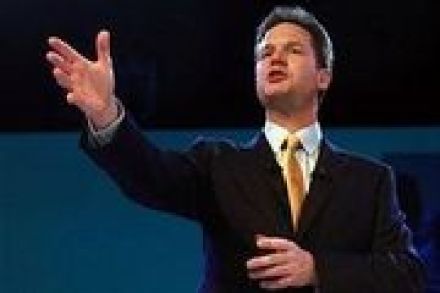
Nick Clegg has one policy that he should be talking about at every opportunity, his plan to make everyone’s first ten thousand pounds of income tax free. It is a radical idea that would lift millions of people out of tax altogether and be a massive step towards making work pay. As one Tory candidate fighting a marginal seat said to me this week, ‘I wish we had something like that to offer people.’ But as Clegg’s appearance on Andrew Marr this morning showed, Clegg doesn’t know how to sell his policy. Rather than emphasising the first ten thousand point, he mainly talked about his plans for a mansion tax and removing the tax breaks on pensions contributions for upper earners.

Has Mandelson won a lasting victory on strategy?

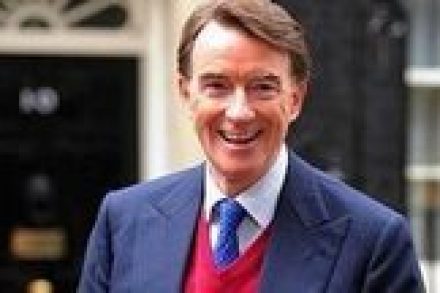
Today was a day which demonstrated just how much Peter Mandelson has won back the turf he lost before Christmas in recent weeks. First, there was his interview in the Telegraph where he comes out for the 50p top rate of tax going down when the fiscal situation allows. Then, there was Gordon Brown’s speech to the Fabians brimful of talk about aspiration. Finally, there were Mandelson’s own brief remarks at that event which emphasised that ‘government alone cannot create jobs’ and the need to create a pro-business environment.

Labour’s cycle of deceit?

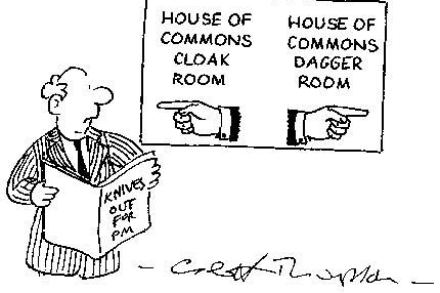
James Forsyth reviews the week in politics There is something wonderfully self-perpetuating about mutiny in politics. Any attempt to depose a leader, successful or otherwise, triggers a cycle of rebellion. The danger for Labour after last week is being sucked into this cycle where treason begets treason. Indeed, the conspirators against Brown cite his actions as justification for their own. As Barry Sheerman put it, when challenged about whether he was betraying his leader, ‘I don’t need anyone who undermined the previous Prime Minister and who was utterly disloyal telling me that I am disloyal.’ When a leader has broken the bonds of party loyalty, he struggles to demand loyalty himself. Iain Duncan Smith, a Maastricht rebel, could never rely on the fealty of his party.

The government caves in to the Muslim Council of Britain

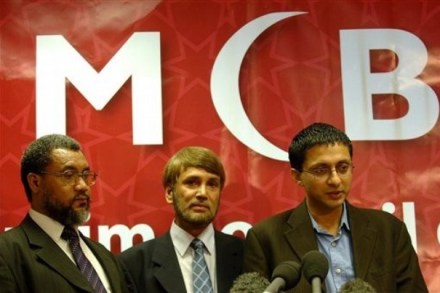
The government has caved in its dispute with the Muslim Council of Britain. The government broke off relations with the group over its deputy director-general Daud Abdullah signing the Istanbul Declaration. Indeed, Daud Abdullah even instigated legal action against the then Communities Secretary Hazel Blears over her statements about what the declaration called for. But now Stephen Pollard is reporting that the government is bringing the MCB back in. A DCLG spokesperson tells Pollard that an MCB commitment to examine “their internal processes and ensure that the personal actions of all members, including senior leaders, remain true to the organisation's agreed policies, avoiding a repeat of the issues which arose after one member signed the Istanbul Declaration...

Fighting terror with the National Security Council

Since September 11, Britain has lost one war and is not winning another. But the question of why this is the case remains depressingly low down the agenda. There is remarkably little interest in why the “British army was defeated in the field in southern Iraq”, to quote Gordon Brown's and David Miliband’s favourite counter-insurgency expert, David Kilcullen. Today, the Tories launched their green paper on national security with speeches by Pauline Neville-Jones and David Cameron. The document is a mixed bag. But the Tories deserve credit for squarely facing up to the fact that Britain is now an “incubator of extremism and an exporter of terrorism”.

Labour’s coming man?

The Labour leadership drama now looks like it will take place in opposition not government. This will have an effect on the kind of leader Labour elects. If one of the coups against Brown had been successful, Labour would have almost certainly selected someone who could be presented as a credible Prime Minister from day one: a David Miliband, an Alan Johnson or - if they had gone for the caretaker option - Jack Straw. But in opposition, the Labour's electorate is likely to feel that it can pick someone who will grow into being a credible PM in opposition. At the moment, there are two people who everyone assumes is running and are making the necessary preparations: Ed Balls and David Miliband.

Labour rebels muster to oppose reform of universal jurisdiction

Martin Bright and the Jewish Chronicle have the scoop that Labour will change the laws so that the power to issue arrest warrants under universal jurisdiction will pass from magistrates to the attorney general. What this means is that foreign politicians will not be arrested in this country for human rights abuses or war crimes without the say-so of the attorney general. The aim is to prevent a repeat of the situation where the Kadima leader and former Israeli foreign minister Tzipi Livni could not visit the UK because of an arrest warrant issued by a magistrate. As I blogged yesterday, there is a Labour revolt brewing over this issue. Martin is hearing that up to 60 MPs might oppose this change so the government will have to rely on Tory support to get this through.

Is there a Labour revolt brewing over any changes to universal jurisdiction?

Following the issuing of an arrest warrant for Tzipi Livni, the government committed to looking at changes to the way that ‘universal jurisdiction’ is applied. David Miliband said that, "The Government is looking urgently at ways in which the UK system might be changed in order to avoid this sort of situation arising again."   It is expected that the government will say what changes it intends to introduce next week. But judging by a debate on the Goldstone Report in Westminster Hall yesterday, there will be trouble from some Labour backbenchers over this. Five Labour MPs spoke out explicitly against any change and several more did so implicitly.

PMQs is a contest again

Well, well another PMQs where Brown holds his own. He struggled for a long time after the election that never was, but in the past couple of months Brown has found some form. For the second week in a row, he had the best line: “He’s getting much redder than he is on his photograph”. Cameron did have one particularly effective moment when he asked Labour backbenchers whether they were putting Brown on their election literature. Only a handful did. In some ways this is all Westminster Village froth, few voters watch PMQs. But Cameron’s failure to win these clashes is bugging him. While Brown’s performances must be boosting his confidence before the three planned televised debates.

Turnbull savages chancellor Brown

Andrew Turnbull, who was permanent secretary at the Treasury from 1998 to 2002 and Cabinet Secretary from 2003 to 2005, has previous when it comes to criticising Gordon Brown. But his recent piece in the FT — ‘Six steps to salvage the Treasury’ — is one long barely coded attack on the PM. Take this line: “First and perhaps foremost, it [the Treasury] needs a strong ministerial team – a chancellor who wants to be chancellor for the full term rather than coveting the prime minister’s job.” Interestingly, Turnbull comes out in favour of the Tories’ plans to create an Office of Budgetary Responsibility. I know this is derided by some as yet another quango, but I actually think it will be an important reform.

Cameron takes a brave line on family policy

David Cameron’s speech today at the launch of Demos’s Character Inquiry was both brave and significant. His message was that it is parenting, not material wealth, that plays the most important role in determining a child’s prospects in life. As Cameron put it, ‘What matters most to a child’s life chances is not the wealth of their upbringing but the warmth of their parenting.’ This message is easily caricatured — ‘Millionaire Cameron says poverty doesn’t matter’ — but it is important and, as recent academic research shows, true. (This is not to say, that poverty doesn’t matter, it clearly does, but that material poverty is not the sole determinant).

Social breakdown by numbers

At the Demos event on character this morning, Frank Field came out with a quite remarkable statistic: that for the last year for which there are records, two years ago, there were more violent crimes against the person in his constituency, Birkenhead, than there were in the entire country 50 years ago or 100 years ago.  It's one of those statistics which shows just how much the social fabric has frayed over the past fifty years. The key question is whether any politician has the determination and insight to accept that these changes are not irreversible. Analysis of Cameron's speech, and what it says about him, to come soon.

The Cabinet’s lack of love for Brown is a gift to the Tories

‘Never interrupt your enemy when is making a mistake’, said Napoleon; the Tories have abided by this dictum in the last few days. They have held back policies announcements while Labour debated whether or not it wanted to get rid of Gordon Brown. The Tories have reentered the fray today with David Cameron’s appearance on Marr and a pledge to offer university scholarships to the children of fallen soldiers. However, Cameron’s appearance on Marr suggests the Tories are still happy to keep the focus on Labour. One rich seam for the Tories over the next few months will be the idea that even most members of the Cabinet don’t really want Gordon Brown as Prime Minister.

Darling takes the opportunity of Brown’s weakness to talk about £57bn of spending cuts and tax rises

Alistair Darling knows that Gordon Brown is now too weak now to slap him down and his interview with The Times is notable for his candour. Fresh from having undermined Brown and Balls’s attempt to use VAT as an election dividing line, Darlings tells Rachel Sylvester and Alice Thomson that the spending review will be the toughest for 20 years and that there will have to be £57 billion worth of spending cuts and tax rises. As Darling puts it, “Many departments will have less money in the next few years,” he said. “[The cuts] are utterly totally non-negotiable.’ It is a far cry from the investment versus cuts line so beloved of Brown and Balls and reopens the whole debate about Labour's election strategy.

Cameron’s big idea is simple: he doesn’t need one

The Tories have opened the new year in a blaze of speeches and promises. But what does it all add up to? Nothing, says James Forsyth — and that’s deliberate. There will never be such a thing as Cameronism Once more, search parties are being sent out to look for David Cameron’s big idea. They will return empty-handed. For the truth is that there is no big idea. However much social responsibility, the post-bureaucratic age or progressive conservatism might be talked up as the ‘big idea’, they are not it. Rather, they are a set of classic conservative insights updated for the 21st century. Cameron is not an ideologue but rather that very English, very Tory thing: a principled pragmatist.

More trouble lies in wait for the government

Labour lost the first week of the long election campaign. The Hoon and Hewitt plot and the late and tepid endorsements of Brown from key members of the Cabinet have highlighted the divisions within the Labour party. Hoon and Hewitt were right that stories about these decisions will not go away. They will run and run right up to polling day. The weekend papers will also not be good for Labour. To compound Labour’s woes, it looks like the big political story of early next week will be Alastair Campbell’s testimony to the Iraq inquiry, which threatens to dredge up memories of spin and Iraq. It should be remembered, though, that Campbell is a formidable performer and could come out of this appearance far better than expected.