James Forsyth

James Forsyth

James Forsyth is former political editor of The Spectator.

Polls aplenty

If we needed a reminder not to get overly excited about small variations in the opinion polls, it comes today with two surveys from the same pollster taken at pretty much the same time which return slightly different results. The YouGov survey for today’s Telegraph has the Tories on 38, down two, Labour on 31, up 1, and the Lib Dems on 19, up two. While the one for the People has the Tories on 40, Labour on 31 and the Lib Dems on 18. There are also two other polls that came out on Friday. Ipsos-Mori which had the Tories on 40, Labour up six to 32 and the Lib Dems on 16. An Angus-Reid poll, the only one to show the Tories on course for an overall majority, had the Tories on 40, Labour on 24 and the Lib Dems on 19.

Cameron and Osborne must listen to their backbenchers — or face revolt

James Forsyth reviews the week in politics When David Cameron and George Osborne move between their suite of offices at the eastern end of the parliamentary estate and the Commons chamber they do so with a pomp that would not embarrass a medieval monarch. A crowd of attendants accompanies them, constantly changing positions but never disrupting the order: staffer, Cameron, staffer, Osborne, staffer. The party moves through the corridors at breakneck speed, heads thrown back, staring into the middle distance rather than looking around at their colleagues. This display certainly succeeds in getting them noticed. But to the Tory MPs whom they march past without even a glance, the whole procession symbolises not power but the remoteness and arrogance of those who are running the party.

Might Brown be frozen out of office?

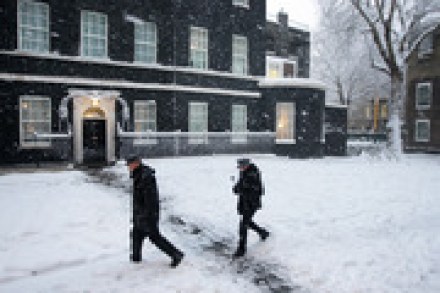
The next set of GDP figures are going to play a key role in the election campaign. They are due out on April 22 with polling day expected to be a fortnight later. Brown desperately needs a good growth number so that he can try and make the case that his policies have steered Britain through the recession, he’s hoping that the voters don’t take account of the fact that pretty much no other major economy has had a recession as long or as deep as Britain has. If the number turns out to be negative rather than positive, then that would surely be the end of whatever chance Brown has of stopping the Tories getting an overall majority. Even another o.1-style number would not be good for Brown. One added problem in all this for Brown is the frozen start to the year.

Jacqui Smith admits Brown’s tactics forced Blair to leave earlier than he wanted to

Jacqui Smith has given a rather reflective interview to Andrew Neil, which you can see on the BBC News Channel this weekend, in which she concedes that she’s likely to lose her seat. But, to my mind, the most interesting thing about the interview is how frank she is about how Blair was bundled out of office by the Brownites. Look at how she answers this question: Andrew Neil:  And can we be in any doubt now that Mr Blair was forced to leave earlier than he wanted to because Mr Brown and his people were pushing so hard? Jacqui Smith:  I think it’s likely that Tony left probably earlier than he might have done had there not been that pressure placed upon him.

There were real, human costs to containment

On Today this morning, Nick Robinson said that Tony Blair would point to improvements in infant mortality and the like. Today then cut back to the studio where a reporter analysed this claim. The reporter disputed the validity of this claim and said that sanctions had ‘skewed’ the numbers. But the sanctions were a consequence of Saddam being in power. As long as he was there, there were going to have to be sanctions to contain his ambitions. Dennis Halliday, a UN official who resigned over sanctions, said that four to five thousand children a month were dying because of sanctions. There are intellectually respectable arguments on both the pro and anti-war sides. But to claim that the containment status quo was cost free is simply not accurate.

Davos man thinks sovereign debt is the most likely cause of the next financial crisis 

The markets have traditionally not looked too carefully at sovereign debt. But that seems to be changing. At a panel at the World Economic Forum in Davos, people were asked to vote what was most likely to cause the next crisis. More than 50 percent of them, 50.7 to be precise, named sovereign debt far ahead of protectionism, 37.3%, and over-regulation, 12%. Another interesting tit-bit from Davos is this quote from Ken Rogoff, a former IMF chief economist who the Tories greatly admire, ‘If you took away the props of the (European Central Bank) and the (International Monetary Fund) half a dozen countries in Europe would fail tomorrow’.

The Gove agenda goes Hollywood

News reaches me of a surprising meeting in the lobby of Portcullis House today, Goldie Hawn — of Private Benjamin fame — swept in to Westminster wearing big shades and more fur than a member of the Household Division. She was in the Commons to meet with Michael Gove’s chief of staff, Dominic Cummings. Gove’s office won’t be drawn about what was on the agenda. But Hawn has an educational foundation specialising in how neuroscience and social and emotional learning techniques can be used to transform teaching techniques so we can presume that this was the main focus of discussions.

Bypassing the centre and trying to broker a peace of the extremes in Northern Ireland was always going to come back to haunt the government

The prospects of a deal in Northern Ireland seem to be receding. If the talks and, therefore the executive, do collapse, it will show how foolish it was of Jonathan Powell to try for this peace of the extremes. Powell decided that rather than spending hours negotiating with the UUP and the SDLP, the quicker way was to just go round them and deal directly with the extremes  on both ends of the spectrum (though, it is important to remember that however bigoted some DUP members are there is no moral equivalence with Sinn Fein). The theory was that these parties would have more room for manoeuvre as they could not be outflanked. But this has, unsurprisingly, not turned out to be true. The DUP have made the abolition of the parades commission a condition of any agreement.

Both Sinn Fein and the DUP would rather that the focus is on the talks in Northern Ireland than their respective scandals

The talks on devolving peace and justice in Northern Ireland are in trouble. The Prime Minister has left without a deal being signed, having been there far longer than he intended. But as the talks continue, it is worth remembering that that both DUP and Sinn Fein are benefitting from the focus on this issue. For the DUP, it moves the conversation on from the financial and marital problems of the Robinsons. While Sinn Fein is glad that there isn’t more discussion of the child abuse scandal in the Adams family which as the revelations in The Sunday Tribune show is extremely serious and raises huge questions about Gerry Adams’ actions. (If this was any party other than Sinn Fein, this story would be getting far more attention than it is).

The Tories’ Northern Ireland policy has nothing to do with electoral advantage

If Tory policy in Northern Ireland was based around electoral advantage, as their critics have been insinuating these last few days, then they never would have attempted to get a new political force off the ground there. Rather, they would have waited for the election result and then, if necessary, made a deal with a unionist party that could offer them enough support. As the vote on 42 days showed, the DUP is not averse to deal-making. Indeed, until recently it appeared that the Tory approach would cost them if there was a hung parliament as it made the DUP far less inclined to support the Tories, their electoral rivals. The mutterings you hear from the Northern Ireland Office is that the Tories decision to contest seats in Ulster means that they can no longer be seen as impartial.

Growth but of the weakest possible sort

So Britain did grow in the fourth quarter of last year but only by 0.1 percent. Many on the Labour side had hoped that the moment that the country started growing again, Brown would be able to go on the offensive; arguing that his handling of the economy had steered Britain through the crisis. But the fact that the growth number is considerably lower than expected, most predictions were for growth of 0.3 to 0.4 percent, has rather stymied that plan. There are now only one more set of GDP figures before the election, presuming that it is held in May. So, it is now almost certain that Brown will not be able to go to the country boasting of a robust recovery. (The worst case scenario for Brown is that these figures are revised downwards meaning we are still in recession).

The Tories will contest every seat in Northern Ireland

On the Today Programme this morning, Sarah Montague kept pressing Sammy Wilson of the DUP on whether his party would enter into an electoral alliance in certain seats with the new Conservative and Ulster Unionist grouping. Wilson suggested that the DUP would stand but would welcome it if other unionists stood aside. But that’s not going to happen. The Conservatives are determined to contest every seat in Northern Ireland. They see this as crucial to their attempt to move politics there beyond the sectarian and constitutional issues. They must also surely know that any kind of electoral alliance with the DUP could, given the views of some DUP politicians, cause problems for them on the mainland.

Nest-eggs for some pre-election goodies

Labour’s tax on banks that pay bonuses has failed to change behaviour and so will raise significantly more money, roughly two and a half billion more, than the Treasury budgeted that it would. How Labour uses this extra revenue will tell us a lot about how Labour intend to campaign and the balance of power within the government. At Brown’s press conference, Gary Gibbon pressed the Prime Minister on whether this money would all be earmarked for deficit reduction, the option that those close to Darling prefer. Noticeably, Brown failed to endorse that idea. He also would not commit to using any other extra revenue exclusively for deficit reduction. The significance of this is that there are rumours floating around that a bank might be sold before the election.

Harman thinks that parenting skills are all about income

There’s a quite astonishing quote from Harriet Harman in The Sunday Times today: “you can’t separate out good parenting skills from family income.” Now I doub’t anyone would disagree that it is easier to raise children if you do not have to worry about money, but the idea that how good a parent you are is determined by your family income is absurdly economically determinist. (I also think it is offensive—imagine how Labour would react if someone said middle class people were better at being parents than working class people) Harman’s quote, though, reveals what is wrong with the Labour’s policy approach in this area. It is all about money and the fails to see the importance of family structures, love, boundaries and the rest.

Cameron’s military muck-up

One of the biggest mistakes David Cameron has made as leader of the opposition was the announcement at Tory party conference that Sir Richard Dannatt was to become a Tory peer and would likely serve in a Tory government. It devalued all of Dannatt’s previous criticisms of the government over its treatment of the army and the equipment shortages in Afghanistan. They no longer looked like the words of a general standing up for his men regardless of the political consequences but party political point scoring.  It also showed a lack of confidence in the current Tory defence team. Indeed, Cameron had to go out of his way to say that Liam Fox would be defence secretary in his conference speech in an attempt to right this.

Will the Gove schools be so successful that the Scots and Welsh adopt them?

When I was writing my column this week on the Tories’ education policy, I realised that there’s a new test for policy: will it be so successful that the devolved administrations end up adopting it.  Michael Gove’s plan for a supply side revolution in education – allowing any group of people to step up schools—promises to transform education. But there will be no new Gove schools outside of England because education is a devolved matter. If the Gove schools are obviously working, though, and a clear improvement on what went before, I expect there will be significant pressure from the voters for them to be allowed north and west of the border respectively.  Since devolution, all the major public service reforms have been pioneered by Westminster.

The Tories plan a radically different education system, with new schools

James Forsyth reviews the week in Politics It is not often that David Cameron lavishes praise on a Labour achievement. But that’s exactly what he was doing on Monday morning at Walworth Academy as he lauded the school for having almost doubled the number of pupils getting good GCSE results. As one of Tony Blair’s academies, Walworth is a rare Labour success, a state-funded institution free from local education authority control. Yet Labour has turned its back on the academies, leaving Cameron and the Tories free to swoop in and claim them as their own. A Tory government would see the academy model become the norm. Schools would be state-funded and free but left to run themselves. This is a welcome development.

Publishing the serious case review in the Edlington case is the best way to prevent more awful mistakes

The Edlington case is shocking and depressing to think about. But I would urge you to watch Gavin Esler’s interview of Ed Balls on Newsnight where he challenged Balls over his reasons for not publishing the full case review. Newsnight, who were leaked a copy of the full case review in the Edlington case, pressed Balls on why the full report was not being published when the summary was misleading and did not highlight some of the biggest problems. Balls, as the government does whenever it is challenged on this point, invoked the support of the NSPC, Lord Laming (whose record, as Iain Martin points out, isn't that great) and various other members of the establishment.

Confusion surrounds the Tory position on the Muslim Council of Britain

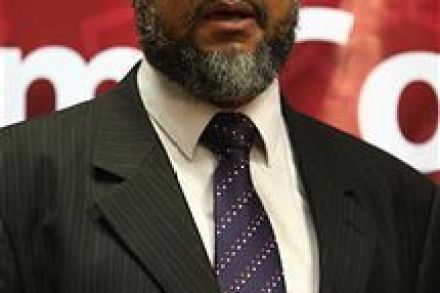
The government broke off relations with the Muslim Council of Britain over Daoud Abdullah, its deputy secretary-general, signing the Istanbul declaration, which the government believed encouraged attacks on British forces if they attempted to enforce a weapons blockade on Gaza. Last week, the government retreated; inviting the MCB back in despite Daoud Abdullah’s signature remaining on the document. The question now is whether the Tories are going to go along with this surrender. The first test of this is a fundraiser that the MCB is holding on the 22nd of February. The invitation boasts that Jack Straw and Nick Clegg will be attending and says that Chris Grayling has been invited but his attendance has yet to be confirmed.

What will Labour do with the extra £1.5bn?

Labour’s tax on banks that pay big bonuses was budgeted to yield £550 million. But because the tax has failed to change behaviour it is going to bring in far more than that, at least 2 billion according to recent reports. This raises the question of what will Labour do with the extra 1.5 billion? The responsible thing to do would be to use it for deficit reduction. We can expect, Darling who has said that his “number one priority is to get the borrowing down”, to take this position. But we can expect the more party politically minded members of the government to want to use this money for extra public spending. For example, one can easily imagine them wanting to use the money to help meet their target of ‘eradicating’ child poverty by 2020.