James Forsyth

James Forsyth

James Forsyth is former political editor of The Spectator.

Why Obama did not consider pulling out of Afghanistan

The implosion of General McChrsytal’s career has refocused attention on Afghanistan. Reading Peggy Noonan’s column on the subject I was struck by this paragraph reflecting on Jonathan Alter’s reporting of Obama’s decision making process when he ordered the surge: More crucially, the president asked policy makers, in Mr. Alter's words, "If the Taliban took Kabul and controlled Afghanistan, could it link up with Pakistan's Taliban and threaten command and control of Pakistan's nuclear weapons?" The answer: Quite possibly yes. Mr. Alter: "Early on, the President eliminated withdrawal (from Afghanistan) as an option, in part because of a new classified study on what would happen to Pakistan's nuclear arsenal if the Islamabad government fell to the Taliban.
Immigration cap to be announced on Monday

The Mail reports that the government will announce a cap on non-EU immigration to Britain on Monday. It also refers to objections from within the Coalition to the policy. But as the paper notes these came from Tories, not Lib Dems. My understanding is that in the Cabinet Committee meeting where the issue was discussed, David Willetts gently raised concerns about the idea and the effect it could have on the global competitiveness of British universities. Michael Gove then echoed these objections more forcefully; saying—I’m told—that he was ideologically opposed to the measure.

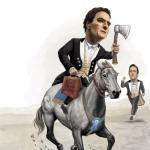
Osborne is becoming the true Tory leader

There’s one subject that you don’t raise with David Cameron’s circle if you want the conversation to last: the election result. They don’t like to be reminded that they failed to win a majority. The Cameroons have been persuading themselves that coalition government is the best possible result. No. 10 has been dubbed ‘the love nest’ by the rest of Whitehall. The Tories inside gush about their new Liberal Democrat colleagues. But just next door, there is a man who is still obsessing about how to win a Tory majority. George Osborne has digested the election result, does not regard it as a success, and is seeking to learn from it how best to create a Tory parliamentary majority in this country again.

Abbott gives no answers

There’s one thing that people want to talk about today and that’s Diane Abbott’s appearance on This Week last night. As you can see above, it was a total disaster for Abbott. She was all over the place on her taxi claims and she got into a total tangle on whether she had meant to imply with her comment that ‘West Indian mothers will go to the wall for their children’ that West Indian mothers were better than mothers of other ethnicities. Under repeated questioning, all she would say is that she had said all she was going to say on the subject.  Even when it was clear that this answer was not sufficient, Abbott had nothing to add.

Downing Street monitoring three potential Whitehall trouble spots

Benedict Brogan, who is extremely well sourced inside Number 10, has a very interesting report on three potential problems that Downing Street is keeping a close eye on. The first is the Cameron Fox relationship. As James Kirkup writes in the Telegraph today, Cameron was not best pleased when Fox announced Sir Jock Stirrup’s sacking in a newspaper interview. There’s a feeling among some of his Cabinet colleagues that Fox is using up his lives rather quickly what with this mistake and the comment about Afghanistan being a broken 13th century just before he and William Hague and Andrew Mitchell arrived there. There’s also a lot of briefing against Fox coming out of his own department. The MoD have not taken to him.

Rudd resigns, Australia has its first female PM

In the end, Kevin Rudd didn't even last to the leadership ballot. He agreed to step down as PM and Labour leader this morning and the party immediately replaced him with Julia Gillard, his deputy who announced she was prepared to stand against him yesterday. At the start of the year, Rudd was the most popular PM in thirty years. His departure is a remarkable turn of events. We'll have more analysis later in the day.

Cameron and Clegg offer joint defence of the Budget

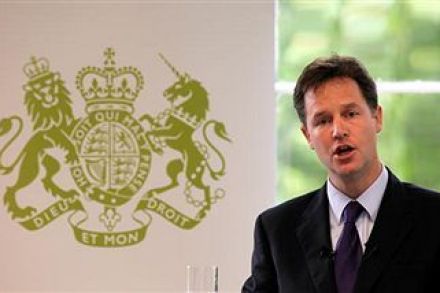
David Cameron did particularly well in the Cameron and Clegg joint interview just now. He has a real ability to read the mood of an audience; the debates could have been very different if the audience hadn’t been required to be silent. The only news made during the interview was Cameron saying that he will not take the Prime Minister’s pension. But there was an interesting bit at the very end when Nick Robinson asked Nick Clegg what he had kept out of the Budget. Clegg said he didn’t want to go into the ‘gory details’, a phrase that Robinson immediately jumped on. Cameron then intervened to say that the one thousand pound increase in the personal allowance was a Lib Dem policy.

McCrystal goes

NBC is reporting that President Obama has accepted General McChrystal’s resignation. McChrystal had offered it following the publication of a magazine profile in which him and his staff were reported deriding various members of the administration’s Afghan war effort. McChrystal’s own criticisms of the president were also part of the piece. The BBC is now saying that General Petraeus, the general who implemented the surge strategy in Iraq, will replace McChrystal. This suggests that McChrystal’s dismissal will not lead to a change in strategy. Although it remains to be seen whether Petraeus will stay as head of CentCom.

Rudderless

Remarkable developments in Australian politics as the Prime Minister Kevin Rudd faces a leadership challenge tomorrow. Rudd is being challenged by his deputy PM Julia Gillard, who would be Australia’s first female PM. Gillard’s strategy might be to try and replicate Bob Hawke who was elected leader of the Australian Labour party and then went to the country almost immediately afterwards winning a convincing victory. The challenge has been triggered by Rudd going from a popular leader at the turn of the year to one who is in danger of losing office after just one term, the next election has to be held by April next year.

Cameron settling in nicely

David Cameron was on punchy form at PMQs today. He jibed that in Harriet Harman’s case the Budget Red Book should be called ‘the unread book’ and called Labour backbenchers ‘dunces’ who didn’t know what the last government was planning. The Cameron Harman exchange was interesting. Harman had come armed with some classic follow-up questions using the details in the Red Book. Cameron didn’t want to engage on the detail, suggesting that Harman might have had a point. But his ability to attack Labour for having got the country into this mess allowed him to win the exchange on points quite comfortably. Bob Russell, a Lib Dem MP who said he may oppose the Budget yesterday, roared out three nil after Harman’s first three questions.

A well-crafted Budget but the spending review will hurt more

George Osborne’s Budget today was the first dose of pain. The second will be the spending review in October, which I suspect will put far more of a strain on the Coalition than today did. Non-protected departmental Budgets, everything apart from health and DFID, are going to be cut by 25 percent on average. But Osborne told the House he would hope that the cuts to defence and education would be significantly less than that. The unspoken part of that is that the cuts to some other Budgets will have to be significantly bigger than that; I expect there are a few people at BIS and DCMS looking around rather nervously this evening. When the cuts are laid out that’s when the current feeling of unease among a chunk of the Lib Dem backbenches will crystallise.

The old politics

The first Deputy Prime Minister’s Questions was the worst of the old politics. I’m all in favour of robust exchanges in the Commons but the Labour side was just shouting at Clegg today. As he was answering one question — and, I mean, actually answering — on Sheffield Forgemasters, one Labour MP tried to drown him out with cries of traitor. Although, I thought the question about whether Clegg could help Crimestoppers with the whereabouts of the fugitive Lib Dem donor Michael Brown was delivered with wit.   One thing worth noting is that the soft-ball questions to Clegg came from Tory—not Lib Dem—backbenchers.

Clegg gets his retaliation in first

Nick Clegg has written to his MPs and party members trying to stiffen their sinews ahead of the Budget. The message is, yes this will be unpleasant, but it’s Labour’s fault—and they shouldn’t be allowed to forget that as they rail against it. It ends with this very David Cameron-esque sign-off, ‘Sorting out Labour’s mess will be difficult but it is the right thing to do.’ Tomorrow, will be the biggest test by far of the Coalition and Lib Dem support for it. Will we see Lib Dem MPs waving their order papers as Osborne sits down, will they have the stomach to cheer such a tough Budget?

Huhne and the future of the Coalition

The exposure of Chris Huhne’s affair could end up affecting the way the Coalition develops. At the last election, Huhne held his seats thanks to the loaned votes of Labour supporters; his literature emphasised how in Eastleigh the only way to keep the Tories out was to vote for him. His majority is 3,864 and the Labour vote there fell by 5,085. Once Huhne went into government with the Tories, he was always going to lose most of these Labour-leaning votes at the next election. But he’ll now also probably lose the support of some voters who feel let down by his behaviour. All in all, it looks like Huhne will have a tough race to get back. But if the Tories were understanding he would have a much easier time.

Another BP PR blunder

The Energy Secretary’s actions will rather obscure the latest developments in the BP story, but they are well worth noting. First, Tony Hayward has made yet another PR blunder with his decision to attend a yachting event off the Isle of Wight. In a way it might not matter what Hayward is up to—he’s not going to plug the spill himself—but, as the White House Chief of Staff has been quick to point out, it is hardly a smart PR move. This mistakes following hot on him being moved away from day to day management of the spill, does suggest that Hayward might not be in this particular job for that much longer.

The Miliband brothers may yet drown each other in a butt of malmsey

James Forsyth reviews the week in politics From a distance, Tony Blair might be able to persuade himself that the Labour party contest now underway is the fulfilment of his dreams. The ‘brothers’ everyone is talking about are not trade union heavies but two Oxford PPE graduates who have worked their way up through the New Labour machine. But to listen to what they say, there is scant evidence of Blair’s election-winning philosophy. The candidates are outbidding each other on making punitive levels of taxation on the rich permanent, denouncing Labour’s rapprochement with big business and committing to abolishing tuition fees. Not that anyone is listening much to what they say.

BP move gaffe-prone Hayward away from day to day management of the oil spill

The day after Tony Hayward’s pretty disastrous appearance before Congress, BP have announced that Bob Dudley, the managing director of BP, will take over day to day control of trying to deal with the oil spill. BP Chairman Carl-Henric Svanberg told Sky that "It is clear Tony has made remarks that have upset people." "This has now turned into a reputation matter, financial and political, and that is why you will now see more of me”. This choice of words hardly suggests much confidence in Hayward.

The right message and the right messengers

The Coalition’s plan to let teachers, parents and voluntary groups set up their own state-funded free schools has had a particularly good run in the media. The package on the Six o’clock news was one of the most positive pieces I can remember being done on Coalition policy. The free schools idea is a good one and has been well thought-through. That’s definitely part of the reason it has come across well today. But it has also been boosted by the fact that the most prominent advocates for it today have not been politicians but the parents and teachers who want to set up their own schools. On the Today Programme this morning, Mark Lehain, an assistant head who wants to open a free shcool, was particularly effective.

Congress boils with oily rage at BP’s Hayward

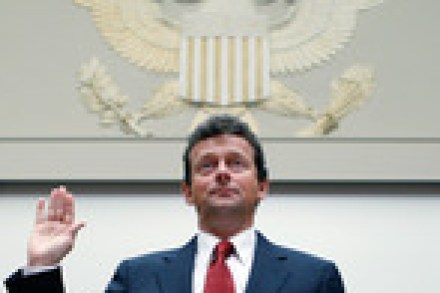
The BP chief executive Tony Hayward was always going to be given the roughest of rides by Congress. He has become the bumbling face of BP, the man who personifies its failure to stop this oil spill getting worse by the day. But he turned up today with an apology and precious little else. He had no answers to predictable questions and still appeared not to get it. A ham-fisted intervention by Representative Joe Barton—apologising to BP for the way the incident had become politicised—has taken some of the heat off Hayward. But Hayward really does not look cut out for the job of being CEO of a company involved in this kind of crisis. You wonder how much longer he’ll stay in post.

The Big Society reincarnated

The Big Society is a great idea. But its problem has always been that it lacks definition; voters and even some Tory MPs aren’t quite sure what it means. But an idea being floated today gives you a sense of its practical and political potential. It is being suggested that the community right to buy, the idea that the community should have first refusal on any asset being sold off, should be applied to the port of Dover. The last government wanted to privatise the port but the new MP for Dover, a Tory called Charlie Elphicke has proposed that a community trust be allowed to buy the port and then lease it out to an operator.