James Forsyth

James Forsyth

James Forsyth is former political editor of The Spectator.

Trouble on the horizon | 18 August 2010

100 days in, a danger emerging for the coalition: the idea that it is balancing the budget on the backs of the middle class. The Daily Mail front page today warns in apocalyptic font of a ‘Bonfire of the middle class benefits’ while the Times says ‘Families to lose out in bonfire of the benefits.’   The problem for the coalition is that because it is committed to protecting the poorest and the most vulnerable, the cuts will have to be concentrated further up the income scale. This means that a lot of will what go in the cuts are the middle class bits of the welfare state. To compound the problem — and as as Paul Goodman notes - many of the coalition’s tax rises will worry the middle class.

Sky News survey has the Lib Dems down to 8 percent

It is just one poll and of the Sky News Panel but a survey to mark the Coalition’s 100 days has the Lib Dems down to 8 percent. (One note of caution, the sample seems to have more Tory voters from the last election than you would expect).   The Lib Dem’s falling poll ratings is rapidly becoming the biggest political problem facing the coalition. Combine it with the fact that The Sun’s You Gov poll today shows a plurality in favour of keeping first past the post and you have a pretty toxic brew for the Liberal Democrats.

Cable won’t be Coalition candidate for Mayor

The most bizarre story of the day is Michael Crick’s post saying that in Number 10 there’s discussion of Vince Cable running as a Coalition candidate for Mayor of London. Now, I’d be totally shocked if this was to happen and have made some calls it still strikes me as thoroughly unlikely. The three main reasons for this are that Boris Johnson wants to run for re-election, the coalition would be taking a massive risk to test its electoral popularity in this way (imagine if Labour won) and taking Cable out of the Cabinet would unbalance the coalition. On the London mayor front, we’ll know who the Labour candidate is on the 25th of September—the result will be announced at the same time as that of the Labour leadership election.

Strategic differences

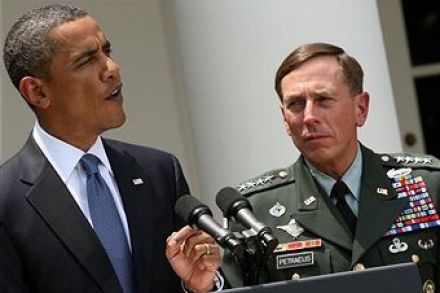
When President Obama asked General Petraeus to take over the Afghan command after General McChrystal’s Rolling Stone implosion, there was much speculation that the two men would clash over the date for America to begin withdrawing troops. Obama had set down July 2011 as the starting point but Petraeus was almost certainly going to want more time than that. In Petraeus’s Meet the Press interview on Sunday, Petraeus made clear he might argue that withdrawal cannot begin that quickly 'MR. GREGORY:  I just want to clarify this.  Did — could you reach that point and say, “I know that the process is supposed to begin, but my assessment as the commander here is that it cannot begin now”? GEN.

Readying the bombardment

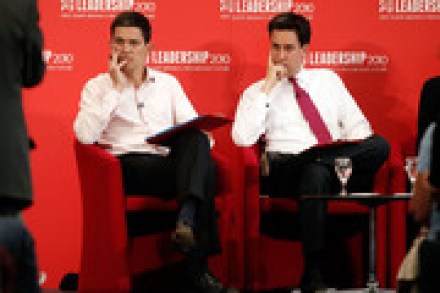
Westminster might be in holiday mode, but behind the scenes the coalition is preparing to take on the new Labour leader. As I say in the Mail on Sunday, the coalition is determined to hit whichever Miliband wins early and hard. The Cameroons believe that Tony Blair’s decision not to attack Cameron straight away in 2005 was crucial in allowing him to present himself to the public on his own terms. By contrast, both Hague and Duncan Smith were made to look like losers by the Labour attack machine within months of becoming leader of the opposition. The result of the Labour leadership election will be announced on the 25th of September.

Whelan suggests Brown will turn up to Labour conference

A poll in today’s Daily Mail might have the Tories down to 29 percent (in part due to a very large number of undecideds) but it is Charlie Whelan’s interview blaming Peter Mandelson for Labour’s election debacle that is getting all the attention. In a fit of campaign nostalgia, CCHQ has tweeted out a bunch of lines from it. But I suspect it is the last Whelan quote in the piece that has them smacking their lips.  Whelan says, 'Labour has not fallen out of love with Gordon. Quite the reverse. If he tips up at the Conference - which I think he will - he'll go on stage and he'll be cheered to the rafters. This is hardly going to help the new leader of the Labour party, who’ll be announced on the eve of conference.

The coalition’s university challenge

The contours of an agreement on how to pay for university education are clearer today after Rachel Sylvester’s interview with David Willetts. Up-front fees look to be on the way out.  Willetts tells Sylvester, ‘It’s very important that it’s signaled very clearly that the money that is paid back comes out of your earnings once you have graduated and are in work.’ It also seems that different courses at different institutions will have different prices. Willetts proclaims that he wants something that ‘links you to your university and the course you did at that university.’   So far, this looks like simply collecting variable fees through the tax system.

The dangerous rows behind the scenes are between Tories and Tories

James Forsyth reviews the week in politics Coalition politics has thrown political journalists for a loop. For years we have been used to members of government claiming that there is not a cigarette paper of difference between them and their colleagues — even when the disagreements were obvious. But now Cabinet ministers happily admit that they differ. And when they disagree, the coalition partners set about resolving their differences in a civil and reasonable fashion. The lobby journalist’s bread and butter — the splits story — is in danger of disappearing. But the old politics is not dead. There are still vicious rows going on in government, but they are blue on blue: Tory versus Tory. This is not as odd as it might seem.

Pickles axes the Audit Commission

Eric Pickles’ decision to scrap the Audit Commission is further evidence that Pickles is the minister prepared to move quickest on the cuts agenda. It is a bold decision and one that is going to come under heavy attack. The Audit Commission’s supporters will claim that it is self defeating to scrap the watchdog that checks that public services are delivering value for money. Set against that, though, has to be the culture of excessive pay and waste at its hearts. Until Pickles intervened, it wanted to pay its new chairman £240,000.

Debating gay marriage

There’s an intellectually enriching debate going on at the moment between Ross Douthat and Andrew Sullivan over gay marriage. It was all started by an eloquent and heartfelt column by Ross arguing that the idea that “lifelong heterosexual monogamy at its best can offer something distinctive and remarkable — a microcosm of civilization, and an organic connection between human generations — that makes it worthy of distinctive recognition and support” and that is incompatible with gay marriage. Andrew Sullivan, who along with Jonathan Rauch, deserves a huge amount of credit for moving the argument for gay marriage into the mainstream, wrote a powerful set of rebuttals.

What to do with the defeated?

One of the challenges facing the next Labour leader will be what to do with Ed Balls. Balls, as he demonstrated in the last few months, has the right mentality for opposition. Labour will need his appetite for the fight in the coming year. But if a new leader makes Balls’ shadow Chancellor, he’ll have a shadow Chancellor whose position on the deficit is simply not going to seem credible to the public; Balls has already said that he thinks the plan Labour went into the election with for the deficit was too ambitious. The Tories are convinced that if Balls is shadow Chancellor, they’ll have the dividing lines they want on the economy. A better department for Balls to shadow would be the Home Office.

Officials: Better than 50 percent chance that Israel will strike Iran next year

The Iran issue has dropped down the news agenda in recent months. But that doesn’t mean it has gone away. Even with the difficulties that Iran’s nuclear programme has faced, any decision on whether to try to use force to stop Iran becoming a nuclear-ready power will have to be taken in the next year or so as Jeffrey Goldberg’s brilliantly reported cover piece in the Atlantic reminds us. Goldberg writes, “I have interviewed roughly 40 current and past Israeli decision makers about a military strike, as well as many American and Arab officials. In most of these interviews, I have asked a simple question: what is the percentage chance that Israel will attack the Iranian nuclear program in the near future?

The university funding compromise

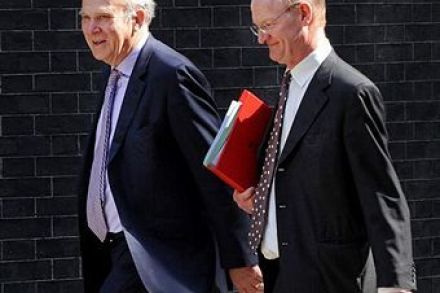
One of the issues on the horizon that has the most potential to cause problems for the coalition is how to fund higher education. The Liberal Democrats are opposed to fees and the Tory MPs and press loathe the idea of a straight graduate tax. As Ben Brogan notes in his Telegraph column today, Vince Cable and David Willetts, the two ministers charged with working this out, are having a very civilised discussion about it. Oddly enough, it is — as I say in the magazine this week — the blue on blue rows in government that are most vicious.

Jack Straw backs David Miliband

The Labour party’s very own Vicar of Bray has made his choice. Jack Straw is backing David Miliband for leader. Straw is a politician who has always had a canny sense of which way the wind is blowing. Barbara Castle, who Straw worked for as a special adviser, once famously said that she hired him for his ‘guile and low cunning’. Straw’s move from the Blair camp to the Brown one was a sign that Blair was running out of road. Say what you like about Straw—Tony Blair was once caught calling him a ‘tart’—but he has a record of picking winners in Labour contests.  His endorsement of David will be seen as a sign that the elder Miliband is still the brother who the smart money is on to be the next leader of the Labour party.

The coalition gets political

The joint Tory Lib Dem press conference to attack Labour’s legacy was a sign of how comfortable the two parties are becoming together. Chris Huhne and Sayeeda Warsi’s message was that the ‘unavoidable cuts that are coming are Labour’s cuts’ and that Labour is ‘irrelevant’ until it admits its responsibility for the deficit. The message was essentially the one that Chris Huhne and Michael Gove set out at the political Cabinet at Chequers last month. In a move that is bound to generate some headlines, Warsi has written to those Labour leadership contenders who were ministers asking them to forfeit their severance pay and to ask the ex-ministers supporting them to do the same.

Resisting an EU tax on financial services

The prospect of taxes being levied directly by the European Union is one of those stories that pops up on a fairly regular basis. It is never likely to actually happen as national governments won’t want to cede the power of the purse strings. But the great Hamish McRae makes a very good point about the taxes that the EU wants to levy in his Independent column: ‘The two areas the EU wants to put taxes on, banking and air traffic, would hit the UK particularly hard. Financial services are the UK's largest export industry, with net exports (ie exports minus imports) of £33bn last year, more if you add in associated professional services. We are by far the world's largest net exporter of such services.

IDS’ resignation would be a catastrophe

If Iain Duncan-Smith resigned from the government, the coalition would be in trouble. If Vince Cable is the coalition’s left tent peg, IDS is the right one: his departure would leave the coalition’s right side dangerously open to the elements. Which prompts me to oppose Ben Brogan’s blog saying that the coalition would not suffer much if IDS walked. If IDS left, the Cabinet would be dangerously unbalanced. There would, in these circumstances, be only two people in it who the Tory parliamentary party considers to be on the right, Liam Fox and Owen Patterson. The right, as the Liberal Democrats seem to appreciate, would in these circumstances demand far more policy concessions from Cameron in return for its support.

Strange bedfellows

As the row over Naomi Campbell’s testimony at Charles Taylor’s war crimes trial fills up acres of space in the newspapers and hours of airtime for the news channels, I can’t help but remembering the friendship between the model and Sarah Brown. Brown even selected Campbell as her 21st century heroine in a 2009 Harpers Bazaar poll, praising her as a “loyal friend”. Now, it should be stressed that the work Brown and Campbell did together was for a series of worthwhile causes, improving maternal health and helping Haiti post-earthquake. But it struck me as surprising at the time that a savvy former PR woman married to the Prime Minister chose such a controversial friend.

Cameron, Villa and the succession

The Prime Minister is, as we know an Aston Villa fan. So we can expect him to be disappointed at Martin O’Neill’s departure. On his trip to Birmingham the other week, Cameron’s support for Villa caused the PM to, as the phrase has it, misspeak. He told the Birmingham Post that with “the Governor of the Bank of England as a supporter, the next King of England and the current Prime Minister, [Aston Villa] got a good set” of fans in high places. But his reference to the next King of England being a Villa fan will raise a few eyebrows as it is Prince William — not Prince Charles — who is the Royal Villain. Now it is obvious that Cameron just slipped up and that he didn’t mean to impart any information about the succession.

Will the Tory right oppose a graduate tax?

One of the vulnerabilities of the Coalition is that when Labour moves position one of its flanks can be exposed. When the Coalition agreement was drawn up, it seemed sufficient that the Lib Dems would maintain the right to carry on opposing tuition fees as both Labour and the Conservatives were in a favour of them. The Lib Dems would still be able to tell students, a key constituency for them, that they were the only party committed to abolishing fees. But as soon as the Labour leadership contenders started moving rapidly towards a graduate tax, the Lib Dems had a problem.