James Forsyth

James Forsyth

James Forsyth is former political editor of The Spectator.

The beginning of the end of universal benefits

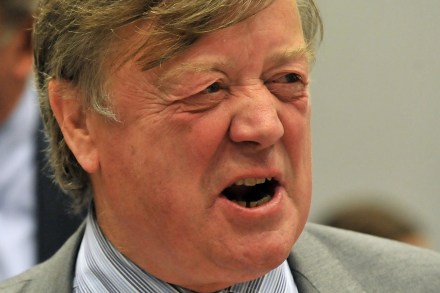
The most important line in George Osborne’s speech was this one: “It’s very difficult to justify taxing people on low income to pay for the child benefit of those earning so much more than them.” Logically, this argument applies equally to all other universal benefits. Why should someone on £12,000 a year be paying tax to help cover the cost of Ken Clarke’s pension? Personally, I’m quite happy to see universal benefits go. The end of universal benefits would, though, change the nature of the welfare state. Quite rapidly, it would become a safety net not a contributory system. This is why Labour will oppose so vigorously taking child benefit away from those on the higher rate of tax.
Osborne’s benefit risk

George Osborne’s announcement that child benefit will be taken away from any family with a higher rate taxpayer in it to help fund welfare reform shows how far Cameron and Osborne were prepared to go to keep Iain Duncan-Smith on board. During the campaign and in the Budget, Cameron and Osborne had strongly implied that child benefit would remain universal. The move carries it with considerable political risks. The measure takes effect from 2013, so before the country will have seen the benefits of welfare reform.

Ken Clarke in the firing line

There’s an intriguing pre-conference story in the Mail on Sunday today. The paper reports that: “Ken Clarke faces a whispering campaign by allies of David Cameron and George Osborne to move him from Justice Minister because of his ‘disastrous’ views on law and order, it was claimed last night. Conservative MPs say Mr Cameron and Mr Osborne are ‘ frustrated’ by Mr Clarke’s refusal to take a tougher line on key issues such as prison sentencing.” Clarke’s liberal views on criminal justice certainly are infuriating his colleagues. Allies of Theresa May have been heard to complain that "Ken is going to send the crime rate soaring and we’re going to get the blame.

Lib Dems to the right of their Tory colleagues?

I’ve re-read it several times now and I’m still not sure whether Francis Maude was joking or not when he told The Times that Danny Alexander ‘is obviously a bit to the right of me’. It is the kind of thing that the dry-witted Maude might say as a joke. But equally there’s no signal there that it is. But Mr Alexander occupies an odd place politically at the moment for a Liberal Democrat. He has become an ardent budget-balancer. Indeed, Nick Clegg has been heard to observe recently that his former chief of staff has had his brain captured by Treasury officials.

Cameron, more ideological than he appears

The Tory conference in Birmingham is the last big political event before the cuts come. After the 20th, every time a senior Tory appears in public for the next few years they will be about why this or that is being cut. As the row over defence shows, these questions will come from right across the spectrum. For this reason, Simon Schama’s interview with Cameron in today’s FT is probably one of the last that will start with the assumption that Cameron is genial, non-ideological fellow. Once the cuts are happening, it will be harder to cast Cameron as a consensual figure. His edges will appear harder, more defined.  But when Schama asks Cameron what he wants his legacy to be we get a reminder of how non-ideological Cameron is.

Cameron’s new model army

The Conservatives are planning to chip away at the lower middle-class voter and release his inner Tory Two inconvenient truths will put the dampeners on what could have been a celebratory Conservative party conference in Birmingham next week. First, there is a champagne ban for the third year running. There are to be no pictures of Tories with bubbly. Next, there is no real victory to toast. David Cameron failed to win a majority against Gordon Brown, which is something of a sore point among his advisers. Visitors to No. 10 are told that this is ‘not a helpful subject’ to bring up. There is a ‘don’t mention the campaign’ policy running in Cameron Towers. But beneath this defensiveness lies an understanding of what went wrong.

Cameron needs to show that life is better under the Conservatives

The election of a new Labour leader means that proper politics has resumed. David Cameron now knows who he needs to beat to win the next election. As I argue in the magazine this week (subscribers), if the Tories are to secure a majority in 2015, they’ll need to do better among those in households with an income of thirty-odd thousand or so, what pollsters call the C1s. The last time the Tories won outright, they got 52 percent of the C1 vote—more than double Labour’s total. But in 1997, Labor and the Tories split this group evenly. The Tories have never fully recovered from this.  In 2010, the Tories garnered 39 percent with this group, a mere three percent swing since 2005.

An example of union hostility against people who want to do their jobs

Amongst BBC political staff, there’s mounting concern about the plans for a strike during Tory conference. One of them said to me at Labour conference that they just didn’t know what to do, they had been put in an impossible position by the decision to call the strike on such politically important days. These journalists fear that striking during Tory conference would undermine the corporation’s reputation for impartiality. So, a whole host of them wrote to their union rep asking him to make representations on their behalf.

David Miliband keeps the door ajar

The list for the shadow Cabinet elections shows that no David Miliband supporter who was going to stand for the shadow Cabinet has decided not to run following Ed Miliband’s victory. It’ll be intriguing to see what the party balance of the shadow Cabinet is following these elections. There is an expectation that Yvette Cooper will top the poll now that David Miliband is not standing. David Miliband’s decision not to stand was as expected. As one fellow hack pointed out to me the other day, if David had stayed on the public would never have worked out which Miliband was which and the press would have constantly looked for a split story.

Miliband’s Balls dillema

After one of the many sections in Ed Balls’ speech on the economy, there was a telling moment as Ed Miliband clapped half-heartedly with a thoughtful look on his face. One could almost see him trying to work out with whether he agreed enough with what Balls was saying to make him shadow Chancellor. There are dangers in both him making Balls’ shadow Chancellor and not. If he does make Balls shadow Chancellor, then it be a Neil Kinnock and John Smith situation all over again: the leader will have ceded control over economic policy. But if he doesn’t, then he’ll have an aggrieved Balls on his hands and considering all the other problems the new leader has to deal with, he might not want to add this to the list of them.

Miliband’s dilemma

The day after the leader’s speech is always a slightly flat time at a party conference. But Manchester today feels particularly flat. Everyone knows that the two big political stories are happening down in London: David Miliband’s expected announcement that he is not standing for the shadow Cabinet and the Fox flap. One of the challenges for Ed Miliband is going to be asserting his authority with his parliamentary colleagues, most of whom didn’t vote for him. Added to this is the fact that many of them remember him as a young bag-carrier. Members of the shadow Cabinet were openly mocking his ‘new generation’ line last night. All this is going to make his performances in the Commons chamber more important than usual.

Miliband produces the bare minimum, but don’t underestimate him

Ed Miliband did what he needed to do. In his speech he needed to show that he was not some demented left-winger, that he was not a tool of the unions and that he appreciates the need for cuts. He did the first bit with his tone. It is very hard to depict someone as dangerously left-wing when they appear thoroughly reasonable. The union test he got through with the line that no one in the Labour party should have any ‘truck with overblown rhetoric about waves of irresponsible strikes.’ As one Tory said to me last week, attacking him over being in hock to the unions was never going to be effective for long as it is so easy for him to distance himself from them.

Where does Miliband go now?

How to reduce the deficit is the ground on which the Tories want to take on Ed Miliband. The whole Tory war machine has been mobilised to try and use today’s IMF report which calls the Osborne deficit reduction plan ‘appropriately ambitious’ to flush out Ed Miliband’s position on the deficit. The deficit is the ground on which Labour would least like to fight right now They know that, in the words of one former Cabinet minister, ‘that his approach to the deficit is what will defined Ed politically.’ But it is hard to make this choice when you don’t know who your shadow Chancellor is and what’s in the comprehensive spending review.

Why Ed Miliband shouldn’t be underestimated

There is a feeling on the right that with the election of Ed Miliband it is back to the good old days. The thinking goes that Labour have elected a lefty as leader and it is time "to do ‘em over just like we did back in the day". But this is overly-simplistic. First of all, Ed Miliband is certainly to the left of Tony Blair but he’s nowhere near as far left, compared to the public, as Michael Foot or Tony Benn, or anyone like that. Second, the right in the ‘80s had three fronts on which to attack left-wing politicians: economics, culture and national defence. Now, it only really has one. The economic argument is, obviously, still live. But the cultural one is now gone.

Labour’s subdued response to Miliband’s victory

There’s an odd mood in Manchester at the moment. The leadership election result has discombobulated the Labour establishment. In some circles, there is irritation that union votes delivered the leadership to Ed Miliband against the wishes of the MPs and party members. Others worry that this has all come too soon for Ed Miliband, that – in the words of one senior member of the last government – "he still doesn’t know what he thinks". While others are still getting their heads round the family dynamic. It was striking that when people arrived in the conference hotel bar from the Ed Miliband victory party they were not mobbed. But Ed Miliband’s performance on Marr this morning was steady, there were – as Pete notes – no mistakes.

The dignity of David Miliband

We spend a lot of time criticising politicians so it behoves us to praise one when they behave with as much dignity as David Miliband has today. He has lost the Labour leadership election by the narrowest of margins and despite winning among both party members and MPs, but there has not been even a hint of bitterness or irriation in his behaviour. After the result, David addressed his team, telling them to rally around his brother. He told them their job was to ensure that Labour keeps the pressure on the coalition through the comprehensive spending review. Right now, David Miliband is touring the conference hotel, talking to conference delegates. On his face, there is no sign of the disappointment that he must be feeling.

Cameron neglects to mention his tax cut for the middle classes

David Cameron’s interview in the Telegraph this morning is striking for three reasons. First, despite the interview appearing on the day of the Labour leadership declaration, there’s no attempt to bring the hammer down on the new Labour leader. All we get is some framing on the deficit. Next, as Paul Goodman notes, it is an attempt to reassure the Tory faithful after the Lib Dem conference Vince Cable is gently put back in his box with the line ‘Vince is Vince’. Cameron also stresses that he ‘will always safeguard our nuclear deterrent’; a line that is very different from the nakedly political discussions of Trident in Liverpool, where what seemed matter to most was making life difficult for Labour.

Risky Business

The Spectator/KPMG conference explored investment opportunities in today’s uncertain geopolitical climate We live in an age of uncertainty. The predictable threats of the Cold War have been replaced with more nebulous dangers: great power politics might be stable but across large parts of the world instability rules. The Spectator’s ‘Global Risk and Opportunity’ conference in association with KPMG explored the consequences of this uncertain global environment for business. Andrew Neil opened the event by observing how the all-party desire in America to withdraw from costly foreign entanglements threatened the Pax Americana that has kept the peace since the end of the Cold War.

Labour’s coming up on the rails

Even leaderless and without fresh ideas, Labour has surged in the polls. Think what the party might be able to do with someone – anyone – in charge The Labour leadership contest has been easy to mock. It has set brother against brother, lasted for months and shown that the party has no heir to Blair. In private, Labour politicians are frank about the failings of their candidates. When I asked a senior backbencher about who he was endorsing, he replied, ‘The least worst one.’ Coalition ministers are gleeful about the weaknesses of the field.