James Forsyth

James Forsyth

James Forsyth is former political editor of The Spectator.

The Archbishop’s attack

The Archbishop of Canterbury’s intervention in the welfare debate isn’t going to change anyone views of the politics of the Church of England’s hierarchy. But what struck me was how even Archbishop is now using fair as shorthand for moral and right. IDS’ proposals do strike me as fair. They both offer long-term claimants a way to return to the routines and disciplines of a job while also creating an appropriate level of pressure to find work. One fascinating thing to watch is how often the Archbishop will speak out explicitly against government policies. Are we heading for a re-run of the 80s and all the controversies caused by Faith in the City, the CofE’s attack on the economic and social policies of the Thatcher government?

The importance of teaching British values in schools

One of the websites that the young Muslim woman, Roshonara Choudhry who stabbed Stephen Timms MP mentioned in her police interview was RevolutionMuslim, which now appears to have been taken down. Charles Moore turns his attention to the site in his column today: 'After Choudhry’s conviction, I had a look at RevolutionMuslim. It has put up a list of all MPs who voted for the Iraq war, details of their surgeries and even a link to a supermarket website where you can buy knives. I watched its video, in which a young man praised Choudhry for “taking the matter into her own hands”, and attacked Muslims who collaborate with the infidel. A similar-looking young man featured in press pictures of demonstrators outside the Old Bailey.

Let councils take the decisions – and the blame

Let councils take the decisions – and the blame If there’s something strange in your neighbourhood, the coalition wants you to call ‘bureaucracy busters’. This may sound like an irritating bit of alliterative spin, but it’s actually one of the government’s most radical proposals. The idea is to help individuals and community groups overcome the regulations and government restrictions that stand in the way of innovation at a local level: in other words, to clear a way for the big society. Bureaucracy busters is the brainchild of Greg Clark, the minister for decentralisation. Clark has a degree from Cambridge and a doctorate from the LSE, and is astute enough to have grasped that politicians can’t do things alone.

The coalition faces a by-election test

The court’s decision that the Oldham East and Saddleworth election must be re-run because Phil Woolas was guilty of illegal practices under election law presents the coalition with a dilemma. Do both parties campaign fully in this three-way marginal? Oldham East and Saddleworth is number 83 on the Tory target seats list, it would require just over a five percent swing for them to win. But the Lib Dems are even closer, only a hundred odd votes behind Labour. If both of the coalition parties went all out for it, Labour would have a much better chance of holding on and winning the seat would be a welcome morale boost for the Lib Dems who were down at nine percent in one poll this week. I expect that the Tories will field a candidate.

Europe hasn’t gone away

The Tory party’s acceptance of a 2.9 percent increase in the EU budget has persuaded Steve Richards that ‘Europe has ceased to be a toxic issue in British politics.’ As Steve acknowledges, this is in part because the Euro-sceptics have won the argument over the single currency. But it is also because the Tory parliamentary party has accepted that the coalition means nothing positive is happening on the Europe front for the next few years. One thing, though, needs to be borne in mind: the Tory party is more Euro-sceptic than it has been in living memory.

The growing case for libel reform

Policy Exchange’s work on Islamism has been some of the most important undertaken by a think-tank in recent years. It has influenced and bolstered the thinking of brave politicians in both the last government and the current one. That’s why it is so important that Policy Exchange came off best in the libel case brought against it by North London Central mosque. The case is now over and the mosque has made, what Policy Exchange calls, ‘a substantial contribution’ towards the think tank’s costs. Policy Exchange has stated that it never meant to suggest that extremist literature was sold or distributed on the mosque’s grounds with the consent of the trustees or staff of the mosque.

A model for coalition policy-making

David Willetts and Vince Cable deserve huge credit for coming up with an impressive agreement on higher education funding that both the Tory and Liberal Democrat leaderships can live with. They have taken the coalition beyond the coalition agreement and shown that it can make sound policy on even the thorniest of political issues. But as important as the agreement is the way that it was hammered out. The discussions were civilised and empirical. There was—in stark contrast to the ‘blue on blue’ debates over defence and welfare—no negative briefings or anything like that. My main quibble with it is whether the £9,000 cap on fees is set too low to allow our universities to both maintain the excellence of their teaching and their global standing.

Hardly vintage stuff from Ed and Dave

Neither Ed Miliband nor David Cameron had a good PMQs. Cameron let his irritation at questions about the appointment of his campaign photographer to a civil service post show. It was also a bit rich for him to criticise a Labour MP for asking a question scripted by the whips when Tory MPs ask patsy questions with monotonous regularity, I counted at least four in this session alone. But the regular shouts of ‘cheese, cheese’ from the Labour benches were clearly riling the Prime Minister. But it wasn’t a good session for Ed Miliband either. His delivery was rather halting and he stumbled on his words far more than he usually does. His jokes didn’t quite come off either.

Republicans take control of the House, Democrats cling on in Senate

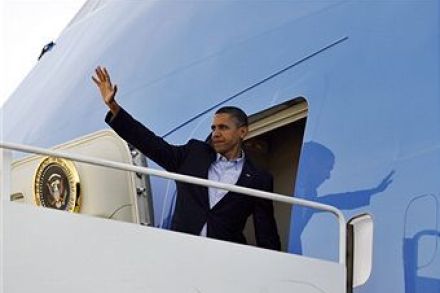
The Democrats have lost control of the House of Representatives. The Republican party looks to have picked up more than 60 seats in the lower house, slightly more than they were expected to, and they will have a comfortable majority there. The Democrats have lost six seats in the Senate but held onto their majority in the upper chamber. These results are a blow to President Obama. The loss of the Democratic majority in the House will force him to compromise to get things done.  The results do seem to be a rejection of his agenda, 56 percent of voters in the exit poll felt that government is now doing too much. A Republican controlled House will also be able to use its subpoena power to make life difficult for the White House.

Early signs are that it will be a good night for the Republicans and an awful one for Obama and his agenda

It is early in the night but things are looking good for the Republicans. Marco Rubio, the Cuban-American son of a bartender, has won his Senate race in Florida at a canter and confirmed his status as a rising star in the party. Rand Paul, a committed libertarian, has won in Kentucky. While it looks like the Republicans have also won in the Senate races in Arkansas, New Hampshire and Pennsylvania. Although, it is worth noting that Christine O’Donnell—the eccentric Tea Party backed candidate—lost in Delaware in a contest that one would expect the Republicans to win in these circumstances. In the House, the Republicans seem almost certain to gain control. 538 is currently projecting a 55 seat Republican pick-up.

Coalition 2.0

Tomorrow’s announcement on university funding is a big moment for the coalition. It will show that the Conservative and Liberal Democrat leaderships have been able to come to agreement on a subject where they thought the differences were insurmountable just five months ago when they negotiated the coalition agreement. Indeed, in their months together in government, the two sides have managed to deal with two of the three issues that were too hot to handle in the coalition agreement. As I revealed in the Mail on Sunday, preparations have already begun behind the scenes to draw up a joint policy agenda for the second half of the parliament.

A day of Tory grumbles

Today is one of those days when you can’t walk around the Palace of Westminster without bumping into a Tory with a grumble about the coalition’s polices. First of all, there’s massive irritation that the government has been forced into agreeing that prisoners should have the right to vote. It has revived Tory concerns about the ECHR and annoyance that the presence of the Lib Dems in the government means that nothing will be done about it. Then, there’s this Anglo-French defence agreement. Tories are, understandably, deeply suspicious of anything that smacks of giving the French a veto over the deployment of British forces.

Cameron emerges unscathed

David Cameron’s statement on the European summit just now was an opportunity for pro-European politicians to tweak the Conservative party’s tail about the coalition’s stance on Europe. Ed Miliband told the PM that on Europe ‘we’re here to help him’ and ‘we’re prepared to ignore his previous convictions if he is too.’ Charles Kennedy welcomed the PM as a new pro-European. While Denis MacShane, the very communitaire former Europe Minister, said that there was nothing in Cameron’s statement he disagreed with. There was some grumbling from the Tory benches. Sir Peter Tapsell asked why if Merkel can get a Treaty amended can’t Cameron do the same and allow the country the referendum it was promised.

A conservative revival in the States

Election night two years ago was not a good night for the GOP. Not only had it lost the White House but also all those predictions about how social trends and demographics were making America more Democrat appeared to be coming true.  In the south, Virginia and North Carolina shifted to the Democratic column. In the mid-West, Indiana went for the Democratic candidates for the first time since 1964. I was watching the results come in that night with an informal adviser to the McCain campaign and that evening it was hard to see how the Republicans could get to 270 in future with the upper south moving into swing state territory. But just two years on, the Democrats are about to get hit by a Republican wave.

Are the coalition in control on Control Orders?

Friday's foiled bomb plot is a reminder, if one were needed, that the terrorist threat has not gone away. Inevitably, given the volatile state of the argument about the balance between liberty and security, this incident has become part of the political debate on the issue. Ben Brogan is using it to argue that given the level of threat to this country, David Cameron should call off all the inquiries into whether or not the security services acquiesced in torture. This plot has also come at a time when the coalition is trying to come to a mutually acceptable position on control orders and how long suspects can be detained without charge.

Reading the Tea Party

Copyright BBC Tea Party America with Andrew Neil, Renegade Pictures for the BBC This Tuesday we will find out the electoral strength of the Tea Party, the insurgent political movement that has already toppled several favourites of the Republican Establishment. From this side of the Atlantic, it has been hard to get a handle on the Tea Party. Does it represent a right turn in US politics or is it just a rag-tag group whose policies and candidates are just too extreme to be electable? To answer this question, Andrew Neil headed to the States this summer; travelling to the states where the Tea Party has made the most impact. His documentary on it airs on BBC 2 at 7PM on Monday, there’s a clip from it above.

It is when Boris comes from the right that he is a threat to Cameron

The ease with which Number 10 dealt with Boris Johnson’s sally on housing benefit has revealed something important. A challenge from Boris is a threat to Cameron when Boris is vocalising the concerns of the right. But the mayor is far less dangerous when he is doing anything else. As one person close to the Tory leadership reflected to me on Friday, Boris’s interventions on Europe and 50p have caused Cameron problems because they have been immediately amplified by the right and Cameron has been conscious that most of his party agrees with Boris not him on the issue. But pretty much no one on the right agrees with Boris on housing benefit so his remarks fell on deaf ears. There is undoubtedly a space in British politics for a voice to the right of David Cameron.

Politics: The coalition gets away with a sneaky power grab

On Monday night, David Cameron and Nick Clegg succumbed to the temptations of power. On Monday night, David Cameron and Nick Clegg succumbed to the temptations of power. They went against the spirit of their pre-election commitments to restore trust in politics. While the press concentrated on the government’s strategy for the economy, they sneakily expanded the government’s future powers of patronage. The coalition quietly whipped its MPs into voting for an expansion of the power and influence of the executive (government) over the legislature (parliament).

Voters think the new generations look old and tired

There’s an intriguing detail in the latest YouGov poll. The number of people seeing Labour as old and tired is back up to 44 percent, which is where it was before Ed Miliband became leader.   The concern for Labour must be that the youthful, vigorous optimism that Ed Miliband is trying to promote hasn’t cut through to the public yet. Admittedly it is early days. But first impressions do matter in politics. Indeed, I must admit to being slightly surprised that the Tories are still generally ahead in the polls. I thought that the spending review would push Labour into the lead.   Something that, contrary to the media perception, might be helping the Tories is the ongoing rows over housing benefit and child benefit.