James Forsyth

James Forsyth

James Forsyth is former political editor of The Spectator.

The battle over the 4th carbon budget

At the weekend, it appeared that Chris Huhne had won his battle with Vince Cable and George Osborne over whether or not the government should sign up to the 4th carbon budget. This budget covers 2023 to 2027 and is all part of a plan to cut carbon emissions by 80 percent by 2050 compared to the level in 1990; they have currently been reduced by 26.5 percent from the 1990 level. But it now appears that the greens in government might have been premature in declaring victory. First, the next set of cuts in UK carbon emissions is dependent on the European Union agreeing to embark on an equally significant emissions cut by early 2014. If this does not happen, then the UK carbon budget will default to the EU average.

The Huhne story takes another turn

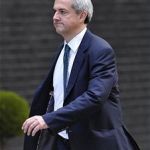
The Chris Huhne story has moved along a fair bit today. It is now being openly reported that it was Huhne’s estranged wife Vicky Pryce who allegedly took the points, though Huhne repeated his denial of the whole story earlier today. The BBC is also saying. that Pryce was that evening at an LSE dinner. (The fact that the BBC is now actively reporting this story shows just how much it has moved into the mainstream.) If, and it is a fairly big if, Essex Police have retained a copy of the picture taken by the speed camera then this case should be resolved fairly easily. The time and the name on the ticket can be set against the diaries of those involved. As Pryce was then a senior civil servant, there’ll almost certainly be a record of where she was and when that day.

The threat of Republican terror

The Metropolitan Police has released a statement saying that they have received a bomb threat for central London today from dissident Irish Republicans. There’s no information on where in the capital or what time today the warning relates to.   The threat, for which the spurious attempt at justification is presumably related to the Queen’s visit to Ireland tomorrow, may well be a hoax. But if it is real, it would attest to the growing reach of dissident Republicans whose previous operations have been confined to Northern Ireland itself. (The best book on dissident Republicanism is Legion of the Rearguard by occasional Coffee House contributor Martyn Frampton).

The Huhne story speeds up

Looking at today’s papers, it is clear—as Pete says—that Chris Huhne’s political career is in real danger. The most striking thing about the Mail on Sunday and Sunday Times stories about the allegation that he asked someone to take driving penalty points for him is that the person who took the points appears to have taped a recent conversation between the pair about the matter. This suggests a total breakdown in trust between them. The Sunday Times also includes the allegation that Huhne “is alleged to have entered another person’s name on the form, without consulting them.

Another blow to the Lansley plan

Number 10 has now taken charge of coalition health policy to such an extent that the Department of Health press office was caught unawares by the news that the Prime Minister was to deliver a major speech on health next week. David Cameron is determined to present the coming substantial changes to the Lansley reform plan as the changes he wants, not the ones forced on him by the Lib Dems. To that end, the head of the NHS future forum, a body Cameron has set up to oversee the NHS listening exercise, Steve Field telling The Guardian that he thinks all competition should be removed from the bill is helpful to Cameron. But these sentiments will exacerbate the growing concerns in Conservatives circles that the bill is going to end up being so diluted as to be pointless.

Politics: Lib Doom

When politicians start complaining about the media, you know that they’re in trouble. When politicians start complaining about the media, you know that they’re in trouble. This weekend, a Liberal Democrat minister bounded up to me to complain about a double standard in the way that his party was reported. ‘Yes, we’ve lost councillors but we’ve gained five Cabinet ministers. Did anyone ever say that Tony Blair should resign because he was eroding Labour’s base in local government?’ The minister’s bullishness couldn’t disguise the fact that the Liberal Democrats are staring disaster in the face. Not only did they lose 695 councillors last Thursday, but they are also in danger of a wipeout at the next general election.

Mixed news from the Eurozone

France and Germany’s better than expected growth numbers are making news today. But the divergence within the Eurozone — Estonia grew at 2.1 percent in the first quarter, Portugal shrank by 0.7 per cent — highlights one of the single currency’s biggest problems: how can one interest rate fit all? Economists expect Germany, whose GDP is now larger than before the financial crisis, to continue to outperform the rest of the Eurozone. Given that Germany and France together make up half of the Eurozone economy, interest rates will have to be set with this in mind. But, on the other hand, the Iberian countries and Greece are struggling with austerity and need a continued monetary stimulus.

Remaking Laws

David Laws has just apologised to the House of Commons in a short statement listened to in sombre silence. Laws stressed that he was glad that the commissioner and the committee had accepted that his motivation had been to protect his privacy not to enrich himself. Indeed, Laws pointed out — somewhat boldly — that there had been ‘no adverse effect’ for the taxpayer from his arrangements as he could have claimed more. The report and the punishment are harsher on Laws than many expected. But given that the coalition needs him and, as David has noted, that Laws’ own explanation for why he broke the rules has been accepted, I think Laws is a contender to return in the March 2012 reshuffle.

The Lords punish Cameron over policing

In Number 10, they are already concerned that they are losing public support on crime and punishment. David Cameron is planning to give a speech on the subject that will, in the words of one senior coalition figure, ‘throw a lot of bones to his party’s right.’   But Cameron’s words will mean little if he can’t rescue the elected police commissioners policy from its defeat in the Lords last night. By introducing police commissioners who are accountable to the public, this policy will make the police concentrate on the crimes that have the greatest impact on peoples’ quality of life rather than form filling.

Cameron tells the ’22, the NHS pause is my idea not Clegg’s

David Cameron was received in the usual desk-thumping way at the 1922 Committee. But what was striking about his appearance was his message that the NHS reform pause is his idea not Nick Clegg’s and that he won’t let the Lib Dems take credit for the coming changes. The robustness of this message took even Tory MPs by surprise. But I understand that Tory high command feels that Clegg’s decision to list the Tory policies he had blocked this morning means that they are allowed to make points like this. There were some hostile questions to Cameron but the general mood of the meeting was positive.

A mixed bag for the coalition at PMQs 

So much for the de-Flashmaning project. At PMQs, a tetchy Cameron doled out his usual number of insults, comparing Ed Miliband to Eddie the Eagle Edwards. Frankly, I don’t think this really matters as long as Cameron appears to be in control of his temper, which isn’t always the case. But Ed Miliband definitely raised a chuckle when he told Cameron to ‘calm down, dear.’ But, perhaps, the most noticeable thing about today’s PMQs was the behaviour of the Liberal Democrats. Nick Clegg joined in with all the jeering at the Labour front bench, something which he very conspicuously didn’t do in the last few weeks. Chris Huhne happily chatted away to Michael Gove and two Lib Dem MPs asked patsy questions of the PM.

Not so flash, Dave

The papers report this morning that David Cameron has been urged by his aides to be more polite to his opponents at PMQs or risk playing into the Flashman stereotype of him as a cocky public school bully. Now, as with all advice about making PMQs a calmer affair (remember how Cameron pledged an end to Punch and Judy politics), this is easier said than done. The confrontational atmosphere of PMQs means that it is hard for those involved to resist a withering put down or to meet insult with insult. But if Cameron does learn to rein himself in, it will be a triumph for his new chief political strategist, Andrew Cooper.

Hillary Clinton: Chinese regime can’t defy history

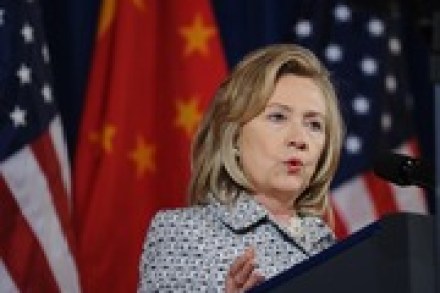
Hillary Clinton has given a fascinating interview to the Atlantic Monthly’s Jeffrey Goldberg. The main topic of it is the Arab spring but it is her comments about China that are making waves. When Goldberg comments that the Chinese have been scared by the sight of dictatorships toppling across the Middle East, Clinton replies:“They're worried, and they are trying to stop history, which is a fool's errand. They cannot do it. But they're going to hold it off as long as possible. “ As Goldberg says, it is quite remarkable to hear the US Secretary of State say so frankly that the Communist dictatorship in China will collapse at some point.

Credit where it’s due

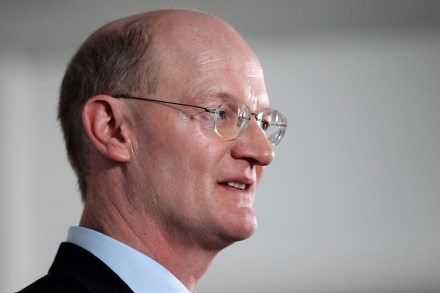
One of the worries of Tory modernisers about the coalition back in May last year was that the Tories would end up being seen as being responsible for all the tough but necessary stuff, eg deficit reduction, while the Lib Dems would claim the cuddly stuff, for example the pupil premium — a policy that was in both the Tory and Lib Dem manifestos.   David Willetts in a piece in the Telegraph today, taken from a speech he’s giving tonight, makes this point anew in the context of the new, frostier coalition relations: “This agenda is shared, so it would be a mistake to get into a game of identifying Liberal measures and Tory ones in a perpetual trade-off.

The Lib Dems’ hostage situation

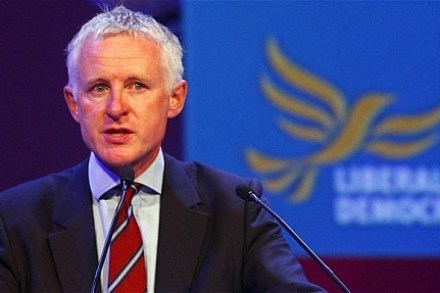
Norman Lamb’s comment on the Daily Politics about the Lib Dems having become a "human shield" for the government sums up the mood on the Liberal Democrat benches. Lamb went onto wonder whether this was inevitable: "Whether that's inevitably the case for the junior partner I don't know... But we are in this for the long term." The bad news for the Liberal Democrats is, I fear, that it is. On Friday I was having a discussion with a senior Labour figure who was explaining how the party was now going to concentrate its fire on Cameron not Clegg.

Why Clegg will get his way on NHS reform

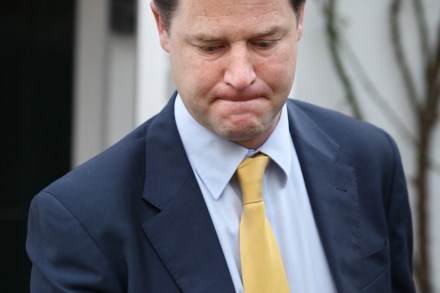
On Andrew Marr this morning, Nick Clegg made clear that changes to the NHS bill are his new priority. He said that there would be ‘substantial’ changes to it and declared that ‘no bill is better than a bad bill.’ I suspect that Clegg will get what he wants on the NHS bill. When I spoke to one senior Clegg ally after the AV vote, I was told that Number 10 is ‘conceding everything to us in that area.’ My source went on to say that because of the Tories’ traditional weakness on the the NHS, the Tories ‘are mortally afraid of a row over the NHS with us on side and them on the other and rightly so.’ The NHS, though, was the only area where Clegg appeared to be setting a new tack.

The winners and losers from Thursday’s elections

After every election, the political stock exchange goes into a frenzy trying to work out who is a buy and who is a sell. Thirty-six hours after the polls closed, it is a little clearer who the winners and losers of this election season have been. Here are our selections: Winners Alex Salmond, the biggest winner of Thursday night. Salmond has achieved what the Scottish electoral system was meant to prevent, an overall SNP majority in the Scottish parliament. Salmond now has the votes he needs for a referendum on independence.

Politics: The rose garden romance is well and truly over

A little under a year ago, David Cameron held a party at Downing Street to thank all of those who had helped the Tory general election campaign. A little under a year ago, David Cameron held a party at Downing Street to thank all of those who had helped the Tory general election campaign. It was a bittersweet occasion: although Cameron was Prime Minister, the Tories had failed to win a majority. In his speech, Cameron told them that coalition was actually better than a small Tory majority. For the people who had worked tirelessly for the election of a Tory government, these words left a sour taste. But in those heady, early months of the coalition, with the scent of the rose garden hanging in the Downing Street air, most observers could see what Cameron meant.

Axeman in chief

After a year in government, most ministers look ten years older. Not Francis Maude. He bounds into the anteroom of his ministerial suite to greet me, wearing his customary open-necked shirt with a red check that matches the colour in his cheeks. In a confident voice, he says, ‘I just need to get some things decided and then we’ll be right with you.’ It is more like meeting a businessman at the height of a boom than a politician in the age of austerity. In Maude’s office overlooking Horse Guards Parade, the businesslike atmosphere becomes even stronger. Phrases like ‘saving money off the overhead’ and ‘drive prices down in procurement’ tumble from his lips.

Lessons for the Lib Dems

Chris Huhne’s behaviour still has everyone at Westminster talking. Earlier in the week, senior Liberal Democrats were saying that once the voting had happened, Paddy Ashdown and the party president Tim Farron would communicate the party’s anger at the behaviour of the No campaign, while the party’s Cabinet ministers began to rebuild relations with their coalition colleagues. Vince Cable, for example, has been far more restrained today than he was during the campaign, blaming AV’s defeat on the failings of the Yes campaign not the No campaign’s tactics. But Huhne either didn’t get these instructions or has chosen to ignore them.