James Forsyth

James Forsyth

James Forsyth is former political editor of The Spectator.

Boris Johnson needs even tougher sanctions to deter Putin

Boris Johnson has just outlined a series of further sanctions on Russia. They are considerably more substantial than the ones he announced earlier this week. They exclude Russian banks from the UK financial system, bar Russian firms from raising capital in London and will see the UK join the US’s technology sanctions on Russia. However, Russia will not be cut off from the Swift payments system — it is clear that the UK has, sadly, lost the argument on that for now. This does raise the question of what, if not the unprovoked invasion of a sovereign country, would be enough to lead to Russia being cut off from Swift.

Two reasons Putin thinks he can weather sanctions

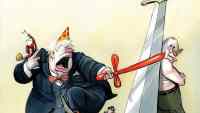
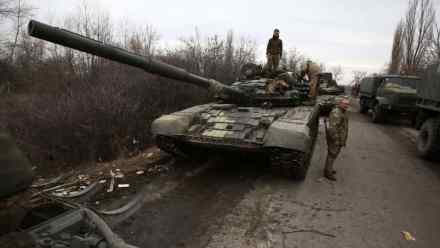
The nature of the Russian attack on Ukraine, striking across the country and not just concentrating on the territory claimed by the so-called breakaway republics, shows Vladimir Putin’s confidence that he can weather whatever sanctions the West imposes. This is not an assault designed to sit in any kind of grey area, but an unambiguous invasion — which the West has always made clear would bring forth the maximum set of sanctions. This is not an assault designed to sit in any kind of grey area Putin’s confidence is driven by two things. First, as I say in the magazine this week, Russia has been preparing to face expanded sanctions since the annexation of Crimea in 2014.

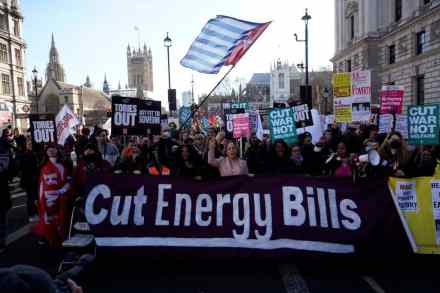
Sanctions on Putin will hit Britain’s cost of living. Are we ready?

No British soldiers will go to fight in Ukraine. The UK’s military involvement will be limited to weapons shipments and more forces to Nato’s eastern flank to try to deter further Russian revanchism. Despite this, domestic opinion in Britain — and other western countries — will be hugely significant in this conflict. The West is trying to use sanctions to influence Vladimir Putin’s behaviour. However, there are clear limits to deterrence through economic measures, as Niall Ferguson writes in his article. The threat of sanctions was not enough to stop Putin unilaterally recognising the two breakaway republics in the Donbas, Donetsk and Luhansk, and agreeing to send troops there.

Putin launches full-scale invasion of Ukraine

Russia last night launched a full on assault on Ukraine, with cruise missile strikes reported on the airport east of Kiev amongst targets in at least a dozen other cities. At the moment, it is unclear whether it is Kiev's military or civilian airport which has been hit; air raid sirens sounded at 7am. The city of Mariupol on the Azov sea has come under heavy shelling. Ukraine's border guard agency said two cities – Chernihiv and Zhytomyr, in northwest Ukraine – are coming under attack.  A senior Ukrainian official has been quoted saying large numbers of of Ukrainian soldiers have already been killed. Russia has denied Ukrainian reports that five of its aircraft and one helicopter had been shot down earlier this morning.

Are UK sanctions all bark no bite?

12 min listen

For the last few weeks, the UK has condemned Putin and promised a strong response in the face of more Russian aggression. But when Boris Johnson announced his sanctions, for many, including those within his own party, they felt a little small. Particularly when compared to Germany cancelling the Nord Stream 2 pipeline. Isabel Hardman talks with James Forsyth and Katy Balls about the UK's response to the Russian invasion.

Why we shouldn’t ban Russia Today

Nadine Dorries, the Culture Secretary, has written to Ofcom urging it to keep the situation with Russia Today ‘very carefully under review' given events in Ukraine. At PMQs, Keir Starmer called for the government to ask Ofcom to review RT’s license.  But if RT lost its broadcast license in the UK, then Putin would use this as an excuse to kick out the BBC and other British broadcasters. Just look at how Russia closed the Moscow office of Deutsche Welle, the German public service broadcaster, and ended the accreditation of its journalists after a German-language version of RT was taken off air in Germany. The least-worst option would be for guests to refuse to go on RT given the credulous way in which it reports Kremlin propaganda.

Britain’s Russia sanctions are underwhelming

The sanctions that Boris Johnson has just announced in response to Russia’s breach of international law are fairly underwhelming. Five banks are being hit, three rich individuals and those members of the Duma who voted to unilaterally recognise the breakaway republics. They will not make Moscow take notice in the way that the decision end certification of Nord Stream 2 has. Johnson’s defence of the limited nature of these sanctions is that they are the ‘first tranche’ and the UK needs to hold things back to try and deter Russia from further action. But given that the UK, rightly, considers what Russia is up to an invasion of Ukraine, these sanctions are nowhere near robust enough. The three oligarchs hit have been on the US sanctions list since 2018.

Russia invades: what comes next?

11 min listen

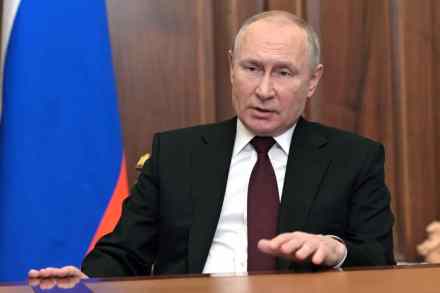
Last night Vladimir Putin gave an hour-long television address to the Russian people over his decision to move troops into Ukraine. Amid international condemnation, Boris Johnson held a Cobra meeting this morning to discuss the UK's next moves. Meanwhile, Germany has put the brakes on Nord Stream 2.‘The ball is now back in Vladimir Putin’s court. This is at the maximal end of responses that were expected' — James Forsyth.Cindy Yu speaks to Katy Balls and James Forsyth.

The seismic importance of Putin’s latest move

Vladimir Putin has tonight unilaterally recognised the two breakaway republics in Ukraine. In doing so, he has effectively ended the Minsk peace process. The move also begs the question of whether Putin is recognising the territory that these so-called republics actually hold, or the much larger territory that they claim. If the latter, then that raises the question of whether Russian troops will be used to take that land given that Putin immediately signed ‘friendship and mutual assistance’ treaties with them at the end of his speech this afternoon. The speech, though, went even further than recognising the break-away republics, carving off another chunk off Ukraine after the annexation of Crimea in 2014.

Is a Russian invasion now imminent?

Tensions on the Ukraine border are continuing to increase. Worryingly, Russian state media has gone from mocking Washington’s warnings of an invasion to ramping up the various pretexts that the Kremlin is trying to create for one. The leaders of the two self-proclaimed breakaway republics in the Donbas have been on Russian TV today asking for Russia to recognise them and offer military assistance. Moscow is also claiming that it has killed five Ukraine troops who supposedly crossed into its territory.  The Biden administration remains convinced that an attack on Ukraine is coming in the near future.

Will Brits with Covid still self-isolate?

11 min listen

With Boris Johnson set to announce the end of legal Covid restrictions later today, how will people respond? Will they continue to isolate, or choose to go about their life even if they have the virus?Cindy Yu talks to James Forsyth, Katy Balls and Fraser Nelson about the change, as well as the continuing crisis in Ukraine.

Theatre of war

34 min listen

In this week’s episode: What is the next act in Putin’s theatre of war?For this week’s cover story, James Forsyth writes about Putin’s dangerous dramatics on the Russian-Ukrainian border and where they might lead. James joins the podcast along with Paul Wood, who writes in this week’s magazine that Putin’s bluff may be backfiring. (00:49)Also this week: How important is gallows humour?The BBC’s new comedy-drama, This Is Going To Hurt, based on the best-selling book of the same title by trainee doctor turned comedian Adam Kay depicts some truly gut-wrenching scenes with a touch of gallows humour.

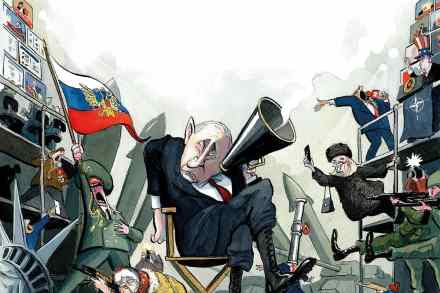
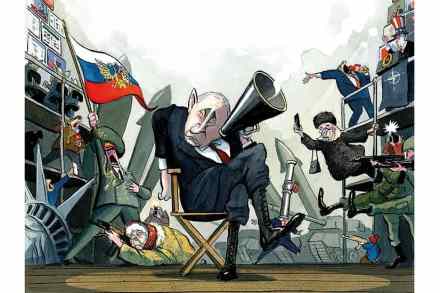
Theatre of war: Putin’s deadly dramatics over Ukraine

Vladimir Putin now knows that the West won’t fight for Ukraine. The past few weeks have shown that. All options are open to Moscow. Russian troops could march on Kiev or stay on the border destabilising Ukraine’s economy until its government gives way. If Putin wanted a fight, he would win — at least initially. No western military force will stop Russia from crossing the border. The main question is what punishment the West would be able to inflict on Russia after an incursion. Would Nato members be able to agree on what approach to take? Tensions within the alliance have been exposed.

What will be the cost of sanctions against Russia?

10 min listen

Joe Biden has set out his intentions to impose sanctions against Russia should Putin decide to launch an invasion against Ukraine. Are European countries that economically rely on Russia prepared for the inevitable costs that will come with these sanctions?'There is no way you could have a set of sanctions on Russia without thinking there will be some cost to the West for imposing them' - James ForsythAlso on the podcast, what's the latest with the Partygate police probe? All to be discussed as Cindy Yu speaks to Katy Balls and James Forsyth.

Can the government solve the cost of living crisis?

12 min listen

Two issues dominate the news this week. While Putin is recalling some troops back to their barracks, the situation in Ukraine is far from over. Meanwhile at home, we are in a cost of living crisis that could continue for years to come. What will the government do to resolve this crisis?All to be discussed with Katy Balls and James Forsyth on today's Coffee House Shots.

Putin may yet resist a full-on invasion

The west is still in the dark on what Vladimir Putin will do next. The Russian military build-up on the Ukrainian border continues but in televised meetings with Sergey Lavrov, his foreign minister, Putin was told that there is a case for ‘continuing and intensifying’ diplomatic discussions with the West. For Putin — who smarts at what he sees as the humiliation of the end of the Cold War and the decline of Soviet power — there is a satisfaction in watching the West scramble to respond to his actions. The Biden administration wanted to prioritise competition with China, but Putin is succeeding in forcing him to concentrate on European diplomacy — something that will please both Moscow and Beijing.

Why do the Americans think war is imminent?

11 min listen

Over the weekend things between Ukraine and Russia seem to have gone from bad to worse. After a call between Biden and Putin failed to yield any meaningful results, the US warned that a Russian invasion of Ukraine could being as soon as Wednesday.Cindy Yu sits down with Katy Balls and James Forsyth to discuss whether war is truly just days away.

Does Europe need to get used to dealing with Russia?

14 min listen

During the Cold War, the US saw Russia as global threat number one. But with China looming large on the world stage its focus is shifting. This leaves Europe to take the lead in dealing with Putin's desires on Ukraine. Katy Balls talks to James Forsyth and Sophia Gaston the director of the British Foreign Policy Group about the growing tensions on the continent.

Ukraine’s plight paints a bleak vision of Europe’s future

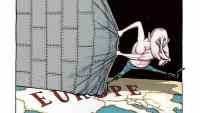
It is tempting to view Vladimir Putin as a Cold War relic: a former KGB officer who hasn’t got over the fall of the Soviet Union, which he called the ‘greatest geopolitical catastrophe of the century.’ But, as I say in the Times today, what is happening on Ukraine’s border isn’t a throwback to the Cold War. Rather, it is a preview of Europe’s future. Since Nato’s creation, European security has rested on America’s involvement. But Europe is now a secondary concern for the US; Asia and competition with China is the most important challenge facing Washington now. The horribly messy US withdrawal from Afghanistan was justified on the basis that it would free up resources to focus on China.