James Forsyth

James Forsyth

James Forsyth is former political editor of The Spectator.

Cameron needs to move fast to regain the initiative

From our UK edition

Westminster is rife this afternoon with rumours that there’ll soon be a high-profile arrest in the phone hacking case. For David Cameron, this issue is going to remain incredibly difficult as long as the focus remains narrowly on News International. But Cameron has one tool he can use to try and broaden out the issue, the inquiries he mentioned yesterday at PMQs. If Cameron were to move quickly on setting up judge-led public inquiries into the police and into journalistic abuses, he would regain some of the initiative. These inquiries are really the only tool he has, given that the government is hemmed in on the takeover of BSkyB as it is a quasi-judicial issue and on the cases itself he can’t say anything that might risk prejudicing a trial.

The list of alleged victims grows longer as News International’s problems mount

From our UK edition

The emotive list of alleged victims of phone hacking has grown again tonight. To Milly Dowler, the parents of the Soham victims, and survivors of 7/7 can now be added the families of British soldiers killed in Afghanistan and Iraq. It should be stressed that nothing has yet been proved in any of these cases. But this story is just getting bigger and bigger and more and more problematic for News International. Among tomorrow’s front pages, the FT’s will — I expect — cause particular concern at the top of the company. It declares ‘Murdoch investors take fright’. This along with the growing international interest in the story, threaten to open new fronts on Murdoch. There are two new political notes to the scandal tonight.

Cameron’s Coulson problems may be getting bigger

From our UK edition

The Guardian’s story that News International believes that Rebekah Brooks was on holiday when Milly Dowler’s phone was allegedly hacked will place further pressure on Andy Coulson, who was her deputy editor at the time. This is the second piece of trouble for Coulson in the past 24 hours following last night’s revelations. Some in News International are unapologetic about how Coulson is being treated. They say that if Coulson had not gone into Downing Street then the whole phone hacking saga would not have got a second wind and there wouldn’t be all this trouble. Indeed, they allege that Coulson had assured a senior figure at News International that he would not go into Downing Street if the Tories won the election.

Miliband gets serious about phone hacking

From our UK edition

The striking thing about the phone hacking debate is that Ed Miliband is sitting on the Labour front bench, a statement of how seriously the Labour leader is now taking this issue. Miliband nodded vigorously when Chris Bryant declared that if Rebekah Brooks had a single shred of decency she would resign. Dominic Grieve is currently replying for the government and is taking a consensual line. I suspect that Grieve, unlike many ministers, has no great love for News International. His career has never recovered from his clashing, when Shadow Home Secretary, with Rebekah Brooks over how the tabloids report crime. It is said that from that day on, Andy Coulson put the black spot on him and Grieve was subsequently moved in the next reshuffle.

A beating, but not as harsh as it might have been

From our UK edition

PMQs today was a taste for David Cameron of what he will have to face over the coming weeks as the scandal surrounding the News of the World continues to grow. Ed Miliband asked him whether he agreed that Rebekah Brooks — a friend of Cameron’s —should resign and then mocked him when he wouldn’t answer. The Labour leader than pushed him on whether News International should be stopped from taking over BSkyB and derided him when he said the matter was out of his hands. Finally, he slammed him for his decision to bring Andy Coulson — who had resigned as editor of the News of the World because of the phone hacking scandal — into Downing Street. As each blow hit, there was little the Prime Minister could do.

Andy Coulson thrown back into the story

From our UK edition

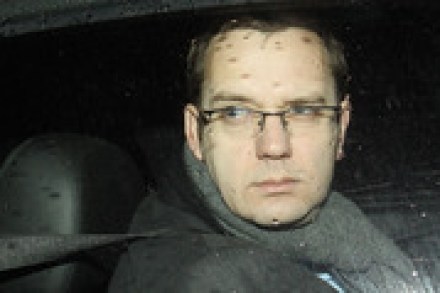
On the Ten o’clock News tonight Robert Peston reported that News International have allegedly handed emails to the police that show Andy Coulson as editor of the News of the World authorised payments to the police. If this was true, it would be illegal. But it should be stressed that Peston could not reach Coulson for comment on the story. There are two immediate implications of this latest development in the story. First, the fact that this development has come out now shows that News International is keen to move the spotlight away from Rebekah Brooks. But given the Independent’s front page tomorrow this tactic is unlikely to succeed Second, it brings David Cameron into this story.

The parties take their positions as the phone hacking story deepens

From our UK edition

The political plates on phone hacking are shifting rapidly. The story has now ‘gone mainstream’ following the accusations about how the phones of Milly Dowler and the parents of the Soham victims may have been hacked.  Politicians are racing to catch up. Ed Miliband is rapidly moving into a more robust position. The Labour leadership doesn’t want to appear vindictive, to turn this into Labour v. Murdoch.

Politics needs to respond to the changed phone hacking terrain

From our UK edition

The politics of the phone hacking saga have changed dramatically in the last 24 hours. Up to now, it has been a scandal that has been of huge interest in political and media circles but hasn’t cut through to the public. But that could all be about to change with the allegation that Milly Dowler’s phone was hacked after she was abducted and voice mails deleted (it should, obviously, be noted that nothing has been proven in a court of law on this point yet). If this allegation is true, it shows just how out of control and unrestrained the culture of phone hacking was.

Personality and politics

From our UK edition

One of the things about the press that politicians frequently complain about is that papers concentrate more on personalities than policies. But reading the latest extracts from Alastair Campbell’s diaries you see just how much personality matters. Indeed, according to Campbell, Tony Blair excluded Gordon Brown from a discussion about what to do after 9/11 not because of any difference about how to respond but because he had become fed up with how difficult Brown was to deal with on a personal level. Now, there are nowhere near the personal tensions at the top of this government that there were in the last one. But because politicians are humans and not purely rational actors, the individual relationships in the government matter.

To see whether the coalition will last, watch how the Lib Dems respond to Dilnot

From our UK edition

The approach that the Liberal Democrats take to social care over the next few weeks and months will be the best guide we have to how they now view the future of the coalition. If, in the coming all party talks, they effectively ally with Labour and try to score points off the Tories by suggesting that their coalition partners are ‘too mean’ to fund a solution to the problem then it will be apparent that they have moved fully into distancing mode and are preparing to position themselves as the party who restrained the Tories. This would imply a Lib Dem exit from the coalition sometime well before the 2015 election.

Europe, the times they are a-changin’

From our UK edition

Before writing my column for The Spectator this week I asked one of the most clued-up Eurosceptics on the centre right what opt-outs Britain should push for in any negotiation over an EU treaty change. His answer, to my surprise, was "forget that, we should just leave". This answer took me aback because this person had been the embodiment of the view that the European Union could be reformed from within. But people are dropping this view at a rapid rate for reasons that Matthew Parris explained with his typical eloquence in The Times (£) yesterday. I wrote in The Spectator this week that two Cabinet ministers now favour leaving the EU only to learn soon afterwards that the real number is three. Iain Martin writes that half of all Tory MPs now favour leaving.

Boris comes out against high-speed rail

From our UK edition

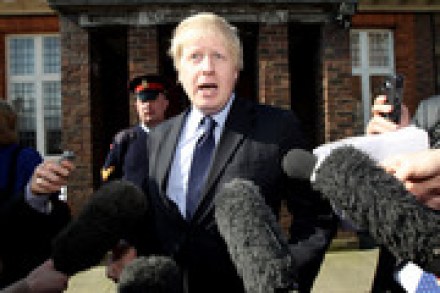
The news, via a leaked letter, that Boris Johnson now opposes high-speed rail will come as little surprise to the government. Boris has been moving to this position for quite some time and the Department for Transport resigned itself to the mayor coming out against the scheme earlier this week. Recently, one of Boris’ senior aides visited the Department for Transport and said that the mayor would only support the scheme if there was an additional tube line from Euston as part of it. But when the Department for Transport pushed for details of where this line would go to, and how it would be engineered it became apparent that this was more of a rhetorical point than a negotiating position. Oddly, the politics of Boris’ position could work out for both sides.

Politics: ‘Best in Europe’ is no longer good enough

From our UK edition

If there’s one phrase that infuriates Tory radicals more than any other, it’s ‘We’re the best in Europe at ...’. If there’s one phrase that infuriates Tory radicals more than any other, it’s ‘We’re the best in Europe at ...’. The words are used among the bureaucratic establishment as an excuse for accepting the status quo. The logic is that as long as Britain is the best in Europe, then all is well. But this is emphatically not the case. Europe is a continent in decline. According to work by the Prime Minister’s own office, it is probable that Europe will go from having four of the ten largest economies in the world today to none by the second half of this century.

Treasury notes reveal Osborne’s position on euro bailouts

From our UK edition

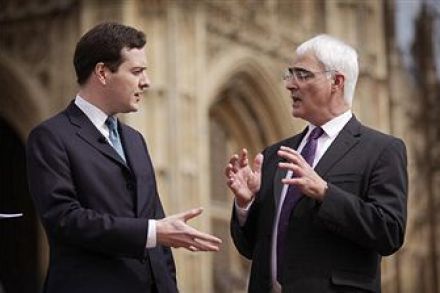
There has been much talk about what George Osborne told Alistair Darling about the EU bailout mechanism during those days in May between the election and the coalition being formed. But notes of a conversation between Osborne and Darling released today show that Osborne did urge Darling not to commit to anything that would have a lasting effect on the public finances. Osborne also suggested that the UK government might abstain due to the fact that the country was between governments. To which Darling’s reply was that the Cabinet Secretary’s advice was that the government was the government until a new one actually took office. It remains to be seen what Douglas Carswell, the Tory MP who has been pushing for the release of these documents, makes of the issue.

A good day to bury boring news

From our UK edition

When a Labour press release landed in my inbox saying, ‘Ministers must come clean over attempt to bury bad news on strike day,’ I was expecting quite a story. But the reality of it turns out to be rather underwhelming. Labour’s accusation centers round a shift in direction on charging points for electric cars, not exactly a subject that I would expect to keep the government’s communications director Craig Oliver up at night. Ironically, the Department of Transport did publish a press release on the story yesterday and it even attempted to set up a newspaper interview to trail the announcement but this effort failed as the story wasn’t deemed exciting enough.

Is Strauss-Kahn back in the race for the Élysée?

From our UK edition

The news that the case against Dominique Strauss-Kahn is in danger of collapsing is almost as surprising as the initial news of his arrest on suspicion of raping a chamber maid. There had been a general assumption in New York, Washington and Paris that the case against the former IMF president was clear-cut and that his political ambitions were over. It is unclear how quickly the case will now be resolved. But there is sure to be pressure in France to delay the nominating deadline for the Socialist Primary beyond the 13th of July to allow Strauss-Kahn to run if he is cleared. The question is whether the various revelations about Strauss-Kahn and his relations with women which followed his arrest have damaged him politically beyond repair.

Hague has been vindicated on the euro

From our UK edition

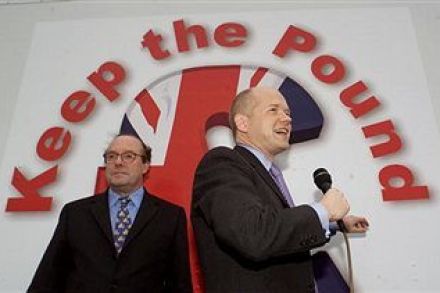
The Foreign Secretary finds himself in the rather unique position today of trying to deal with the consequences of a crisis that he largely predicted. In May 1998, William Hague gave a speech warning that the single currency would lead to social unrest as governments tried to cope with one size fits all interest rates. It is a reminder of how much Hague was swimming against the tide of bien-pensant opinion that Michael Heseltine claimed this prediction was so extreme as to drive the Tories off the centre ground. But what is, perhaps, more interesting than Hague’s vindicated view that the euro, in a crisis, would be the ‘economic equivalent of a burning building with no exits’ is his view on how European governments would resolve the problem.

Our politicians need to look beyond Europe

From our UK edition

In Britain, public sector strikes always bring with them the whiff of national decline. They are a reminder of a time when the country was becoming less and less competitive and the civil service regarded its job as the management of decline, a mindset only broken by the Thatcher government.   But today Britain faces a choice almost as acute as the one it faced in the late 1970s. Is this country content with declining slightly less quickly than the continent of Europe as a whole, or does it want to equip itself for a new world in which economic power is moving east?   It is in this context that the debate about the EU needs to be seen.

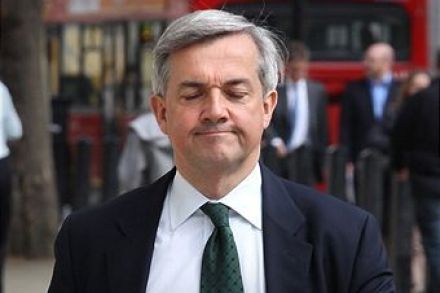
Where now for the Huhne story after Sunday Times hands over tape?

From our UK edition

Roy Greenslade’s report in the Evening Standard that The Sunday Times will hand over to Essex Police the tape of Chris Huhne talking to his estranged wife Vicky Pryce that got the speeding points story motoring in the first place has revived speculation in Westminster about the future of the Energy and Climate Change Secretary. The Sunday Times’ report says that the tape contains Pryce telling Huhne that, ‘It’s one of the things that worried me when I took them; when you made me take the points in the first instance.’ Huhne, of course, has always denied that anyone ever took points on his behalf. It should be stressed that nothing has been proved any which way.