James Forsyth

James Forsyth

James Forsyth is former political editor of The Spectator.

Blunt’s flawed rehabilitation programme

From our UK edition

The decisions of Crispin Blunt, the prisons’ minister, are hard to fathom. One wonders why-as the Daily Mail reports today — he allowed a man convicted of killing five people to give an unapologetic interview to a magazine. Blunt’s defence is that it wouldn’t have been right for him to stop it. That may be the case but that doesn’t explain his decision to send a press officer to assist with the whole procedure. Rehabilitating prisoners is vital if we are going to tackle crime in this country. But it is hard to see how this kind of thing — or parties in prison — help that noble aim. Rather they are actions that do nothing but upset the families of victims and undermine public confidence in the judicial system.

Time for action

From our UK edition

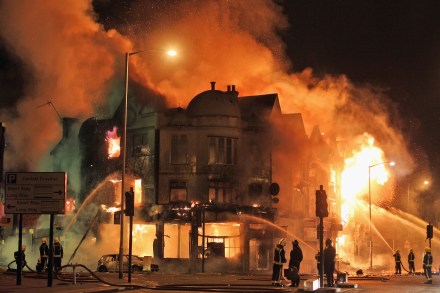
The facts of life are Conservative, as the old phrase has it. The events of the past few days have shown the urgent need for Tory social policies. The case for reforms to the police, welfare and education has been amply demonstrated.  Some in the government appear to get this. But there is also an odd hesitancy about getting on the front foot. As Tim Montgomerie said yesterday, why wasn’t a minister put up for Question Time last night? They could have used the programme to push Cameron’s reform agenda.

Should evictions from social housing be broadened?

From our UK edition

I understand that the government’s view is that social housing tenants whose children live with them and are convicted of looting should be evicted from their homes. The law already allows for this, although only if the criminal act occurred within the borough in which the family lives, and the Department for Communities and Local Government is encouraging councils and housing associations to use these powers. Although, the final decision on any eviction would be for the courts. Personally, I think there might be a case for broadening this out. The problem with the current approach is that it lets off those dead-beat dads who take no interest at all in the upbringing and disciplining of their children.

Cameron sets out his stall

From our UK edition

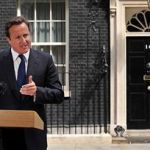
David Cameron’s statement to the House of Commons was clear about the circumstances that led to these riots. ‘This is not about poverty, it’s about culture. A culture that glorifies violence, shows disrespect to authority, and says everything about rights but nothing about responsibilities.’ Later in the session, he said ‘you don’t hit moral failure with a wall of money.’ On this, Cameron is surely right. In a respectful atmosphere in the House of Commons, Cameron set out the government’s proposed response to the riots. The major legislative action he set out was a change to the law to allow the police to force people who they suspect of being involved in criminal activity to remove face coverings.

Cameron has the opportunity to lead the nation

From our UK edition

The recall of parliament today offers David Cameron the chance to take command of the current situation. The police might have horribly mishandled the situation on the first few nights of the riots and Cameron’s government might have been caught flat-footed by them. But he now has the opportunity to build on the successful policing of the last two nights and his strong statement yesterday and lead the national response to this crisis. The mechanics of a parliamentary statement allow Cameron to set the terms of debate. He also has the huge advantage of simply being the Prime Minister. The nature of his office affords him the opportunity to speak for the country.

Politics: The people Cameron should be shmoozing

From our UK edition

David Cameron has just passed through his first full-blown crisis as Prime Minister. He may have been a bit-part player in this Murdoch drama, but he has remarked to those in No. 10 that the past few weeks have been the most gruelling of his premiership so far. He has seen the arrest of a former employee, Andy Coulson, and a close friend, Rebekah Brooks. Social relationships on which so much of his politics is based have had to be reassessed. Worst of all, the deficiencies of the No. 10 machine have allowed a story about one poorly judged appointment to spiral dangerously out of control. Take his treatment of Conservative MPs during the past two weeks. During any crisis, it is imperative that a leader keep his party with him.

The turning point?

From our UK edition

There’s a feeling in Conservative circles that they have finally turned the corner on phone hacking today after David Cameron’s marathon performance at the despatch box today. At the 1922 Committee this evening, Cameron entered and exited to the banging of desks. But, tellingly, there were no questions on phone hacking and Andy Coulson. Instead, the crisis in the eurozone was the main subject of discussion. Cameron did, though, refer to the matter. At the end, he recalled how Peter Tapsell, the veteran Tory MP, had said of him that ‘he had never known a Prime Minister more adept at getting out of scrapes. But he had also never known a Prime Minister who got into so many scrapes.

Cameron passes test

From our UK edition

The questions following David Cameron’s statement to the House of Commons have just finished. As Cameron answered 136 questions, it became increasingly clear that the immediate moment of political danger appears to have passed for the Prime Minister. By the end of the session, Cameron was even joking about inviting Mrs Bone to Chequers for the weekend. In his opening statement, Cameron placed far more distance between himself and Andy Coulson than he had before. For the first time, he expressed regret about the appointment. He told the House that, ‘With 20:20 hindsight – and all that has followed – I would not have offered him the job’.

The crisis gets closer to the Tories

From our UK edition

The news that Neil Wallis was informally advising Andy Coulson without the knowledge of any of the other senior figures in the Tory party is a reminder of just how dysfunctional the Tory party machine was pre-election. It is also an indication of the license that Coulson was afforded. The Tories cannot say if anyone else offered Coulson this kind of ‘informal advice’. The Tories are stressing that they did not pay Wallis or his company. But it is a massive embarrassment for the Tory party that two people who did work for it in its preparations for the election have now been arrested by the police. I expect Cameron will face hard questions from Tory MPs about this matter when he appears before the ’22 committee.

Waiting for the Murdochs

From our UK edition

Much rides on the appearance of the Murdochs today. Word is that James Murdoch’s role as chairman of BSkyB depends on his performance today reassuring the non-News Corp shareholders in the company. Bloomberg News, hardly a sensationalist outfit, is even reporting that —remarkably— Rupert Murdoch could be replaced as CEO of News Corp after today. Bloomberg's story says that ‘News Corp. executives who watched Murdoch, 80, rehearse for his appearance had concerns about how he handled questions, according to three people, who weren’t authorized to speak publicly’. Certainly, there is concern in News International circles about how Murdoch will perform today.

Tonight’s developments

From our UK edition

The untimely death of Sean Hoare is dominating tomorrow’s front pages. But on The Guardian front page there’s also a report on another development in this scandal: Detectives are examining a computer, paperwork and a phone found in a bin near the riverside London home of Rebekah Brooks, the former chief executive of News International. The Guardian has learned that a bag containing the items was found in an underground car park in the Design Centre at the exclusive Chelsea Harbour development on Monday afternoon. The car park, under a shopping centre, is yards from the gated apartment block where Brooks lives with her husband, a former racehorse trainer and close friend of the prime minister David Cameron.

Where are Cameron’s praetorians?

From our UK edition

One of the striking things about the wall to wall hackgate coverage on the 24 hours news channels is the absence of Tory voices defending the Prime Minister. It is coming to something when the leader of another political party, Nick Clegg, is doing more to defend the PM than most of the Tory members of the Cabinet. One minister told me earlier that Number 10 was having trouble getting people to go on TV to bat for the PM. While many Tories are wondering where their party chairman is, in these circumstances you would expect her to be touring the TV studios. Cameron’s political spokeswoman Gabby Bertin is doing a typically able and indefatigable job of making the case for her boss.

Yates goes as Boris stands by

From our UK edition

Yates of the Yard has gone as the phone hacking scandal claims yet another scalp. Yates walked after being told he would be suspended. Yates’ departure was necessary given the appalling mistake of hiring Neil Wallis, a former editor at the News of the World, while the Met was investigating — or supposed to be investigating — phone hacking at the paper. There will, though, be particular pleasure in Blairite circles at Yates’ departure. They remain furious with Yates for his behaviour and tactics during the cash for honours investigation. The talk is of appointing a new Met Commissioner by the autumn.

How Cameron can regain some initiative

From our UK edition

The phone hacking scandal has now been leading the news for a fortnight straight. When a story has been on the front pages for this long, it develops its own momentum. If we were on day two of the story, I very much doubt that Sir Paul Stephenson would have resigned as quickly as he did or if David Cameron would have agreed so readily to extending the parliamentary session. Cameron is now out of the country, allowing Ed Miliband to stay on the front foot. The danger for Cameron is that Miliband constantly appears to be half a step ahead of the PM. Miliband’s line that Cameron is ‘hamstrung’ in this matter by his own actions over Coulson has something to it. Leaders of the Opposition can move far quicker than incumbents.

Stephenson kicks Cameron on the way out

From our UK edition

Sir Paul Stephenson’s resignation statement contains three paragraphs that hand plenty of political ammunition to Labour: "Now let me turn to the reported displeasure of the prime minister and the home secretary of the relationship with Mr Wallis. " The reasons for not having told them are two fold. Firstly, I repeat my earlier comments of having at the time no reason for considering the contractual relationship to be a matter of concern. Unlike Mr Coulson, Mr Wallis had not resigned from News of the World or, to the best of my knowledge been in any way associated with the original phone hacking investigation.

Now Sir Paul Stephenson resigns

From our UK edition

This story just keeps speeding up. Paul Stephenson, the commissioner of the Met, has now resigned because of his links to Neil Wallis. Wallis is the former News of the World journalist arrested recently as part of the investigation into phone-hacking; he was hired by the Met to offer media advice from autumn 2009 to 2010. The New York Times today claims that Wallis was reporting back to News International during this time. Boris Johnson and the Home Secretary will now have to agree on a replacement for Stephenson. Given what we have learnt about the Met in recent days, I suspect it will be an outsider. Bernard Hogan-Howe, the former chief constable of Merseyside who was a finalist when Stepehnson was appointed, will, I expect, be the early favourite.

Rebekah Brooks arrested

From our UK edition

There is a growing controversy about the timing of the arrest of Rebekah Brooks. Having now been arrested, Brooks may well not appear before the select committee on Tuesday. This will enrage parliamentarians who feel that parliament has been misled several times during this scandal and want answers. (The Murdochs, though, are still scheduled to appear). The next source of controversy is that the arrest occurs at a time when the police were beginning to take centre stage in the scandal. There will be those who suspect that this is not just a coincidence. Then, there is the fact she has been arrested just two days after resigning from News International. Although Brooks’ representatives are stressing that she did not know she was going to be arrested when she quit the company.

The spotlight moves onto the police

From our UK edition

Tomorrow’s New York Times contains more revelations on the overly cosy nature of the relationship between the police and News International. The paper alleges that Neil Wallis, who was acting as a media consultant for Scotland Yard from autumn 2009 to 2010 and was arrested this week in relation to the phone hacking case, was ‘reporting back to News International while he was working for the police on the hacking case.’ It should be stressed that this allegation has not been proven. If The New York Times’ allegation is correct, then the police’s decision to hire Wallis becomes—hard, though, this is—an even more stupid one. I suspect that the actions of the police will come in for far more scrutiny in the next few days.

Ed against the empire

From our UK edition

Rupert Murdoch’s hold on British politics has finally been broken. The politicians who competed to court him are now scrapping to see who can distance themselves fastest. As the Labour leader, Ed Miliband, says when we meet in his Commons office on Tuesday afternoon, ‘The spell has been broken this week and clearly it will never be the same again.’ Miliband and his staff have just heard that the government will support their motion calling for Murdoch to withdraw his bid for BSkyB. They are trying to contain their excitement, but their grins give them away. The press secretary, normally a nervous-looking soul, is beaming from ear to ear. Their strategy, hatched late on Monday night, seems to have worked.

Another resignation over phone hacking

From our UK edition

There’s another resignation from the Murdoch empire tonight. Dow Jones CEO Les Hinton has left the building. But Hinton’s departure is related to his time in Britain as executive chairman of News International. Hinton was one of those at the company to testify to select committees that phone hacking was not widespread at the News of the World. There are two things to watch for after this announcement. First, how does it play in the States? If this scandal gets going over there, a much bigger profit centre for News Corp than here, then Murdoch might take drastic action. Second, if more senior people end up having to resign over this then they are going to have to have the surname Murdoch.