James Forsyth

James Forsyth

James Forsyth is former political editor of The Spectator.

Cameron is right to use the bully pulpit of his office

From our UK edition

The normal Monday morning calm of The Spectator was disturbed today by an argument about David Cameron’s comments about fathers who go ‘AWOL’. I thought Cameron was right to say what he did, my editor didn’t. He felt that it wasn’t the Prime Minister’s job to moralise, and that him doing so was the beginning of a descent into totalitarianism.   The reason I think Cameron was right to speak out is that so many of the problems in this country are social or cultural. They can’t be solved by another piece of legislation or a government initiative.

Profit could hasten Gove’s school reforms

From our UK edition

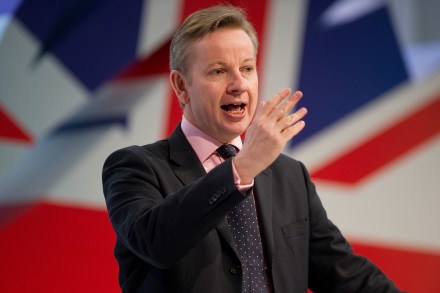
Michael Gove is giving a big speech tomorrow on free schools amid evidence that the policy is beginning to gather momentum. The papers report today that there have been 281 applications to set up free schools in the round that closed this month alone (sentence updated).   One of the best known of these planned free schools is the one being set up Tony Blair’s former strategist Peter Hyman. Ever since The Spectator revealed back in May that Hyman was planning to take advantage of the Tories’ reforms to start his own school, there’s been considerable interest in what Hyman is up to. In today’s Sunday Times he eloquently defends his project, arguing that free schools are just the logical continuation of Blair’s education reforms.

Why enshrining the military covenant in law might not be such a good idea

From our UK edition

Charles Moore’s column in the Telegraph today makes a very good case against enshrining the military covenant in law. As Charles argues, once the lawyers and the judges get their hands on it there could be a whole slew of unintended consequences. Judges could decide, for instance, that the court martial system does not offer soldiers ‘fair treatment’. Indeed, it is worth noting that the Major General, now retired, who drafted the covenant does not believe that it should be made law for precisely this reason. There’s no doubt that under the last government were expected to fight wars on peace time budgets and that spending on the military overall was too low. But putting the covenant into law is not the right solution to that problem.

Osborne throws his weight behind education reform

From our UK edition

Pete rightly points to Michael Gove’s interview in The Times this morning as the story of the day.  Some producer interests are objecting to Gove dismissing the exam system as ‘discredited’ and his plans to return A-Levels to being a proper preparation for undergraduate study. But there’ll be no backing down. A Gove spokesman tells me that ‘'The system is discredited and it needs fixing. The public know it and support change. If some don't like hearing that, tough. They'll find it much more unpleasant in ten years if we don't fix the system and they're working for Chinese billionaires who did maths at Harvard.' But, perhaps, the most important development on education reform this week was George Osborne throwing his weight behind it.

Politics: What Miliband has learnt from Thatcher

From our UK edition

Ed Miliband could be excused for indulging in some comfort television. Ed Miliband could be excused for indulging in some comfort television. He has returned from honeymoon to find himself torn to shreds in the press, put on probation by anonymous ‘Blairite’ ministers and humiliated by David Cameron in parliament, and his relationship with his brother is under the microscope again. But if Miliband were to flop down on the sofa, he might find salvation — or at least the hope of it — on DVD. As someone who grew up in immersed in politics on both sides of the Atlantic, Miliband is naturally a fan of The West Wing. This US drama charts the presidency of Jed Bartlet, an academic turned politician, and is a paean to the virtue of government.

On the edge of his seat

From our UK edition

Michael Gove’s plans for education don’t allow for a moment’s pause When I walk into his office on the seventh floor of the Department for Education, Michael Gove is sitting behind his desk with his jacket off. He is hunched over, writing a note on House of Commons letterhead. His left arm is pushed right out across the desk and the lines on his forehead are showing as he rereads what he’s put down so far. Even as a civil servant and I advance towards him, Gove’s concentration does not break. Eventually, the civil servant asks loudly, ‘Have you met the Secretary of State before?’ At this, Gove looks up, sees the people in the room and springs out of his chair.

How the Tories could capitalise on the eurozone’s woes

From our UK edition

With events in Greece moving at pace, next week’s European Council meeting (which was scheduled to be a low-key affair) could be the place where attempts to resolve the crisis in the eurozone take place. I’m told that Number 10 has now woken up to this possibility and is doing some preparatory work on the matter.   But, frustratingly, there’s still no strategy for how David Cameron could use this crisis to advance the British national interest. As I wrote last week, if the eurozone countries decide that a solution will require a treaty change, then Britain has a veto over that — and could use the negotiations to secure various things that Britain wants from the EU.

Gove goes forwards, while other reforms stall

From our UK edition

The good, the bad and the ugly of the coalition’s reform agenda are all on display this morning. The good is the quickening of the pace in education. As Michael Gove tells this week’s Spectator, the 200 worst primary schools will now be taken over by new management, 88 failing secondary schools are to be converted into academies and any school where half the pupils are not reaching the basic standard of five good GCSEs including English and Maths will be earmarked for a takeover. Gove’s aim is remarkably simple: he wants good schools to take over bad ones.   The bad is yet another delay to the public service reform white paper, the longer things stay in the Whitehall system the less radical they become.

Osborne to sell off the Rock

From our UK edition

George Osborne will use his Mansion House speech tonight to, in the words of one source, "fire the starting gun" on the sale of Northern Rock.   Robert Peston, who had the story first, reports that "The chancellor hopes that the sale of Northern Rock will send a powerful signal that the banking industry is on a path back to more normal conditions, following the crisis of three years ago."   In an attempt to maximise return for the taxpayer, the whole of the "good bank" part of Northern Rock will be sold off to a single bidder. This means that the whole issue of discounted bank shares, which splits Osborne and Cable, with the Chancellor in favour, doesn’t arise.

Why the battle of the bins matters

From our UK edition

The government is, rightly, receiving a monstering from the papers for its u-turns on weekly bin collections. But what is at stake here is more than just the issue of bins. The government’s failure to honour its promise on this matter casts doubt on whether ministers are strong enough and tough enough to impose their will on their departments. The two ministries dealing with the rubbish question are the Department of Environment, Food and Rural Affairs and the Department of Communities and Local Government. Both are run by Conservative Secretaries of State. If this was not enough, both the Secretaries of State involved — Caroline Spelman and Eric Pickles — are personally associated with the Tory policy on bins.

Miliband relieves the pressure

From our UK edition

After last week’s performance and this weekend’s headlines, Ed Miliband needed a win at PMQs — and he got one. Knowing that David Cameron would attack him over the fact Labour will vote against the welfare reform bill this week, Miliband had a string of questions for the Prime Minister on the detail of the bill and whether people recovering from cancer would lose the contributory element of their benefits. The issue was both wonky and emotive. The fact the questions were about cancer meant that Cameron couldn’t deliver his usual string of put downs to Miliband. Indeed, when one Tory backbencher heckled him, the Labour leader shot back that ‘it’s a disgrace that Conservative members are shouting as we talk about cancer.

Osborne’s valuable weapon

From our UK edition

Paul Waugh is tweeting that Number 10 is stressing that, pace this morning’s front pages and Lord Freud’s comments yesterday, the benefit cap remains. This is not surprising: the benefit cap was always a statement of values more than anything else. As George Osborne said at Tory conference, it was designed to ensure that, “No family on out of work benefits will get more than the average family gets by going out to work.” The cap was designed to say something both about the Tories’ values and those of its opponents. If Labour opposed it, they would put themselves on the wrong side of the whole welfare/fairness debate. It is a classic wedge issue.

David Miliband should join the shadow Cabinet or quit British politics

From our UK edition

David Miliband’s statement today declares that he ‘wants no part’ of the ‘soap opera’ of leadership drama. But as long as David Miliband remains outside the shadow Cabinet and, therefore by definition, not doing everything he can to support his brother it will be easy for people to say that he is just waiting for Ed to fail. If David Miliband does not wish to be a focus for discontent with his brother but cannot bring himself to join the shadow Cabinet, then he should resign his seat. Only by leaving the Commons will he persuade some of his supporters that he is not the man who can — and will — take over if his brother is deposed. Personally, I do not think David would be doing any better than his brother.

Burnham burns up

From our UK edition

Andy Burnham has caught up with Coffee House’s revelation earlier this week that the Treasury, the Department for Communities and Local Government and the Department of Education are going to have to review their position on academy funding because of a legal challenge.  Burnham is twittering, in typically hyperbolic terms, about the matter. But the reality of the situation is rather less dramatic. The coming changes will simply be a matter of preventing the taxpayer paying twice over for a service, once from the academy to the local authority (the new system) and once from the Department of Education to the local authority (the old system).

The Milidrama

From our UK edition

No paper has been more critical of Ed Miliband than The Times. So it is in some ways not a surprise that the paper’s leader column today declares that he has until Labour conference to save his leadership. But this ultimatum stokes the sense of drama created by the combination of the Balls’ leaks and the publication of the speech that David Miliband would have given if he had won the leadership. Expect to hear David Cameron quoting from both these sets of documents at PMQs regularly over the next few weeks. The challenge now for Ed Miliband is to make lemonade out of these lemons.

Politics: Don’t let Europe’s crisis go to waste

From our UK edition

Europe has reached a crucial crossroads, from which there is no return. Europe has reached a crucial crossroads, from which there is no return. Soon, either the eurozone countries will become even more tightly bound together or they will begin to fall apart as the most ambitious elements of the European project are abandoned. The eurozone cannot continue as it is constituted for much longer. And if David Cameron is to be credible as a Conservative leader, he must take advantage of Europe’s weakness to secure Britain’s strength. The eurozone’s difficulty may quickly become Britain’s opportunity.

What David Miliband would have said if he had become Labour leader

From our UK edition

Tonight’s Guardian scoop revealing that the speech that David Miliband would have given if he had been elected leader makes this one of the most difficult—and leaky—weeks for Labour since its election defeat. The line in the speech that will cause the most trouble for Ed Miliband is that David Miliband intended to create a commission on the deficit chaired by Alistair Darling and charged with creating a new set of fiscal rules, an admission that Labour got it wrong on the deficit which Ed Miliband has refused to give.

Gates: Current state of Nato is ‘unacceptable’

From our UK edition

The outgoing US Defense Secretary Robert Gates has delivered a remarkably frank warning to the European members of Nato that if they do not spend more on defence, the United States will be unwilling to maintain the transatlantic alliance. Gates declared that, “The blunt reality is that there will be dwindling appetite and patience in the U.S. Congress – and in the American body politic writ large – to expend increasingly precious funds on behalf of nations that are apparently unwilling to devote the necessary resources or make the necessary changes to be serious and capable partners in their own defense -- nations apparently willing and eager for American taxpayers to assume the growing security burden left by reductions in European defense budgets.

More to come?

From our UK edition

I understand another story concerning improperly obtained documents may break shortly concerning Ed Balls, his spads, a civil servant and a journalist at the FT. Whitehall is in a febrile mood.

Balls in the limelight

From our UK edition

The most important political consequence of the leak of the Project Volvo documents is that it reminds everyone in the Labour party of what a divisive figure Ed Balls is. Ever since the leadership contest, where his reputation as a plotter crippled his candidacy, Balls has been trying to soften his image. He has sought to present himself as a more collegiate figure. But this leak is a reminder of how Balls used to operate and why some people in the Labour party will do everything they can to prevent him from becoming leader. We now wait to see what emerges about how these documents made their way into the public domain and whether retaliation follows. For the other Ed the challenge is to find a way to move Labour beyond the factionalism of the past.