James Forsyth

James Forsyth

James Forsyth is former political editor of The Spectator.

The reformist case for Clegg

From our UK edition

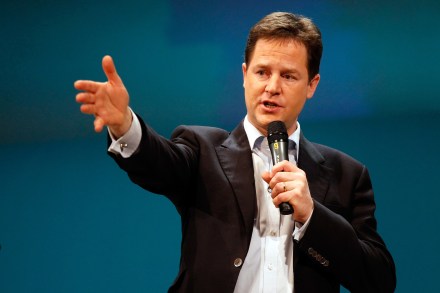
One ally of the deputy Prime Minister suggested to me yesterday that the press was missing the most significant aspect of Clegg’s speech on education: Clegg acknowledging that free schools would now be a permanent part of the educational landscape. This ally argued that this was a big deal given that a year ago Lib Dem conference had voted to boycott these schools. The Lib Dem leader is considerably more liberal than his party. This means that he sometimes needs, so the argument goes, to sweeten the reformist pill with some Lib Dem rhetoric. Hence the emphasis on free schools being fair schools in yesterday’s speech. But this internal Lib Dem party management is frustrating for Conservative ministers.
The breakdown of Clegg’s Cabinet alliances

From our UK edition

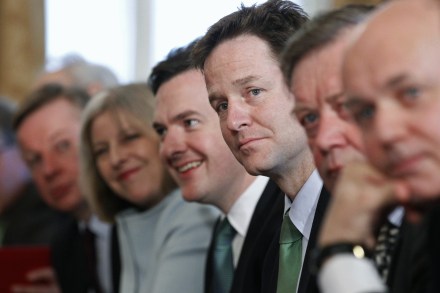
There used to be a time when some of the most important relationships in the government were between Tory reformers and Nick Clegg. The Lib Dem leader, to his credit, tilted the scales in favour of radicalism in both education and welfare. But those reformist alliances are now pretty much over. Indeed, Ken Clarke – with his plans to put rehabilitation first in the justice system – is the only Tory Cabinet minister who remains in a strategic alliance with the Deputy Prime Minister. Iain Duncan-Smith’s relations with the Lib Dems have soured over the issue of family policy. On the education front, the Clegg-Gove axis is clearly at an end following Nick Clegg’s speech today, and the briefing that preceded it.

School’s back, and a fight breaks out in the Westminster playground

From our UK edition

Nick Clegg’s speech today on education has certainly garnered him some headlines. But it has also ruffled feathers in Whitehall. A senior Department for Education source told me earlier: "Clegg doesn't understand that the 2010 Act means that Academies are the default mode for new schools, whether Local Authorities like them or not. His speech doesn't change Free School policy or Academy policy generally. It was stupid of Richard Reeves to turn what should have been rare good news for the Government into a splits story, and it won't help reverse public perceptions of Clegg as dishonest." The striking thing about the Deputy Prime Minister's speech today is the emphasis that it places on the need for a role for local authorities.

Osborne and Pickles defiant on planning reform

From our UK edition

George Osborne and Eric Pickles’ joint op-ed in the Financial Times on planning reform is meant to send the message that the coalition won’t back down on the issue. They warn that "No one should underestimate our determination to win this battle". Allies of Pickles are pointing out that these planning proposals are different from the NHS reforms or forestry, both issues on which the government did u-turn, because they are crucial to the coalition’s growth strategy and fully supported by Numbers 10 and 11 Downing Street. One other thing that separates planning from the issues on which the government has u-turned is the confidence Numbers 10 and 11 have in the ministers charged with selling the plans.

Tony Blair revealed to be godfather to one of Rupert Murdoch’s children

From our UK edition

It is a sign of just how close the Blairs and the Murdochs were that Tony is godfather to one of Rupert Murdoch’s young daughters. But it is also a sign of the changed politics around Murdoch that this news will now be a major embarrassment to Blair. Wendi Deng Murdoch has, the Daily Telegraph reports, told the October edition of Vogue that Blair was present at the christening of her two daughters on the banks of the River Jordan last year. He is, the paper says, godfather to the elder one.

Darling lifts lid on Brown’s chaotic government

From our UK edition

Tieless, Alistair Darling appeared on Marr this morning to discuss his memoir. As with so many of these New Labour autobiographies, there was the strong whiff of a therapy session. At one point, Darling said "if Gordon is listening to this" before remarking that he still felt a huge amount of "residual loyalty" to him. It is not news that the Brown government was dysfunctional. But it was striking that Darling did not dissent when Marr suggested that under Brown, Labour had – collectively – not been fit to govern.

There’ll be no u-turn on planning

From our UK edition

This government has developed rather a reputation for u-turning. But I would be extremely surprised if it did one over its planning reforms. When you talk to ministers and advisers one is struck by how up for this fight they are. They’re convinced that it is only by taking on these vested interests that they’ll get their message across to the public. And unlike on forests or the NHS, Number 10 and the Treasury are fully on board. There are those who claim that these reforms are profoundly un-conservative. But, in fact, the opposite is the case as Charles Moore argues with his typical eloquence in today’s Telegraph. As Charles says, planning isn’t a conservative concept it is a socialist one.

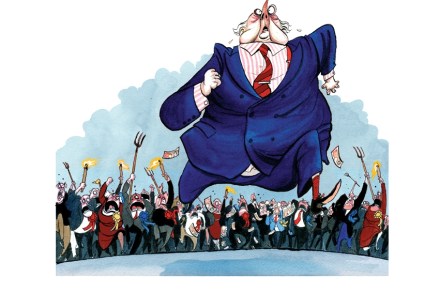
Who are the ‘undeserving rich’?

From our UK edition

Westminster isn’t sure. But it’s suddenly obsessed with them Recently, one Tory cabinet member went for dinner at a top London hotel with some of the most famous members of the financial elite. Good food and better wine: it was the kind of occasion that, in days gone by, would have turned into an orgy of mutual self-congratulation. But the world has changed. The bankers spent the evening attacking the Conservative party for not doing enough to defend them. The cabinet member became steadily more irritated, and as soon as he left the hotel, turned to a friend and decried ‘the obscene arrogance of these people’. The contempt, it seems, is now mutual. Now is not a good time to be rich in Britain.

Lagarde sets about the Eurozone

From our UK edition

When Christine Lagarde took over the IMF top job, it was widely assumed that she would simply continue her predecessor’s policy of almost unconditional support for Eurozone bailouts. But Ken Rogoff, the IMF’s former chief economist, has detected a hardening in the IMF’s approach. He thinks that Lagarde’s call for, as he puts it, "forced recapitalization of Europe’s bankrupt banking system" signals a new, tougher approach towards the euro-zone. As Rogoff says, the IMF’s previous approach to the euro-zone simply wasn’t credible. The idea that Spain was really at no more risk of a default than Germany was risible.

Getting tough on discipline

From our UK edition

A fortnight ago, The Spectator asked if Cameron was fit to fight? We wondered if he had the gumption to use the political moment created by the riots to push through the radical reforms the country needs.  So, it’s only fair to note that the government has today actually done something—as opposed to just talking about—the excesses of the human rights culture. The Department for Education has stopped the implementation of new regulations that would require teachers to log every incident in which they ‘use force’ with children. These new rules would have made teachers record every time they had pulled apart two kids in a corridor or intervened to break-up an over-enthusiastic game of football.

The undeserving rich

From our UK edition

Ever since the Elizabethan poor laws — if not before — society has tended to divide the poor into the deserving and the undeserving. But, as I write in this week's magazine, our politicians are now taking aim at a new category, the undeserving rich. Who you consider to be the undeserving rich depends on your ideological leanings. Russian oligarchs or the families of Middle Eastern despots are, perhaps, the most obvious examples. They have acquired huge wealth but often by illegitimate means. Then come those who evade, to use a favourite phrase of both David Cameron and Ed Miliband, "their responsibilities".

Cameron and Osborne wary of Vickers’ banking reforms

From our UK edition

Banking reform has always been one of those issues that was going to test the unity of the coalition. Indeed, it was the subject of the very first inter-coalition wrangle when back in May 2010 George Osborne and Vince Cable tussled over who would chair the Cabinet committee on banking reform.   To date, these differences have been held in check by the fact that the coalition is waiting for the recommendations of the John Vickers-led Independent Commission on Banking. But with the final draft of the Vickers Report being published on 12 September, these splits are starting to open up again.   Cable and the Liberal Democrats would like, at the very least, a strict ringfencing within banks of the investment and retails arms.

Whitehall leaks

From our UK edition

The Department of Education is remarkably unbothered by yesterday’s Guardian splash about free schools. Why? Because they have known for months that the emails on which it was based had gone missing. Indeed, the only thing that surprised them about the story was that it did not appear three months ago in the Financial Times. Email security in Whitehall is notoriously bad. Ministers and special advisers often don’t realise that civil servants have access to their email accounts. This access provides ample opportunity for those hostile to the government’s political agenda to leak out stories. (Most ministers in both this and the last government use secret squirrel email addresses to communicate with people to get round this problem).

Coalition prepares for bank bust-up

From our UK edition

There’s a big coalition split coming down the road. Next month the Vickers’ review into banking reform, which is going to suggest a ring-fencing of the investment and retail arms of banks, will come out. The Liberal Democrats — led by Vince Cable — will push for the instant implementation of the report’s recommendations. The Treasury will argue that banks need to be given time to introduce these new rules. The result will be, as one senior Lib Dem source tells this morning’s FT, ‘a big fight’.   The tricky question for Cameron and Osborne is how do they win this argument when there’s a visceral desire for tough measures against the banks?

Merkel’s domestic difficulties threaten the Eurozone

From our UK edition

As August draws to a close, Europe is bracing itself for a series of September sovereign debt crises. Events in Germany at the moment have the potential to make these crises into events that could break the back of the Eurozone. As Ambrose Evans-Pritchard reports, Chancellor Merkel might not have the votes to push the European Financial Stability Facility through the German parliament. Merkel is currently under attack from all angles in Germany. Helmut Kohl has criticised her foreign policy, while the German president has implied that she should not have let the European Central Bank buy up so many poor quality bonds. It is now possible to see her coalition collapsing at some point in the near future.

The Lib Dem conference advantage

From our UK edition

Traditionally the fact that the Liberal Democrats hold their conference first and still vote on party policy at it has been regarded as a disadvantage. But this year, I suspect that these two things will be in their favour. By going first, they will get to set the terms of debate for conference season. They’ll be able to spike their coalition partners’ guns on a whole variety of post-riots issues. They can make clear that they won’t accept any changes to the human rights act or any government push to encourage marriage. Even better, they can pass motions to this effect. They also will have first crack at setting out on what terms the 50p rate can be ended.

Why energy bills will be one of the big issues of the autumn

From our UK edition

One of the big political issues of the autumn is going to be energy bills. Among Tory MPs, there’s mounting concern that the coalition’s green policies are driving up the price of energy rather than helping to bring it down. They fear that this is both acting as a drag on the economy and adding to the squeeze on family budgets. So, today’s story in The Times about how a carbon trading scheme—started under the last government—has led to households being charged, on average, £120 more than they should have been in utility bills is going to turn up the political heat on this subject.

Politics: Will Gaddafi’s fall go to Cameron’s head?

From our UK edition

David Cameron’s public utterances often appear to have been crafted to make him sound as much like Tony Blair as possible. David Cameron’s public utterances often appear to have been crafted to make him sound as much like Tony Blair as possible. But when he discussed the fall of Tripoli on Monday, he was trying to do the opposite. There was no democratic triumphalism, no paeans to liberty and no kaleidoscopes being shaken. Instead, he emphasised the post-conflict planning that had already gone on and warned, ‘no transition is ever smooth or easy’. The subtext was clear: ‘Libya is not Iraq, and I am not Blair.’ Iraq was meant to have put the public and politicians off foreign adventures for a generation.

The advent of social impact bonds

From our UK edition

Today’s announcement of social impact bonds is one of the best things that the government has done. These bonds offer a chance to deal with some of this country’s most difficult social problems at no cost and no risk to the taxpayer. The bonds see money raised from the private and voluntary sectors to fund local government’s work with problem families. The idea is that the bond holders earn their money back and some through the savings made by sorting the lives of these households out. Considering that close to £100,000 a year is spent on some of these families, the opportunities here are considerable. At the moment, only ‘social investors’ are involved in this project.

Beating Labour’s education legacy

From our UK edition

If it is GCSE results day, there must be a row about government education policy. True to form, the NASUWT — a union whose role often appears to be to make the NUT look moderate by comparison — has come out with a comically hyperbolic statement accusing the coalition of a ‘betrayal of young people’ because of its decision to reform the educational maintenance allowance. What the NASUWT statement ignores is that the real betrayal of young people has been pushing them into doing courses and qualifications that condemn them to a life of low-skilled labour at best. Last year, only 16 per cent of pupils achieved a C or above in English, Maths, a foreign language, a science and one of history of geography.