James Forsyth

James Forsyth

James Forsyth is former political editor of The Spectator.

Defining the government through argument

From our UK edition

Every government spin doctor knows that one of the ways you can get media attention is by picking a fight. So, when the Cabinet all return to their desks in September, expect to see the coalition getting into some scraps to try and define itself in the public mind. Greg Clark, the newly appointed minister for cities and one of the most highly thought-of members of the government, has already spent much of the summer skirmishing with the National Trust and The Campaign to Protect Rural England over the government’s planned changes to the planning system. The aim is not only to push these very necessary changes through, but to show the country that the coalition really is putting growth first.
Cameron needs to take this opportunity

From our UK edition

Libya has elbowed the riots off the front page. But, in the medium-term, how Cameron responds to them remains one of the big tests of his premiership. In the Evening Standard today, Tim Montgomerie vents the frustrations of those Tories who fear that Cameron is missing his chance. Tim’s complaint is that Cameron has actually done — as opposed to said — very little and that the chance to use this moment to push through a whole bunch of big, necessary changes is being missed. With every day that passes, action on — say — the Human Rights Act becomes less likely as the Liberal Democrats become more dug in.

Mentoring deserves an audience

From our UK edition

It is easy to mock the idea of ministers and Downing Street advisers ‘mentoring’ problem families. But the idea is onto something important. First of all, a lot of what these families need is help from someone who understands how to get on in the world. Someone there pushing and prodding them to start applying for jobs would be a healthy development. Second, as Alice Thomson points out in The Times today (£), it would act as a social bridge between the two nations of modern Britain.  As with so many ‘big society’ schemes, this idea runs slap bang into the problem of how time poor most professional people are. But restoring the social fabric in this country is going to require creating a great sense of community.

Winning the peace

From our UK edition

The sight of rebel troops kicking a statue of Gaddafi round the colonel’s compound is another sign that the rebels are taking control of the capital. But the whereabouts of Gaddafi remain unknown. I understand that the British government is doing what it can to help the rebels locate him. But, until Gaddafi and his sons are detained there’ll be uncertainty about the situation. There’ll be much discussion of where Gaddafi should be tried if he is captured. Personally, I think it is entirely understandable if the Libyans want to try their old oppressor themselves. But the crucial thing is that the Transitional National Council prevents a wave of revenge killings.

BBC alleges that Coulson received hundreds of thousands of pounds from News Int while working for the Tories

From our UK edition

Tonight, the main news is—obviously—the situation in Libya. But Robert Peston’s claim that Andy Coulson carried on receiving payments from News International, as part of his severance package, while working for the Tories is worthy of note. If true, this piece of news is a further embarrassment for the Tories and David Cameron. Even if the money was simply part of a severance deal, it does not look seemly for a political party to have a communications director who is in the pay of a media group (Though, it should be noted that these payments stopped at the end of 2007 once Coulson had been paid the amount he was entitled to).

An encouraging start for the new Libya

From our UK edition

The press conference by Mustafa Abdel Jalil, the head of the National Transitional Council, was encouraging. Jalil stressed that he wished Libya to be a country governed by the rule of law and urged his supporters not to indulge in revenge attacks. He also stressed that Gaddafi will be given a ‘fair’ trial. In an echo of the text message that the rebels sent out last night, Jalil encouraged Libyans to protect both private and public property. There is clearly a desire to avoid the kind of post-liberation looting that was so corrosive to public order in Baghdad. In terms of the broader political framework, Jalil emphasised that he wanted Libya to be a democratic state with equality under the law but within a moderate Islamic framework.

Cameron: No transition is ever smooth

From our UK edition

David Cameron’s statement on Libya just now was cautious in tone and content. The Prime Minister stressed that "no transition is ever smooth or easy." Cameron said that he wanted to see Libya become a "free, democratic and inclusive" country. He emphasised that the NATO mission there would continue for as long as necessary. In an attempt to reassure the country that the liberation of Tripoli will not be followed by the chaos that followed the fall of Baghdad, Cameron repeatedly mentioned the post-conflict reconstruction planning that has been going on. He also said that he had stressed to the National Transitional Council that there must be no reprisals. Noticeably, Cameron decided to reiterate his "necessary, legal and right" formulation in this statement.

This autumn, Europe could become the most important issue in British politics again

From our UK edition

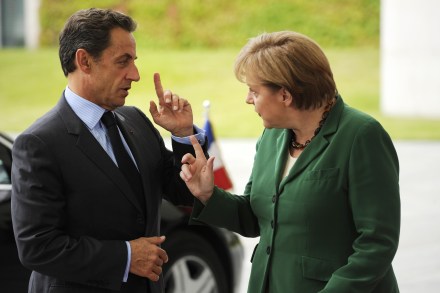
Europe will be one of the political issues of the autumn. The government expects another round of sovereign debt crises in the autumn and these will add urgency to the Merkel Sarkozy plan for ever closer fiscal union between the eurozone members. Nearly every Tory MP and minister I have spoken to is instinctively sceptical of the Franco-German strategy. But Cameron, Osborne and Hague believe that because the Eurozone members won’t accept the break-up of the currency union, Britain has to back further fiscal integration in the hope that it will make the euro work. (Cynically, one might add that their position also makes life easier within the coalition given the Lib Dem’s Europhile leanings.

Arresting the West’s crisis of confidence

From our UK edition

What’s the most important geo-political event of this century? Most people would say 9/11. The Foreign Secretary believes that it is the Arab Spring. But in The Times today (£), Emma Duncan makes a persuasive case for it being the collapse of Lehman Brothers. Duncan argues that Lehman Brothers’ fall has three claims to be an epoch-making event. The first is its contribution to the financial crisis and subsequent economic stagnation. The second is the way that it has catalysed China’s economic rise vis-à-vis the US, with China now predicted to become the world’s largest economy within this decade.

Pickles rebuffs calls for new taxes

From our UK edition

Anyone looking for a good blast of common sense on a Saturday morning should read Eric Pickles’ interview in the Telegraph. In it, he responds to much of the kite-flying by the Liberal Democrat left in recent weeks. In an exchange that will have many of his Cabinet colleagues nodding along in agreement, Pickles criticises judicial activism and the chilling effect it is having on ministers: “You are constantly looking over your shoulder for judicial review … the electorate is being frustrated,” he says. “I could kind of expect to be reviewed on procedural matters, but to be reviewed on policy?” But, should judges not have some oversight of policy? “No,” he replies. “I’m a bit old-fashioned really.

Fight or flight

From our UK edition

David Cameron now has the chance to be the Prime Minister he always wanted to be. Up to now, his premiership has, to his frustration, been dominated by the economic crisis that the country is facing. His cherished social reform agenda has not been the government’s animating mission but a rhetorical extra. But after last week’s riots, this has all changed. Broke Britain is now being forced to share its space at the top of the national agenda with Cameron’s specialist subject, Broken Britain. This crisis may have deprived Cameron of his summer holiday but it has given him back his political mission. Those present at the meeting in Downing Street before Cameron addressed parliament last Thursday say the mood was remarkably upbeat.

The Mrs Bercow show

From our UK edition

What, I suspect, would infuriate Sally Bercow most is if there was a complete media blackout over her appearance on ‘Celebrity’ Big Brother. As she made clear on entering the house, her whole aim is to annoy what she calls the ‘establishment.’ But at the risk of playing Bercow’s game, it’s worth debunking one argument that her defenders make. They say that she’s a person in her own right and so should be allowed to do what she wants, that her appearance should be defended on feminist grounds. But on the show, she’s not presenting herself as that. Instead, she’s there as the Speaker’s wife — that is her claim to fame.

Dark days

From our UK edition

There’s a pessimistic mood in Westminster at the moment, a sense of gloom about the economic prospects of the West. The government expects there to be another round of the European sovereign debt crisis this autumn and believes that the problems of the eurozone will take at least a decade to resolve. No one I’ve spoken to really believes that the plan Merkel and Sarkozy announced on Tuesday will be enough to keep the markets at bay for long. Looking across the Atlantic doesn’t raise spirits either given the state of both the American economy and political system. But the global economic situation will get an awful lot worse if the Chinese bubble bursts.

Miss Lightwood suggests…

From our UK edition

The press’s tendency to feature female students receiving their A-Level results rather than their male counterparts is coming in for a fair bit of ribbing today. The Guardian diary yesterday revealed quite how far some schools are prepared to go to get their pupils on the front page: “And yet eyebrows were raised at Diary HQ on receipt of an email from Badminton School, inviting Fleet Street to feature a selection of pupils on results morning who "speak extremely well and take a good picture". "I have a fabulous case study of a girl … who sadly lost her mother … and is now an active charity campaigner," reads the email from director of admissions and marketing Henrietta Lightwood.

The Huhne story returns

From our UK edition

The news that the Crown Prosecution Service has asked Essex Police to make further inquiries into the whole allegation that Chris Huhne asked his then wife to take speeding points for him in 2003 is a political embarrassment for the Energy and Climate Change Secretary. Huhne has always denied these allegations and nothing has been proved against him but the whole process is hardly reputation enhancing. (But it is worth noting that the CPS’s decision suggests that they currently don’t think there’s enough evidence to lay charges against anyone. Equally, they haven't thrown the whole file out). Huhne’s troubles are also causing a certain amount of coalition friction.

Recalcitrant police forces

From our UK edition

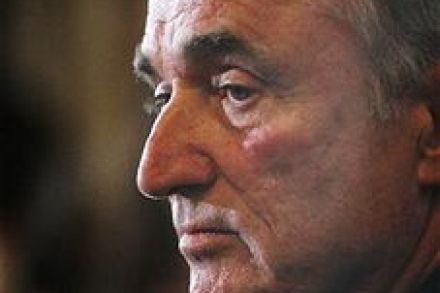
Applications to be the next commissioner of the Metropolitan Police closed at noon today. But thanks to the Home Office and the police, the best candidate for the job — Bill Bratton — hasn’t been allowed to even apply. The energy which was put into barring him shows just how determined the police and the Home Office are to prevent any outside talent from being brought into the police. Number 10, though, maintains that it still wants to appoint outsiders to positions of authority in the police, even though it is now trying to claim that the commissioner of the Met was the wrong place to start this process. It was, apparently, too big a job to give to someone from outside the magic circle of chief constables.

Cameron’s missed opportunity

From our UK edition

As David noted earlier, the big headline in Nick Clegg’s speech this morning is that the government will hold some kind of inquiry into the riots after all. This climb down in the face of demands from Ed Miliband makes it all the more baffling that Cameron didn’t announce his own inquiry earlier. If he had taken the initiative, he could have determined both its terms of reference and membership which would have ensured that it came up with the right answers. But, in policy terms, I suspect the more important announcement is that prisoners leaving jail will now be placed straight into the work programme. The work programme, masterminded by Chris Grayling, promises to be one of the coalition’s most successful initiatives.

Battle of the century

From our UK edition

The American historian Walter Russell-Mead has a cynical — but very possibly accurate — take on what the French are trying to persuade the Germans to accept with their plan for Eurobonds: 'France’s clear short term goal is to commit Germany to underwrite debts from weak EU states.  That not only staves off a crisis that threatens to engulf France; by putting Germany on as a co-signer for Greek, Italian and Spanish loans, France will ensure that Germany’s credit rating will not be better than France’s. The French will accept almost any German rules to limit the ability of countries like Greece to run up new debts.

Cameron and Miliband’s differences

From our UK edition

David Cameron and Ed Miliband both gave speeches on the riots this morning and the political dividing lines between the two are becoming more and more apparent. Cameron argues that these riots were about culture not poverty, Miliband thinks you can’t ignore inequality. Cameron believes that society needs two parent families, Miliband that it is about parental responsibility. Cameron doesn’t want an enquiry, Miliband does. The challenge for Cameron now is to turn the social analysis in his speech, which I think was broadly correct, into actual policy. Already in Conservative circles, people are saying that if Cameron really does want to support two parent families then surely he must use the tax system to both encourage marriage and help those who are married.

Cameron mustn’t let the police top brass bully him into silence

From our UK edition

The police have been busy defending themselves this weekend against any criticism of their performance. They aim to stop elected politicians from making any comment on their performance. But David Cameron should not—and must not—back down from both his criticism of police tactics and his conviction that the force urgently needs reforming. The truth is that the initial police response to the riots was hopelessly inadequate. If senior police officers really do think that the Met’s performance on Saturday, Sunday and Monday was adequate, then that in and of itself makes the case for reform. Losing control of the streets in sections of the capital is a failure.