James Forsyth

James Forsyth

James Forsyth is former political editor of The Spectator.

Hague does his leader’s bidding

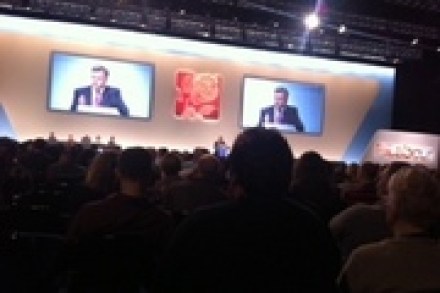
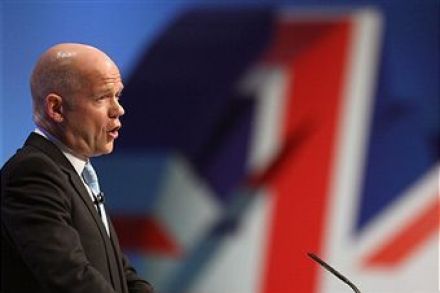
William Hague’s speech to conference today wasn’t the barn-burner of years past. It did include some jabs at Balls and Miliband. Hague joked that “their shadow Chancellor was Gordon Brown’s right hand man. And their leader was right hand man to the right hand man.”  But the overall tone was serious. Politically, two things struck me as significant about the speech. First, Hague showed how determined the Tories are to play the Cameron card. The speech ended with a long tribute to the Prime Minister which called him “the leader for a better future”. The Tories are convinced that of the three party leaders, Cameron is the only one who strikes the country as a plausible PM.
Cameron’s tricky interview

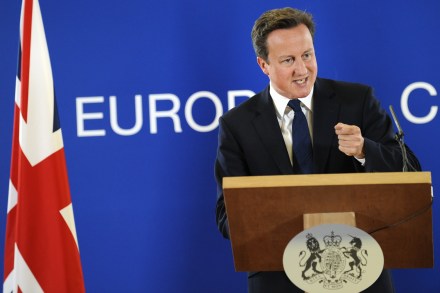
In a surprisingly testy interview on the Andrew Marr show, David Cameron defended the government’s approach to Europe, the economy and planning. But before the interview really got going, Cameron had to reiterate his Sunday Times’ apology (£) to women for the patronising comments he has made in the Commons chamber. This is hardly an ideal start to conference for a party leader who is struggling to maintain female support. On the Eurozone, Cameron was blunt that its problems were a threat to “the British economy and the world economy”. He also risked a clash with Nicolas Sarkozy by demanding that “action needs to be taken in the coming weeks to strengthen Europe’s banks”.

Alan Duncan predicts partial Greek default

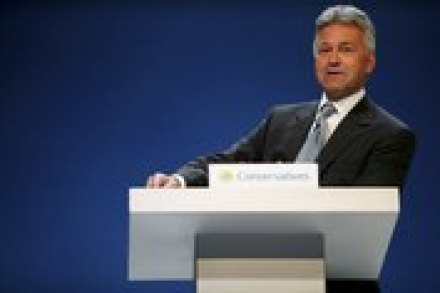
On Any Questions, Alan Duncan—a minister of state at the Department to International Development and a longstanding ally of the Foreign Secretary William Hague—has just predicted a partial Greek default. He told the programme that ‘I guess what’s going to happen is there will be a partial default and some kind of agreement’. There have long been rumours in Westminster that the British government’s position was now to—in private—push for an orderly default. Indeed, George Osborne’s comment in his Telegraph interview today that the eurozone “need to end this endless speculation about Greece — they have got to come to a decision and stick to it” implied that.

Cameron and Osborne respond to Miliband

Senior Tories are saying that there won’t be many attacks on Ed Miliband from the party’s big hitters at conference. They are concerned that aggressive assaults on him could win him public sympathy. But both Cameron and Osborne respond to one of the central arguments of Miliband’s speech in their pre-conference turns. Cameron writes in the Mail that ‘the role for government is not to single out good and bad industries, it’s to make it easy as possible for all industries, all businesses, to grow, invest and take people on.

Politics | 1 October 2011

Not being Ed Miliband’ may not be enough to win Cameron the general election There is something odd going on in British politics. The traditional link between the economy and the political fortunes of the governing party is in abeyance. David Cameron and the Conservatives are much less despised than they expected they would be; a year ago, not even the most optimistic Tory would have thought they’d be level pegging with Labour in the polls. But the economy, by contrast, is in far worse shape than anyone in government predicted. Despite the gloomy outlook, the Cameroons will arrive at their conference in Manchester in good heart. They believe that they still have the party firmly behind them.

‘There are no exits’

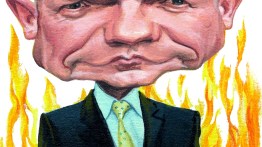
William Hague always knew the euro would go up in flames. But now he’s focused on the rescue operation Politicians normally have to wait for history to vindicate them. For William Hague, vindication has come early. All his dire predictions about the dangers of the euro, so glibly mocked at the time, have come to pass. But as he makes clear when we meet in his study in the Foreign Office, he is not enjoying this moment. Rather, just days before the start of Tory conference, he is absorbed with trying to sort out the mess that others have created.

Cameron’s perfect Europe row

The European Commission has just given David Cameron the perfect chance to stand up to Brussels. Its attempt to make Britain pay benefits in full to any citizen of an EU country who pitches up here is, frankly, barking and if successful would totally undermine public support for the free movement of people, as Fraser said last night. But, politically, this row provides Cameron with a real opportunity. By taking the commission on over it, he can reassure his party that he’s still a Eurosceptic while avoiding the more fundamental issues of the euro and Britain’s whole relationship with the EU.

Rehsuffle rumours

Those now leaving Liverpool are indulging in some shadow Cabinet reshuffle speculation. This chatter has been sparked both by the fact that Miliband has now abolished shadow Cabinet election and by how many of the media rounds in the past few days have been done by members of the 2010 intake notably Stella Creasy, Chuka Umanna and Rachel Reeves. Expect them to be in line for rapid promotion. To make way for them, some of the under-performing members of the shadow Cabinet will have to be sacked. One name touted as being in the frame is John Healey, the health spokesman. Healey has long infuriated some in the leader’s office who think that he spends more time wondering how he could become deputy leader of the party than on how to attack Andrew Lansley.

Red flag at half-mast

Labour conference has now closed with the traditional singing of the Red Flag. Ed Miliband appeared to know all the words as he sang along as one wag put it, ‘you don’t grow up in the Miliband household without knowing all the words to the Red Flag.’ But what was really striking about the end of conference was how downbeat it was. As the delegates streamed out of the hall, the atmosphere was palpably flat. Harriet Harman declared in her closing speech that Labour are now done with statements of contrition about their record in office. She told the hall that: ‘…the two Eds both acknowledged – what we all know – that not everything we did in government turned out right.

Miliband meets the public, and a lot of Labour members

Ed Miliband has just finished an hour and twenty minute long question and answer session. The audience was meant to be a mix of the general public and Labour members, but there seemed to be far more Labour members than anybody else. It would be easy to take the Michael out of the whole event. The questioner who walked out as the Labour leader was trying to answer his question, Miliband’s tendency to stare into the bleachers with his hand above his eyes and the technical glitches. One could also, rightly, say that the vast majority of questions were classic lefty fare. But there was the glimmer of something important here. There were flashes of the humour that comes across in private but not in public. In short, Miliband seemed far more himself than he did yesterday.

Yesterday’s big speech

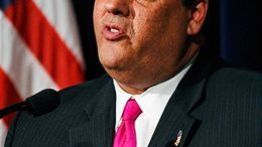
I suspect that the most important political speech delivered yesterday was not Ed Miliband’s address to Labour conference, but Chris Christie’s one at the Reagan Library in California. The governor of New Jersey is coming under mounting pressure from the Republican establishment to run for president; they view him as the party’s best chance of capitalising on President Obama’s electoral vulnerability. This speech was striking for its political dexterity. It is not a base-pleasing red-meat speech, but rather one designed to reach out to those who voted for Obama last time; those who grown disillusioned by how he has governed.

Hague: The euro is a burning building with no exit

James Forsyth has interviewed the foreign secretary, William Hague, in tomorrow’s issue of the Spectator. Here is an extended version of the piece that will appear in the magazine. Politicians normally have to wait for the history books for vindication. But for William Hague it has come early. All his warnings about the dangers of the euro, so glibly mocked at the time, have come to pass. But, as he makes clear when I meet him in his study in the Foreign Office days before the start of Tory conference, he is not enjoying this moment. Rather, he is absorbed with trying to sort out the mess that others have created.

Miliband’s three mistakes

Three things puzzled me about Ed Miliband’s conference speech yesterday. First, I didn’t understand why Miliband did not attack Cameron for having talked about the need for ‘moral capitalism’ and then have not delivered it. It would have been far harder for Miliband’s speech to be caricatured as left wing if he had pointed out that Cameron had promised ‘to place the market within a moral framework - even if that means standing up to companies who make life harder for parents and families’ - and then not delivered on that pledge. The second thing was the absence of any policy at all.

It’s not Brown, it’s Balls

Ed Balls’s speech to Labour conference just now was a typically Ballsian performance. There was intellectual aggression, dividing lines with the Tories and a bit of class warfare from this privately educated Oxbridge graduate. The meat of Balls’ address was a Brown-style five point plan. The new elements of this were a National Insurance holiday for new workers and a reduction in Vat to five percent for home improvements and maintenance. The former struck me as a classic bit of opposition politics, work out what the government might try and do and announce it first.

For one night only, David Miliband returns

David Miliband was studiously loyal to his brother in his one speaking appearance at Labour conference. He told Movement for Change, the community organising group that he founded, that ‘Ed deserves huge praise’, that ‘Ed has led with purpose and conviction and that ‘we’ll all here because we want to put Ed into Downing Street’ But the brother over the water did come with three warning for Labour. The first was that ‘if Labour becomes a sectional party, we’ll never be elected to government.’ The second was that there’s ‘never been more distrust of the state across the industrialised world’ so if Labour becomes ‘a big state party, we’ll never get over the mistrust of the state’.

A preview of just how personal the Boris Ken struggle will be

If anyone had any doubts about just how personal the 2012 London mayoral campaign is going to be, they should have been dispelled by Ken Livingstone’s speech to Labour conference today. Ken claimed that the Mayor had ‘got what he wished for’ in above average unemployment and accused him of standing for a ‘privileged minority’. He then went on to draw an equivalence between Boris’s student antics and those of the rioters: “What is the difference between the rioters, and a gang of over-privileged arrogant students vandalising restaurants and throwing chairs through windows in Oxford? Come on Boris – what’s the moral difference between your Bullingdon vandalism as a student and the criminality of the rioters?

Can Labour make the right kind of news this week?

The great Labour worry about this week is that they’ll be relegated to the ‘in other news’ section of the evening bulletins. There’s a real sense of a struggle for relevance. As one Labour MP half-joked to me last week, ‘do you think the conference of the third most interesting party in British politics will get much coverage?’ But those close to Ed Miliband can take some satisfaction from the opening hours of this conference. The leader’s arrival with his wife and children produced some nice pictures for the Sunday papers, his interviews on the morning news shows went well enough and he looks likely to get the changes to the party rules he wants through with ease.

Miliband’s growing argument

Ed Miliband turned in a crisp performance on the Andrew Marr show this morning. If he is having media training, it is paying off. In a clear sign of where Labour’s economic policy is heading, he constantly stressed that growth was the key to getting the deficit down. But he was far less clear on how he would stimulate the economy beyond a proposed cut in VAT. Miliband was also asked about his proposal to cut tuition fees to £6,000. I’m not convinced by the politics of this move. It leaves fees in place and raises them from where they were under the last government which is hardly a radical change or enough to fire up the student vote. But, interestingly, Miliband suggested that Labour would try to go further on this issue by the time of its manifesto.

Hard Labour

The sense of unreality that hangs over party conference seems particularly heightened this year. As events outside roll on at a dramatic pace, the conferences try to proceed as normal. A new law on stalking may be necessary but it is small beer compared to the economic crisis gripping the Western world at the moment. Ed Miliband’s challenge in the next few days is two-fold. First, he has to work to restore Labour’s economic credibility—something that will be made even harder by today’s allegations about the role of his shadow Chancellor in the last government. Second, he has to show that the party gets the seriousness of this moment. Miliband, who travelled up on the train with his wife and children earlier today, is running into a headwind of bad polls.