James Forsyth

James Forsyth

James Forsyth is former political editor of The Spectator.

More fuel for the EU rebellion

From our UK edition

Today’s Daily Express poll will add to the sense of momentum that the Tory rebels are feeling ahead of Monday’s vote. The fact that 81 per cent of Tory voters want their MP to vote for the motion will make it harder for the whips to dissuade those who are inclined to vote for the motion. The poll results also demonstrate that only a small percentage of the public would vote for the country’s current set-up with the European Union if they had the chance. Only 15 per cent would vote to stay in, compared to 28 per cent who would vote to leave, while 47 per cent would plump for renegotiation. If forced to chose between In or Out, the public splits 31 to 52.

Politics | 22 October 2011

From our UK edition

The government’s never-ending European problem In the hours after the coalition was formed last May, a minister and a group of Tory MPs sat around a table in a parliamentary cafeteria discussing what it all meant. One new MP said to the minister that it was a pity that, in the course of the talks, the Tories had agreed to ‘park Europe for the next five years’. The minister, high on the Panglossian spirit of the early days of the coalition, reassured her that this was for the best. The party could devote its full attention to Europe when the economic situation was less pressing. Yet almost 18 months on, Europe is taking up an ever-increasing amount of the government’s time.

Eustice: If the government won’t back my amendment, I’ll vote for the EU referendum motion

From our UK edition

George Eustice’s comments just now that if the government doesn’t support his amendment  to the EU referendum motion, then he’s "minded" to vote for the original motion is a sign of how Downing Street is losing the parliamentary party on this issue at an alarming rate. Eustice having been press secretary to David Cameron is not an instinctive rebel nor can he be being accused of motivated by personal animus.   Equally telling is Eustice’s saying that he’s being pushed towards supporting the motion because "the government’s not going to deal with the party in a responsible way on this". This is a sign of just how fed up normally supportive MPs are with Number 10’s handling of this whole issue.

Cameron unmoved by the Eustice amendment

From our UK edition

Sources in Number 10 tell me that the party leaderships feels it cannot support the Eustice amendment. They stress that it is not Conservative party policy. But I also detect a sense that there is no point even considering backing it as the Lib Dems would never accept renegotiation followed by a referendum being government policy. If Number 10 continues to be inflexible, it will have a sizable rebellion on its hands. Tory MPs — especially those who think they might have a reselection fight on their hands, and that’s a lot of them thanks to the boundary review — want something to take back to their constituencies.

Amendment to EU referendum vote put down

From our UK edition

Tonight, George Eustice, David Cameron's former press secretary, and several other eurosceptic members of the 2010 intake have put down an amendment to the EU referendum motion that will be put on Monday. The amendment reads: "This House calls upon the government to publish a White Paper during the next session of Parliament setting out the powers and competences that the government would seek to repatriate from the EU, to commence the renegotiation of Britain's relationship with the EU, and to put the outcome of those negotiations to a national referendum." As I said before, this renegotiate-referendum strategy is Cameron's best chance of heading off a full-scale rebellion on Monday, but it remains to be seen if the government will throw its weight behind this.

Cameron needs an amendment – and fast

From our UK edition

A third of Tory backbenchers have now signed the EU referendum motion. Worryingly for the whips, this isn’t the limit to this motion’s appeal. There are several Tories who plan to come out for it on Monday and one PPS, Stewart Jackson, has already made clear that he’s prepared to resign over the matter if necessary. Last night, Number 10 sources told me that they would be interested in a compromise amendment. But I think the Cameron operation will have to offer more than they were planning to. What’s needed to head off this rebellion is a commitment to renegotiation at the first available opportunity followed by a referendum on the results of that.

The government’s never-ending European problem

From our UK edition

We thought CoffeeHousers might appreciate an advanced viewing of James' political column from tomorrow's issue of The Spectator, so here it is: In the hours after the coalition was formed last May, a minister and a group of Tory MPs sat around a table in a parliamentary cafeteria discussing what it all meant. One new MP said to the minister that it was a pity that, in the course of the talks, the Tories had agreed to ‘park Europe for the next five years’. The minister, high on the Panglossian spirit of the early days of the coalition, reassured her that this was for the best. The party could devote its full attention to Europe when the economic situation was less pressing.

Europe bubbles to the surface in PMQs

From our UK edition

A particularly fractious PMQs today. Ed Miliband started by asking questions about Liam Fox which, frankly, seemed rather out of date given that Fox has already resigned. Cameron swatted them away fairly easy, mocking Miliband with the line "if you’re going to jump on a bandwagon make sure it is still moving". But when Miliband came back on the economy, Cameron was far less sure footed. The Labour leader had one of those great PMQs facts: despite the government having issued 22 press releases about the regional growth fund in the last 16 months only two firms have received any money for it. A visibly irritated Cameron then said that all Miliband "wants to do is talk down the economy" which drew hoots of derision from the Labour side.

What Cameron needs to do to avoid a rebellion over Europe

From our UK edition

The backbench motion on an EU referendum has been cleverly crafted. Rather than just proposing a straight In/Out vote it includes a question on whether Britain ‘should renegotiate the terms of its membership in order to create a new relationship based on trade and cooperation.’ This has given the motion real reach into the Tory benches.   Number 10 needs to play catch-up on this issue, and fast. The whips yesterday were talking about limiting the rebellion to ‘30 to 40 MPs tops’. But 46 Tory MPs — including the chairman of the 1922 committee, Graham Brady — have already signed the motion.   It strikes me that there are two ways out of this predicament for Cameron.

The dawdling eurozone

From our UK edition

For all the attention that is being focused in Westminster on the publication of the Cabinet Secretary’s report into the links between Adam Werritty and Liam Fox tomorrow, the real story is the countdown to Cannes. It is now three weeks since George Osborne declared that the eurozone countries had three weeks to save the Euro. So far, they haven’t done anywhere near enough. There’s also little sign that this weekend’s summit will see them make much progress. The Germans are already busy playing down expectations. From a British perspective, the intriguing question is: what does the coalition do if the eurozone continues to show no sign of getting its act together?

Miliband’s challenge

From our UK edition

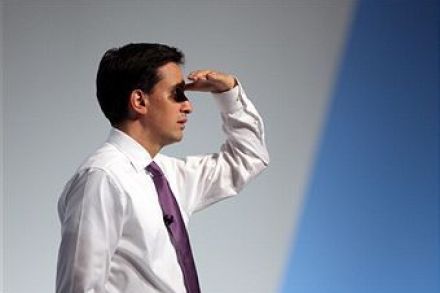
One of the striking things about politics at the moment is that Ed Miliband is proving adept at spotting issues that are going to become big — think the squeezed middle, energy prices — but is failing to drive home this advantage. There’s scant evidence that, for instance, the voters regard Miliband as the solution to the problem of rising energy bills. I suspect that the coalition’s plans to make it easier for people to switch tariff and supplier will cut through with the public more than Miliband’s speeches on the issue. In part, this is the natural advantage of incumbency — governments can actually do things. But the challenge for Miliband’s operation is to make him appear a more effectual figure.

How will Greening deal with the airports issue?

From our UK edition

One Cabinet minister fretted to me yesterday about the implications of Justine Greening’s appointment as Secretary of State for Transport. Their worry was not Greening’s position on the Tory ideological spectrum but her views on aviation. This minister worried that Greening, who helped lead the opposition to a third runway at Heathrow, would be against any expansion in airport capacity. In recent months, opinion has been shifting at the top of the Tory party on the airports issue. People were increasingly coming round to the view that there was need for an extra airport or at least an extra runway somewhere close to the capital.

Cameron’s party management problems

From our UK edition

Parliamentary party management is, perhaps, the subtlest of the political arts. It is, obviously, particularly difficult in coalition. But the Cameroons are still scoring a ‘must do better’ grade on this work. The mini reshuffle was fairly neatly executed. But it has, almost inevitably, left behind some bruised feelings. Part of the problem is that the Whips’ office is, to borrow a phrase, neither Sandhurst nor a proper careers’ department. Ministers and MPs are all too often left to guess at why they have been passed over for promotion. There is also a tendency for people to be rapidly promoted and then fall out of favour almost as suddenly.

The future’s bright for the right

From our UK edition

There’s much gnashing of teeth about the future of the right today following Liam Fox’s resignation. I think this is misplaced. Fox was a passionate advocate of a certain strand of Conservative thinking. But his appeal and relevance was always going to be limited by his tendency to believe that it was, in political terms, always 1987. The future of the right now, as Matthew Parris says (£), rests on the 2010 intake. They are, generally speaking, an impressive bunch. At Tory party conference, I chaired an event on the future of the party with four of its most able members.

To catch a minister

From our UK edition

Old hands in Westminster are confident that they know what lies behind the Liam Fox-Adam Werritty relationship. With a knowing glint in their eye, they lean forward and whisper: ‘He’s a lobbyist.’ They’ve seen it all before, they say. It explains why Werritty thought it was worth spending tens of thousands of pounds just to be in the same city as the Defence Secretary. ‘We all know the drill with these people,’ one senior Tory explains. ‘Their job is to get as close to you as possible and if it is easier to bump into you in Dubai or Washington than London, that’s where they’ll do it.’ Lobbyists for special interests are a cancer on the body politic.

The new Tory generation

From our UK edition

The final reshuffle moves have now been announced. Chloe Smith, the winner of the Norwich North by-election, moves from the Whips office to become economic secretary to the Treasury. Expect Smith to, in time, do a lot of media. Greg Hands, Obsorne’s PPS moves into her slot as a whip. From this position, he’ll be able to continue running the parliamentary side of George Osborne’s highly effective political operation. Sajid Javid moves from being PPS to John Hayes to being PPS to the Chancellor. I suspect that Smith’s promotion will be seen by those Tories who held frontbench positions in opposition but missed out on jobs in government because of coalition as evidence that their chances of promotion are effectively gone.

Greening’s rapid promotion

From our UK edition

David Cameron has sent the Cabinet’s safest pair of hands to the Ministry of Defence. Philip Hammond, a robust Euro-sceptic with a belief in firm fiscal management, will bring calm and stability to the department. He’s also the Cabinet minister most likely to be able to sort out the longstanding problems of defence contracts going hugely over budget. As a close political ally of George Osborne, Hammond will be well placed to win extra funding for the department in the, sadly increasingly unlikely, event of the public finances having been put back on a sound footing by the end of the parliament. Hammond is followed at Transport by Justine Greening. Greening voted for Fox in the 2005 leadership election.

Fox unlikely to cause trouble for Cameron

From our UK edition

As soon as the news about G3's funding of Adam Werritty emerged, it became clear that Liam Fox was going to have to go. Downing Street had no desire to be seen to be pushing this Thatcherite out of the Cabinet, but its test has always been that Werritty could not have been receiving money from companies with any interest in defence. Once that line was crossed, Fox was always going to have to go. I suspect that the former Defence Secretary will not be a problem for Cameron on the backbenches. Fox values loyalty highly and his friends appreciate how the Prime Minister didn't push Fox at the first opportunity. Also, Fox's standing as a politician has been severely diminished by the events of the past ten days.

Few think Fox can survive

From our UK edition

I understand, from a Cabinet Office source, that Sue Grey, the civil servant who interviewed Adam Werritty on Tuesday, was completely baffled by Werritty's explanation of how his funding arrangements work. This is yet another sign that events are beginning to move rapidly against Liam Fox. The Times' front page story this morning has led to a significant fall away in support for Fox among Tory MPs. There is also considerable nervousness in Tory circles about what tomorrow's papers are expected to bring. All this makes it increasingly hard to find people who expect the Defence Secretary to survive. Indeed, several people who have been defending Fox in the media say that they feel that they can no longer do so.

The Fox story rumbles on

From our UK edition

It has been a relatively quiet day on the Liam Fox front today. It now seems that the report into this whole affair will not be ready until next week; Adam Werritty has not yet had a second interview with Cabinet Office. For his part, Fox has looked more confident today and by all accounts was impressively calm as he sat on the front bench today. Interestingly, one ministerial ally of Doctor Fox feels that last night’s report by Nick Robinson was more damaging for the defence secretary than most people have realised. His fear is that having people pay Werritty to push a specific agenda, even if it was ideological not commercial, is deeply problematic and makes it more likely that Sir Gus O'Donnell’s report into the whole matter will not be sympathetic to Fox.