James Forsyth

James Forsyth

James Forsyth is former political editor of The Spectator.

How Lansley won over the Lords

From our UK edition

As Ben Brogan wrote this week, the House of Lords is threatening to become one of the biggest obstacles to the coalition’s reform agenda. But the way in which the Health and Social Care Bill was steered through its second reading in the upper house does provide a model for how even the trickiest votes can be won. Andrew Lansley’s much derided operation got this one right. It realised months ago that the crucial thing was to stop the crossbenchers voting against the bill en masse. So, the health minister in the Lords, Earl Howe, and Lansley’s long-serving aide Jenny Jackson have been on a cup of tea offensive for the last few months, seeking to explain the bill to any crossbencher who would listen.
Werritty’s no Walter Mitty

From our UK edition

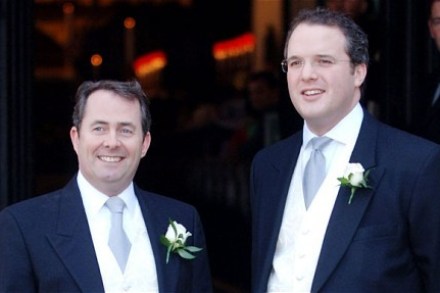
Those "friends" of Liam Fox who are trashing Adam Werritty to journalists (see here, here and here) are doing the Defence Secretary no favours. The idea that Werritty somehow imposed himself on Fox is simply risible. Fox was under no obligation to invite Werritty to dinner with an American general or to go on skiing holidays with him. Crucially, Fox didn't move to cut Werritty off even after he found out about the infamous business cards that described Werritty as an adviser to him. On Monday, Fox told the House that he dealt with this issue in June. But this doesn't seem to have led to any change in Fox's attitude towards his friend.

Miliband attacks Cameron on jobs

From our UK edition

Ed Miliband chose to ask all six questions on the economy today, making only the quickest of references to the Liam Fox story that the Westminster village is currently obsessing over. Armed with ammunition from the latest unemployment numbers, Miliband did a solid job of pushing Cameron onto the back foot. But there was one moment which will worry Miliband's supporters: the spontaneous way the government benches fell about when Miliband claimed that Scottish and Southern Energy's decision to start selling its electricity on the wholesale market was the result of his conference speech. Three Labour backbenchers did ask questions about Liam Fox. Cameron said he would look at publishing a list of Adam Werritty's professional and social contact with ministers and advisers.

BREAKING: Jeremy Heywood to be new Cabinet Secretary

From our UK edition

Gus O’Donnell has just emailed colleagues to say that he is announcing his retirement today. He will be leaving the civil service at the end of this year. His successor as Cabinet Secretary will be Jeremy Heywood, the current permanent secretary at Number 10 who has managed to make himself indispensable to David Cameron. But Heywood, who is not overly popular with the departmental permanent secretaries, will not become head of the home civil service. That job will instead go to one of the other permanent secretaries who will take this on in addition to their current role. Ian Watmore, of Football Association fame, will become the permanent secretary at Number 10.

Fox defies the hounds

From our UK edition

To the joy of the Tory benches, Liam Fox has just come out swinging in the House of Commons. In his initial statement, Fox apologised to the House for allowing the lines between his personal and professional life to become blurred out of “personal loyalty to a friend.” He then conceded that Werritty had travelled on 18 overseas visits with him since May 2010 and visited the Ministry of Defence 22 times. The presence of George Osborne and Michael Gove on the front bench showed how determined the Cameroons are to indicate support for the defence secretary despite the political differences between him and them. Jim Murphy missed the target in his reply. He was overly theatrical and failed to make clear what he actually wanted answers to.

How Number 10 will judge Fox

From our UK edition

Downing Street is busy stressing that the David Cameron doesn't want to lose Liam Fox from the Cabinet. There is lots of talk of how the Prime Minister doesn't want to pull the rug out from under anyone. I understand that to Number 10's mind the crucial questions are whether Adam Werritty has made any money out of defence since May 2010 and if so, did Fox know about it? If the answer to both of these questions is yes, then the Defence Secretary is probably done for. But if it is no then Fox will have suffered some embarrassment but nothing more.

Liam Fox’s apology

From our UK edition

In a bid to save his Cabinet career, Liam Fox has just issued a statement, which he also read to the cameras, apologising for allowing ‘distinctions to be blurred between my professional responsibilities and my personal loyalties to a friend’. The defence secretary goes on to accept that he should have ensured that officials were present at meetings between him and Adam Werritty at which ‘defence and security related issues were rasied.’ He says that he has apologised to the Prime Minister for the Dubai meeting, at which Fox saw a commercial supplier with no official present. Apparently, the MoD permanent secretary will now be putting in place new procedures to ensure that this does not happen in future.

Cat-flap, day five

From our UK edition

‘Cat-flap’ is the story that just won’t go away. A report in today’s Guardian claims that the whole story may have been lifted from a speech made by Nigel Farage, the leader of the UK Independence Party. One colleague of May’s tells the paper that "Not only has Ms May been caught out making up stories about the Human Rights Act for cheap laughs, she has been plagiarising her clap lines from the UK Independence party." In the grand scheme of things, this is hardly the most serious charge. There’s just enough truth to the cat anecdote for May to have some ground to stand on and most Tories, understandably, want to see the Human Right Act scrapped.

Cameron must offer women more than an apology

From our UK edition

Shortly after he arrived in Downing Street as the chief political strategist, Andrew Cooper sent David Cameron a memo about the nation’s hopes and fears. Shortly after he arrived in Downing Street as the chief political strategist, Andrew Cooper sent David Cameron a memo about the nation’s hopes and fears. Cooper’s research showed that voters’ greatest concern was that their children wouldn’t have the opportunities they’d had. The mood of pessimism in the country, he concluded, could not be lifted until this question was addressed. This is why the conference this week has featured lots of of talk about children and ‘inter-generational fairness’.

Miliband tries to re-energise the Opposition

From our UK edition

The Labour reshuffle is an attempt to bring more energy and aggression into Ed Miliband's top team. It is also a recognition that the party has failed to cut through on public service reform, hence new shadows at both health and education. Chuka Umunna's rapid promotion to shadow Business Secretary will, I suspect, dominate coverage of the reshuffle. Having been an MP for less than 18 months, Umunna now finds himself up against Vince Cable. If he succeeds in this role, he'll rapidly become the leader in waiting. But there's also a danger that it might all be too much, too soon for him. Umunna is one of five new MPs to make the shadow Cabinet.

Fox under pressure

From our UK edition

https://www.youtube.com/watch?v=zTOskAPgL9c The Westminster Fox-hounds think they have picked up the scent this morning. Enemies of the Defence Secretary, of whom there are many, are convinced that they'll be able to bring him to ground over his links to Adam Werrity. Werrity was Fox's best man and is a good friend of the Defence Secretary. But the problems stem from the fact that Werrity, who holds no official position, was dishing out cards saying he was an "adviser" to Fox, arranging meetings for him and attending diplomatically important events with the Defence Secretary. Fox has tried to kill off this story by asking the permanent secretary to investigate whether he has breached the ministerial code.

Healey and Denham depart the shadow Cabinet

From our UK edition

John Healey and John Denham have resigned from the shadow Cabinet ahead of Ed Miliband’s reshuffle. Healey is, officially, departing for family reasons. But I doubt that many of those closest to Miliband will particularly mind his departure. I expect that Miliband may also take this chance to move Andy Burnham, who knows the health brief from his time in government and is an effective if one dimensional media performer, from education into the health brief. These two resignations free up a couple of the big shadow Cabinet jobs as Miliband prepares to shuffle his pack. It is almost certain that the Labour leader, who has just won himself complete control over shadow Cabinet appointments, will promote members of the 2010 intake to the full shadow Cabinet.

The Cabinet cat-flap continues

From our UK edition

The Ken Clarke and Theresa May cat-flap has sparked up again this morning, with the Justice Secretary accusing the Home Secretary of using "laughable child-like examples" to attack the Human Right Act. In some ways, it's hard to take a political row about a cat particularly seriously. But this back and forth between May and Clarke is actually exposing something very important: the Liberal Democrats are not the only brake on Tory radicalism. At the moment, lots of Tory ministers – up to and including the Prime Minister – like to imply that they'd be doing far more on Europe, immigration and the Human Rights Act if it wasn't for the Lib Dems.

Cameron does enough

From our UK edition

There were three big themes to David Cameron’s speech. The first was that decline is not inevitable, an attempt to tackle the mood of pessimism that is gripping the nation. The second was an attempt to reassert the Conservatives’ compassionate credentials, hence the emphasis on how the Liberal Democrats would have cut the NHS and the section explaining why conservatives should support gay marriage. The third was leadership, Cameron’s biggest advantage over the other party leaders. The attack on the idea of Britain’s decline being inevitable was powerful in places. But because Cameron has a non-ideological approach to growth it is hard for him to make a stirring argument about how the economy can be revived.

An order or a description?

From our UK edition

The hours before David Cameron’s speech have been filled by a row about the pre-briefed line that: "The only way out of a debt crisis is to deal with your debts. That means households - all of us - paying off the credit card and store card bills." This was taken by several papers as the Prime Minister instructing people to pay off their credit cards bill now, something that would have reduced the prospects for growth even further. So, the line has now been changed to show that Cameron is just describing what’s going on. It is all mildly embarrassing. But this little flurry can’t disguise the fact that this conference has largely gone to plan for the leadership. It has been as uneventful as they wanted it to be.

Taking the ‘cat-flap’ seriously

From our UK edition

              Today’s ‘cat-flap’ between Ken Clarke and Theresa May exposes one of the largest divides in the Conservative party today. May, along with most Tory MPs, wants to get rid of the human rights act, while Clarke and the attorney general Dominic Grieve want to keep it. May, to the surprise of her colleagues, used a pre-conference interview with the Sunday Telegraph to make clear her desire to get rid of the act. After this, there was always going to be a reaction from Clarke & Co. One ally of the Justice Secretary tells me that his comments today were spurred, in part, by an irritation that he hadn’t seen the text of the Home Secretary’s speech before she delivered it.

The Tories await Boris

From our UK edition

In just over an hour, Boris will make his first appearance in Manchester. The Tory hierarchy is acutely aware that for at least the next 18 hours or so this will be Boris’ show. There’s a certain nervousness about what might be in Boris’s speech. One MP close to the leadership just came up to me and asked, "You guys don’t have any idea what he's going to say, do you?" Boris has, apparently, being telling people that he hasn’t written his speech yet, which is only increasing the anxiety that he might make some fruity comments on Europe or tax. One thing that’s certain is that the hall will be packed for Boris. The activists’ seem to love him more than ever this year.

Explaining credit easing

From our UK edition

Having had a few more discussions, I’m a bit clearer about the government’s plan to do credit easing. The full details of the scheme will be released on the 29th of November as part of the autumn statement. But I hear that the scheme is intended to be worth between the high billions and the low tens of billions and it will be aimed specifically at small and medium sized enterprises, although it could be extended to all companies and expanded up to somewhere in the region of £50bn if the credit markets were to seize up.  I also understand that major supply side measures are being saved up for the autumn statement.

Osborne’s big step

From our UK edition

As George Osborne was addressing Tory conference, Standard and Poor reaffirmed Britain’s triple A rating. For the Osborne team, it sent out the perfect message — their deficit strategy is keeping the nation creditworthy. It was their piece of conference theatre for this year. The Chancellor’s address was a sombre affair. But, in some ways, it was his most impressive conference performance. It was a classic Osborne blend of politics and economics, but distinguished by a clear and precise analysis of why the economy was not recovering. Osborne’s big policy announcement was that the Treasury was now exploring credit easing.

Willetts tackles the three Ds

From our UK edition

How the Conservatives should respond to “disorder, debt, and distrust” is the theme of David Willetts’ speech to the Conservative Policy Forum. Willetts, one of the most cerebral Conservative ministers, argues that the riots, the deficit and the anti-politics mood have come together to create a triple-challenge for the party. But Willetts’ speech is also the Tory response to Ed Miliband’s charge that they are breaking the promise of Britain: the idea that each generation does better than the next. Willetts, who has written a book on the subject, accepts that fairness between the generations is the biggest challenge in politics right now.