James Forsyth

James Forsyth

James Forsyth is former political editor of The Spectator.

Merkel and Sarkozy try to hold the euro together

From our UK edition

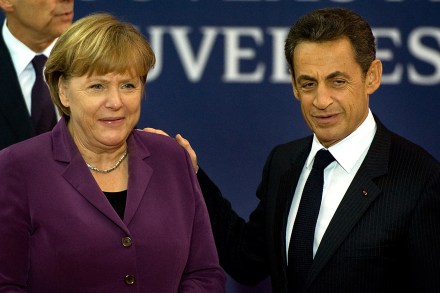
Right about now, Nicolas Sarkozy and Angela Merkel are having George Papandreou for dinner. There have been all sorts of rumours today about what Sarkozy and Merkel will demand from him. Thankfully, they seem to have abandoned plans to tell him to cancel the referendum. But they still seem keen to dictate the question and the timing to him. How that will go down with the Greek demos remains to be seen. One thing is clear, though: the euro is now destroying the whole European project. The European Union’s claim to be a force for peace, stability and democracy in Europe is rapidly disappearing into the Athens smog. The wholesale sacking of senior Greek military officers shows that there are real fears in Athens of a military coup.

Cameron versus Balls

From our UK edition

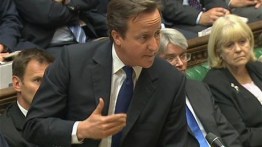
The real clash at PMQs today was between Ed Balls’ heckling and David Cameron’s temper. Balls was in a particularly chirpy mood. He started off his impression of an Australian slip fielder as soon as the Prime Minister arrived at the despatch box. The flat lining gesture made an early appearance, along with his signals telling Cameron to calm down.   But the moment when Balls seemed to really get under Cameron’s skin was when he pointed at the overwhelmingly male Treasury bench as Cameron talked about the importance of getting more women on boards. Two questions later, Cameron responded to a Balls’ heckle by saying that ‘the shadow Chancellor is wrong, even when he’s sitting down.

The Greek land mines that Cameron must avoid

From our UK edition

When the topic of Greece comes up at PMQs, David Cameron will need to avoid stepping on three land mines. The first task is not to say anything about what is going on in Athens, or Rome for that matter, that will exacerbate market anxieties. The second is a diplomatic challenge, to avoid anything that would sour Britain’s pitch ahead of the G20. The third, and perhaps most difficult one, is to keep his own backbenchers on side.   An ever growing number of Tories doubt that a 17 member Euro and fiscal union is in Britain’s, or Europe’s, interests. Already, some Tory backbenchers are talking about going to Greece, if invited, to campaign for a No vote. Cameron will need to avoid antagonising this group.

The post-riots landscape

From our UK edition

Back in August, the riots were being talked about as an event that would redefine our politics. But the economic news has been so relentless that the post-riots issues have received minimal coverage. This, though, doesn’t make them any less important. This week, we’re seeing two strands of the government’s response. First, Louise Casey starts work at the DCLG on dealing with the 100,000 problem families that the government has identified. Second, the May and IDS report on gangs comes out. So far what’s been trailed from the report is the proposal to create a new offence of intent to supply fire-arms.

The coming world oil order

From our UK edition

Following on from Daniel’s post this morning about a more inward looking America, Daniel Yergin has a very interesting essay in the Washington Post about how the changing balance of the US’s energy supplies are going to change its geo-strategic priorities. Yergin makes the point that by 2020, Canada could be a bigger oil producer than Iran and Brazil could be producing more than half of what Saudi Arabia is currently pumping out. Put these developments together with increased domestic energy production in the States itself and the fact that China is on its way to overtaking the US as the world’s largest oil consumer, and the geo-politics of energy begins to look very different.

Thoughts for the day

From our UK edition

Charles Moore and Matthew Parris, Spectator columnists both, represent two of the distinct philosophical and intellectual tradition that make up the Conservative party these days. Their columns today should give every Conservative pause for thought. Matthew is surely right that ‘For every protest junkie in a tent outside St Paul’s yelling: “Down with global capitalism” there are a thousand middle-income householders in Bromley, Bletchley and Barrow, studying directors’ pay and muttering: “It just isn’t right.”’. While the nub of Charles’ column is contained in these two sentences: ‘“Abolish wealth,” cried one of their posters.

The rebellion wasn’t just against Europe — it was also against Cameron’s style of leadership

From our UK edition

In the hours leading up to Monday’s vote in the Commons on the EU referendum motion, frantic negotiations took place between No. 10 and Nick Clegg’s office. Downing Street wanted the Liberal Democrat leader to stay away from both David Cameron’s statement on the European Council and William Hague’s speech in the debate. It feared that the presence of the deputy Prime Minister would inflame the tinder-dry Tory benches. One Tory remarked that this was a moment when the party would appreciate some space. Eventually they reached a compromise. The pro-European Clegg would be on the front bench for the statement. But he had to accept Cameron saying that he wanted to ‘refashion our membership of the EU’.

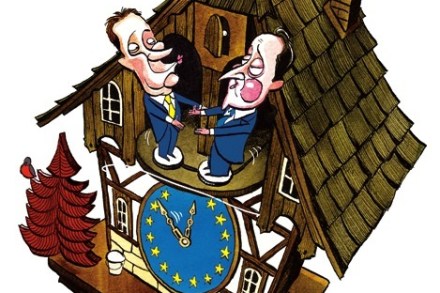
Politically, it’s cuckoo

From our UK edition

As David Cameron recovers from the biggest-ever Tory rebellion over Europe, he should beware of another dramatic, self-inflicted injury. The government has stopped short of giving its official endorsement to Rebecca Harris’s bill to move Britain on to Central European Time. But nor has it quashed the idea, which it could have done. Instead, government whips have allowed the bill to move to its next stage — the so-called money resolution. When this happens, the proposal will be significantly closer to becoming law.

The government goes cuckoo

From our UK edition

The government has, this morning, confirmed The Spectator's cover story: that it is considering supporting Rebecca Harris’s bill to move Britain onto Central European Time. As we argue in the magazine, such a move would be a huge mistake both practically and politically. Under the new regime, anyone living north of Manchester would have to endure two months of the year when it was dark when they started work at 9am. Any government that supported this move would look like a government of southerners, by southerners for southerners. The consequences for the Union could be horrendous too. Just imagine what a propaganda gift the new time would be for Alex Salmond.

Cameron’s Euro-migraine

From our UK edition

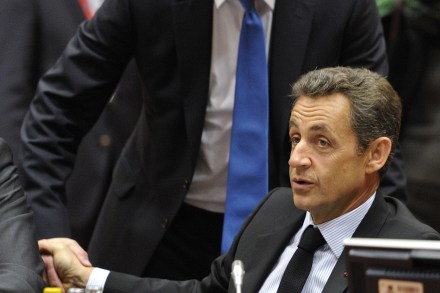
The picture of Nicolas Sarkozy not even turning around to shake David Cameron’s hand rather neatly sums up the Prime Minister’s problems right now. The danger for him is that the 17 Eurozone countries start writing a new set of rules and riding roughshod over the interests of those countries that are outside. This would be bad enough at anytime but with the Conservative party on the warpath over Europe it is a clear and present danger to the Prime Minister. As one ally of the Prime Minister said to me today the PM’s predicament is made even harder by the fact that many of the 10 countries outside the Eurozone want to eventually join the Euro and so have no desire to stand up to the 17.

The politicisation of poppies

From our UK edition

Dave Wooding rightly upbraids one Labour MP, Alex Cunningham, for trying to make political capital out of the fact that MPs on the government benches were not wearing poppies at PMQs yesterday. In another sign of how politicised our symbol of rememberance has become, the Defence Secretary Philip Hammond has written to his Cabinet colleagues providing guidance on when it is appropriate to start wearing a poppy. The note informed ministers that while there was no definitive view on when it was appropriate to start wearing one, that Thursday from noon would be a good time as that would coincide with the launch of the Royal British Legion’s campaign. Obviously, none of this detracts from the remarkable and important work that the Royal British Legion does.

Ellwood returns as PPS to the Minister for Europe

From our UK edition

Tobias Ellwood has been appointed as PPS to the Europe Minister David Lidington. The vacancy had been created when Adam Holloway decided to resign from the job so that he could vote for the EU referendum motion. This appointment is a nifty piece of party management. Ellwood was Liam Fox’s PPS but when Fox resigned, the new Defence Secretary Philip Hammond decided, to the resentment of some Tory backbenchers, not to keep him on. Instead, Hammond chose to appoint Clare Perry, a member of the 2010 intake who had worked for George Osborne and Hammond in opposition. Some Tory MPs, and particularly those who felt passed over, saw this as evidence that the party was being run by a clique. Ellwood’s return will be seen as an olive branch from the Cameroons to the party.

Cameron battles it out

From our UK edition

David Cameron came out swinging today at PMQs. Knowing that Ed Miliband would try and exploit the Tory rebellion over Europe on Monday night, Cameron went for the Labour leader. He called him a "complete mug" and mocked him as being detached from reality. At the end of the exchange, Osborne gripped Cameron's shoulder in congratulation – a sign that the pair knew that they needed a strong performance today to calm their backbenches. The other notable aspect of PMQs was its emphasis on the new political battleground: women. The Labour MP Gloria Del Piero asked the PM why the government was more unpopular with women than men, which gave Cameron a chance to rattle off the government's female-friendly initiatives.

Testing the Coalition’s commitment to growth

From our UK edition

The Beecroft report is an early test of the government’s willingness to put growth and jobs first. Replacing unfair dismissal with redundancy pay based on length on service would be a sensible step. The argument for it is two-fold. First, the more difficult it is to fire people, the more reluctant firms will be to hire people. Second, the current unfair dismissal culture not only makes firms reluctant to take people on but also swallows up a huge amount of time as firms try to jump through the legal hoops to avoid the threat of a legal challenge. Norman Lamb’s comments today that "to throw away employment protection for everyone would be madness" is being taken as ruling out Beecroft’s suggestion.

Cameron needs a new management style

From our UK edition

There seem to be three schools of thought among those close to the leadership about last night's rebellion. One even now maintains that the issue was handled as well as it could have been and blames the rebels for all the trouble. These people don't seem to realise that what they are saying is effectively that the Conservative parliamentary party is unmanageable. The second group says that the issue of Europe sends the Conservative party loopy. But they also concede that Number 10 got caught up in the madness too. The third lot are the ones who have grasped the significance of last night's events. Despite being loyalists, they are in no doubt about the need for Cameron to change his style of party management.

43 percent of Tory backbenchers vote for an EU referendum in defiance of David Cameron

From our UK edition

The scale of tonight’s rebellion is quite remarkable, 43 percent of Tory backbenchers have defied a three line whip—and we are only 18 months into the parliament. Indeed, if you factor in the abstentions more than half of Tory backbenchers rebelled. This should be a wake-up call to David Cameron. He needs to develop a proper policy for repatriating powers from Brussels, change his style of party management, and reform the Whips office.  This rebellion will encourage the hard-line Euro-sceptics to try again and again. They will reckon, rightly, that as the parliament goes on the number of potential rebels will grow.

Europe Minister’s PPS quits over referendum vote

From our UK edition

Adam Holloway, PPS to the Europe Minister David Lidington, has just effectively quit his job by giving a speech setting out his intention to vote for the motion. That the Europe Minister’s PPS is walking over this issue is an embarrassment for the government and a sign of how strongly opinion on this issue is running. The most striking thing about William Hague’s speech was the near silence in which it was listened to on the Tory benches. When Hague mocked the motion, he didn’t draw laughs from even the most sycophantic backbenchers. Whatever happens tonight, this debate has widened divisions on the Tory side. There is a real danger that without urgent action, up to a third of the backbenches will become actively hostile to the Prime Minister.

Cameron’s warm up act

From our UK edition

David Cameron's statement on the European Council served as the warm up act for this afternoon's debate on the EU referendum motion. Cameron attempted to show his backbenchers that he is serious about bringing back powers from Brussels. He stressed that he had already prevented the transfer of further authority to the European Union without a referendum and that he "remained committed" to repatriating powers. In an attempt to flash a bit of leg to his own side, he said that when the debate about treaty change starts "every country can wield a veto until its needs are met." But Cameron remained vague about what powers he would like to see returned.

Whipping up a storm | 24 October 2011

From our UK edition

It looks like about a third of Tory backbenchers will rebel in tonight’s vote on an EU referendum. 18 months into government, this is a massive rebellion and one that should make the Prime Minister think again about his style of party management. Those in Number 10 who claim that many of the rebels will ‘never be happy’ are missing the point that, while there may be a hardcore of MPs keen to rebel, many more are reluctant rebels who feel they have been pushed into it by Cameron’s failure to engage with the party on the whole issue of Europe. One reluctant rebel said to me over the weekend: if you write anything about this please say that the whips office needs sorting out.

Liddington: EU vote should follow a new treaty

From our UK edition

David Liddington, the Europe Minister, has just told the Murnaghan Show that the moment for a referendum on the European Union is once a treaty change has been agreed. Liddington argued that then everyone would know what they were voting on. This is quite a significant shift in the government’s position. Up to now, the position has been that there would only be a referendum if yet more powers were transferred from Westminster to Brussels. Liddington appeared to be saying that a vote would follow any new treaty, even one that brought powers back. This moves the government far closer to a position of renegotiation followed by a referendum.