James Forsyth

James Forsyth

James Forsyth is former political editor of The Spectator.

Labour’s new golden girl

When I arrive to interview Stella Creasy in one of the cafés in parliament, she’s sitting in a meeting with two earnest, wonkish types, the coffee mugs having been cleared from the table. As time ticks by, her body language becomes urgent, but she’s too polite to wrap it up. I begin to see why her rather protective assistant insisted that this interview should be no more than 30 minutes. Creasy, though, has a lot to say and we speak for an hour before she goes off to write a speech on this summer’s riots. She’s a politician in demand. MPs enjoy few things more than posing as talent scouts. Within hours of a new intake arriving in parliament, the old hands start picking out the ones who they think will go far.

Europe’s debt overspill

That Italy is now paying around 7.8 per cent for two-year borrowing, compared to the 4.5 per cent it was paying just last month, is a reminder that the imposition of a technocratic government was far from a solution to the country’s problems. With €8 billion more debt to be sold on Tuesday, there’s little respite for Italy coming up. One does have to wonder how long they can carry on like this.   But Italy’s troubles need to be seen in conjunction with what happened at the German bund auction this week.

Miliband’s opportunity in the economic debate

Political debate is going to be dominated by the economy between now and the autumn statement. Ed Miliband is trying to use this moment to persuade the public that the Coalition's economic policies have failed. By contrast, the Tories want to highlight how much deeper trouble the country would be in if it did not have the confidence of the bond markets. The Tories hope that this 'stay close to nurse for fear of something worse' approach will eventually deliver an election victory for them in 2015, given how hard Labour is finding it to regain credibility on the economy. As Ben Brogan wrote the other day, this strategy worked for them in 1992 — the campaign on which both Cameron and Hilton cut their political teeth.

In PMQs, a preview of next week’s battles

Today's PMQs was a preview of the debate we'll be having after next week's autumn statement. Miliband, struggling with a bit of a cold, tried to pin the economy's problems on Cameron. The Prime Minister's retort was 'who would want to put the people responsible for the current mess back in charge'. It was a simple message and one that carried him through the session. The other feature of today's joust was also a preview of next week: a tussle over the strikes. Cameron said strikes were the 'height of irresponsibility'. He also made sympathetic noises when Tory MPs asked about imposing minimum thresholds for strike ballots.

Huhne’s partner involved in lobbying row

Another lobbying scandal has hit the coalition. The Times is reporting that Carina Trimingham, Chris Huhne’s partner, boasted of having ‘excellent contacts… from Cabinet members to more junior ministers’ to a lobbying firm she was seeking work with. She also allegedly urged this firm to ‘make use of my skills and contacts.’ Trimingham has told the paper that she will not take on any role that involves energy and climate change so there will be no conflict of interest. She also points out that having worked in politics for more than a decade Huhne is not her only contact. A spokesman for the Energy and Climate Change Secretary says that Trimingham has offered assurances that she won’t work in any area under his department.

Party funding reforms won’t happen

The recommendations of the Committee on Standards in Public Life's review into party funding are not going to happen. Both the Labour and Tory members of the review have issued notes of dissent to it. Nick Clegg has, on behalf of the government, issued a statement gently rolling the report into the long grass. Interestingly, the Tory party - which was for a while attracted to additional state funding - has now ruled it out completely. Unlike Clegg's statement saying it shouldn't be done while economic times are so tough, the Tory rejection of it is not time limited. One other thing worth noting is that Labour, via Margaret Beckett's dissent, has not set itself against trade union members having to opt in to pay the political levy.

There’s merit in the Coalition’s housing proposals

The government's announcement on housing today is an attempt to square the circle. On the one hand, a return to excessive lending and sub-prime mortgages is clearly not a good thing. Critics say, with justification, look where government backed mortgages got America. But on the other, there are clearly problems when people who aren't fortunate enough to have parental help aren't getting on the housing ladder until well into their thirties. Conservatives who understand the importance of a property-owning democracy should be concerned about this. The Coalition's solution — and this is the most genuinely coalition piece of policy we've seen in months — is partial government indemnities for people taking out 95 per cent mortgages on new build properties.

The government’s airport conundrum

There is a growing acceptance in government that the South East needs more airport capacity. But, as today's Times outlines, there's nowhere near agreement on how best to achieve this. The big problem with a new airport on the Kent coast or 'Boris Island' is that the Dutch would not be prepared to open up the necessary air space. They control most of the air above the North Sea under international treaty because of Schiphol airport. I understand that feelers put out to the Dutch on this matter have been rebuffed. Another option is Heathwick. The idea is that an extra runway is built at Gatwick and then the two airports are joined together by a high-speed rail line. Initial work suggests that journey time between the two airports would be just 15 minutes.

The vote in Spain

The expected triumph of the centre-right Popular Party in today’s Spanish elections promises to have some interesting consequences for British politics. The PP have been in close touch with the Tories here and plan to introduce an emergency budget based on the Osborne model: a clear deficit reduction plan combined with an increase in the retirement age. They hope that this will reduce the ever-upwards pressure on Spanish bond yields. Certainly, if the PP approach does succeed in gaining Spain credibility with the bond markets, it will bolster the coalition’s arguments about the importance of sticking to Plan A.

Riots and responsibilities

The riots are fast in danger of becoming the forgotten issue in our politics. The social and cultural problems that they laid bare have been knocked out of the news by the continuing financial and political drama in the Eurozone But if we, as a society, don’t work out how to address these problems then they will simply get worse. The essay by David Lammy, the MP for Tottenham, on what happened this summer in The Guardian magazine today is thought-provoking even if I don’t agree with all of its conclusions. . Interestingly for a man of the left, Lammy accepts the points that the riots were about culture as much as anything else. As he writes, ‘the mothers sitting nervously in my surgeries were not just talking about money.

Politics: Recovery begins at home

There’s a pattern emerging to George Osborne’s autumn. He gives a big domestic set piece speech on growth and then immediately leaves the country for a meeting of European finance ministers. It is what he did straight after his conference speech last month and what he will do after the growth review on 29 November. It is a reminder that the fate of the British economy is uncomfortably linked to the fortunes of the floundering eurozone. The Prime Minister and the Chancellor have never been more worried about the economic outlook than they are now. One Downing Street aide remarks: ‘it is not quite sleepless nights territory. But it is bloody serious.’ Fears of a chaotic break-up of the euro have been heightened by the events of the past few days.

Cameron and Merkel: all smiles but no progress

David Cameron and Angela Merkel were clearly keen to show that, whatever the tensions over the role of the European Central Bank, they still get on. I lost count of the number of times in their press conference that they used the word 'good' to characterise their relationship and their discussions. But there did not appear to have been any actual progress on how to deal with the current crisis. Certainly, there was no softening of Germany's opposition to using the ECB as the backstop for the Eurozone. Merkel conceded that she had raised a European-only financial transactions tax with the Prime Minister but that, unsurprisingly, no progress had been made on this front.

Benefits won’t rise in line with September’s inflation figures

Jill Sherman, the Whitehall editor of The Times, reports tomorrow that the government will not raise benefits in line with September’s inflation figures as normally happens. However, there’ll be no freeze in benefits. Instead, they’ll rise in line with a six month inflation average which stands at 4.5 percent rather than September’s 5.2 percent figure. This move will save the government a little less than a billion pounds as pensions will be exempt from the move. I suspect that there’ll be objections to this shift from various quarters. But it is worth remembering that 4.5 percent is far larger than the pay rises most private sector workers will see while there’s a wage freeze in the public sector.

Miliband finds his niche

I spent this morning with Ed Miliband on a trip to a factory in Sunderland. Miliband was visiting the Liebherr plant there, which manufactures cranes. The centerpiece of the visit was a Q&A with the workforce. Now, a factory in the North East is not the toughest venue for a Labour leader to play. But Miliband appeared far more comfortable in this setting than he does when giving a traditional speech from behind a podium.   Unlike Miliband’s Q&A at Labour conference, the questions were not softballs or traditional left-wing fare. One set of three questions were: why don’t we close the borders, bring back national service and do more to clamp down on benefit cheats.

Unemployment rate highest in 15 years

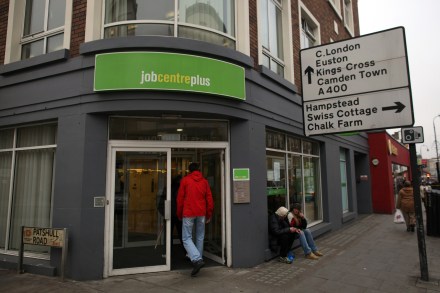
Today's unemployment figures do not make for cheery reading. Youth unemployment is up to over a million and unemployment overall has reached 2.62 million, meaning that the unemployment rate is the highest it has been for 15 years. Laura Kuenssberg tweets one particularly striking statistic: 'Number of UK Nationals in work fell 280k compared to this time last year, number of non-UK Nationals in work increased 147k over same time' This suggests that it's a touch too simple just to say that there are no jobs out there. It also means that we really should think about why non-UK nationals are proving so much more adept at finding work than their British counterparts.

Cameron stamps on the SpAds

David Cameron summoned all Tory special advisers to Downing Street for a meeting this afternoon. He wanted, I understand, to warn them that too much of the coalition's internal workings were being briefed out to journalists. He made it clear that he wants an end to process stories appearing in the papers.   Downing Street has been infuriated by recent reports of tensions between Steve Hilton, Cameron’s senior adviser, and George Osborne and is keen to stamp on anything that keeps this — rather misleading — story going. There are also worries about the party being seen as divided again, a return to the old Tory wars stories of the 1990s.    Interestingly, Cameron said that he did not think that many leaks came from officials.

Cameron shows his eurosceptic side

David Cameron's speech at the Lord Mayor's Banquet last night was a significant moment — the clearest articulation yet of his European Policy. In the crucial paragraph, he declared: 'we sceptics have a vital point. We should look sceptically at grand plans and utopian visions. We’ve a right to ask what the European Union should and shouldn’t do and change it accordingly. As I said, change brings opportunities. An opportunity to begin to refashion the EU so it better serves this nation’s interests and the interests of its other 26 nations too. An opportunity, in Britain’s case, for powers to ebb back instead of flow away and for the European Union to focus on what really matters.

Whitehall could use some Google thinking

Today's New York Times has a fun piece about Google X, the secret lab where Google is working on its special projects. The ideas are, suitability, far out. They are, apparently, looking at connecting household appliances to the internet and creating a robot that could go to the office so you don't have to. It would be tempting to laugh if not for what Google has already pulled off. Indeed, the NYT reports that Google's driverless car might soon go into production. But in political terms what struck me about the article is that this is the culture that Steve Hilton embraces. Remember that when Hilton was working from California, he had a desk at Google. To someone from this mindset, the ideas that the Lib Dems are so keen to mock are not so crazy.

Cameron’s frustration with ‘quick fix’ critics

No columnist is closer to David Cameron than Bruce Anderson. The Spectator’s former political editor spotted Cameron’s potential back in 1992 during the general election campaign and ever since he has been an advocate of the Cameron cause. In 2003, he wrote a piece for The Spectator in which he tipped Cameron for the premiership.    The two remain in close touch and Bruce has, I’m told, been a recent guest at Chequers. So, it seems reasonable to assume that Bruce’s rebuttal of Cameron’s right-wing critics is, to some extent, a reflection of the Prime Minister’s own thinking.

Barroso’s warning

José Manuel Barroso’s article in The Observer today is a plea for relevance. When you cut through the usual EU jargon, what you find is the Commission President—predictably—declaring his opposition to German talk of an inter-governmental treaty among the 17 Eurozone members. He’s also warning the smaller Eurozone states that without the Commission’s protection their interests will be trampled on by the Germans and the French. This is what he means when he writes that  “all member states need to support and trust the common supranational European institutions that were created after the second world war.