James Forsyth

James Forsyth

James Forsyth is former political editor of The Spectator.

Passed over

The thirty ministers of state in this coalition could be forgiven for feeling a bit unloved. They are notionally the most senior members of the government after the Cabinet. But every time there has been a Cabinet vacancy, they have been passed over. The three Cabinet positions that have become available have gone to a backbencher and two parliamentary under secretaries respectively. Judging from the talk around Westminster, Cameron and Clegg’s respective decisions to bypass the ministers of state has left them feeling a bit sore and rather nervous about the reshuffle, currently expected post-Olympics. Many ministers of state regard this reshuffle as their last chance to make Cabinet.

Miliband gets the better of Cameron on the NHS

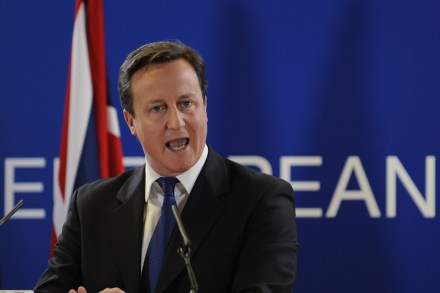
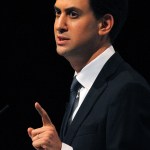
As expected, Ed Miliband went on the NHS and it helped deliver him a points victory. Whenever Miliband raises the issue at PMQs, David Cameron’s rather overly macho body language gives away that he knows he is playing on a sticky wicket. The exchanges today were not particularly enlightening but Miliband had the better of them. There was, though, one effective counter-attack from Cameron where he compared what is happening to the NHS in England to what is happening in Wales where the devolved administration is sticking with the status quo. There’s mileage in this argument if the coalition has the patience to develop it. But part of the problem is that the coalition is so clearly unenthusiastic about its own reforms.

Miliband to keep pressing on with his NHS attacks

The last PMQs before recess gives Ed Miliband a chance to have another go at the coalition’s NHS reforms. I suspect that the ‘Andrew Lansley should be taken out and shot’ quote that appeared in Rachel Sylvester’s column (£) will make an appearance at some point.   Miliband will keep going on the NHS because he knows it is one of the Tories’ biggest vulnerabilities and one of the few subjects on which Cameron isn’t confident attacking. Based on past performance, any PMQs where the focus is on NHS reform will produce at least a score draw for the Labour leader.   But I still don’t expect Cameron to move Lansley anytime soon.

Osborne defends ‘rewards for success’

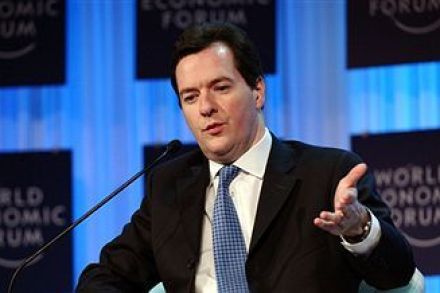
George Osborne’s speech to the Federation of Small Businesses tonight tries to offer some reassurance that the coalition isn’t caving into the anti-business zeitgeist. Referring to the recent rows over executive pay, he deplores rewards for failure before saying ‘a strong, free market economy must be built on rewards for success. There are those who are trying to create an anti-business culture in Britain – and we have to stop them.’ How reassuring business leaders will find this remains to be seen. As Robert Peston reported yesterday there’s a lot of grumbling from them about the government’s handling of the Hester bonus and other matters.

Cameron’s coming battle over the ECHR

The coming release of Abu Qatada on bail is going to put bellows under the whole debate about the European Court of Human Rights. In his recent speech to the Council of Europe, David Cameron rightly protested about a situation with terror suspects in which ‘you cannot try them, you cannot detain them and you cannot deport them.’ We will now find out how quickly Cameron is prepared to act on this issue. If Cameron wants to makes changes to the Courts and the Convention, then he is going to have to get agreement from every member of the Council of Europe. There’s no guarantee that he’ll be able to get this and it will take an awfully long time.

An important intervention on energy policies, but will the Lib Dems pay attention?

The economist Dieter Helm is one of the few policy thinkers respected on both sides of the coalition. Oliver Letwin is a long-standing friend of his and Clegg’s office views him as one of the best economic brains in the country. All of which makes Helm’s attack on Chris Huhne’s energy policies in The Times today as interesting as the anti-wind farm letter signed by a 101 Tory MPs. Helm argues that the policy of huge subsidies for renewables is a mistake and that shale gas is a game-changer. Helm writes that, while renewables have a role to play, ‘Coal burning is not going to go away because of wind. Gas is one transition option, a bridge to decarbonisation.

The government will have to fight for Lords reform

House of Lords reform is one of those subjects that make most people’s eyes glaze over. But it is going to dominate the next parliamentary session. The Queen’s Speech will include a bill for elections in 2015 for 20 per cent of the seats in the Lords using a ‘Proportional Representation’ voting system. This bill will take an age to get through the Commons, where it has to start if the coalition is to use the Parliament Act to push it through, let alone the Lords. One of the things that’ll be fascinating to watch is how large a Conservative rebellion there is on the issue. There are already Tory MPs mobilising to block the kind of Lords reform that Clegg wants.

The danger for the Lib Dems

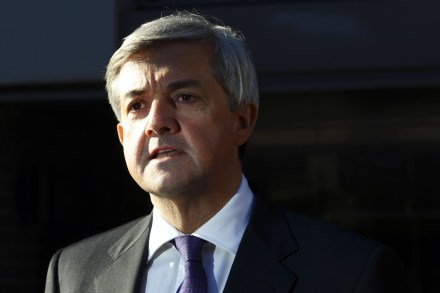
Today’s papers make clear just how damaging the next phase of this whole Chris Huhne business could be to the Liberal Democrats. The danger is that because this story is a very human drama it cuts through to the public in the way that some minor dispute over policy would not. The Mail, for instance, reveals that Nick Clegg’s wife Miriam called Vicky Pryce as soon as the news broke about the charges saying ‘If you need somewhere to stay, if the kids need support, we’re here’. Patrick Wintour is surely right when he writes that the concern for the Liberal Democrats ‘must be the consequences of a drawn-out court case.

Politics: Parliament’s power surge

Bob Diamond, the chief executive of Barclays bank, is not a man inclined to bend to the public mood. ‘There was a period of remorse and apology for banks,’ he told MPs this time last year. ‘I think that period needs to be over.’ His remarks presaged the coming confrontation between Diamond and Parliament over the Barclays bonus pool. He may think the bankers’ period of remorse and apology should be over but MPs and the public do not. The Labour leadership, sensing a political opening, is determined to have the Barclays bonuses debated on the floor of the House. We will soon find out where this Diamond scores on the Mohs scale of hardness.

Clegg confirms the reshuffle

Nick Clegg’s statement just now was notable for how he stressed that he would like Chris Huhne back in the Cabinet if Huhne emerges from these current difficulties. This echoes what he said in his exchange of letters with the departing Energy and Climate Change Secretary. Cameron — notably — made no such comment in his letter to Huhne.   The reshuffle is widely as expected with Ed Davey coming into the Cabinet and Norman Lamb taking his post in the Business Department. But David Laws, who is already acting as an unofficial policy adviser to Clegg, doesn’t make a formal return to the government. Instead the spare pay roll post goes to Jenny Willott, who was a tuition fees rebel.   I suspect that the Tories will be happy with this ‘shuffle.

What Huhne’s case means for the Lib Dems

The biggest danger for the Liberal Democrats from this coming trial is that it turns the party into the butt of everybody’s jokes. Having gone into government and lost much of their original support by taking tough decisions, they have consoled themselves with the hope that they have now established themselves as a serious political party.   Their aim at the next election will be to present themselves as a credible party of government who will make the Tories more compassionate and Labour more fiscally responsible. But at the top party they are aware that there is a danger that a trial of Chris Huhne and his ex-wife Vicky Pryce could make the party appear to be a bit of a joke, airing much of its dirty laundry in public.

Clegg faces a potential dilemma over Chris Huhne

Neither David Cameron nor Nick Clegg is a fan of Chris Huhne. The Prime Minister would, by all accounts, shed few tears if Huhne had to step down.   But I suspect that the deputy Prime Minister will be hoping that tomorrow does not bring any adverse developments for the Energy and Climate Change Secretary. If there were to be charges, Clegg would be placed in a very difficult position. He would, despite his efforts to hide behind the Cabinet Secretary, have to decide whether the man he narrowly beat to the Lib Dem leadership could stay in post. This would be a lose-lose situation for Clegg for obvious reasons.   Now, it should be stressed that Huhne denies any wrongdoing. Also beware of anyone making any confident predictions about what will happen tomorrow morning.

Bankers need to realise that things have changed

In a speech tomorrow, Ed Miliband will call for ‘one nation banking’. The Labour leader will argue that banks have to show that they are part of the society in which they operate.   But, perhaps, most interesting is Miliband’s point — previewed in the political column this week — that the behaviour and pay structures of banks are fair game for parliament because they are ‘either directly or indirectly supported by the taxpayer.’ Labour will, indeed, propose a vote on the broader bonus culture. The clear target of this motion will be Barclays and Bob Diamond.   Before the bailouts it would have been easy to dismiss all this as left-wingery gone mad.

Labour vote to the Tories’ benefit

Labour has just marched into the trap that George Osborne set them and voted against the benefits cap — again. As one gleeful Tory says, ‘we’re going to make sure everyone in the country knows how they voted on this.’   I suspect that in every Labour-held marginal that the Tories need to win to get a majority in 2015 the benefit cap will feature prominently on Tory literature. Labour MPs will be faced with the unenviable task of explaining why an able-bodied household where no one works should receive more in benefits than the average wage.   The cap chimes with the public’s sense of fairness — as the huge support for it shows.

Tories push benefit cap in PMQs, Miliband ignores it

As expected, the Tories did everything they could to make the benefit cap the subject of PMQs. One Tory MP managed to slip in a question on it just before Miliband got up, allowing Cameron to press the Labour leader on the issue even before he had started speaking. Tory MPs kept coming back to the benefit cap — there were five questions on it in all — allowing Cameron to repeatedly mock the Labour front bench for not saying what its position is. ‘Just nod — are you with us or against us?’ was one of the lines Cameron tried to goad them with. But in the main clashes between the two leaders, which were on top pay and the NHS, Miliband actually did pretty well.

The battle for ‘fairness’ continues

Today’s PMQs will be another skirmish in the battle for fairness. All three parties know that there is no more potent word in British politics at the moment than fairness and they all want to be its champion. But what will make PMQs interesting today is that Cameron and Miliband each have a powerful weapon in the fairness debate, but also a vulnerability. Miliband’s weapon is bankers’ bonuses – the government’s inaction over Stephen Hester’s bonus has given him plenty of material. But he’s acutely vulnerable over the benefits cap. Cameron will be desperate to move the debate onto this territory.

Fred shredded down to size

The removal of Fred Goodwin’s knighthood serves the coalition’s political purposes. It shows them being tough on a bad banker and reminds everyone that these problems happened on the last government’s watch and that Alex Salmond was cheering on RBS’s bid for ABN Amro. There are even some in government who are up for a fight over clawing back part of his pension or past bonuses believing it would put both Goodwin and the human rights act in the dock. This is not to say that the removal of his knighthood was not merited. Goodwin didn’t do much of a service to banking, after all. There’s another lesson in this: honours shouldn’t be awarded to people when it is too early to know what they have actually achieved.

Modernisation 2.0

One of the flaws of Tory modernisation was that it was never interested enough in pounds and pence. Social issues, the environment and public service reform were what the modernisers specialised in, not economics. But tonight’s Macmillan lecture by Nick Boles, one of the most intellectually influential modernisers, is devoted to the subject of how Britain’s global competiveness in the global economy can be improved. His argument is that: ‘What really threatens the general wellbeing of the British people is the stalling of productivity growth and the certainty that the next 20 years will expose them to competition that is vastly more intense than anything we have ever seen.

Peston: Hester will not take bonus

Stephen Hester’s decision to waive his bonus, revealed by Robert Peston just after 10 o’clock, will be a source of great relief to David Cameron and George Osborne. A story that could have dragged on for weeks, undermining their argument about fairness has just lost most of its potency. Ed Miliband, though, will be able to claim — with some justification — that it was the threat of a Commons vote on the matter that led to Hester renouncing his bonus. But this isn’t quite the end of this business. There’s now the question of what happens to the bonuses for other members of staff at RBS and then there is next year’s round. There’s also the whole issue of RBS’ status.

Labour seizes on Hester’s bonus

The issue of Stephen Hester’s bonus is going to carry on hurting the government. Labour has now announced that it will use an opposition day debate on 7 February to hold a parliamentary vote on the issue. The coalition will either have to lose, an admittedly non-binding vote, or whip its MPs to go through the lobbies in defence of Hester’s bonus. As Labour showed when it used the threat of a Commons vote to push Rupert Murdoch’s News Corp to abandon its bid for full control of BSkyB, the bully pulpit of Parliament can be extremely effective. These votes also bring out tensions within the two coalition parties. I imagine that Lib Dem MPs will be even less keen than Tory ones to support the Hester bonus.