James Forsyth

James Forsyth

James Forsyth is former political editor of The Spectator.

The return of the Tony Blair Show

From our UK edition

The Tony Blair Show was back in town today. The former Prime Minister was clearly less nervous in front of this inquiry than he was in front of Chilcot; there was little of the passion and intensity in his voice that there was that day as he defended his decision to take the country to war. But Iraq, again, provided the most memorable moment of his appearance so far as a protestor burst into the courtroom and accused him of being a ‘war criminal’. (The ease with which security was breached both in Parliament for Murdoch’s select committee appearance and today at Leveson is something that should worry us more than it does.) On the substance of the inquiry, Blair was predictably smooth. He slipped away from any difficult question in his usual style.
The coalition’s euro-differences start to boil over

From our UK edition

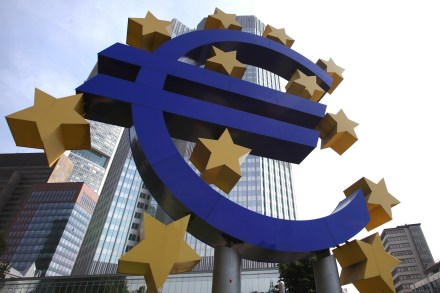
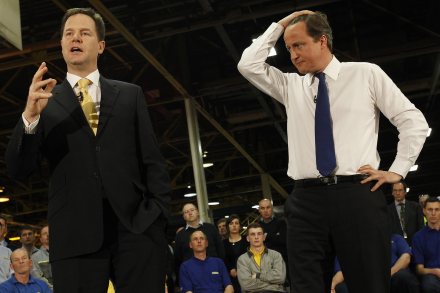
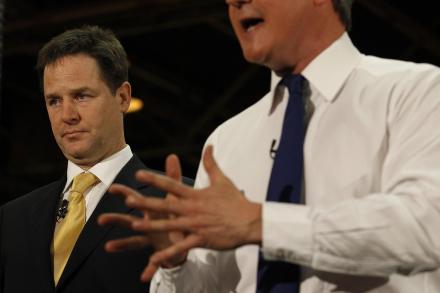
Nick Clegg did not show his Berlin speech on the Euro crisis to Number 10 or the Foreign Office before releasing it to the media. This is quite remarkable. Up to now, there has been a recognition that while the Liberal Democrats may try and differentiate themselves from the Prime Minister on various things, the government must speak with one voice on the deficit reduction strategy and foreign policy. No credible country can afford to send mixed messages to either the bond markets or foreign governments. Clegg’s freelancing on this issue is a reminder of how Europe remains the biggest ideological fault-line in the coalition. When David Cameron formed the government, he hoped that the whole Europe issue could be parked until he had a majority of his own.

A shift in the government’s thinking about the Eurocrisis

From our UK edition

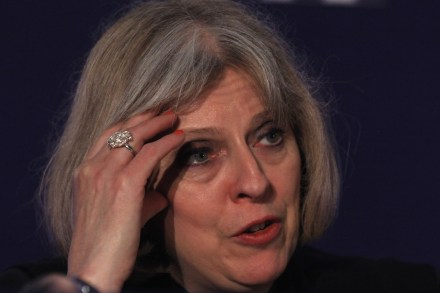
Theresa May’s suggestion that Britain could suspend the free movement of people in the event of a Eurozone break up is a reminder of just how transformative an event the falling apart of the single currency would be. The Home Secretary is a cautious politician who picks her word carefully, so when she says that the government ‘will be doing contingency planning’ about the immigration implications of a Eurozone break-up you know it is serious. One of the things that makes this such an intriguing development is that it suggests a shift in government thinking on the severity of the crisis that could be coming.

Ukip’s new deal

From our UK edition

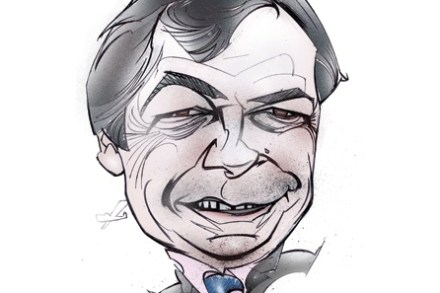
Nigel Farage is relishing the chance to sow discord in Tory ranks Nigel Farage looks round with mild disgust at the antiseptic Westminster restaurant in which we’re meant to be having lunch. The leader of the United Kingdom Independence Party tilts his head back and sniffs the air theatrically, then whispers, ‘Why don’t we just go to the pub?’ We head off down the street. Farage is in a pinstripe suit with a Ukip golf umbrella under his arm. He puffs on a cigarette, his gait — half-jovial, half-military — straight out of an Ealing comedy. When we get to the pub, he greets his pint of bitter with an enthusiastic cry of ‘First of the week!’ before taking a lip-smacking gulp.

Travel special – Lake District: All quiet on the Westmorland front

From our UK edition

The Lake District is, to my mind, the most relaxing place in England. I think it’s the good walking, sheep gambolling on the fell-side and exceptional food that makes it so very therapeutic. At any rate, I think we can all agree that there are few things better in life than a day’s walking on the fells punctuated by a Huntsman’s pie and a pint of Hawkshead bitter. I spent countless childhood holidays in the lakes, swimming in the Duddon and climbing mountains, fuelled by that same Kendal Mint Cake that propelled Edmund Hillary and Sherpa Tenzing to the top of Everest. But I only realised recently, since my parents have returned there, how fond I am of the place.

Hunt has questions to answer

From our UK edition

Adam Smith’s Leveson ordeal is now over. The testimony we’ve heard from Smith and Fred Michel has left Hunt’s position weaker in one key regard. The crucial allegation is that he misled Parliament when he said that he had not tried to influence the quasi-judicial decision on News Corp’s bid for BSkyB when it was Vince Cable’s responsibility. It is hard to see how this squares with Hunt’s memo to David Cameron in November 2010 warning of the consequences for the media sector of the bid being blocked. Labour is also attacking on the grounds that Hunt should never have been given responsibility for making this quasi-judicial decision given the views expressed in the memo. But I think Hunt is on safe ground here.

Leveson continues, but it is a sideshow to the Euro drama

From our UK edition

Fred Michel’s testimony this morning at the Leveson Inquiry was embarrassing but not devastating. The texts between him and Jeremy Hunt are cringe-worthy but my read is that the Culture Secretary is not in a weaker position than he was this morning. More important for Hunt’s survival prospect is the appearance of his former spad Adam Smith this afternoon. The question is, did Hunt not know of the extent of contact between Smith and Michel? Everything going on at Leveson, though, is a sideshow compared to the economic news and the storm brewing on the continent. On that note, it does seem odd that Nick Clegg is suggesting that the seventy percent of German voters who would like Greece to leave the euro are irrational.

What Farage’s offer means for David Cameron

From our UK edition

Nigel Farage’s suggestion of joint UKIP / Tory candidates at the next general election is part serious offer, part mischief-making. Farage knows that if the polls stay the same this will be an appealing offer to Tory candidates. As one leading Eurosceptic Tory MP said to me when I put the idea to him, ‘the maths says is has got to be done.’ There are an increasingly large number of Tory MPs who fear that they can’t hold their seats unless they can win back the voters and activists who have gone over to UKIP. They will be attracted to the concept of an electoral alliance with UKIP.

Cameron loses his rag

From our UK edition

Ed Balls succeeded in getting David Cameron to lose his rag at PMQs today. The shadow Chancellor sledged the PM throughout the session, apparently asking him how many glasses of wine he had had today and the like. Towards the end of the session, Cameron snapped and called Balls ‘the muttering idiot sitting opposite me’. The House erupted. Ed Balls looked even more pleased with himself than usual while the Tory benches cheered the line. The exchange will put Cameron’s temper up for discussion which is Downing Street’s second least-favourite topic after the PM’s work-rate. But I suspect that there’ll be limited cut through to the public: politicians insulting each other in the House isn’t exactly new.

The pressure on Cameron to call Clegg’s bluff

From our UK edition

The debate over the Beecroft report is now the politics of the viscera. For Tory MPs it has become symbolic of how the Liberal Democrats — and Vince Cable, in particular — are holding them back from doing what they need to get the country out of this economic emergency. On the Liberal Democrat side it has become emblematic of everything about Steve Hilton — ‘Thatcher in a t-shirt’ as they dubbed him — that annoyed them. Adrian Beecroft’s intervention today in the Telegraph and the Mail is bound to increase Tory tensions on the matter. He tells the Mail that Cameron and Osborne have ‘given up’ on unfair dismissal.

A matter of conscience

From our UK edition

Personally, I’m in favour of gay marriage. But it is precisely the kind of issue that should be subject to a free vote and all the indications are that the government intends that when the legislation comes to Parliament it will be. So, it shouldn’t be a big deal that the Northern Ireland Secretary Owen Paterson feels that he can’t support it, a view he expressed in a letter to a gay constituent that Politics Home has obtained a copy of. There are several other ministers who feel the same way. Indeed, I understand that the Chief Whip himself has grave reservations about the matter. It would be deeply intolerant to attempt to whip these ministers to vote against their consciences.

Susie Squire to take over as Tory press chief

From our UK edition

Senior Conservative sources are confirming that, as Guido Fawkes reported this morning, Susie Squire will take over from Henry Macrory as the party’s head of press. Squire, who is currently Iain Duncan Smith’s media special adviser, is highly-thought of in Number 10 where she is credited with ramming home the party’s advantage over Labour on welfare. The decision to move someone from such an important department to CCHQ shows that Number 10 has recognised that coalition requires the party to have a more distinctive presence. What also makes the appointment noteworthy is that in her current brief Squire has not been afraid to mix it with the other parties.

Bust-up postponed

From our UK edition

A coalition bust-up was avoided today by Vince Cable’s absence from the Commons for the urgent question on the Beecroft Report. Tory MP after Tory MP got up to make warm noises about a report which Vince Cable has been gleefully trashing, describing one of its proposals as ‘bonkers.’ That Cable couldn’t make it back in time from the north of England to appear at the dispatch box will have been a relief to the Tory whips; one of them was distinctly concerned about how the Tory benches would treat the Business Secretary when he heard about the UQ earlier. Indeed, it was telling that when Chris Heaton-Harris attacked Cable and Lord Oakeshott, Mark Prisk — the Tory minister answering the question — did not rebuke him.

Will Nick ignore Vince and go for growth?

From our UK edition

Vince Cable’s reaction to the coming publication of the Beecroft report — which Pete blogged earlier — suggests that the memo on a more cooperative, coalition attitude to growth hasn’t reached the Business Department. The full-on hostility from Cable’s crew to the proposals shows that he remains set against any further deregulation of the labour market. The question now is whether Nick Clegg overrules the Business Secretary. Relations between Clegg and Cameron are warmer at the moment than they have been for a while, the pair dined together with their wives on Thursday night. Aides to both men have been acknowledging in recent days that both sides are going to need to give something in pursuit of growth.

The need for a coalition attitude to growth

From our UK edition

The publication of the Beecroft report on Thursday is a big moment for the coalition. The Lib Dems have long been dismissive of it but it is now a crucial part of any coalition grand bargain on growth. In recent days, those close to David Cameron and Nick Clegg have been talking about a more cooperative, coalition attitude to growth. There’s been a recognition that the two sides both need to make some concessions to give the coalition a more adequate growth strategy. As one senior figure puts it, the coalition needs to show ‘more radicalism and unity on growth’. This is what makes the publication of Beecroft on Thursday so important.

The strains on the Cameron-Hilton relationship

From our UK edition

I suspect that ‘Weekend secrets of the “chillaxing” Prime Minister’ (£) is one of the last headlines that Number 10 wanted to see this Saturday. It is acutely sensitive about the idea that Cameron doesn’t work hard enough, a charge that it thinks is as unfair as it is damaging. But perhaps more interesting than the details of the Prime Minister’s Sunday routine — a ‘crap film’ and a few glasses of wine at lunch — is what Francis Elliott and James Hanning reveal about the Cameron-Hilton relationship.

Politics: Don’t bet on Ed Miliband to win it for the Tories

From our UK edition

In the past few difficult months, the Cameroons have taken comfort from their belief that Ed Miliband will never be prime minister. After the local elections earlier this month, when Labour took far more Tory seats than expected, the silver lining for the government was the thought that Ed Miliband would now stay on as Labour leader until 2015. When asked to justify their conviction that Miliband will never make it to Downing Street, the Cameroons offer three reasons. First, they reckon that the public just can’t see him as PM material. Second, they expect that the next election will be fought on the economy, the area where Labour is weakest.

Merkel heads to the G8

From our UK edition

I doubt that Angela Merkel is looking forward to the G8 summit very much. It will mostly consist of the other world leaders telling her to give ground on austerity. But I suspect that Merkel won’t budge much, if at all. She clearly believes that the Greeks can be whipped into line by telling them that the election is really a referendum on euro membership. Hence both her suggestion of a simultaneous referendum on election-day and her backing for the European Central Bank cutting off support to Greek banks which shows that while there’s no formal mechanism for ejecting a country from the single currency there are ways of doing it. The German government, intriguingly, seems more accepting of the idea of the Greeks leaving the Euro than others do.

Cameron can no longer laugh off Ed

From our UK edition

The Cameroons have long taken comfort in their belief that Ed Miliband will never be Prime Minister. They have seen him as a firebreak between them and electoral defeat. Three things have driven their conviction that the Labour leader will never make it to Number 10. First, their belief that he fails the blink test: can you see him standing outside Number 10? Second, the next election will almost certainly be fought on the economy, Labour’s weakest area. Their final reason was a sense that he would never get the full support of those on the Labour side who know how to win elections. But recent events suggest that this confidence that Miliband will lose the next election might be misplaced.

Cameron vents his euro frustration

From our UK edition

David Cameron’s speech today is a sign of his frustration with the eurozone. Numbers 10 and 11 are increasingly irritated by how eurozone leaders are refusing to accept the logic of their project. What Downing Street is keen to avoid is another wasted year as Angela Merkel gears up for her reelection campaign. So, intriguingly, we see Britain throwing her weight behind Hollande’s support for project bonds. Cameron also uses the speech to again back eurobonds, which Merkel is firmly opposed to as she knows that this would mean Germany effectively standing behind everyone else’s debt. I can’t see a resolution to this crisis coming anytime soon, though. The economics and the politics are, yet again, set against each other.