James Forsyth

James Forsyth

James Forsyth is former political editor of The Spectator.

The 301 Group purge the 1922 committee

From our UK edition

The 1922 elections were not a clean sweep for the loyalist 301 Group slate, they missed out on one of the secretary position. But they have pretty much succeeded in purging the ’22 and the Backbench Business Committee of the so-called ‘wreckers’. Indeed, the only ‘wrecker’ who has survived is Bernard Jenkin who remains on the ’22 executive. But, significantly, I understand that Stewart Jackson, who spoke up in defence of Nadine Dorries at ’22 last week and was very critical of David Cameron at the weekend, came — in the words of one who has seen the actual voting numbers — ‘within a whisker’ of being elected to the executive. These elections are odd affairs, people vote on friendship as much as ideology.

Cameron gets tough with the eurozone

From our UK edition

Today’s PMQs will be remembered for one thing, Cameron saying that the eurozone had to ‘make up or it is looking at a potential break-up’. This is a distinct hardening of the government’s line on the single currency. Cameron’s comment was particularly striking coming just days after George Osborne said that ‘open speculation’ about whether or not Greece would leave the euro was ‘doing real damage across the whole European economy’. However those close to Cameron are not resiling from the remark. Instead, I understand that we can expect more from the Prime Minister on this subject when he makes a speech on the economy tomorrow. The break-up of the euro would be extremely painful in the short-term.

Miliband’s reshuffle isn’t necessarily to the left

From our UK edition

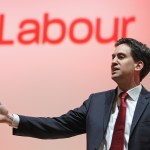
Ed Miliband’s reshuffle turned out to be a rather small affair. The news out of it is that control over the policy review passes from Liam Byrne to Jon Cruddas, although Byrne continues to shadow Iain Duncan Smith. Given that Byrne is a Blairite who has been pushing for a tougher line on welfare, and that Cruddas rebelled to vote against the second reading of the welfare reform bill, some will see this as a shift to the left. But Cruddas is a more interesting thinker than that. The Blue Labour philosophy that he is an advocate of is, in many ways, a rather socially conservative view of the world. He’s also a Eurosceptic; he was the link man between the No to the single currency campaign and the unions.

Brooks charges mean more trouble for Cameron

From our UK edition

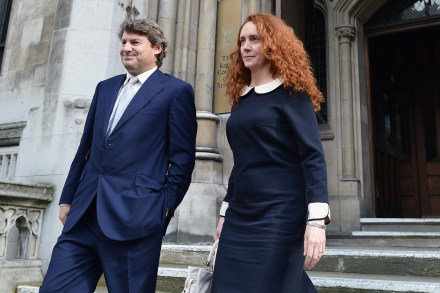
The news that Rebekah Brooks and Charlie Brooks have been charged with perverting the course of justice means that there'll be at least one trial involving friends of the Prime Minister before the next election. In cynical political terms, that Charlie has been charged as well as Rebekah creates an additional political problem for David Cameron. Part of Cameron's explanation for how close he got to Rebekah Brooks has always been that she married an old school friend of his. Undoubtedly, the Charlie Brooks connection added a genuine layer of friendship to relations between Rebekah Brooks and Cameron. I suspect that if it was not for Charlie Brooks there would have been no riding of the retired police horse and the like.

The battle for the ’22

From our UK edition

Elections to the 1922 Committee of Tory backbenchers have always been a test of the relative strengths of the right and left of the party. But this year, the split is between those who are backing the broadly pro-leadership 301 Group slate and those who view the ’22 as more of an alternative voice. The contest has become particularly heated after last week’s fiery meeting of the ’22 Committee. Intriguingly, Stewart Jackson, who was barracked when he tried to defend Nadine Dorries for her ‘posh boys’ attack on Cameron and Osborne, is standing for the executive. Given what he wrote on Sunday and that he resigned as a PPS over the EU referendum vote, the support for him will demonstrate how many MPs are dissatisfied with Cameron’s leadership.

Boris keeps on charming his party

From our UK edition

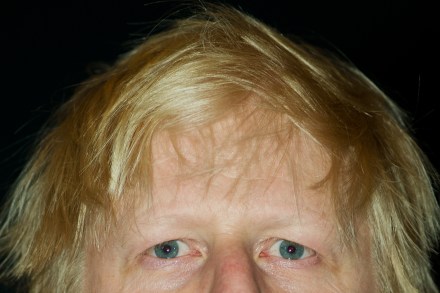
Not since Michael Heseltine has there been a politician who is so adept at finding the g-spot of the Tory faithful as Boris Johnson. His column today in the Telegraph is a classic example of this. There’s some witty and perceptive BBC bashing, mockery of the Lib Dems and their priorities, and a demand that the Tories get what they need out of the coalition. His line ‘If we are really going ahead with Lords reform (why?)’ sums up Tory feelings on the subject far better than more earnest tracts have done. ConservativeHome is certainly impressed, saying that the Mayor of London is ‘real and raw in an age when few politicians are.’ Boris is also being used by others as a stick with which to beat David Cameron.

Cameron looks to his early leadership period for inspiration

From our UK edition

David Cameron’s big parenting push this week is a reminder of what the Prime Minister would have liked to have been before the economic crisis intervened. Cameron believes that encouraging stable, loving families is the best way to prevent social failure. Doing that reduces the demand for government and, so the logic goes, shrinking the state then becomes a lot easier.   How the government can try and help people be better parents without falling into the nanny state is undoubtedly tricky. But Cameron’s emphasis so far has, rightly, been on simply giving people more information to help them make their own decisions.

Will Greece run out of German sympathy?

From our UK edition

As Greece heads for another election, there’s increasing speculation that the anti-bailout parties will do even better next time. Talking to people in Brussels, there's an expectation that if this does happen German patience could snap and they might start pushing for Greece’s ejection from the euro. The argument goes that Merkel, who faces her own elections next year, can’t afford to let the Greeks change the terms of their bailout deal. There is, though, one particular reason to be sceptical about whether Berlin would ever actually put Athens in a position where it would have to leave the euro. If Greece did go back to the drachma, the markets would ramp up the pressure on the other vulnerable Eurozone countries — particuarly, Spain and Portugal.

Politics: Why a European referendum is now almost certain

From our UK edition

The Romford Pledge might not have the same ring to it as the Tamworth Manifesto. But Boris Johnson’s decision while campaigning last month to sign up to the campaign for an in/out referendum on EU membership could be a key moment in the history of the Conservative party — the moment when the party’s balance of power tipped decisively in favour of a referendum. As with so many of Boris’s actions, it is hard to know whether his pledge was spontaneous or a calculated move. Certainly, the Mayor hesitated before signing. Then, according to those present, the seat’s Eurosceptic Tory MP, Andrew Rosindell, told him it wasn’t party policy to sign — and that appeared to make up his mind.

Embarrassment for Cameron, trouble for Hunt

From our UK edition

Rebekah Brooks’s testimony at Leveson was embarrassing for the Prime Minister — but no worse than that. I suspect that tomorrow’s papers will have much fun with the fact that Cameron used to end his texts to her with the letters ‘LOL’ in the mistaken belief that it meant ‘lots of love’. But, as one friend of the PM’s pointed out to me, No.10 would have definitely settled for that being the headline story this morning. Jeremy Hunt, though, again finds himself in some difficulty thanks to a Fred Michel email which indicates that the Culture Secretary was seeking News Corps’ guidance on how to deal with hacking.

Coulson easily handles his Leveson test

From our UK edition

Andy Coulson’s evidence to the Leveson Inquiry was a reminder of why he rose so quickly. He never said more than he had to and never let his ego interfere with his judgment. It is a testament to his skill that we essentially learnt nothing new from his evidence this afternoon. But it should be remembered that Coulson wasn’t on that bad a wicket today. The Leveson Inquiry isn’t going to overlap with the criminal investigations going on and so there wasn’t much time spent on hacking or on payments to the police. Instead, the questions focused on his relations with politicians and Cameron and Osborne in particular. Helped by some leaden questioning from Robert Jay QC, Coulson got through this without too much difficulty.

Why the Tories are shaping up for an EU referendum

From our UK edition

An EU referendum pledge in the next Tory manifesto is ‘basically, a certainty’ according to one of those most closely involved in the party’s electoral strategy for 2015. The current plan is for the manifesto to declare that a Conservative government would renegotiate Britain’s membership of the European Union and then put the new terms to the people in a referendum within 18 months of the general election. I understand that the Tory line would be that they would urge staying in the EU if Britain’s concerns could be met through this process. But if the rest of the European Union refused to play ball, they would be prepared to advocate leaving.

Jokes and jibes follow the ‘gracious speech’

From our UK edition

The Queen’s Speech debate is a unique mix of parliamentary variety show and proper politics. The debate was opened by Nadhim Zahawi — who combined humour with some serious points to good effect — and Malcolm Bruce, who gave a rather worthy speech. Ed Miliband then kicked off the more political part of proceedings. Miliband, who no longer has a kick-me sign attached to him when he gets up to the despatch box, is clearly still exulting in the local election results. He scored the best hit of the debate when he complimented Zahawi on his speech. Noting that the Tory MP was the co-founder of YouGov, Miliband joked ‘I’ve spent the last 18 months thinking he has a lot to answer for.

First blood to the sceptics on Lords reform

From our UK edition

The Queen’s Speech commitment that ‘A Bill will be brought forward to reform the composition of the House of Lords’ is a lot vaguer than theLiberal Democrats were hoping for, or expected just a month or two ago. Crucially, there is no mention of the second chamber being elected. If this was not enough, the bill’s place in the speech — it was the 16th piece of legislation mentioned — sent out the signal that it is not a government priority. It appears that the Tory sceptics of Lords reform have won the opening battle. This impression is bolstered by the fact that leading Tory opponents of Lords reform are content with the words in the Queen’s Speech.

Today’s theatrics will soon be overshadowed by Leveson

From our UK edition

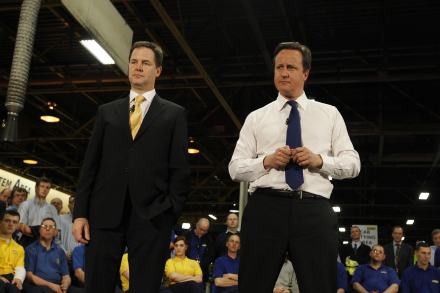
Today’s Cameron-Clegg event was meant to be very different from the one in the Downing Street garden two years ago: grittier, more real. Watching it, one was struck by the fact that the two leaders still seem comfortable in each other’s company. The dynamics between them are better than those between Blair and Brown two years in. But, thanks to the compromises of coalition, they lack a compelling growth message for the here and now — as opposed to the long term — at the moment. One of their other problems is that coalition makes everyone focus that much more on the political process.

Cameron faces a political storm

From our UK edition

For the Cameroons, the political weather at the moment is about as appealing as the prospect of a Bank Holiday trip to the beach. The Tory party is having a very public debate about its future strategy. The Alternative Queen’s Speech being promoted by David Davis, John Redwood and Tim Montgomerie is a reminder of how vocal the leadership’s internal critics are prepared to be. The worry for Cameron has to be that there is this much sounding off just two years into the coalition. One wonders what it will like be a year from now.

What Hollande’s victory means

From our UK edition

Tonight’s election results mark the next challenge to the euro. In France, the Socialist candidate François Hollande has won. Having campaigned on changes to the fiscal compact, Hollande will have to deliver something on this front. But Angela Merkel, with her own elections next year, will not want to agree to anything that appears to be a watering down of the pact. I doubt, though, that there’ll be that much market reaction to Hollande’s victory. City sources say that it has been priced in for while and that there is an expectation that Hollande will merely accept some window-dressing about growth being added to the agreement. But what could set off a reaction are the results in Greece.

Osborne brings it back to the economy

From our UK edition

It wasn’t, as expected, Nick Clegg on Marr this morning but George Osborne as the coalition attempted to move the argument back onto the economy. Osborne kept stressing that the government would focus on the things that ‘really matter’ to people; code for we’re not going to spend too long on Lords reform. Indeed, given that Nick Clegg has turned down a compromise on that, we now appear to be heading for — at most — a referendum on the subject. Osborne defended his deficit reduction programme, arguing that the lack of growth was a result of the Eurozone crisis and the oil price spike. But he did concede that a Tory government would be going far further on employment law reform than the coalition is.

How the parties fared

From our UK edition

As the dust settles on these elections, it is becoming clearer how the parties did. Labour exceeded expectations, the Tories had a bad but not disastrous set of results and the Liberal Democrats took another kicking. Indeed, they actually lost a higher proportion of the seats that they were defending this year than they did last year: 44 per cent compared to 41 per cent in 2011. Given these results is it is quite remarkable how solidly behind Nick Clegg the Lib Dem parliamentary party remains. Not a single MP has called for him to go or for the party to quit coalition. I’m sure this is partly because the Lib Dems are doing better in the parliamentary seats that they hold than they are nationally. But their calm under fire is still noteworthy.

Boris is back — and Ken retires

From our UK edition

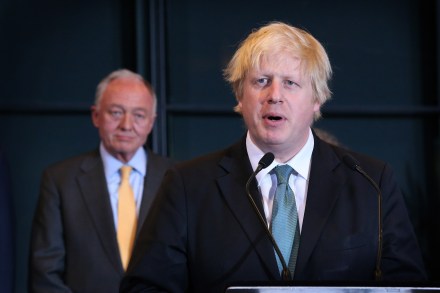
Just before midnight, Boris Johnson was confirmed as the winner of the London mayoral election. The margin was tight, 51.5 percent to 48.5 percent after the second preference votes had been counted. But in these difficult circumstances, any win by a Tory candidate in a Labour-leaning city is impressive. Boris’s victory speech was short and light-hearted. Ken’s was long and slightly self-indulgent. But given that he was using his concession speech to announce his retirement from electoral politics, we shouldn’t object too much to that, I suppose. I suspect that Labour will start planning who they intend to run in 2016 very soon. David Lammy will start this nominating contest as favourite.